How to Make a Flower Bed in 3 Steps
If you’ve ever wanted to create a vibrant flower bed but didn’t know where to start, you’re not alone. Many people struggle with picking the right spot, preparing the soil, or even just figuring out how to space their plants properly.
Luckily, make a flower bed doesn’t have to be complicated, and with a few simple steps, you can enjoy a beautiful, thriving garden.
Choose a sunny, well-drained spot that gets at least six hours of direct light and has good airflow. Clear grass, weeds, and debris, then loosen the soil, test it, and mix in compost if needed.
Mark your bed shape, plant flowers with proper spacing, water them deeply, and add 2 to 3 inches of mulch, keeping it off the stems. With a few extra tips, you can make the bed even healthier and more beautiful.
Key Takeaways
- Choose a sunny, well-drained spot with enough airflow and easy access for maintenance.
- Clear the area, loosen the soil, and mix in compost or other needed amendments.
- Mark the bed shape, then plant flowers with proper spacing and water them deeply.
- Add 2 to 3 inches of mulch, keeping it away from plant stems.
- Maintain the bed by watering, weeding, and watching for pests and plant stress.
Choose the Best Spot for Your Flower Bed

Start by choosing a spot that gets the right amount of sunlight for the flowers you want to grow, since most blooms need at least six hours of direct sun each day. Watch how sunlight exposure changes across the day, and pick a place that matches your flower selection.
You’ll get better results if the site also has good airflow and easy access for watering and maintenance. Check drainage considerations after rain; avoid low areas where water lingers and drowns roots.
Look at nearby plants too, because trees, shrubs, and large perennials can steal light, space, and moisture. Choose a location that supports seasonal blooms so you can enjoy color from spring through fall.
Nearby plants can compete for light and moisture, so choose a spot that lets your blooms shine through the seasons.
Think about how the bed will fit your garden aesthetics, whether you want a bold focal point or a soft border. The right spot makes the whole bed easier to manage and far more attractive.
Prepare the Soil and Mark the Bed Shape

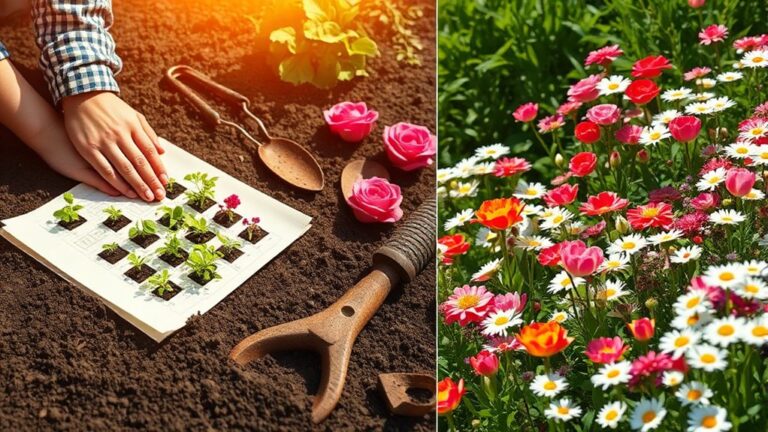
Once you’ve picked the right location, get the bed ready by clearing away grass, weeds, rocks, and debris. Rake the area smooth, then loosen the top 8 to 12 inches of soil with a shovel or garden fork. If the ground feels hard, break up clumps and remove roots so new plants can spread easily.
Next, do simple soil testing to check pH and nutrient levels. This helps you know whether you need compost, lime, or other amendments before you plant. Mix any needed changes into the soil evenly, then rake the surface flat again.
Now mark the bed shape. Use a garden hose, rope, or spray paint to outline the border, and adjust the curves until they fit your space. Measure the bed dimensions so the shape stays practical, balanced, and easy to maintain. Once the outline looks right, walk around it and make sure you can reach every part comfortably.
Plant, Water, and Mulch the Flower Bed

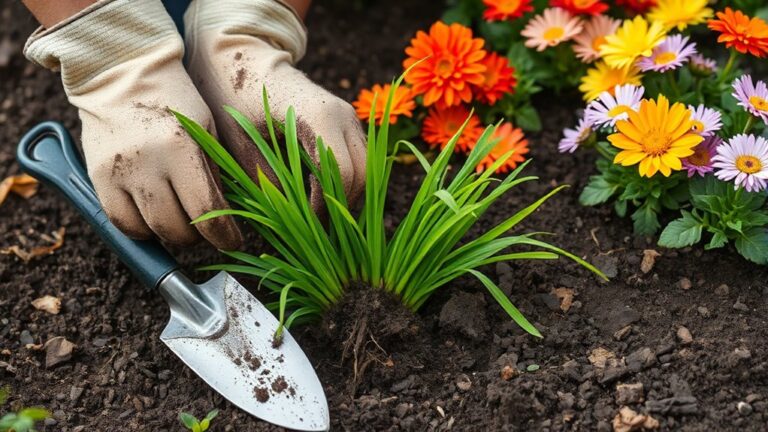
With the bed marked and the soil ready, place your plants according to their mature size. Space them so they won’t crowd each other as they grow. Choose flower selections that fit your sun, shade, and color goals, then tuck roots in gently and firm the soil around each one.
Water deeply right after planting so moisture reaches the root zone, and keep the bed evenly moist while the plants settle in.
Water deeply after planting, and keep soil evenly moist as your flowers settle in.
- Check the forecast before watering.
- Add mulch in a 2- to 3-inch layer, keeping it off stems.
- Watch for weeds, pests, and stress as the bed fills out.
Mulch helps lock in moisture, moderate temperature, and support seasonal blooms. It also cuts down on weeding and gives you practical maintenance tips for a cleaner look.
Stay alert for pest control issues early, because healthy plants resist damage better. With steady care, your flower bed will root in well and grow into a vibrant, lasting display.
Frequently Asked Questions
Which Flowers Bloom Best in My Climate?
You’ll get the best blooms by matching flower selection to your climate zones. If you live in hot, sunny areas, try zinnias, lantana, and marigolds.
In cooler zones, pansies, peonies, and tulips often thrive. For humid climates, choose coneflowers, daylilies, and black-eyed Susans.
Check your local frost dates, sun exposure, and soil before you buy. Then you’ll pick flowers that grow stronger and bloom longer.
How Do I Keep Deer From Eating Flowers?
You can keep deer from eating your flowers with a mix of deer deterrents and smart flower protection. Start by spraying repellent often, especially after rain. Then add fencing, motion lights, or scent-based deterrents near tender plants.
You should also choose deer-resistant flowers when you can. Think of your garden like a fortress: layer your defenses, and you’ll make it much harder for deer to feast on your blooms.
When Should I Divide Overcrowded Perennials?
You should divide overcrowded perennials in early spring or early fall, when temperatures stay cool and plants can root quickly. For the best division techniques, dig up the clump, split it with a sharp spade or knife, and replant the healthiest sections right away.
Seasonal division timing matters because it reduces stress and helps your plants recover faster. Water them well, and you’ll encourage strong growth and better blooms.
How Do I Choose Flowers for Continuous Blooming?
Choose flowers with staggered bloom times, and you’ll keep your garden glowing like a lantern from spring to frost. Mix early, midseason, and late bloomers, and include reliable repeat performers.
For annual selection, pick varieties that flower heavily and keep reblooming. Plan color combinations that shift smoothly through the seasons, so one color hands off to the next.
You’ll enjoy nonstop interest, texture, and fragrance without long bare gaps.
What Tools Are Best for Flower Bed Edging?
You’ll want a spade, edging shovel, and string line for clean flower bed edges. A hand trowel helps refine curves, while a rubber mallet sets edging materials firmly.
If you’re using pavers, metal, or plastic, follow simple installation techniques to keep the line straight and stable. A garden hose can mark shapes first, and gloves protect your hands.
Choose tools that match your material and soil type for best results.
Conclusion
With the right spot chosen, the soil turned rich, and each bloom tucked into place, your flower bed is ready to shine. Water it well, spread mulch like a soft blanket, and watch the garden wake up with color.
Before long, petals will sway in the breeze, bees will hum through the air, and your yard will glow with life. You’ve built more than a bed; you’ve grown a little piece of beauty right outside your door.
That’s the magic of how to make a flower bed—it’s about creating a vibrant, living space that brings joy every day.