Should Ducks Eat Bread: A Guide to Safe Feeding
If you’ve ever found yourself wondering whether it’s okay to feed ducks bread, you’re not alone. Many people enjoy feeding ducks but worry about what’s actually safe and healthy for them. It’s a common struggle to balance the joy of feeding wildlife with doing what’s best for their health and the environment.
You should ducks eat bread because it lacks the nutrients they need and can harm their health, causing malnutrition and dependency. Bread also pollutes waterways, leading to algae blooms and ecosystem damage.
Instead, offer safe foods like cracked corn, oats, or chopped vegetables in small amounts to support their natural diet.
Feeding ducks responsibly helps keep water clean and encourages their natural foraging habits. Keep going to learn how to feed ducks safely and respectfully.
Key Takeaways
- Ducks should not eat bread because it causes malnutrition, poor health, and disrupts their natural foraging behaviors.
- Feeding bread also leads to water pollution and harmful algae blooms that degrade aquatic ecosystems.
- Instead, offer nutritious alternatives like cracked corn, oats, birdseed, and chopped vegetables to meet ducks’ dietary needs.
- Feed small portions occasionally, scattering food on land or at water edges to prevent overcrowding and pollution.
- Always respect natural habitats by feeding only in designated areas and avoid processed, salty, or sugary foods.
Why Feeding Ducks Bread Is Harmful To Their Health

Why do so many people feed bread to ducks despite the risks? You might think it’s harmless, but bread can seriously harm their health. Ducks have specific dietary needs tied to their natural behaviors, and bread doesn’t provide the nutrients they require.
When you feed ducks bread, it can disrupt their bird migration patterns because malnourished ducks lack the energy to travel long distances. Also, bread fills their stomachs without offering essential vitamins and minerals, leading to poor body condition and weakened immune systems.
Feeding ducks bread disrupts migration by causing malnutrition and weakens their immune systems.
You should understand that duck behaviors like foraging naturally help them maintain a balanced diet. When you interfere by giving them bread, ducks may stop searching for their normal food sources, which can cause long-term health problems.
To protect these birds, you need to avoid feeding them bread and instead offer safe, nutritious alternatives that support their natural habits and migration needs.
How Feeding Bread Pollutes Local Waterways

Although feeding ducks bread may seem harmless, it actually contributes to pollution in local waterways. When you toss bread into ponds or lakes, uneaten pieces sink and decompose, promoting water pollution by increasing nutrient levels. This excess nutrient load fuels algae blooms that deplete oxygen in the water, harming aquatic life.
You might not realize it, but this process leads to habitat degradation, disrupting the natural balance ducks and other wildlife depend on.
Additionally, bread attracts large flocks of ducks to concentrated areas, causing overcrowding. This increases waste buildup, further contaminating the water and damaging vegetation. Over time, these changes reduce water quality and harm the ecosystem’s health.
What Nutrients Ducks Really Need To Thrive
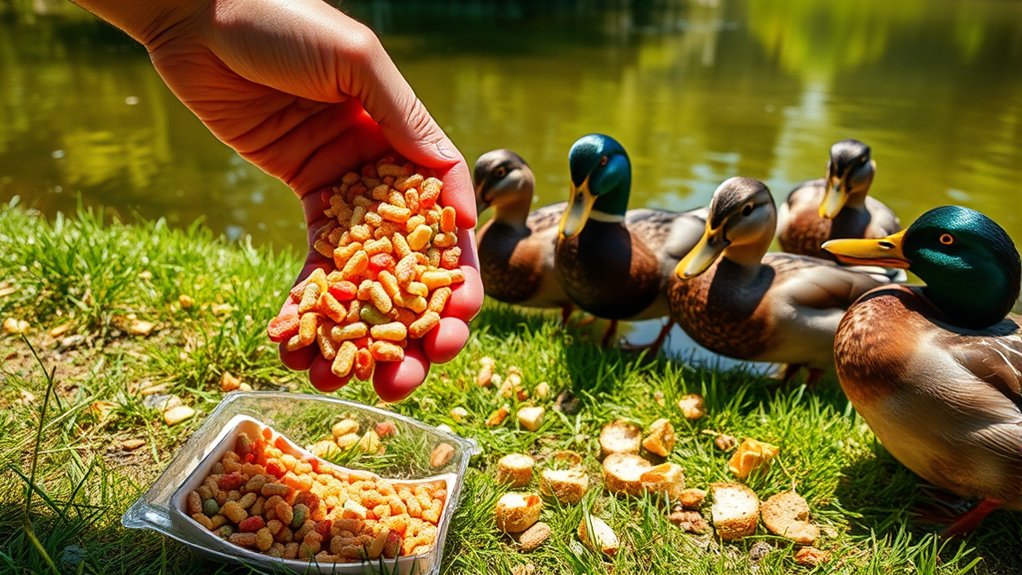
Feeding ducks bread may harm their environment, but it also fails to provide the nutrients they actually need to stay healthy. Ducks require a diet rich in protein, vitamins, and minerals to support essential activities like duck migration and nesting behaviors.
Protein helps them build strong muscles for long flights, while vitamins A and D strengthen their immune systems and bones. Calcium is necessary, especially during nesting, to form durable eggshells.
Instead of bread, you can offer ducks cracked corn, birdseed, or chopped vegetables, which better mimic their natural diet. These foods supply the energy and nutrients ducks need to thrive throughout the year.
Health Problems Ducks Get From Eating Bread
When ducks eat bread regularly, they can develop serious health issues that affect their ability to survive. Bread lacks the essential nutrients ducks need, leading to malnutrition and weakened immune systems. This makes it harder for ducks to complete their demanding duck migration, as they don’t have the energy or strength required for long flights.
Furthermore, leftover bread often pollutes the water, causing water contamination. This promotes harmful algae growth and attracts pests, disrupting the natural ecosystem that ducks rely on. The contaminated water can spread diseases among duck populations, further threatening their health.
When you feed ducks bread, you’re unintentionally contributing to these health problems and environmental issues. To protect ducks and their habitats, it’s important to avoid feeding them bread and understand the risks it poses. By doing so, you help ensure they stay healthy and capable of thriving in the wild.
Safe And Healthy Foods To Feed Ducks Instead Of Bread
To keep ducks healthy and thriving, you can offer them foods that provide the nutrients bread lacks. Observing duck behavior helps you understand what they prefer and how to offer food without disrupting their natural feeding habits. Practicing good feeding etiquette, like scattering food on the water or ground, reduces competition and stress among ducks.
Here’s a quick guide to safe and healthy foods you can feed ducks instead of bread:
| Food Item | Nutritional Benefit | Feeding Tips |
|---|---|---|
| Oats (rolled or instant) | High in fiber, gentle on digestion | Scatter on water surface |
| Corn (cracked or whole) | Rich in carbohydrates, energy boost | Offer in moderation |
| Peas (fresh or thawed) | Protein and vitamins | Feed slowly to avoid choking |
| Duck pellets | Balanced nutrition | Follow package feeding instructions |
Healthy Bread Alternatives For Kids And Families To Feed Ducks
If you want to feed ducks something healthier than bread, you’ve got plenty of nutritious options to try. It’s actually pretty easy to prepare simple snacks at home using ingredients like oats, corn, or chopped vegetables.
These alternatives don’t just keep ducks safe—they also make feeding time more fun and enjoyable for kids and families. So next time you head out to the pond, you can bring along something tasty and much better for those feathered friends!
Nutritious Duck-Friendly Snacks
Why settle for bread when you can offer ducks healthier, more nutritious treats? Ducks’ favorite treats include peas, corn, oats, and chopped lettuce. These foods provide essential vitamins and minerals.
These options support their natural diet and promote better health than processed bread. When feeding ducks, pay attention to feeding frequency. Offering snacks once or twice a week prevents overfeeding and maintains their natural foraging instincts.
You can also try birdseed mixes or chopped vegetables, which are easy to carry and store. By choosing nutritious duck-friendly snacks, you help sustain their well-being and enjoy watching them thrive.
Easy Homemade Feeding Options
When you want to feed ducks without relying on bread, homemade options offer a simple and healthy solution. You can prepare small portions of chopped vegetables like peas, corn, or lettuce, which mimic their natural diet.
Offering oats, cracked corn, or birdseed also aligns with feeding etiquette, ensuring ducks get nutritious food without harming their habitat. Avoid processed or salty snacks, as these can disrupt their health and the ecosystem.
By choosing these alternatives, you help support habitat preservation, keeping the pond environment balanced and safe for wildlife. Remember to feed ducks in moderation and scatter food on the water or ground to prevent overcrowding and pollution.
This way, you enjoy feeding ducks while respecting their well-being and natural surroundings.
How To Feed Ducks Safely Without Harming Them
Although feeding ducks can be a fun and rewarding experience, you need to choose the right foods to keep them healthy and safe. Feeding ducks improperly can disrupt their natural diet, affect their feather coloration, and even interfere with their migration patterns.
To feed ducks safely, follow these simple tips:
- Offer natural, nutritious foods like cracked corn, oats, or birdseed instead of bread.
- Feed small amounts in open areas to avoid overcrowding and reduce pollution.
- Avoid processed foods and anything with salt or sugar to prevent health problems.
How To Tell When Your Duck Feeding Area Needs A Cleanup
If you notice an accumulation of uneaten food, feathers, or droppings around your duck feeding spot, it’s a clear sign that the area needs a cleanup. Leftover food can attract pests and cause water pollution, which harms ducks and disrupts their natural habitat.
Many feeding myths suggest throwing excessive bread or snacks, but these often lead to waste and unhealthy conditions. Remember, a proper duck diet consists mainly of natural foods like aquatic plants, insects, and grains, not processed human snacks.
You’ll also spot the need for cleanup if the ground becomes muddy or slippery from constant duck traffic, making the area unsafe. Regularly clearing debris helps prevent the spread of disease and keeps the environment pleasant for both ducks and visitors.
Best Practices For Feeding And Interacting With Wild Ducks
When you’re feeding wild ducks, it’s best to pick healthy foods like grains or vegetables instead of bread. Bread might seem like an easy option, but it’s not great for them. Also, try to use proper feeding techniques so you don’t overfeed the ducks or mess with their natural habits.
And don’t forget to respect their home! Keep the area clean and do your best to minimize your impact on their habitat. That way, everyone can enjoy watching the ducks without causing any harm.
Healthy Food Alternatives
Why choose healthy food alternatives for wild ducks? Because these options support their natural diet, help maintain proper nutrition during duck migration, and comply with local feeding regulations. When you opt for healthy foods, you’re protecting their health and the environment.
Here are three great alternatives to bread:
- Cracked corn is easy to digest and a natural energy source.
- Oats, whether whole or rolled, mimic wild grains ducks find.
- Chopped vegetables like peas, corn kernels, or lettuce provide vitamins and hydration.
Proper Feeding Techniques
Although feeding wild ducks can be a rewarding experience, you should follow proper techniques to guarantee their safety and well-being. Start by offering small portions of healthy food alternatives to avoid overfeeding. Always feed ducks in designated areas and avoid tossing food directly into the water to prevent pollution.
Practice good feeding etiquette. Approach ducks calmly, avoid sudden movements, and never chase them. Using your hand to feed ducks helps prevent litter and reduces the risk of attracting pests.
Remember, your actions impact wildlife conservation. Responsible feeding supports their natural behaviors and habitats. Finally, always clean up after yourself to keep the environment safe for ducks and other wildlife.
Respecting Duck Habitats
Feeding wild ducks responsibly means more than just offering the right food. It also involves respecting their natural habitats. When you feed ducks in urban parks, you’re part of a delicate ecosystem that supports bird migration and local wildlife.
To help preserve these spaces, stick to designated feeding areas to avoid disturbing nesting sites and vegetation. Use appropriate food like duck pellets instead of bread, which can harm water quality and duck health. Avoid overcrowding ducks because excessive feeding can disrupt their natural foraging and migration patterns.
How To Encourage Ducks To Eat Natural Foods In The Wild
When you encourage ducks to eat natural foods in the wild, you help them develop healthy foraging habits that support their well-being. Instead of offering bread, try scattering seeds, grains, or chopped vegetables near water edges where ducks naturally feed. This approach aligns with their instinctive behaviors during duck migration, when they rely on natural food sources to fuel their long journeys.
By providing foods that mimic what ducks find during waterfowl migration, you help them stay strong and prepare for seasonal travel. You can also create a welcoming environment by planting native aquatic vegetation and maintaining clean ponds that attract insects and small aquatic creatures.
These natural food sources encourage ducks to forage independently. Remember, supporting ducks’ natural diet reduces dependence on human handouts, ensuring they remain healthy and capable of completing their migration successfully. Your mindful feeding helps preserve their natural behaviors and supports local ecosystems.
Frequently Asked Questions
Can Feeding Ducks Bread Affect Their Behavior or Migration Patterns?
Yes, feeding ducks bread can affect their behavior and migration patterns. When you feed ducks bread, it disrupts their natural diet, which can lead to poor nutrition and dependency on humans.
These feeding consequences may cause ducks to stay in one area longer than they should, altering their migration habits. To protect their health and natural behaviors, you should avoid feeding them bread and offer healthier alternatives instead.
Is It Legal to Feed Ducks Bread in Public Parks?
You’ll find that legal restrictions on feeding ducks bread vary by location, so you should check local park policies before tossing crumbs. Many public parks actually prohibit feeding ducks bread to protect wildlife health and water quality.
If you ignore these rules, you might face fines or penalties. So, always look for posted signs or consult park officials to guarantee you’re following legal restrictions and respecting the environment while enjoying your visit.
How Often Is It Okay to Feed Ducks During the Year?
You might think feeding ducks whenever you want is fine, but it’s best to limit how often you do it. To maintain their nutritional balance, feed ducks only occasionally throughout the year, especially during seasonal feeding times like spring and fall when natural food is scarce.
Overfeeding can disrupt their diet and local ecosystems. So, stick to feeding them a few times a month, focusing on healthy options to support their well-being.
Are There Specific Duck Species That Should Not Be Fed at All?
Yes, some duck species have stricter feeding restrictions because their diet is very specific. For example, diving ducks and sea ducks rely on natural aquatic plants and small fish. Feeding them bread or human food can harm their health.
You should avoid feeding these species altogether to prevent nutritional imbalances. Always research the types of ducks in your area and respect any local feeding guidelines to keep them healthy and thriving.
What Should I Do if I See a Duck That Appears Sick After Eating Bread?
If you see a duck that appears sick after eating bread, you should contact local wildlife health professionals or a rehabilitation center immediately. Avoid feeding the duck more bread or any human food, as this violates feeding guidelines and can worsen its condition.
Keep a safe distance to minimize stress, and note any symptoms to report. Your quick action helps protect wildlife health and supports proper care for the sick duck.
Conclusion
Now that you know why bread is a no-go, you can help ducks stay healthy and happy. There’s no need to feed them like it’s the good ol’ days of yore.
Instead, offer safe, nutritious treats and keep their environment clean. By doing this, you’ll be a true friend to your feathered pals, encouraging them to thrive naturally.
Remember, a little care goes a long way in protecting our quacking friends and their watery homes. When it comes to feeding ducks, choosing the right food makes all the difference.