What Are Female Mallards Called?
If you’ve ever tried to identify ducks in the wild, you’re not alone in finding it tricky to tell males and females apart. Many people struggle with recognizing female mallards because they don’t have the bright colors that males show off.
Understanding what female mallards are called and how to spot them can make your birdwatching experience more rewarding.
You call female mallards called “hens” because their main role is nurturing and protecting ducklings, not for their looks. They have mottled brown feathers and an orange bill with dark markings that help them blend in while nesting.
Unlike males, they don’t have flashy colors, making them easier to miss.
If you want to spot how they behave in groups or understand why they’re so important to their communities and conservation efforts, there’s more to uncover.
Key Takeaways
- Female mallards are commonly called “hens,” highlighting their role in incubation and raising ducklings. The term “hen” emphasizes their nurturing behavior rather than physical appearance.
- Female mallards have mottled brown plumage and are smaller and less vibrant than males. They are sometimes nicknamed “damsel,” “quacker,” or “lady duck,” based on myths, not biology.
- “Hen” is the widely accepted and traditional term used in both wildlife and culinary contexts.
What Are Female Mallards Called and Why?

Although you might hear many terms for female mallards, they’re most commonly called hens. This simple name fits because, like many female birds, female mallards perform the nurturing role of incubating eggs and raising ducklings.
When you consider culinary uses, the term “hen” helps distinguish the female mallard meat, which is often prized for its tenderness and flavor in various dishes. In addition, female mallards carry significant cultural symbolism; they often represent motherhood, protection, and domesticity in folklore and art.
You might not realize how this name connects to both practical and symbolic aspects of the bird’s identity. Calling them hens also aligns with traditional bird-naming conventions, emphasizing their role in the life cycle rather than flashy plumage, which is typical of males.
Why Don’t Female Mallards Have a Special Name?
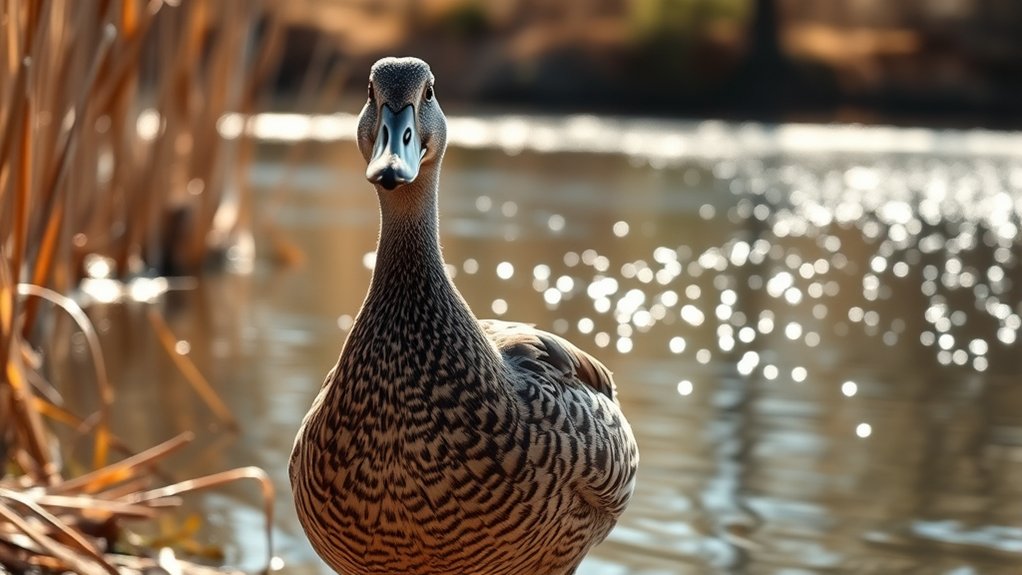
You’ve learned that female mallards are commonly called hens, a name that highlights their nurturing role and cultural symbolism. Unlike males, which flaunt distinctive, colorful plumage to attract mates, females have more muted feathers for camouflage. Because their appearance is less striking, there’s less need for a unique term distinguishing them.
Also, male plumage changes seasonally, making the males more visually notable during breeding. You won’t find a special name for females partly because their role is tied to nesting and protection, not display.
Additionally, migratory patterns affect naming conventions. Since both sexes migrate together, people focused more on identifying males by their bright colors to tell them apart. This practical approach left female mallards with the generic term “hen,” which aligns with other bird species where females share a common name.
Myths About Female Mallards’ Names
You might think female mallards have special names, but actually, a lot of the common terms people use are just myths. Some nicknames come from misunderstandings about how they behave or what they look like. So, let’s clear up where these names really come from and what’s true.
Common Name Misconceptions
Why do so many people believe female mallards have a special name different from males? It often comes down to misunderstandings about their behavior and appearance during mallard migration and nesting habits. People notice differences and assume different names exist. Here’s why these misconceptions persist:
Females look less colorful than males, leading you to think they have a unique name. During nesting, females act differently, which might suggest a separate identity. Migration patterns cause you to see males and females at different times, confusing their naming.
In reality, both males and females are called mallards. The female’s duller plumage helps with camouflage during nesting, but that doesn’t change her name. Understanding their habits clears up the confusion.
Origins of Nicknames
Although female mallards don’t have special names, people often create nicknames based on myths and misunderstandings. You might hear terms like “damsel” or “quacker” tossed around, but these aren’t official.
Many nicknames arise from observing female mallards in urban habitat or from assumptions about their migratory patterns. These labels reflect creativity more than biology.
| Nickname | Myth Behind It |
|---|---|
| Damsel | Assumes a female mallard is delicate |
| Quacker | Based on general duck sounds |
| Lady Duck | Implies a formal female title |
Next time you spot a female mallard, you’ll know the nicknames are fun but not factual!
What Birdwatchers Call Female Mallards
When birdwatchers spot a female mallard, they often refer to her as a “hen.” This term helps distinguish her from the male, or “drake,” especially when observing behavior in various settings.
If you’re watching female mallards, you’ll notice how their feeding habits adapt to both natural and urban habitat environments. In cities, hens forage near parks and ponds, often blending into the hustle while searching for food.
Here’s what birdwatchers keep in mind about female mallards:
- They’re called hens, a simple term that immediately signals gender.
- Their feeding habits vary; in urban habitats, hens scavenge alongside humans more often.
- Observers track hens to study migration patterns and habitat preferences.
Using “hen” makes it easier for you to communicate clearly about these adaptable birds, especially when they’re situated among city life or natural wetlands.
How Female Mallards Look Compared to Males
When you look at female mallards, you’ll notice their plumage is more muted compared to the vibrant colors of males. They’re usually a bit smaller and have a different shape, which helps you tell them apart. Plus, their coloring changes depending on the season, adding another layer to their appearance.
Plumage Differences
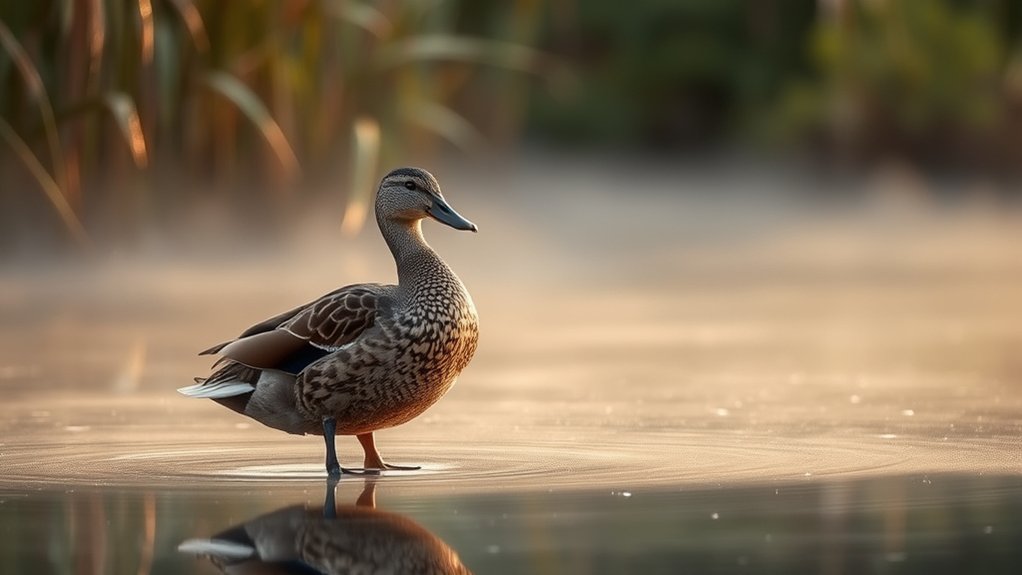
How can you quickly tell a female mallard apart from a male? Focus on their plumage differences. Female mallards have mottled brown feathers that help them blend into their natural habitat. This offers camouflage against predators.
This contrasts sharply with the male’s glossy green head and bright colors. Those colors are more about attracting mates during migration patterns. You’ll notice:
- Females sport a speckled brown pattern, perfect for nesting in marshes or wetlands.
- Their plumage is less vibrant, aiding in stealth within their habitat preferences.
- Males display bold colors that stand out during migration patterns and breeding seasons.
Size And Shape
Although female mallards share many features with males, you can spot differences in their size and shape if you look closely. Female mallards are generally slightly smaller and have a more rounded body compared to the sleeker, larger males. Their heads appear less pronounced, and their bills tend to be duller in color.
These size and shape differences help females navigate their nesting habitats more effectively, providing better camouflage and protection while incubating eggs. During mallard migration, females rely on their compact bodies to conserve energy over long distances.
Understanding these subtle distinctions makes it easier for you to identify female mallards in the wild, especially when observing their behavior in various environments where they nest and raise their young.
Seasonal Color Changes
Because female mallards don’t undergo as dramatic a color change as males, you might find it easier to recognize them throughout the year. Their consistent feather pattern, a mottled brown with subtle streaks, remains fairly stable. This is unlike the males’ bright green heads and vibrant plumage during breeding season.
This steadiness helps during migration timing when males molt into duller eclipse plumage.
Here’s what you should know about female mallard seasonal color changes:
- Their feather pattern stays mostly unchanged year-round, providing camouflage.
- Unlike males, females don’t develop bright colors, making them less conspicuous.
- During migration timing, females maintain their cryptic look, aiding survival.
How Female Mallards’ Coloring Helps With Nesting
When you spot a female mallard, you might notice her muted, earthy colors that blend seamlessly with the natural surroundings. This subtle coloring is vital for her nesting behaviors, helping her stay hidden from predators while incubating eggs. The brown and tan feathers mimic the tones of dried leaves and grasses, offering effective camouflage.
You’ll also find that female mallards are quieter than males during nesting season, using softer avian vocalizations to avoid drawing attention to their location. These low-key sounds help maintain safety for both the hen and her clutch.
How to Identify Female Mallards in the Wild
You can spot female mallards by their distinctive mottled brown plumage, which really sets them apart from the males. They’re not as flashy, but that brown coloring helps them blend into their surroundings.
Also, keep an eye on their size and shape. Females tend to be a bit smaller and have a more rounded body compared to the males. It’s subtle, but once you notice it, it becomes easier to tell them apart.
Another good tip is to watch their behavior. Things like nesting habits and how they interact with other ducks can give you clues that you’re looking at a female mallard. So, a little observation goes a long way when you’re out in the wild!
Distinctive Plumage Features
Although female mallards lack the bright colors of their male counterparts, their distinctive plumage offers clear identification clues. When you spot one in the wild, focus on these key features:
- Mottled brown feathers. This camouflage helps them blend into their surroundings during nesting, protecting them from predators.
- Orange bill with dark markings. Unlike the males’ bright yellow bills, the female’s bill is more muted yet unique.
- Blue speculum feathers bordered by white bars. These striking patches appear on each wing and are visible during flight or preening.
Recognizing these features helps you understand their mating rituals and feeding habits. Their plumage aids in both protection and social signaling within their environment.
Size and Shape Differences
Besides their distinctive plumage, female mallards also show noticeable differences in size and shape compared to males. You’ll find that females are generally smaller and have a more compact body, which helps them stay agile during migration patterns. Their rounded heads and shorter necks distinguish them further.
These size differences also relate to their feeding habits; females often dabble in shallow water, requiring a body shape that supports quick, efficient movement. In contrast, males tend to be larger and bulkier.
When you’re spotting mallards in the wild, paying attention to these subtle size and shape cues can help you identify females more accurately, especially when plumage colors are less clear during different seasons. Understanding these differences enriches your observation of their behavior and ecology.
Behavioral Traits Observed
When observing mallards in their natural habitat, you’ll notice female mallards exhibit distinct behaviors that help set them apart from males. Their migration patterns show females often lead groups during seasonal moves, indicating strong navigational skills.
You’ll also see differences in feeding habits. Females dabble more frequently in shallow water, searching for insects and seeds. To identify female mallards by behavior, watch for:
- Protective nesting behavior. Females fiercely guard their nests.
- Group leadership during migration. Females often guide flocks.
- Foraging style. Females prefer dabbling while males may dive occasionally.
How to Tell Female Mallards Apart From Other Ducks
If you’ve ever tried spotting a female mallard among other ducks, you know it can be tricky because many female ducks share similar brownish plumage. To tell a female mallard apart, watch for its distinctive mottled brown feathers with an orange bill marked by dark spots.
Unlike other ducks, female mallards have a subtle but unique blue speculum bordered by white on their wings. Listening closely helps too. Female mallard vocalizations are a series of soft quacks that differ from other species’ calls.
Observing behavior during mallard migration patterns can also aid identification. Female mallards often migrate in tight groups, displaying synchronized flight and landing patterns distinct from other ducks. By focusing on these visual and auditory clues, you’ll become more confident in distinguishing female mallards in diverse duck populations without confusion.
What Female Mallards Do in Mallard Communities
Understanding how to identify female mallards helps you appreciate their role within their communities. Female mallards are essential players, balancing the dynamics shaped by male dominance and managing hybridization challenges with other duck species.
Here’s what female mallards do in their communities:
- Select Nesting Sites: You’ll notice females choose safe, concealed spots to lay eggs, minimizing threats despite male competition.
- Lead Offspring: They guide ducklings to food and shelter, fostering survival amid environmental pressures.
- Maintain Social Order: Females subtly influence group interactions, often avoiding conflicts driven by male dominance but ensuring community cohesion.
Why Understanding Female Mallards Matters for Conservation
Because female mallards play an essential role in reproduction and community stability, you can’t protect their populations without knowing their behaviors and needs. Understanding female mallard migration patterns helps you predict where they’ll breed and overwinter, guiding habitat protection efforts.
Recognizing mallard habitat preferences ensures you conserve the wetlands and water bodies crucial for their survival. Without this knowledge, conservation plans risk missing key areas and reducing effectiveness.
| Aspect | Importance | Conservation Action |
|---|---|---|
| Migration Patterns | Identify seasonal habitats | Protect migratory stopovers |
| Habitat Preferences | Determine nesting and feeding sites | Preserve wetlands and shorelines |
| Reproduction Role | Indispensable for successful breeding | Minimize disturbances during nesting |
| Community Stability | Support population balance | Monitor female health and numbers |
Frequently Asked Questions
How Long Do Mallards Typically Live in the Wild?
Mallards typically live about 5 to 10 years in the wild, though some can reach up to 15 years.
When you observe mallard mating rituals, you’ll notice how female duck vocalizations play a key role in communication and selecting mates. These behaviors help them thrive and reproduce successfully.
What Do Female Mallards Eat During Nesting Season?
During nesting season, you’ll find female mallards focusing their diet on protein-rich foods to support egg production and incubation. Their mallard diet includes insects, aquatic invertebrates, and small crustaceans, providing essential nutrients.
They also eat seeds, plants, and grains to stay energized. This nesting season feeding strategy helps them maintain strength and care for their eggs effectively while staying camouflaged and safe from predators during this critical time.
How Do Female Mallards Care for Their Ducklings?
You’ll see female mallards fiercely protect their ducklings, leading them to water and teaching essential survival skills. She keeps an eye out for predators, ensuring male ducklings and females stay close.
As duckling development progresses, she encourages swimming and foraging, helping them grow strong and independent. You’ll notice she’s patient, guiding her brood until they’re ready to fend for themselves, showing remarkable dedication throughout their early life stages.
Can Female Mallards Fly Long Distances During Migration?
Yes, you’ll find that female mallards have impressive flight endurance, allowing them to fly long distances during migration. Their migration patterns often cover hundreds of miles as they travel between breeding and wintering grounds.
You’ll notice they take advantage of favorable winds and stop at wetlands to rest and refuel, ensuring they maintain energy for these long journeys. So, don’t underestimate their ability to navigate vast distances successfully.
What Predators Commonly Threaten Female Mallards?
Predators lurk like shadows, using predator camouflage to sneak up on female mallards. You’ll often find raccoons, foxes, and snapping turtles threatening them, especially during nesting safety times.
These predators blend into the environment, making it harder for you to spot danger. To protect female mallards, it’s vital to guarantee safe, hidden nesting spots where they can lay eggs without constant fear of being ambushed by these stealthy hunters.
Conclusion
You might expect female mallards to have a special name, but they don’t. Unlike their flashy, iridescent males, they blend quietly into the reeds. This contrast highlights their essential, often overlooked role in mallard communities.
While they may not stand out like males, understanding and recognizing female mallards is key for birdwatchers and conservationists alike. So next time you spot a subtle, mottled duck, remember she’s just as important as the showier drake. That’s what female mallards are all about.