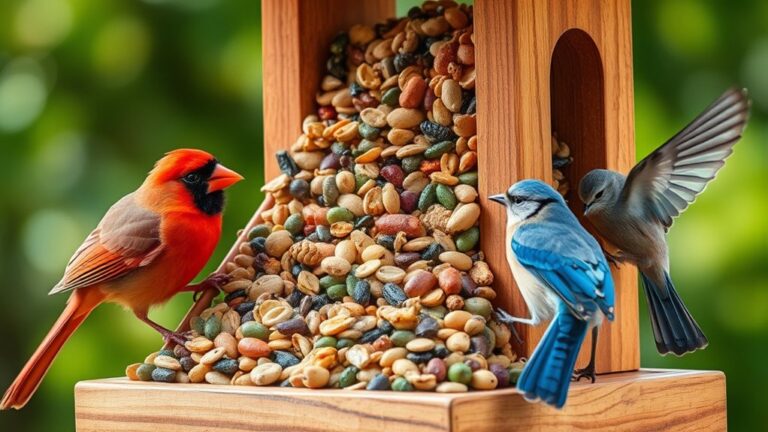

What Is Suet for Wild Birds Made Of?
If you’ve ever tried feeding wild birds, you know it can be tricky to find the right food that really supports their health and energy. You’re not alone—many people struggle with choosing suet that provides the best nutrition without harmful additives.
Finding a suet that keeps birds happy and healthy, especially during colder months, is a common challenge for bird lovers everywhere.
Suet for wild birds is mainly made from animal fats like beef tallow or lard, giving birds the high energy they need, especially in cold weather. You’ll often find added seeds, nuts, dried fruits, and insects to boost nutrition and mimic natural diets.
Avoid harmful ingredients like salt or artificial additives. Adjusting these ingredients seasonally helps support different bird needs throughout the year.
Keep exploring to find out how these choices impact bird health and behavior.
Key Takeaways
- Suet for wild birds is primarily made from animal fats like beef tallow or lard. These provide high energy that’s essential for survival and migration.
- It commonly includes seeds, nuts, dried fruits, and insects to mimic natural diets. This helps supply proteins, vitamins, and minerals.
- Sometimes vegetable oils are used, but they offer less energy compared to animal fats. Often, they’re combined for balanced nutrition.
- You should avoid ingredients like salt, artificial sweeteners, onion, garlic, processed fats, and chocolate. These can be toxic or pose health risks.
- Seasonal suet recipes adjust fat, seeds, and fruit content to support birds’ energy needs and prevent spoilage throughout the year.
What Is Suet and Why Do Birds Need It

Although you might not have heard much about it, suet plays an essential role in feeding wild birds, especially during colder months. It’s a high-energy food source that helps birds fuel up when natural food is scarce.
During bird migration, suet provides necessary calories to sustain long flights and maintain body heat. You’ll notice birds flocking to suet feeders because it offers quick energy, crucial for survival in freezing temperatures.
However, when you put out suet, you should be aware that it can also attract predators like raccoons or cats. To minimize predator attraction, place suet feeders in safe, visible spots and use guards if possible.
The Main Fat Sources Used in Wild Bird Suet

When choosing suet for wild birds, understanding the main fat sources used can help you pick the best option for your feathered visitors. Suet typically comes from animal fats, which provide high energy necessary for birds, especially during bird migration. These fats help birds maintain stamina and body heat.
However, some suets blend in vegetable fats, which can alter the nutritional profile and might affect how birds respond. You should also consider that certain fat sources can influence predator attraction; animal fats tend to attract a wider variety of wildlife, so placement matters.
Here’s a quick look at common fat sources in suet:
| Fat Source | Key Characteristics |
|---|---|
| Beef Tallow | High energy, preferred during cold seasons |
| Vegetable Oils | Lower energy, sometimes used for cost-saving |
| Mixed Fats | Balanced energy, can influence predator visits |
Choosing the right fat source helps support your local birds efficiently while managing predator attraction risks.
Why Birds Prefer Animal Fat Over Vegetable Fat

Because animal fats closely mimic the natural diet of many wild birds, they provide the rich energy and nutrients birds need to thrive. When you offer suet made from animal fat, you’re giving birds a dense source of calories essential for long bird migration journeys. This high-energy fuel helps them build fat reserves critical for survival during these exhausting flights.
You’ll also notice that birds prefer animal fat because it’s easier to digest and closely matches what they naturally consume. This means they can quickly convert it into energy, which is crucial for predator avoidance. When birds have access to energy-rich animal fat, they stay alert and nimble, ready to escape threats. By choosing animal fat over vegetable fat in suet, you’re supporting their natural behaviors and survival strategies, especially during challenging times like migration and avoiding predators.
Common Grains and Seeds in Wild Bird Suet
While suet primarily provides energy through animal fat, adding common grains and seeds improves its nutritional value and makes it appealing to a wider variety of wild birds. Including these ingredients supports birds during migration when they need extra fuel. Plus, grains and seeds help with suet conservation by adding bulk, so the suet lasts longer.
Here are four common grains and seeds you’ll often find in wild bird suet:
- Millet Small and easy to digest, attracting ground-feeding birds.
- Sunflower seeds High in fat and protein, perfect for energy-hungry species.
- Cracked corn Adds carbohydrates, ideal for sparrows and jays.
- Safflower seeds Less favored by squirrels, helping keep your suet for the birds.
Nuts and Fruits That Enhance Wild Bird Suet Nutrition
Although suet’s animal fat provides essential energy, adding nuts and fruits can markedly boost its nutritional profile and attract a wider range of wild birds. You’ll find that nuts like peanuts, walnuts, and almonds offer healthy fats and protein, which are especially valuable during bird migration when energy demands spike.
Fruits such as dried berries, raisins, and chopped apples supply natural sugars and vitamins, supporting birds’ overall health and stamina.
Including these ingredients helps you support birds’ nesting behaviors, too. During breeding season, birds need extra nutrients to build nests and care for their young. By offering a mix of nuts and fruits in your suet, you create a more balanced food source that encourages local birds to stay and thrive.
This diversity also attracts various species, enriching your backyard birdwatching experience. So, by thoughtfully enhancing your suet, you’re providing crucial nourishment that benefits birds year-round.
Comparing Natural and Commercial Ingredients in Bird Suet
When you choose ingredients for bird suet, understanding the differences between natural and commercial options can help you make better decisions for your backyard visitors. Natural suet ingredients often include animal fats, seeds, nuts, and dried fruits. These closely mimic what birds seek during migration and nesting habits. Commercial suet blends, however, may contain additives, preservatives, or fillers to extend shelf life and appeal to different species.
Here’s how they compare:
- Natural suet offers high energy from pure fats, supporting birds during migration.
- Commercial suet provides convenience with pre-mixed ingredients but may include less nutritious fillers.
- Birds’ nesting habits benefit from natural ingredients, providing essential proteins and fats.
- Commercial suet sometimes includes flavor enhancers to attract a wider variety of species.
Seasonal Changes in Wild Bird Suet Ingredients
You’ll notice that suet ingredients actually shift with the seasons to match wild birds’ changing needs. In winter, the mix has more high-energy fats to help keep them warm. Then, in summer, the blends focus on lighter nutrients that are easier to digest. By adjusting these ingredients, we help birds stay healthy all year long.
Winter Suet Ingredient Variations
As temperatures drop and daylight shortens, wild birds need more energy to stay warm, so you’ll want to adjust your suet ingredients accordingly. Considering bird migration patterns helps you decide which ingredients to include since some species may be passing through your area.
Suet ingredient sourcing also shifts in winter, focusing on high-fat, energy-dense components. Here are four key winter suet ingredient variations to try:
- Rendered beef fat provides long-lasting energy.
- Peanuts or peanut butter add protein and fats.
- Sunflower seeds are rich in oils and nutrients.
- Dried fruits offer quick sugars for energy bursts.
Summer Suet Composition Changes
Winter suet recipes pack in fats and proteins to help birds endure the cold, but summer calls for a different approach. During warmer months, you’ll want to reduce the fat content in suet to prevent spoilage and better suit birds’ changing dietary needs.
As bird migration patterns shift, many species focus on insects and fruits rather than high-fat foods. If you feed birds in urban bird habitats, offering suet blends with added seeds, nuts, and dried fruits can attract local species without overwhelming them with unnecessary fats.
Adjusting your summer suet composition this way supports birds’ energy needs while aligning with their natural feeding habits, helping you maintain a healthy, appealing feeding station all season long.
Seasonal Nutrient Adjustments
When seasons shift, wild birds’ nutritional needs change, and so should the ingredients in your suet blends. Adjusting your suet helps support bird migration and contributes to habitat preservation by providing essential nutrients year-round.
Consider these seasonal nutrient tweaks:
- Add more fat in fall and winter for energy during cold months and long migrations.
- Increase protein-rich ingredients like nuts and seeds in spring for breeding and feather growth.
- Incorporate fruits and berries in summer to mimic natural diets and support hydration.
- Reduce suet quantity in warmer months to prevent spoilage and maintain bird health.
Ingredients to Avoid in Homemade Wild Bird Suet
Although homemade suet can be a nutritious treat for wild birds, you’ll want to steer clear of certain ingredients that can harm them. Poor birdhouse placement and changes in bird migration patterns mean you might attract species with sensitive diets. So, avoid additives that disrupt their health or natural feeding habits.
Here’s a quick guide to ingredients you should avoid:
| Ingredient | Reason to Avoid |
|---|---|
| Salt | Causes dehydration and kidney issues |
| Artificial sweeteners | Toxic to birds |
| Onion and garlic | Can cause digestive problems |
| Processed fats | Difficult to digest, harmful chemicals |
| Chocolate | Contains theobromine, a bird toxin |
How to Choose the Best Wild Bird Suet
When you’re picking out suet for wild birds, it’s a good idea to think about the nutritional content. After all, you want to give them the energy they need to stay active and healthy. Plus, it’s helpful to choose suet that matches the season because birds’ dietary needs shift throughout the year. Once you keep these basics in mind, you’ll be able to offer the best food for your feathered visitors.
Nutritional Content Importance
Because wild birds rely on suet as a high-energy food source, choosing one with the right nutritional content is vital. During bird migration and nesting habits, their energy demands skyrocket, so the suet you offer must support these needs.
When selecting suet, focus on high fat content for sustained energy during long flights. Protein levels are important too, as they aid in muscle repair and growth, which is especially critical during nesting.
It’s also good to include seeds, nuts, or insects to mimic their natural diets. And try to choose suet with minimal additives or preservatives to guarantee healthy consumption.
Seasonal Suet Selection
How do you pick the best suet for wild birds throughout the year? Start by considering bird migration patterns. During colder months, choose high-energy suet blends with seeds and nuts to help birds fuel up.
In warmer seasons, opt for suet with fruits and insects to match the changing diet of local birds. You’ll also want to pay attention to suet storage tips. Keep it in a cool, dry place or freeze extra portions to maintain freshness and prevent spoilage.
Rotating suet types seasonally supports different bird species as they arrive or leave your area. By adjusting your suet offerings, you’ll attract a wider variety of birds and provide the right nutrition they need year-round.
Tips for Making Nutritious Suet at Home
If you want to create suet that truly benefits wild birds, focus on using high-quality ingredients that provide essential nutrients and energy. Nutritious suet supports birds during migration and helps preserve habitats by attracting species that contribute to ecosystem balance.
Here are four tips for making your own suet at home:
- Use beef fat or lard as a base for energy-rich suet.
- Add seeds like sunflower or millet to supply proteins and fats.
- Mix in dried fruits or insects for vitamins and minerals.
- Avoid salt, sugar, and artificial additives that can harm birds.
Frequently Asked Questions
How Should I Store Suet to Keep It Fresh for Wild Birds?
You should store suet in a cool, dry place to keep it fresh and maintain wild bird nutrition. If you won’t use it quickly, refrigerate or freeze it to preserve suet ingredient details and prevent spoilage.
When ready to use, thaw it slowly to keep its quality intact. Proper storage guarantees the suet stays nutritious and appealing, helping wild birds get the energy they need from this tasty treat.
Can Suet Attract Unwanted Animals or Pests?
Yes, suet can invite unwanted visitors, drawing pests like raccoons, squirrels, and even rodents. Picture your bird feeder surrounded by curious eyes and tiny paws attracted by the rich, fatty scent.
To minimize pest attraction, place suet in specialized feeders with guards and avoid overfilling. By managing how and where you offer suet, you’ll keep the wild birds happy while discouraging those pesky, unwanted visitors from crashing the feast.
How Often Should I Replace Suet in Outdoor Feeders?
You should replace suet in outdoor feeders every 3 to 7 days, depending on weather and bird species preferences. In warmer weather, suet softens quickly and can spoil, especially if it contains high-fat suet ingredient variations like nuts or fruits.
If you notice the suet melting or attracting pests, swap it out sooner. Watching which birds visit helps you tailor replacement frequency to keep your feeder fresh and inviting.
What Types of Bird Feeders Work Best for Suet?
You’ll find cage-style suet feeders work best since they securely hold the suet while letting birds cling and peck easily. Unlike traditional seed feeders, these cages prevent suet from falling out.
If you want alternative feeding methods, try suet logs or mesh bags. Suet vs. seed blends attract different birds, so having both types of feeders broadens the variety visiting your yard, especially in colder months when birds need high-energy food.
Is Suet Safe for All Wild Bird Species?
Suet is generally safe for many wild bird species, but you should consider each bird’s diet before offering it. Birds with high-fat diets, like woodpeckers and nuthatches, benefit most from suet’s nutritional benefits, especially in winter.
However, some birds prefer seeds or insects, so suet might not suit them. Always monitor which species visit your feeder and adjust offerings to support their natural diet and health.
Conclusion
Now that you know what suet for wild birds is made of, you can choose or make the best mix to keep birds healthy and happy. For example, a backyard birdwatcher in Ohio found that adding nuts and fruits to suet attracted more species during winter.
Remember, using high-quality animal fat and avoiding harmful ingredients makes all the difference. With the right suet for wild birds, you’re not just feeding birds; you’re supporting their survival through tough seasons.