How to Feed Ducks: Is Bread OK?
Feeding ducks might seem like a simple, fun activity, but if you’ve ever wondered, “Is bread OK to feed ducks?” you’re not alone. Many people struggle to find the right foods that keep ducks healthy without harming the environment. It’s easy to want to help, but knowing what to feed ducks safely can be confusing.
You shouldn’t feed ducks bread because it lacks proper nutrients and can harm their health, causing malnutrition and weak feathers. Bread also pollutes water, encourages overcrowding, and attracts pests, disrupting the ecosystem.
Instead, offer healthy foods like cracked corn, oats, or chopped veggies in small amounts. Choose quiet, clean feeding spots and watch ducks for signs of distress.
If you want to help ducks thrive, understanding safe feeding practices and how to assist them is important.
Key Takeaways
- Bread lacks essential nutrients and harms duck health, so it should never be fed to ducks.
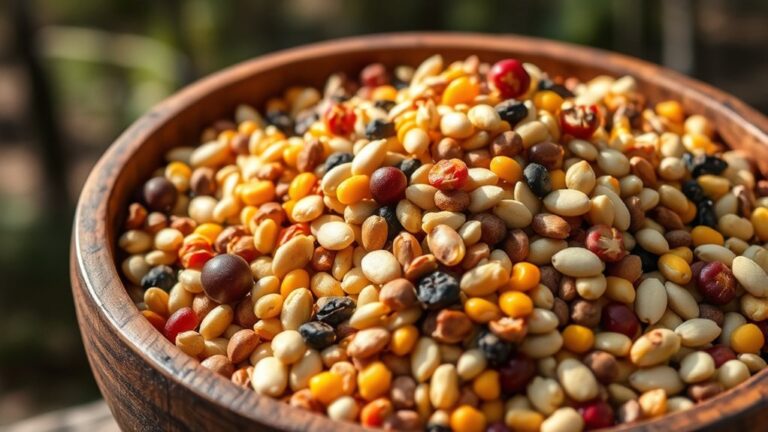
- Safe foods include cracked corn, oats, birdseed, chopped vegetables, and grapes for proper nutrition.
- Feed small portions by scattering food gently on water or ground to mimic natural foraging behavior.
- Avoid processed, salty, sugary, moldy, or seasoned foods to protect ducks and water quality.
- Monitor duck behavior and seek expert help if ducks show signs of distress or illness from feeding.
Why Feeding Ducks Bread Is Harmful

Although feeding ducks bread might seem like a kind gesture, it actually harms their health and the environment. When you feed ducks bread, you interfere with their natural behaviors, such as ducks’ migration patterns.
Bread lacks the nutrients ducks need to fuel their long journeys, causing them to become weak and less prepared for migration. Furthermore, bread can disrupt feather grooming, a crucial process that keeps ducks’ feathers waterproof and insulated.
When ducks eat too much bread, their feathers can become dirty and lose their ability to repel water, leaving them vulnerable to cold and illness. Feeding bread also encourages ducks to gather in unnatural numbers, which can lead to overcrowding and increased competition for natural food sources.
How Feeding Ducks Bread Affects Their Health and the Environment

When you feed ducks bread, you unintentionally harm their health and disrupt the surrounding environment. Bread lacks the nutrients ducks need, leading to malnutrition and weakened immune systems. It also affects their natural foraging habits and ducks’ social behavior, causing them to gather unnaturally around feeding spots. This overcrowding increases stress and disease spread among flocks.
Feeding bread contributes to environmental problems, especially in urbanized areas. Here’s how:
Feeding bread fuels environmental issues, particularly in cities, by harming ecosystems and disrupting natural habitats.
- Leftover bread pollutes water, promoting algae growth that depletes oxygen, harming aquatic life.
- Excess food attracts pests like rats, disturbing local ecosystems.
- Ducks lose their instinct to search for natural food, worsening their reliance on human handouts.
- Urbanization combined with bread feeding amplifies these effects, disrupting natural habitats and social structures.
Safe and Healthy Foods to Feed Ducks
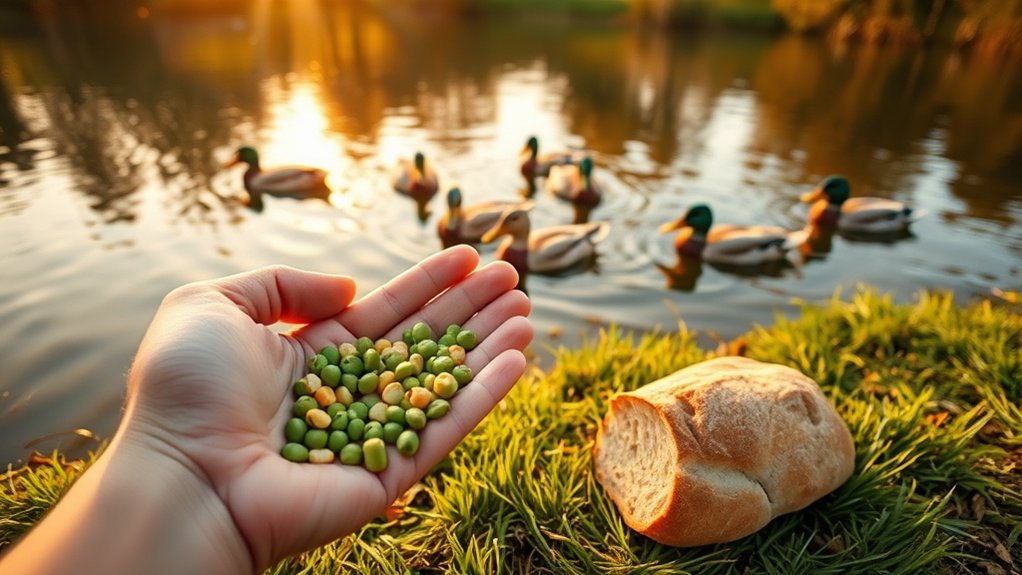
When feeding ducks, it’s important to pick foods that meet their nutritional needs and keep them healthy. Some common safe choices are cracked corn, peas, and chopped lettuce.
On the other hand, there are certain foods you should avoid because they can actually harm the ducks. So, let’s take a closer look at which foods work best and which ones you should definitely steer clear of.
Nutritional Needs of Ducks
Because ducks have specific dietary requirements, feeding them the right foods is essential for their health and well-being. Ducks in urban habitats often rely on human-provided food, but their migratory patterns mean their nutritional needs can change seasonally. To keep them healthy, you should focus on providing a balanced diet that mimics what they find in the wild.
Here are four key nutritional needs to take into account:
1. Protein
Supports growth and feather maintenance.
2. Carbohydrates
Provides energy for daily activities and migration.
3. Fats
Essential for insulation and long flights.
4. Vitamins and minerals
Indispensable for bone health and immune function.
Meeting these needs helps ducks thrive, even outside their natural environment.
Common Safe Duck Foods
Although ducks can eat a variety of foods, you should focus on offering items that are both safe and nutritious to support their health. Good options include cracked corn, oats, birdseed, chopped lettuce, peas, and sliced grapes. These foods provide essential nutrients without harming ducks.
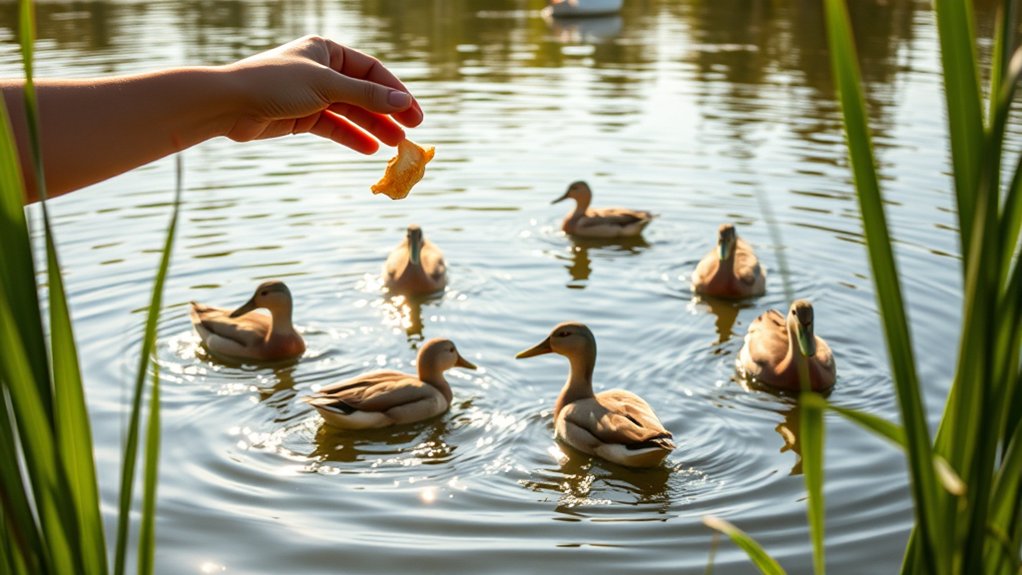
When feeding, practice proper feeding etiquette by scattering food in small amounts rather than handing it directly to ducks. This respects their natural foraging behavior and helps prevent aggressive competition. Observing duck behavior can guide you. If they seem hesitant or overwhelmed, reduce the quantity or spread food more evenly.
Feeding ducks responsibly guarantees they stay healthy and behave naturally, making your experience enjoyable for both you and the ducks. Always remember, safe foods and mindful feeding create a positive environment.
Foods To Avoid Feeding
While feeding ducks might seem straightforward, you should avoid giving them certain foods that can harm their health or disrupt their natural diet. Some common harmful foods can affect their digestion, cause malnutrition, or contribute to water pollution. This pollution impacts bird migration patterns.
Here are four foods to avoid:
- Bread. It offers no nutrition and pollutes water.
- Processed snacks. Salty or sugary items can be toxic.
- Avocado. It contains a substance harmful to ducks.
- Moldy or stale food. These can cause illness or attract pests.
How to Prepare and Offer Healthy Duck Food
When you prepare food for ducks, choosing fresh, nutritious ingredients guarantees they stay healthy and active. Start by offering chopped vegetables like peas, corn, or lettuce, which mimic their natural diet. You can also provide grains such as oats or birdseed. Avoid processed foods or anything seasoned. Keep portions small to prevent leftover waste that can harm the environment.
Practice good feeding etiquette by scattering food gently on the water or ground, letting ducks approach naturally. Sudden movements or overcrowding can stress them, so respect their space and observe duck behavior carefully. Notice if ducks hesitate or seem aggressive, and adjust your approach accordingly. Feeding ducks in moderation helps maintain their natural foraging instincts and prevents dependency on humans.
Best Places and Times to Feed Ducks
You’ll want to pick calm, shallow waters where ducks feel safe and can easily find food. Feeding them early in the morning or late afternoon is best because that’s when ducks are most active. So, let’s check out the ideal spots and times to make feeding more enjoyable for both you and the ducks.
Ideal Feeding Locations
Where should you feed ducks to guarantee they stay safe and healthy? Choosing the right location is key to practicing good feeding etiquette and respecting duck behavior. Aim for spots that allow ducks to eat comfortably without stress or danger.
Consider these ideal feeding locations:
- Calm, shallow water areas where ducks naturally forage.
- Designated duck feeding zones in parks, away from busy walkways.
- Open grassy banks near water, letting ducks approach safely.
- Quiet ponds or lakes with minimal boat or foot traffic.
Avoid crowded or polluted spots that disrupt their natural habits. By selecting peaceful, clean locations, you assure ducks enjoy their meal safely and encourage healthy feeding behavior.
Optimal Feeding Times
Why does timing matter when feeding ducks? Feeding ducks at the right time helps you connect with them without disturbing their natural habits. Early mornings or late afternoons are the best times to feed ducks because they’re most active then, searching for food.
During bird migration seasons, ducks may be more transient, so feeding them consistently during these times supports their energy needs. Respect feeding etiquette by avoiding feeding during nesting or harsh weather when ducks focus on survival.
Also, stick to small portions and feed in designated areas to prevent overcrowding and pollution. By choosing ideal feeding times, you help maintain the ducks’ health and natural behaviors while enjoying a rewarding experience yourself.
Timing truly makes your feeding efforts more effective and respectful.
Encouraging Ducks to Feed Naturally
Although feeding ducks can be enjoyable, encouraging them to find natural food sources helps maintain their health and the environment. When ducks rely on natural feeding, they stay healthier and support the ecosystem, especially during bird migration seasons.
Human food can cause water pollution, which disrupts aquatic life and harms ducks.
You can help ducks feed naturally by:
- Planting native aquatic plants that provide seeds and insects.
- Avoiding feeding ducks processed foods like bread, which offer no real nutrients.
- Creating safe, quiet areas near water where ducks can forage without disturbance.
- Supporting local conservation efforts that protect wetlands and reduce water pollution.
How to Spot When Ducks Need Help
If you spend time near ponds or lakes, you’ll learn to recognize when ducks are struggling and need help. During bird migration, ducks pass through various habitats, and sometimes you’ll notice signs that indicate distress.
Look for ducks that appear lethargic, have difficulty swimming, or show visible injuries. You might also see birds separated from their flock or unable to fly properly, which can be especially concerning during migration seasons.
In duck habitats, poor water quality or lack of natural food can weaken them, making it harder to survive. Keep an eye out for unusual behavior like excessive preening or a drooping posture.
If you spot ducklings alone or abandoned, they may need rescue. By understanding these signs, you can better decide when to intervene or alert local wildlife authorities. Protecting ducks during migration and throughout their habitats guarantees these beautiful creatures stay healthy and thrive.
What to Do If Ducks Eat Harmful Foods?
Recognizing when ducks are in distress is important, but knowing how to respond if they’ve consumed harmful foods is just as vital. Duck behaviors like lethargy, difficulty swimming, or unusual wobbling can signal trouble. Feeding myths, such as bread being harmless, often lead to these issues.
Recognizing distress signs and understanding harmful feeding myths are crucial for protecting duck health.
If you notice a duck has eaten something harmful, here’s what you should do:
- Remove access to the harmful food immediately to prevent further ingestion.
- Observe duck behaviors closely for signs like vomiting, weakness, or disorientation.
- Contact a wildlife rehabilitator or vet experienced with waterfowl for advice or care.
- Avoid forcing food or water, as this might worsen their condition.
Act quickly but calmly, and don’t attempt home remedies unless instructed by a professional. Your prompt response can make a big difference in the duck’s recovery and help dispel feeding myths that harm these animals.
Tips for Teaching Kids to Feed Ducks Responsibly
When you teach kids to feed ducks, start by picking healthy foods that won’t harm them. You can explain how what we feed ducks affects both the environment and the ducks themselves. It’s also important to encourage gentle behavior so the ducks don’t get scared or stressed out.
Choosing Healthy Duck Foods
Although feeding ducks can be a fun activity, you need to choose healthy foods that support their well-being. When you teach kids about feeding ducks, emphasize foods that help ducks stay strong during migration and protect their nesting habitats.
Here are some good options to offer:
- Cracked corn – easy to digest and nutritious.
- Oats – a natural grain that ducks enjoy.
- Birdseed – provides essential vitamins and minerals.
- Chopped vegetables like peas or lettuce, which mimic natural diets.
Avoid bread and processed snacks since they can harm ducks and their environment. By choosing healthy foods, you help ducks thrive through migration and maintain safe nesting habitats, making feeding time both fun and responsible.
Explaining Environmental Impact
Choosing healthy foods for ducks is just one part of feeding them responsibly. You also need to understand how feeding affects the environment. When too much leftover food piles up, it can contribute to urban pollution by attracting pests and littering parks.
Uneaten food often sinks into the water, leading to water contamination that harms aquatic life and disrupts the ecosystem. Teaching kids about these impacts helps them see that feeding ducks isn’t just fun—it’s a chance to protect their habitat.
Encourage them to feed only appropriate amounts and to pick up any trash. That way, you help keep ponds clean and ducks healthy while minimizing human impact on natural spaces. Responsible feeding means thinking beyond the ducks to the environment they live in.
Encouraging Gentle Duck Behavior
To help ducks stay calm and safe, you’ll want to teach kids how to approach and feed them gently. Encouraging gentle duck behavior guarantees the birds remain relaxed. This allows them to enjoy swimming and feather grooming without stress. Here’s how you can guide kids:
- Approach slowly and quietly to avoid startling ducks.
- Hold food in an open palm so ducks can eat calmly without rushing.
- Avoid chasing or grabbing ducks, which disrupts their natural behavior.
- Encourage kids to observe duck swimming and grooming from a respectful distance.
Preventing Overfeeding and Protecting Pond Wildlife
When you feed ducks, it’s important to avoid overfeeding since too much food can harm both the ducks and the pond’s ecosystem. Overfeeding disrupts natural foraging habits and pollutes water, which affects urban habitats where space and resources are limited. It also attracts predators, increasing threats to ducks and other wildlife.
To protect pond wildlife, feed ducks in moderation and choose natural, healthy foods. Avoid feeding bread because it lacks nutrients and causes health problems. Spread food thinly to prevent crowding and competition, which reduces stress and aggressive behavior.
| Issue | Cause | Solution |
|---|---|---|
| Overfeeding | Excess food intake | Feed small portions |
| Water pollution | Uneaten food decomposing | Feed less frequently |
| Predator threats | Food attracts predators | Feed in safe, open areas |
| Disrupted behavior | Reliance on human food | Encourage natural foraging |
Frequently Asked Questions
What Types of Ducks Are Commonly Found in Urban Parks?
You’ll commonly find mallards, wood ducks, and sometimes teal in urban parks. These ducks adapt well to urban habitats, where their diet includes aquatic plants, insects, and small fish.
If you’re observing them, notice how their duck diet varies with the season and available resources. Understanding their natural feeding habits helps you appreciate their role in the ecosystem and why feeding them human food can disrupt their health and behavior.
How Long Do Ducks Typically Live in the Wild?
Ducks typically live around 5 to 10 years in the wild, but their lifespan depends on factors like duck nutrition and feeding habits. If you provide nutritious food that matches their natural diet, you help support their health and longevity.
Poor feeding habits or unsuitable food can shorten their lives by causing malnutrition or illness. So, you should focus on offering food that aligns with their natural feeding habits to help ducks thrive longer.
Can Feeding Ducks Affect Their Migration Patterns?
If you think feeding ducks will totally rewrite their migration triggers, think again, it’s not that extreme! However, feeding impacts can subtly confuse their natural instincts, making them less enthusiastic to migrate or altering timing.
When you regularly offer food, ducks might delay migration or stay put longer, relying on easy meals instead of nature’s cues. So, while you won’t stop migration outright, your feeding can definitely nudge their patterns off course.
What Are Common Signs of Duck Mating Behavior?
You’ll notice common signs of duck mating behavior through courtship displays like head bobbing, wing flapping, and vocal calls. Males often show off their colorful plumage to attract females.
Once paired, you’ll see nesting behaviors such as the female gathering materials and choosing a safe spot for eggs. Paying attention to these actions helps you understand their breeding process and how they prepare to raise ducklings.
How Do Ducks Communicate With Each Other?
You’ll notice ducks communicate primarily through their vocalizations, using quacks, whistles, and grunts to express different emotions or warnings. They also rely on feather signaling, fluffing or positioning their feathers to show aggression, submission, or readiness to mate.
Conclusion
Feeding ducks isn’t just tossing crumbs into a pond; it’s planting seeds of care and respect. Avoid bread because it’s like giving them a broken compass that leads to harm. Instead, offer wholesome treats that nourish and protect their world.
Think of your hands as gentle gardeners nurturing nature’s delicate balance. When you feed ducks thoughtfully, you help keep their pond a vibrant, thriving garden alive with health, happiness, and harmony for all.
Remember, how to feed ducks matters—it’s the key to supporting their well-being and the environment they depend on.