When Do Mallard Ducks Mate and How to Guide
If you’ve ever wanted to attract mallard ducks to your backyard or learn more about their mating habits, you’re not alone. Many people struggle with understanding when and how these beautiful birds mate, making it tricky to create the right environment for them.
Luckily, knowing the basics can help you enjoy watching these fascinating creatures up close.
Mallard ducks mate usually start mating in early spring when daylight lengthens and temperatures rise, triggering their hormonal changes. You’ll notice males showing off vibrant feathers and performing courtship displays like head bobbing to attract females.
They choose mates based on arrival timing, stamina, and plumage brightness.
Nesting happens near water with hidden grounds for safety. To attract and watch them, create a quiet, natural habitat and observe from a distance.
Keep going to uncover more about their fascinating behaviors and care.
Key Takeaways
- Mallard ducks typically begin mating in early spring when daylight lengthens and temperatures rise, signaling hormonal changes.
- Males attract females through vibrant plumage, head bobbing, wing flapping, and synchronized courtship displays.
- Females select mates based on bright feather coloration and early arrival at breeding grounds after migration.
- Nesting occurs near water in concealed spots. Females build nests from grasses and down feathers and incubate eggs for 23 to 30 days.
- To observe mating, visit quiet, natural habitats during migration season. Use binoculars to avoid disturbing courtship behaviors.
When Do Mallard Ducks Usually Start Mating Season?

While mallard ducks’ mating season can vary by location, they usually start in early spring when temperatures rise and daylight increases. You’ll notice males flaunting their vibrant feather coloration during this time, which plays a key role in attracting females.
Their glossy green heads and striking plumage become more pronounced, signaling readiness to mate. Understanding their migratory patterns also helps you predict when mating begins. Mallards that migrate to warmer areas tend to start earlier, while those in colder regions wait until conditions improve.
If you observe their arrival at breeding grounds, you can often pinpoint when mating season kicks off. Paying attention to these natural cues, like feather coloration changes and migratory timing, gives you a clear picture of when mallard ducks usually begin mating. So, if you want to catch the start of their mating behaviors, focus on early spring and watch for those colorful males settling in after migration.
What Triggers Mallard Ducks to Start Mating?

You’ll notice mallard ducks start mating when the days get longer. It’s like a natural signal that the seasons are changing. This change in daylight actually triggers hormonal shifts in the ducks, getting them ready to breed.
But it’s not just the light—things like temperature and their surroundings also help kick off their mating behaviors. So, it’s really a mix of different environmental cues working together.
Seasonal Daylight Changes
As daylight hours lengthen in early spring, mallard ducks respond to the increasing light by triggering hormonal changes that initiate their mating behaviors. You’ll notice that this shift aligns closely with their migration patterns, as they return to breeding grounds.
This natural response helps them time reproduction perfectly, ensuring ducklings hatch when food is abundant and predators’ impact is lower.
Here’s why seasonal daylight changes matter:
- Increased daylight signals safe conditions, reducing predator threats on nests.
- It synchronizes mallard migration so males and females meet at the right time.
- Longer days boost activity levels, prompting courtship and nest building.
Hormonal Fluctuations Impact
The lengthening daylight doesn’t just influence mallard ducks’ behavior on the surface. It sparks a chain reaction inside their bodies. As days grow longer, hormonal regulation kicks in, altering their reproductive physiology.
You’ll see increased production of hormones like testosterone in males and estrogen in females, preparing them for mating season. These hormonal shifts stimulate physical changes, such as the development of secondary sexual characteristics and readiness of reproductive organs.
This internal transformation drives their instinct to seek mates and engage in courtship behaviors. Understanding these hormonal fluctuations helps you grasp why mallards start mating precisely when they do. It’s not just about daylight; it’s about how their bodies respond hormonally to guarantee successful reproduction during ideal conditions.
Environmental Cue Influence
Although hormonal changes prime mallard ducks for mating, environmental cues actually trigger when they start the process. You’ll notice that factors like changing daylight, weather, and habitat conditions play huge roles. Urban adaptations have also shifted timing, as city ducks respond differently than their rural counterparts.
Here’s what you should watch for:
- Increasing daylight signals ducks to begin courtship behaviors.
- Warmer temperatures encourage activity despite predation risks.
- Availability of safe nesting sites influences when ducks commit to mating.
You’ll see that mallards balance their urge to reproduce with the dangers around them, especially in urban areas where human presence and predators mix. By understanding these environmental triggers, you can better anticipate when mallards will start their mating rituals and even support their safe breeding.
How Do Mallard Ducks Choose Their Mates?

When mallard ducks pick their mates, they rely heavily on visual and behavioral cues. You’ll notice males flaunting vibrant feather coloration to attract females. The brighter and more iridescent the feathers, the healthier the male appears, signaling strong genetics and good health. Females instinctively choose mates displaying these traits, ensuring better survival chances for their offspring.
Besides feather coloration, migration patterns also influence mate choice. Ducks returning early from migration often secure the best territories and mates, so timing plays a crucial role. If you watch closely, you’ll see that females tend to pair with males who arrive promptly and show signs of stamina and resilience after long flights.
How Do Mallard Ducks Court Each Other?
You’ll notice mallard ducks use specific courtship displays to attract a mate, like head bobbing and tail shaking. It’s pretty interesting to watch how these little gestures catch the attention of a potential partner.
Once a pair forms, they don’t just stop there. They engage in behaviors that strengthen their bond, such as synchronized swimming and mutual preening. These actions help them stay connected and build trust.
Understanding these behaviors makes it easier to recognize how mallards build lasting partnerships. So next time you see them, you’ll know exactly what’s going on!
Courtship Displays Explained
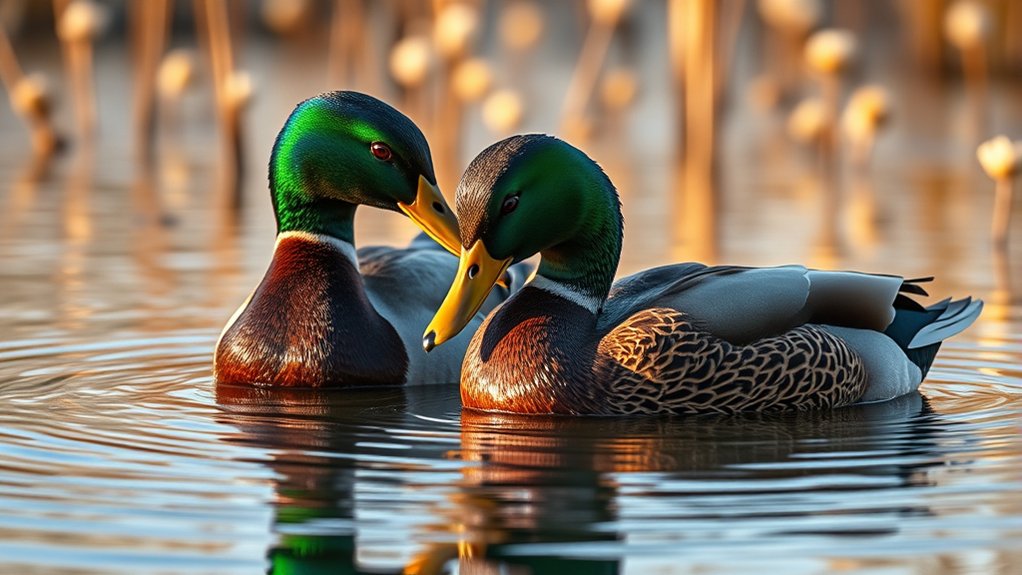
Because mallard ducks rely heavily on visual and vocal signals during mating season, their courtship displays are both intricate and mesmerizing. When you observe them, you’ll notice how the males flaunt their vibrant feather coloration to catch the females’ attention.
Their rich green heads and shimmering blue wing patches stand out brilliantly, especially after long migration patterns when energy levels are high.
Here’s what you’ll likely see during courtship:
- The male performs a head-pumping motion paired with soft quacks to signal interest.
- He spreads his wings wide, showing off the bright feathers.
- They engage in synchronized swimming, strengthening attraction through movement.
These behaviors help you appreciate the complex communication mallards use to find the perfect mate.
Pair Bonding Behaviors
After observing the males’ vibrant courtship displays, you might wonder how these visual signals lead to the formation of lasting pair bonds. Mallard ducks rely heavily on feather coloration to attract and reassure potential mates.
The males’ iridescent green heads and bright plumage catch your eye, signaling health and vitality. But it’s not just about looks. Vocal communication plays an essential role too.
When courting, males emit soft quacks and whistles, which help strengthen the connection between partners. You’ll notice that females respond with their own calls, creating a dialogue that fosters trust.
Through this blend of striking feather coloration and meaningful vocal exchanges, mallards establish pair bonds that often last through the breeding season, ensuring successful mating and cooperation.
Where Do Mallard Ducks Mate?
Although mallard ducks can mate in various locations, they usually choose quiet, sheltered spots near water. You’ll notice that these locations provide safety from predators and allow the males’ vibrant feather coloration to stand out. This plays a vital role during courtship. Understanding their migration patterns also helps you predict where and when they’ll mate, often in calm ponds or marshes during spring.
When you observe mallards mating, keep these points in mind:
- They prefer secluded areas with dense vegetation to avoid disturbances.
- Locations close to water offer easy access to food and escape routes.
- Seasonal migration guides them to familiar breeding grounds where they feel secure.
Where Do Mallard Ducks Nest?
Mallards choose their nesting spots with care, often close to the secluded areas where they mate. You’ll find their nests tucked away in dense vegetation near water bodies like ponds, marshes, or slow-moving streams. This location offers protection from predators and easy access to food.
Mallards nest carefully in dense vegetation near water, balancing safety and access to food.
Because of their migratory patterns, mallards often select nesting sites that align with seasonal changes, ensuring their ducklings hatch when food is abundant. Their dietary habits, which include a mix of aquatic plants, insects, and small fish, influence where they nest. It’s usually close to rich feeding grounds.
When you observe their nesting behavior, notice how females build nests on the ground, using grasses and down feathers for insulation. The choice of nesting site helps balance safety and resource availability, critical for the survival of both mother and ducklings during the vulnerable early weeks.
Understanding these patterns helps you appreciate their nesting strategy within their broader life cycle.
How Long Does Mallard Duck Mating Last?
When you observe the mating process of mallard ducks, you’ll notice it typically lasts from a few seconds to several minutes. This depends on various factors like environmental conditions and the ducks’ behavior. The duration can also be influenced by the availability of food sources, as a nutritious mallard diet helps maintain their energy during mating season.
Timing often aligns with mallard migration schedules, ensuring ducks mate before embarking on long journeys.
Here are three key points to remember about mallard duck mating duration:
- Mating is brief but frequent, allowing ducks to maximize reproductive success.
- Environmental stressors, like weather or predators, can shorten mating times.
- Mating pairs often synchronize their activity with peak feeding times to sustain energy.
What Happens After Mallard Ducks Mate?
Once mallard ducks mate, the female’s eggs get fertilized, and she starts laying them in a carefully chosen nest. Then, you’ll notice her beginning the incubation process, keeping those eggs warm until they hatch. It’s pretty amazing to see how much care goes into raising those little ducklings. Understanding this stage really helps you appreciate all the hard work involved.
Fertilization And Egg Laying
After mating, the female immediately begins the fertilization process, storing sperm in specialized sacs to fertilize her eggs over time. You’ll notice her vibrant feather coloration often signals readiness, influencing migration timing as well.
Once fertilized, the eggs develop inside her body before she lays them in a safe spot. Here’s what you should know:
- Fertilization allows multiple eggs to develop over several days, increasing hatch chances.
- Feather coloration helps males identify fertile females, ensuring timely mating before migration.
- Migration timing is essential; females lay eggs before setting out on seasonal journeys.
Understanding this process helps you appreciate the delicate balance mallards maintain between reproduction and survival. It’s a fascinating glimpse into nature’s timing and strategy.
Nesting And Incubation Process
Although the female mallard has completed fertilization, her work is far from over as she carefully selects a hidden, secure nesting site to lay her eggs. You’ll notice she chooses spots with dense vegetation to reduce predation risk, ensuring her clutch stays safe.
Her dull feather coloration helps her blend into the surroundings, providing natural camouflage while she incubates. During this incubation period, which lasts about 23 to 30 days, she rarely leaves the nest, maintaining consistent warmth for the developing embryos.
You can expect her to be very attentive, as any disturbance could expose the eggs to predators. Understanding this nesting and incubation process highlights how mallard ducks balance safety and care after mating.
How Does Mating Season Affect Mallard Duck Behavior?
When mallard ducks enter mating season, their behavior changes noticeably, and you can see them become more vocal and active. You’ll notice males displaying vibrant plumage to attract females, while both sexes increase their calls and movements.
This heightened activity also influences their mallard diet, as they consume more protein-rich foods to fuel their energy and stamina. Their migration patterns may shift slightly too, with ducks settling in breeding grounds earlier to secure the best nesting spots.
Here’s what you’ll observe during this time:
- Males perform elaborate courtship displays, including head bobbing and wing flapping, to impress females.
- Increased vocalizations create a lively, noisy environment around wetlands and ponds.
- Ducks spend more time feeding to support the energy demands of mating and nesting.
Understanding these behaviors helps you appreciate how mating season drives mallards to adapt their actions and lifestyle.
How to Attract and Safely Watch Mallard Ducks During Mating Season
If you want to attract and safely watch mallard ducks during mating season, you’ll need to create a quiet, inviting environment that mimics their natural habitat. Focus on providing clean water sources, native plants, and safe nesting areas. Avoid sudden movements or loud noises, as mallards are easily startled, especially during this sensitive time.
Pay attention to feather coloration; males display vibrant greens and blues to attract females. Observing these colors helps you identify courting pairs. Understanding their migration patterns is also key. Mallards arrive and mate at specific times depending on your region, so plan your visits accordingly.
Use binoculars or a camera with zoom to watch from a distance without disturbing them. By respecting their space and natural behaviors, you not only enjoy a rewarding experience but also support the ducks’ successful mating and nesting.
Frequently Asked Questions
What Do Mallard Ducklings Eat After Hatching?
Right after hatching, mallard ducklings mainly eat small insects, aquatic invertebrates, and plant matter. Their feeding habits focus on protein-rich foods to support rapid growth.
You’ll notice diet variations as they grow, gradually including seeds, algae, and small crustaceans. To help ducklings thrive, make certain they have access to natural water sources with plenty of tiny critters, reflecting their instinctive feeding habits and diverse diet variations.
How Can Predators Affect Mallard Duck Nesting Success?
Predators can be the dark clouds over mallard duck nesting success, causing eggs and ducklings to vanish before they get a chance to grow. You’ll see how predator-prey dynamics play a vital role, as raccoons, foxes, and snakes often raid nests.
To improve survival, you should focus on nesting site protection by choosing hidden, well-covered spots. This keeps the little ones safer and boosts the chances of a thriving brood.
Do Mallard Ducks Mate for Life?
Mallard ducks don’t usually mate for life; you’ll notice their mallard courtship involves seasonal bonding. During mating rituals, males perform displays to attract females each breeding season, and pairs often separate afterward.
You’ll see that while some may stay together throughout the season, they rarely form lifelong pair bonds. So, if you’re observing mallards, expect their relationships to reset annually during their courtship and mating rituals.
How Do Environmental Changes Impact Mallard Duck Populations?
Imagine a delicate orchestra where each instrument depends on the other to play in harmony. Climate variability and habitat disruption are like sudden, jarring notes that throw the mallard duck population off balance.
You’ll see their numbers fluctuate as changing weather patterns alter breeding seasons and food availability. When their wetlands dry up or get polluted, mallards struggle to thrive.
You’ve got to protect their environment to keep their symphony playing strong.
What Are Common Health Issues in Mallard Ducks During Mating Season?
During breeding season, you’ll notice mallard duck behaviors that can lead to health issues like stress and injuries from aggressive mating. Males often compete, causing wounds or feather damage.
You might also see increased susceptibility to parasites and infections due to close contact. Keeping an eye on their environment helps you minimize these risks.
Ensuring clean water and plenty of space can support healthier ducks throughout the breeding season.
Conclusion
So, you want to play matchmaker for mallards, huh? Just remember, these ducks have their own drama: flirting, fighting, and fancy feathers way before your picnic ends. Mating season isn’t a Netflix rom-com; it’s nature’s wild reality show.
Watch respectfully, keep your distance, and don’t expect a duck to swipe right on you. After all, it’s their love story, not your duck date. Now, go enjoy the quacking chaos responsibly and learn when do mallard ducks mate to better appreciate their fascinating behavior.