Will Birds Eat Bread and How to Feed Them Safely
If you love watching birds but aren’t sure what to feed them, you’re not alone. Many people struggle with choosing the right foods that keep birds healthy and happy.
Feeding birds can be confusing because some common snacks, like bread, might seem harmless but actually do more harm than good.
Yes, birds will eat bread if you offer it, but it’s not the best choice because it lacks nutrients and can harm their health. Instead, feed them natural foods like seeds, nuts, and fruits to support their growth and energy.
Make sure to provide fresh water and clean feeders regularly.
You can attract a variety of birds safely by choosing the right foods and feeding at the best times. Keep learning to help your feathered friends thrive.
Key Takeaways
- Wild birds will eat bread if it’s available, but it lacks nutrients and can harm their health, so it’s not recommended as food.
- Bread offers empty calories and can cause malnutrition, digestive issues, and dependency. This negatively affects birds’ growth and migration stamina.
- Safer feeding options include seeds, nuts, fruits, and insects. These provide essential nutrients for energy, growth, and feather health.
- Feed birds once or twice daily, preferably in early morning and late afternoon. Adjust frequency and food types seasonally for the best results.
- Avoid moldy, salty, or processed foods. Keep feeders clean, provide fresh water nearby, and offer species-specific foods to attract diverse birds safely.
Do Wild Birds Really Eat Bread?

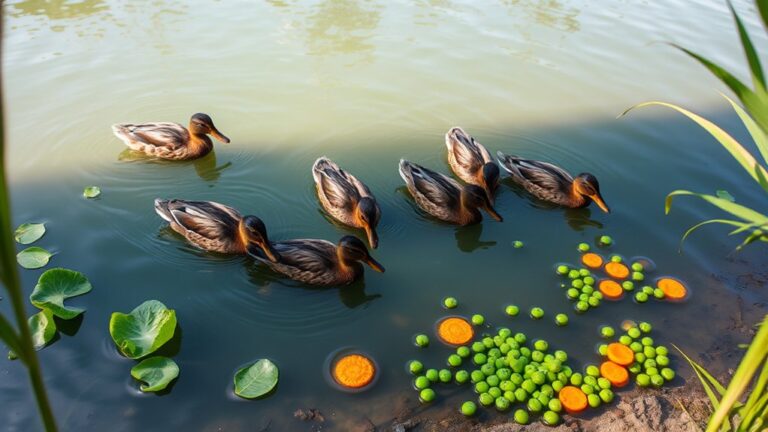
How often have you seen wild birds pecking at pieces of bread tossed into a pond or park? It’s a common sight, but you might wonder if birds really eat bread or if this is just one of the many urban myths surrounding bird digestion.
The truth is, many wild birds will eat bread if it’s available, but that doesn’t mean it’s their natural or healthiest food. Birds are opportunistic feeders; they’ll take what’s easy to find.
However, bread lacks essential nutrients and can be difficult for some birds to digest properly, leading to potential digestive issues. So, while birds do eat bread, it’s important to understand that this behavior is driven more by availability than by nutritional benefit.
Knowing this helps you see beyond the myths and realize that feeding birds bread isn’t necessarily the best choice for their health or well-being.
Is Bread Safe for Birds to Eat?
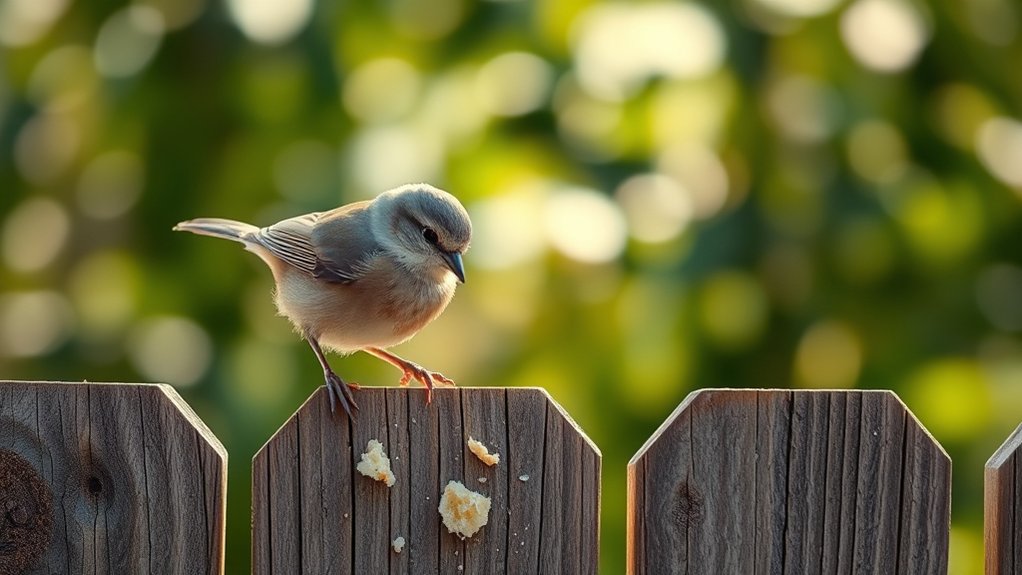
While birds may eat bread when it’s around, you should consider whether it’s truly safe for them. Bread lacks the nutrients birds need, especially during critical times like bird migration and bird nesting. Feeding bread can fill their stomachs but leave them hungry for essential vitamins and minerals. You want to support their health, not hinder it.
Keep these points in mind about bread and birds:
- Bread offers little nutritional value for energy-demanding migration.
- Moldy bread can cause illness and harm developing nestlings.
- Excess bread can attract pests and disrupt natural feeding habits.
- Overfeeding bread may lead to dependency, affecting survival skills.
- Alternatives like seeds and fruits provide better nourishment.
To protect birds during migration and nesting seasons, it’s best to choose safer, more nutritious foods. This guarantees they stay healthy and strong throughout their journeys and while raising their young.
Why Bread Isn’t a Healthy Choice for Birds
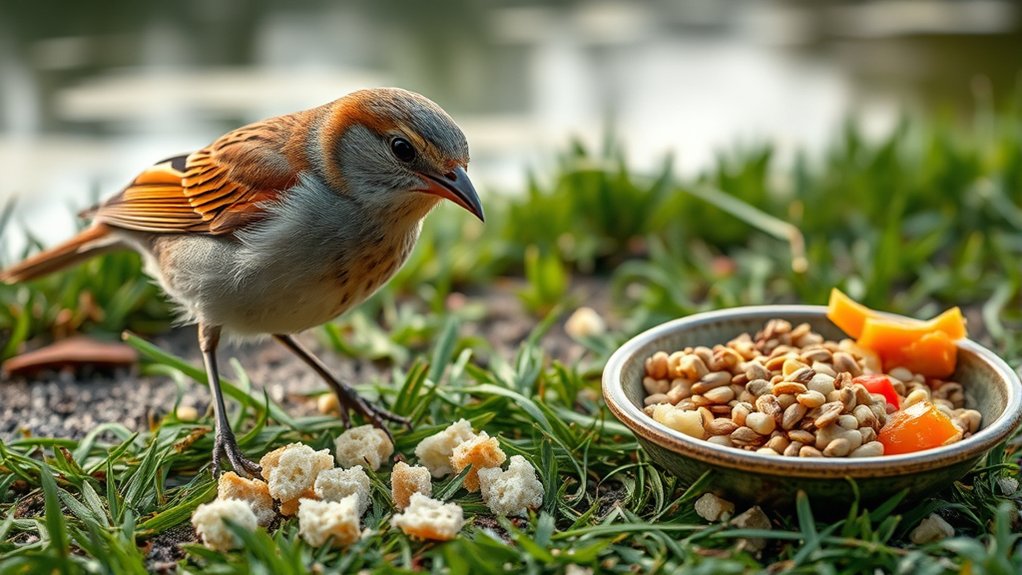
Although bread might seem like an easy snack to share with birds, it doesn’t provide the nutrients they actually need to thrive. Bread is mostly empty calories, lacking essential vitamins, minerals, and proteins that support healthy bird nutrition. When you feed birds bread, you’re not helping them nourish their bodies properly, which can lead to malnutrition over time.
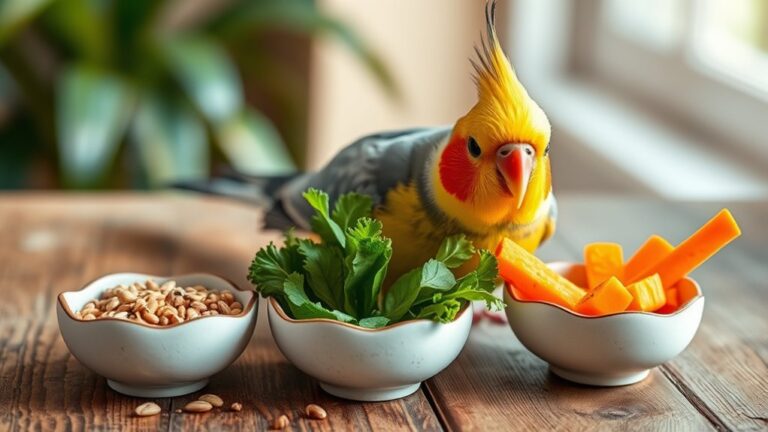
Good feeding etiquette means offering foods that mimic their natural diet, such as seeds, nuts, fruits, and insects. These choices supply the balanced nutrients birds require for energy, growth, and feather health. By sticking to appropriate foods, you contribute to their well-being and avoid disrupting their natural feeding habits.
What Happens If Birds Eat Too Much Bread?
Feeding birds bread might seem harmless, but giving them too much can cause serious problems. When birds consume excessive bread, it fills their stomachs without providing the nutrients they need. This can interfere with their energy levels, especially during critical times like bird migration.
Without proper nutrition, birds struggle to maintain stamina for these long journeys. Moreover, bread lacks the materials birds require for healthy nest building. Instead of gathering twigs and natural fibers, they might rely on unsuitable crumbs that don’t support strong nests.
Too much bread can also lead to malnutrition and weakened immune systems. It can disrupt feeding habits and cause birds to become dependent on humans. Plus, soggy bread increases the risk of drowning.
Bread can attract pests that harm bird habitats. This creates an imbalance in local ecosystems, which affects bird populations in the long run. So, it’s best to be mindful about what and how much bread we offer to birds.
Signs Birds Are Harmed by Eating Bread
If you notice birds looking lethargic or unusually fluffed up, they might be suffering from the effects of eating too much bread. Bread lacks essential nutrients, which can lead to poor feather health and disrupt bird migration patterns.
You might also see birds with swollen crops or difficulty flying, both signs of malnutrition. These symptoms indicate that bread is harming their ability to survive and thrive.
Here’s a quick overview of signs to watch for:
| Sign | What It Means | Impact on Birds |
|---|---|---|
| Lethargy | Low energy | Affects migration stamina |
| Fluffed feathers | Poor feather health | Reduces insulation |
| Swollen crop | Digestive distress | Causes flight issues |
Safe and Healthy Alternatives to Bread for Birds
You can offer birds nutrient-rich foods like seeds, fruits, and vegetables instead of bread. These options are much better for their health. Plus, making safe homemade bird treats is a great idea because you get to control the ingredients and keep feeding healthy. So, let’s check out some simple options that birds will love and actually benefit from.
Nutrient-Rich Bird Foods
Although bread might seem like a convenient option, it lacks the nutrients birds need to stay healthy and active. To support bird migration and nest building, you should offer foods that provide essential vitamins and energy.
Nutrient-rich bird foods help birds thrive through demanding seasons and maintain their strength.
Consider these healthy alternatives:
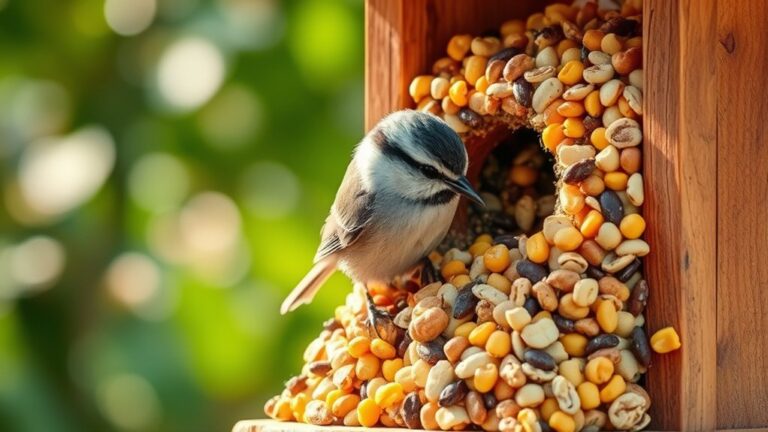
- Sunflower seeds: high in fat and protein, perfect for energy.
- Millets: easy to digest and great for smaller birds.
- Unsalted peanuts: rich in fat and protein, supporting nest building.
- Chopped fruits: offer vitamins and hydration.
- Suet cakes: packed with fats, crucial during migration.
Safe Homemade Bird Treats
When feeding birds at home, choosing safe homemade treats lets you provide nourishment without the risks associated with bread. You can make simple mixtures using oats, unsalted nuts, and dried fruits, which support birds during migration when energy demands rise.
Incorporate ingredients like sunflower seeds or crushed eggshells to aid in calcium intake, important for nesting habits and eggshell strength. Avoid anything salty, sugary, or processed.
A blend of peanut butter and birdseed pressed into shapes offers a high-energy snack that’s safe and appealing. By preparing these treats, you help birds maintain their health and essentiality through seasonal changes.
Homemade options respect natural diets, supporting their survival during bird migration and ensuring successful nesting seasons without the harm bread can cause.
Preparing and Offering Bird Food Safely
Since birds rely on safe and nutritious food to stay healthy, it’s important to prepare and offer their meals carefully. Feeding birds during critical times like bird migration or nesting behaviors means you must avoid harmful foods and provide appropriate nourishment. Here’s how to do it safely:
Wash your hands before handling bird food to prevent contamination. Use fresh, natural foods like seeds, nuts, and fruits instead of processed items. Avoid bread, which offers little nutrition and can disrupt birds’ digestive health.
Offer food in clean feeders or shallow dishes to minimize disease spread. Place feeders in safe locations away from predators and harsh weather.
When and How Often to Feed Birds
You’ll want to feed birds during the early morning and late afternoon since that’s when they’re most active. It’s a good idea to stick to a regular schedule, but don’t overdo it—once or twice a day is usually enough. Also, keep in mind that their feeding needs can change with the seasons, so make sure to adjust accordingly.
Ideal Feeding Times
Although birds can find food throughout the day, feeding them at consistent times helps establish a routine they recognize and rely on. This is especially important during bird migration when energy demands are high, and during nesting habits when parents need reliable food sources for their chicks. Aim to feed birds early in the morning and late in the afternoon, mimicking their natural foraging patterns.
Here are ideal feeding tips:
- Feed birds shortly after sunrise to support morning energy needs.
- Offer food again before sunset to help them prepare for the night.
- Avoid midday feedings when birds naturally rest.
- Adjust feeding times during migration seasons for increased demand.
- Respect nesting periods by providing safe, nutritious options regularly.
Keeping a schedule benefits both you and the birds.
Frequency of Bird Feeding
Establishing a feeding schedule naturally leads to questions about how often you should feed birds throughout the day. Generally, feeding birds once or twice daily is enough to support their energy needs without fostering dependency.
During bird migration periods, you might notice increased activity as birds bulk up, so slightly more frequent feeding can help them refuel. However, be mindful of their natural nesting habits; feeding too often near nesting sites can disrupt their routine or attract predators.
Keep feeding consistent in timing, so birds can anticipate meals without relying entirely on your offerings. By balancing frequency with birds’ natural behaviors, you’ll promote healthy foraging habits and contribute positively to their well-being without interfering with their survival instincts.
Seasonal Feeding Considerations
When should you adjust your bird feeding habits throughout the year? It’s important to align feeding with birds’ natural behaviors like seasonal migration and bird hibernation. During migration, birds need extra energy, so you can feed them more frequently. In colder months, feeding supports those that don’t hibernate. However, avoid feeding in spring when many birds start nesting and rely on natural food sources.
Consider these seasonal feeding tips:
- Increase feeding during fall migration for energy boosts
- Provide high-fat foods in winter to help non-hibernating birds survive
- Reduce feeding in spring to encourage natural foraging
- Stop feeding in summer when insects and fruits abound
- Clean feeders regularly to prevent disease year-round
Adjusting your feeding schedule helps birds thrive safely all year long.
Avoiding Harm: Best Ways to Feed Backyard Birds
Since feeding birds can impact their health, you should choose safe and nutritious options to avoid harm. During bird migration and nest building, birds need energy-rich foods to stay strong and support their activities. Avoid giving bread, as it lacks nutrients and can cause digestive issues.
Here’s a quick guide to feeding birds safely:
| Food Type | Benefits | Avoid |
|---|---|---|
| Seeds | High energy, natural diet | Moldy or stale seeds |
| Fruits | Vitamins, hydration | Citrus or processed fruit |
| Nuts | Protein, fats | Salted or flavored nuts |
Place food in clean feeders and refresh regularly to prevent mold and bacteria. Also, provide fresh water nearby, especially during migration seasons. By following these tips, you’ll help birds thrive without risking their health.
Attracting Different Birds With the Right Food
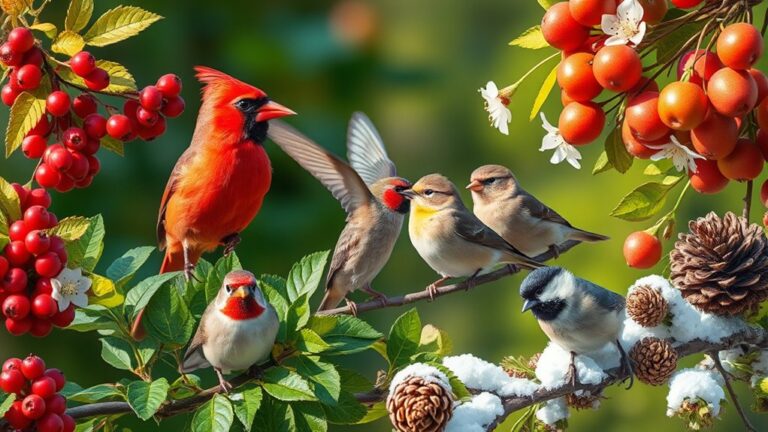
Although many birds enjoy seeds, you can attract a wider variety by offering specific foods that match their preferences. Understanding bird migration patterns and nesting habits can help you choose the right food to bring different species to your yard throughout the year.
For example, migratory birds often seek high-energy foods during their journeys, while nesting birds need protein-rich options to support their young.
Here are some foods to attract a diverse group of birds:
- Black oil sunflower seeds for cardinals and finches
- Suet cakes for woodpeckers and nuthatches
- Mealworms to attract bluebirds and wrens
- Fruit slices like oranges or berries for orioles and thrushes
- Nyjer seeds for goldfinches and siskins
Frequently Asked Questions
Can Feeding Bread to Birds Affect Local Ecosystems?
Yes, feeding bread to birds can affect local ecosystems, especially in urban feeding areas. When you offer bread, it disrupts birds’ nutritional balance since bread lacks essential nutrients.
This can lead to poor health and overpopulation of certain species, upsetting the ecosystem’s natural order. To protect local wildlife, you should provide more nutritious options like seeds or grains.
Doing this helps maintain a healthy balance in urban feeding environments.
Do Different Bird Species Prefer Different Types of Bread?
Yes, different bird species do prefer different types of bread, but you should be cautious. Feeding birds bread often leads to nutritional deficiencies since bread lacks essential nutrients.
Some birds might favor whole grain or seeded bread over white bread, but none get proper nutrition from it. If you keep offering bread, you could cause behavioral changes like dependency or aggression.
Instead, try offering species-appropriate foods to support their health and natural habits.
How Does Bread Feeding Impact Bird Migration Patterns?
Feeding birds bread is like throwing a wrench in the gears of migration. You’ll find that bread’s low nutritional value can disrupt bird digestion, causing them to miss vital migration triggers.
When birds rely on bread, they might not build enough energy reserves needed for their long journeys. This can delay migration timing or even cause birds to skip migration altogether, affecting their survival and the delicate balance of ecosystems they travel through.
Are There Legal Restrictions on Feeding Bread to Birds?
Yes, you’ll find legal regulations and feeding restrictions vary by location regarding feeding bread to birds. Many parks and wildlife areas have specific rules to prevent harm to birds and ecosystems.
Before you feed birds bread, check local laws to avoid fines or penalties. Authorities often discourage bread feeding because it can impact bird health and water quality, so respecting these feeding restrictions helps protect wildlife responsibly.
Can Bread Feeding Cause Dependency in Wild Birds?
Yes, feeding bread can cause dependency in wild birds because it disrupts their natural feeding habits. When you provide bread regularly, birds may rely on this easy, yet nutritionally poor, food source instead of seeking varied, bird nutritional options they need.
This dependency can harm their health and survival skills. To support healthy feeding habits, you should offer more appropriate foods that meet their nutritional needs and encourage natural foraging.
Conclusion
While it might be tempting to toss bread to your feathered friends, keep in mind that even well-meaning gifts can turn into a modern-day Pandora’s box. Birds need nutritious food to thrive, not empty crumbs that can do more harm than good.
By choosing the right seeds and feeding thoughtfully, you’ll be writing a happier ending for your backyard visitors, one where they flourish, not falter. So, feed wisely and watch your garden come alive with health and song. Remember, when it comes to feeding birds, making smart choices ensures they stay happy and healthy.