5 Best Vegetables for Fall Planting
Struggling to keep your garden thriving as the seasons change? You’re not alone—many gardeners find it tricky to know what to plant in the fall for a bountiful harvest. Best Vegetables for Fall Planting.
Choosing the right vegetables can make all the difference, helping you maximize your garden space and enjoy fresh produce before winter sets in.
For fall planting, you can’t go wrong with lettuce, spinach, kale, carrots, and radishes.
Cooler weather helps leafy greens taste sweeter and grow with less stress, while root crops like carrots and radishes develop crisp, flavorful roots.
Kale also handles pests well, and spinach grows fast in chilly nights.
If you plant now, you’ll make the most of your garden space and enjoy a bigger harvest before winter closes in, with more great options ahead.
Key Takeaways
- Lettuce grows quickly in cooler weather and produces tender, flavorful leaves for fall harvests.
- Spinach thrives in chilly nights and offers nutrient-rich greens with fast growth.
- Kale is cold-hardy and pest-resistant. It also becomes sweeter after a light frost.
- Carrots develop sweeter, crisper roots in fall and actually improve after frost.
- Radishes mature fast, making them ideal for short fall growing seasons.
Why Fall Planting Is Worth It
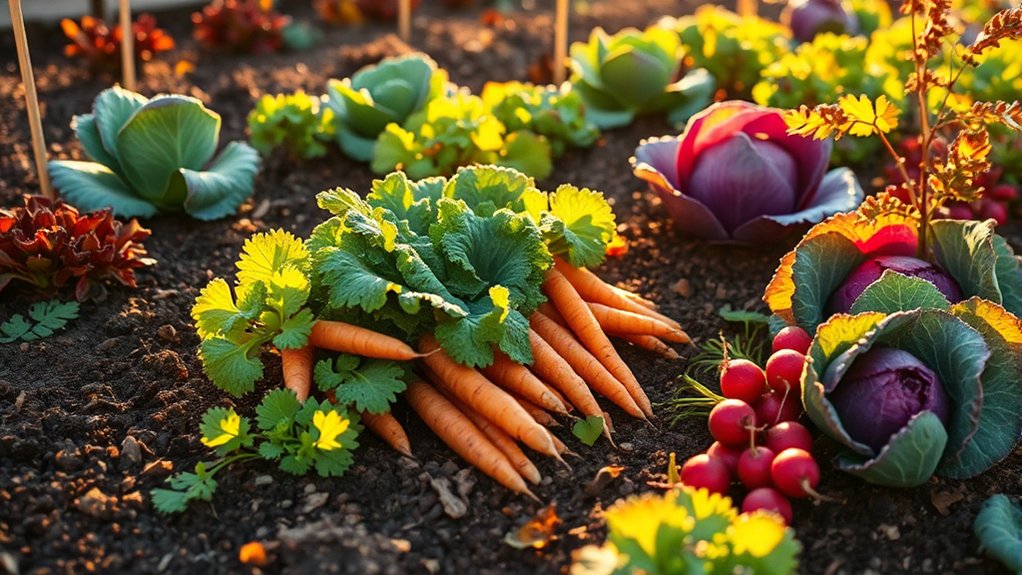
Fall planting is worth it because cooler temperatures help many vegetables grow with less stress, and shorter days can improve flavor in crops like leafy greens, carrots, and radishes. You also get seasonal benefits that summer gardens can’t match, including fewer pest problems and less heat damage.
As temperatures drop, your soil holds moisture longer, so you may water less often and still support steady growth. Fall planting can also help you use space more efficiently after summer crops finish.
If you practice crop rotation, you can break pest and disease cycles while keeping your garden productive. You’ll often find that fall conditions make gardening feel more manageable since weeds slow down and plants don’t wilt as quickly.
Best Leafy Greens for Fall Planting
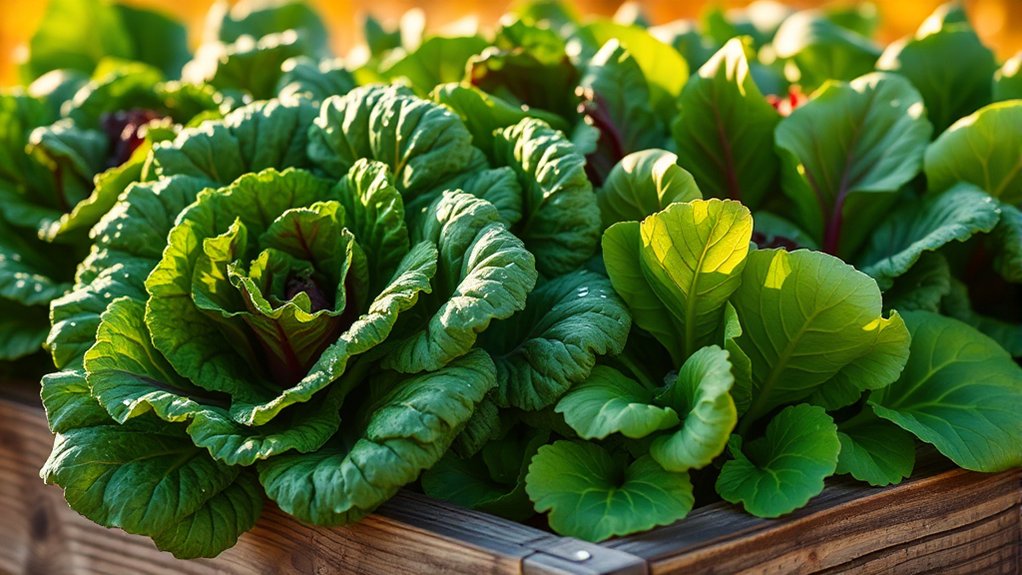
Leafy greens are some of the easiest and most rewarding crops to plant in cooler weather because they grow quickly, handle light frosts well, and often taste sweeter after a chilly night. You can sow them now for fast salads, sautés, and hearty harvests.
| Green | Why you’ll like it |
|---|---|
| Lettuce | Tender leaves and quick growth |
| Spinach | Excellent nutrient density |
| Kale | Strong pest resistance |
| Arugula | Peppery flavor and fast harvests |
| Swiss chard | Cut-and-come-again productivity |
You’ll get the best results by planting in moist, well-drained soil and giving each crop enough space to breathe. Lettuce and arugula thrive in partial shade, while spinach and kale can take more sun as temperatures drop. Harvest outer leaves often to keep plants producing longer.
Root Vegetables for Cool-Weather Harvests

Root vegetables shine in cool weather because the dropping temperatures help them develop sweet, dense roots before the ground freezes. You can plant carrots, beets, radishes, and turnips now for steady fall harvests.
Focus on soil preparation first: loosen the bed deeply, remove stones, and mix in compost so roots can grow straight and easily. Keep rows evenly moist, then thin seedlings early so each plant has room to expand underground.
Loosen the soil deeply, add compost, and keep rows evenly moist for straight, healthy roots.
Good pest management also matters, since root maggots and flea beetles can damage young plants. Use row covers and rotate crops to reduce pressure.
- Carrots give you crisp, sweet roots after a light frost.
- Beets offer tender greens and earthy bulbs from one planting.
- Radishes mature quickly, filling gaps between slower crops.
- Turnips store well and bring a mild, peppery bite.
If you sow in late summer, you’ll enjoy a dependable harvest when other beds slow down.
Brassicas That Thrive in Fall
If you want another group of crops that loves cooler weather, brassicas are a smart next choice for your fall garden. You can plant broccoli, cabbage, cauliflower, kale, and Brussels sprouts when temperatures start to dip. They’ll often improve in flavor after a light frost.
Choose brassica varieties that match your space and timing, then give them rich soil, steady moisture, and full sun. You’ll get the best results when you feed the plants well and keep weeds down early.
Brassicas can attract cabbage worms, flea beetles, and aphids, so check leaves often and act fast. Row covers can help with pest resistance by blocking insects before they settle in.
If you rotate crops each year, you’ll also reduce disease pressure and keep your beds healthier. With the right care, these hardy vegetables can deliver reliable fall harvests and strong color, texture, and taste in your garden.
Fast-Growing Vegetables for Short Seasons
When your growing window is short, fast-growing vegetables can still give you a satisfying fall harvest. You can sow them after summer crops fade and still enjoy fresh food before hard freezes arrive. Choose varieties with strong frost tolerance, and you’ll stretch your season even further. Focus on crops that deliver quick harvests and fit neatly into cool weather beds.
Fast-growing vegetables can still deliver a satisfying fall harvest, even when your growing window is short.
- Radishes: Plant them thickly, and you’ll pull crisp roots in about a month.
- Baby lettuce: Scatter seeds in moist soil for tender leaves you can clip again and again.
- Spinach: Sow it early in fall, and enjoy sturdy greens that handle chilly nights.
- Turnips: Grow both roots and tops, and harvest them before the soil turns hard.
If you keep beds watered and weeded, these vegetables grow fast and stay productive. For you, that means less waiting, more picking, and a fall garden that feels generous even when time is short.
Frequently Asked Questions
How Do I Prepare Soil for Fall Planting?
You should start by clearing weeds, rocks, and old roots, then loosen the soil to about 8 to 12 inches. Next, test your soil so you know its pH and nutrient levels.
Add soil amendments like compost or aged manure to improve texture and fertility. Mix everything in well, water lightly, and let the bed settle for a few days before planting so your fall crops get a strong start.
When Should I Start Fall Seeds Indoors?
You should start fall seeds indoors about 6 to 8 weeks before your first expected frost. That timing gives them a gentle head start, like a quiet sunrise in a cool season.
Choose varieties with smart seed selection tips, then provide strong indoor lighting so seedlings don’t stretch weakly. If you’re growing faster crops, you can begin a little later; slower growers may need more time indoors to thrive well.
How Much Water Do Fall Vegetables Need?
You should water fall vegetables deeply enough to keep the root zone evenly moist, not soggy. Check soil often since watering frequency depends on rain, temperature, and your soil type.
Sandy soil dries faster, while mulch improves moisture retention and cuts back on watering. In cooler weather, you’ll usually water less often, but young plants still need consistent moisture to establish strong roots and steady growth.
Which Pests Are Common in Autumn Gardens?
You’ll often see aphids, cabbage worms, slugs, cutworms, and spider mites in autumn gardens. Use pest identification to spot damage early: chewed leaves, sticky residue, holes, or wilting.
Then choose organic control methods like handpicking, row covers, neem oil, or insecticidal soap. Check plants after rain and on mild days because cool weather can hide infestations. Acting fast keeps your garden healthier and your harvest stronger through fall.
Can I Grow Vegetables in Containers for Fall?
Yes, you can grow vegetables in containers for fall. You’ll do well with container gardening if you choose compact fall crops like lettuce, spinach, radishes, kale, and green onions.
Use a pot with drainage, rich soil, and place it where it gets plenty of sun. Water consistently, since containers dry out faster. You can also cover pots on chilly nights to extend your harvest and protect tender plants.
Conclusion
Fall planting can feel like a secret superpower. You get cooler weather, fewer pests, and crops that practically sprint to harvest. When you choose leafy greens, roots, brassicas, and fast growers, you’re setting yourself up for an almost ridiculously rewarding season.
So grab your seeds, trust the chill, and plant now. Your fall garden can deliver fresh food long after summer fizzles out. Honestly, that’s the kind of win every gardener dreams about when it comes to fall planting.