How to Grow Vegetables in Pots in 7 Steps
If you’ve ever wanted to grow your own fresh veggies but felt limited by space or unsure where to start, you’re not alone. Many people struggle with creating a thriving vegetable garden in small areas like balconies or patios.
Luckily, growing vegetables in pots is a simple and rewarding way to enjoy homegrown produce without needing a big yard.
Start by choosing sturdy pots with drainage holes that match each vegetable’s mature size. Pick compact crops like lettuce, spinach, radishes, herbs, bush beans, and patio tomatoes.
Fill containers with lightweight potting mix, not garden soil, and add compost for nutrients. Sow seeds or set seedlings at the right depth, then water well.
Give plants plenty of sun, keep soil moist, feed regularly, and harvest often so they keep producing. There’s more to get them thriving.
Key Takeaways
- Choose sturdy pots with drainage holes and enough depth for the vegetables’ mature roots.
- Grow compact, container-friendly vegetables like lettuce, radishes, bush beans, herbs, and dwarf tomatoes.
- Use lightweight potting mix for containers, enriched with compost or worm castings. Avoid garden soil.
- Plant seeds or seedlings at the right depth and spacing, then water lightly to settle the soil.
- Place pots in adequate sunlight. Water when the top inch dries, fertilize regularly, and harvest often.
Choose the Best Pots for Vegetables

Start with pots that give your vegetables enough room to grow and drain well. You should choose a pot size that matches the mature root space of the plant and leaves a little extra room for soil and moisture. Bigger containers hold water longer, so they can help you avoid stress during hot days.
Check for drainage holes at the bottom, since standing water can rot roots fast.
Think about container materials before you buy. Plastic stays light and keeps moisture, while terracotta looks classic and dries out faster. Metal can heat up in the sun, so you’ll need to watch watering closely.
Wood offers good insulation, but it must resist decay.
Pick sturdy pots that won’t tip easily when wind or heavy growth pushes them. If you plan to move them, choose ones you can lift comfortably.
A well-made pot gives you a healthier setup and makes daily care easier.
Pick Vegetables That Grow Well in Containers
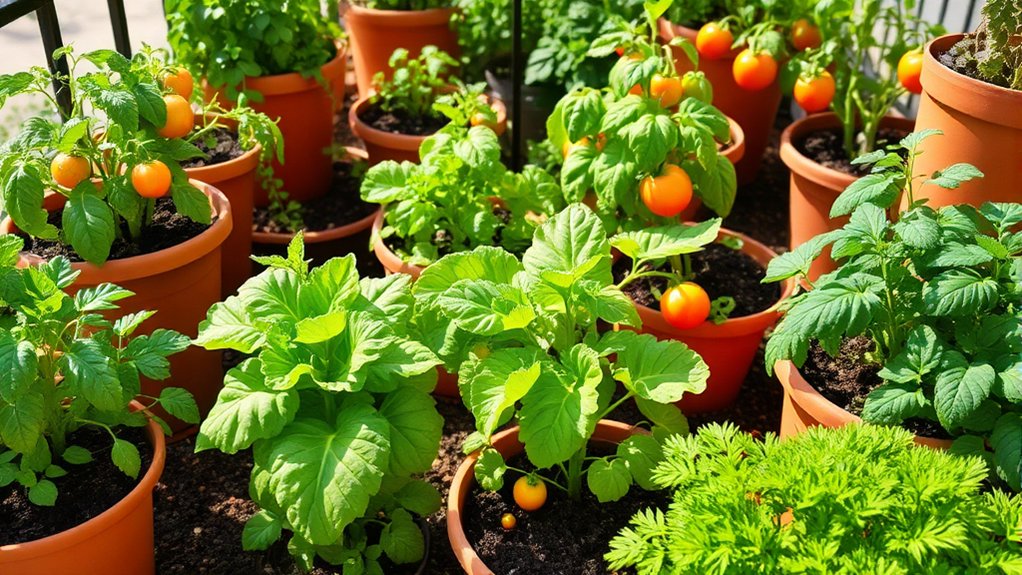
Once you’ve got the right pots, choose vegetables that naturally do well in containers. You’ll have the easiest success with compact, quick-growing crops like lettuce, spinach, radishes, bush beans, and cherry tomatoes. These plants stay manageable, produce steadily, and fit well into container gardening.
If you want taller plants, try dwarf peppers or patio tomatoes, which give you fruit without taking over your space.
Herbs are also smart choices because many herb varieties thrive in small pots and supply fresh flavor all season. Basil, parsley, chives, cilantro, and thyme adapt well to tight spaces and frequent harvesting.
Herbs thrive in small pots, offering fresh flavor all season in tight spaces and frequent harvests.
You can also grow baby carrots or scallions if you want root crops that don’t need deep beds.
Pick plants you actually like eating, since you’ll care for them more often. Start with a few reliable favorites, then expand as you learn what grows best on your balcony, patio, or porch.
Choose Potting Mix and Drainage

Choose a lightweight potting mix made for containers, not garden soil, so your vegetables get the air, moisture, and nutrients they need. You’ll want a blend that drains well but still holds enough water for steady growth.
If the mix seems lean, you can improve it with organic amendments such as compost or worm castings for extra fertility and structure. Avoid heavy clay-based soil, which compacts easily and can suffocate roots in pots.
Make sure every container has drainage holes at the bottom. Without them, excess water collects and can rot roots fast. Set pots on feet or risers so water escapes freely and air can circulate underneath.
When you fill containers, leave a little space at the top so watering doesn’t spill over. Smart potting techniques help you create a loose, balanced growing environment that keeps roots healthy and productive.
Plant Seeds or Seedlings in Pots
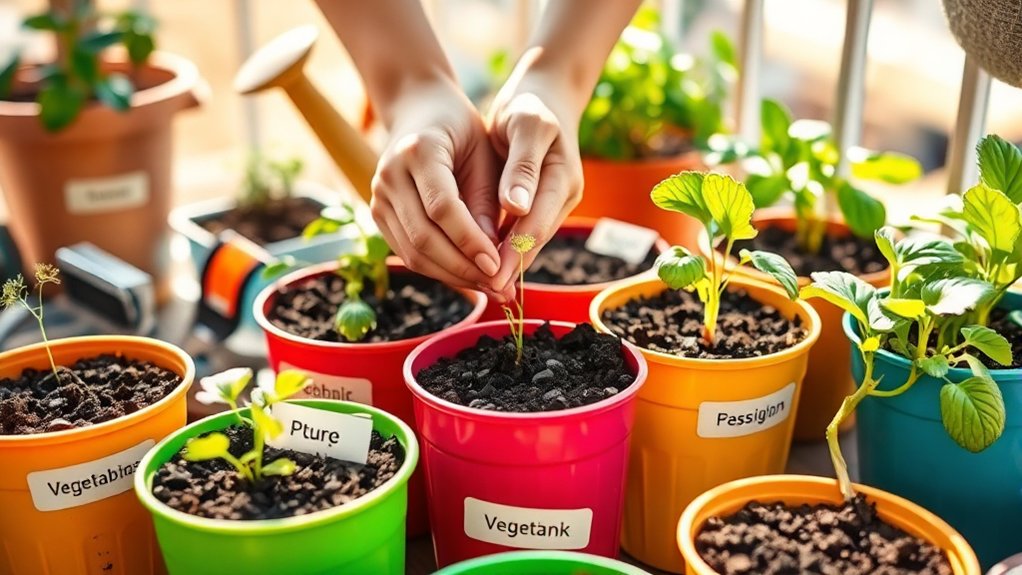
Now comes the planting stage: sow seeds at the depth listed on the packet, or set out seedlings so their roots are covered and the stem sits at the same level it was growing before. Check pot depth first, because cramped roots slow growth and can stunt your crop.
Press the mix gently around each plant, then water lightly to settle it in without washing soil away. Keep the spacing practical for the vegetable you chose, and follow the label for each variety. For seedling care, handle stems carefully, hold leaves instead of roots, and avoid bending tender shoots.
- Water after planting to remove air pockets.
- Label each pot so you know what’s growing.
- Thin crowded seedlings early.
- Recheck moisture daily while roots establish.
If you planted seeds, expect uneven sprouting and keep the surface evenly moist. With seedlings, watch for wilting, then adjust watering. Strong starts come from careful planting, steady attention, and a pot that gives roots enough room.
Give Your Plants Enough Sun and Space
Sunlight is one of the biggest factors in how well your potted vegetables grow, so place each pot where it can get the hours of direct sun it needs. Match sun exposure to the crop, and use container placement to avoid shade from walls, railings, or taller plants.
Most fruiting vegetables want the brightest spot you’ve got, while leafy greens can handle a little less. Rotate pots every few days so stems grow straight and leaves receive even light.
| Vegetable | Sun need |
|---|---|
| Tomatoes | 6-8 hours |
| Peppers | 6-8 hours |
| Lettuce | 4-6 hours |
| Spinach | 4-6 hours |
Give each container enough elbow room, too. Crowded pots block light and make leaves compete for space. If foliage overlaps, move pots apart so air and light can reach every plant.
When you plan container placement well, your vegetables stay stronger, more productive, and easier to harvest.
Water and Feed Potted Vegetables
Potted vegetables dry out faster than garden beds, so check the soil often and water when the top inch feels dry. Water deeply until it drains from the bottom, then empty saucers so roots don’t sit in water. In hot spells, you may need daily watering; in cool weather, cut back.
Seasonal watering helps you match moisture to temperature, wind, and plant growth.
- Use a watering can with a narrow spout to soak the base, not the leaves.
- Feed with a balanced liquid fertilizer every two to four weeks, following the label.
- Flush pots occasionally with plain water to prevent salt buildup from fertilizer.
- Check leaves and stems while you water; good pest management starts with early detection.
If growth slows, inspect the roots and adjust feeding before adding more fertilizer.
Harvest Vegetables and Keep Plants Producing
When your pots are watered and fed well, you’ll start to see steady growth and ready-to-pick crops. Harvest often so plants keep setting new flowers and fruit. Pick beans, zucchini, cucumbers, and leafy greens at their peak size, then use clean snips or a gentle twist to avoid damaging stems.
Check pots every day during warm weather, because quick harvesting prevents overripe produce from slowing the plant down.
After each harvest, remove yellow leaves, trim spent stems, and top up the mix with compost if it’s settling. If a pot finishes early, replant it right away and keep your crop rotation simple by switching to a different family.
You can also use companion planting to boost productivity, like pairing basil with tomatoes or radishes with lettuce. Stay alert for pests, water consistently, and keep picking. That routine tells your plants to keep producing for weeks.
Frequently Asked Questions
How Do I Protect Potted Vegetables From Pests Naturally?
You can protect potted vegetables naturally by checking leaves often and removing pests by hand. Spray neem oil, insecticidal soap, or garlic-based natural repellents to deter bugs without harming plants.
You should also attract beneficial insects like ladybugs and lacewings by adding flowers nearby. Keep pots clean, water at the base, and avoid overcrowding.
These habits help you stop infestations early and keep your vegetables healthy all season long.
Can I Grow Vegetables Indoors Without a Balcony?
Yes, you can grow vegetables indoors without a balcony because apparently your apartment can become a tiny farm after all. You’ll need bright light, good ventilation, and containers with drainage.
Use quality potting soil, and choose compact crops like lettuce, herbs, spinach, or radishes. Keep watering consistent, and rotate plants so they grow evenly.
With smart indoor gardening, you can harvest fresh veggies right from your windowsill, no balcony required.
What Companion Plants Help Potted Vegetables Thrive?
Basil, marigolds, nasturtiums, and chives help your potted vegetables thrive. You can use smart herb pairings like basil with tomatoes, parsley with peppers, and dill near cucumbers to boost growth and flavor.
Marigolds and nasturtiums attract beneficial insects that help pollinate and control pests. Keep companions in separate pots if they need different water or sun, and you’ll create a healthier, more productive container garden with less effort.
How Do I Overwinter Vegetable Plants in Pots?
You can overwinter potted vegetables by moving them to shelter, then pretending your patio is a tropical resort. Use pot insulation, wrap containers, and set them on wood blocks so roots don’t freeze.
Water sparingly during cold weather, because soggy soil can kill plants faster than frost. Cover tender crops with fleece or cloches, and prune only damaged growth.
Keep checking moisture, and you’ll give your plants a fighting chance.
Which Vegetables Regrow After Kitchen Scraps Are Planted?
You can regrow vegetables from kitchen scraps like green onions, celery, lettuce, cabbage, bok choy, fennel, and carrots with tops. You’ll get the best results from roots, bases, or stem ends that still look healthy.
Place them in water first, then move them to soil once new growth starts. For regrowing vegetables, keep them in bright light, change water often, and harvest the new leaves or shoots regularly.
Conclusion
Growing vegetables in pots lets you turn even a small space into a productive garden. Container-grown crops can use up to 70% less water than in-ground gardens when you water wisely.
If you choose the right pots, pick compact varieties, and give your plants sun, food, and regular care, you’ll enjoy fresh harvests in no time. Keep picking often, and your vegetables will keep producing for you all season long.
With these tips, growing vegetables in pots can be easy and rewarding, giving you fresh produce right at your doorstep.