10 Foods Good for Ducks
Feeding ducks can be tricky, and if you’ve ever wondered what to give them without harming their health or environment, you’re not alone. Many people struggle with finding the right foods that are safe and nutritious for these charming birds. Luckily, there are plenty of great options that can keep ducks happy and healthy. 10 Foods Good for Ducks.
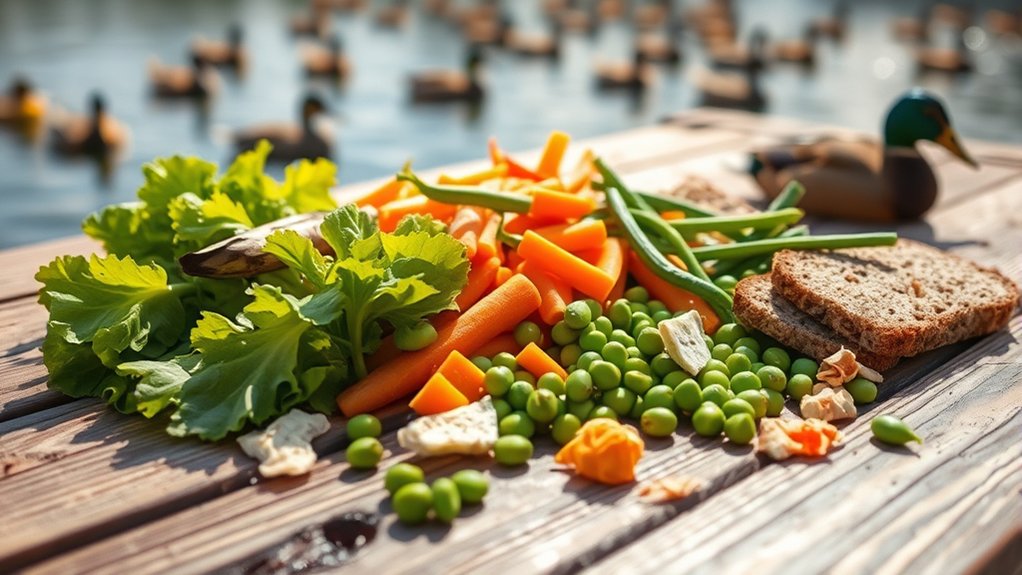
You should avoid feeding ducks bread since it lacks nutrition and harms their environment. Instead, offer fresh vegetables like peas, corn, and cucumbers, plus leafy greens such as kale and spinach. Safe fruits like apple slices and grapes in small pieces also work well.
Ducks benefit from protein sources like insects, worms, and mealworms, and enjoy aquatic plants like duckweed. Cooked rice, pasta, oats, and cracked corn make great energy-boosting options.
For more helpful tips, keep exploring ways to feed ducks responsibly.
Key Takeaways
- Ducks thrive on nutritious foods like leafy greens, peas, corn, cucumbers, and zucchini. These provide essential vitamins and minerals that keep them healthy.
- Cooked plain rice, pasta, cracked corn, oats, and birdseed offer healthy carbohydrates and fiber. These help fuel ducks with steady energy throughout the day.
- Natural protein sources such as insects, earthworms, and mealworms support muscle growth and overall duck health. They’re a great part of a balanced diet.
- Fresh, pesticide-free fruits like berries, grapes, and apple slices give antioxidants and hydration. Plus, they come in manageable pieces that ducks can easily eat.
- Aquatic plants such as duckweed, pondweed, and water lilies supply vitamins, minerals, fiber, and natural energy. These are perfect for ducks living near water.
Why Feeding Ducks Bread Is Harmful
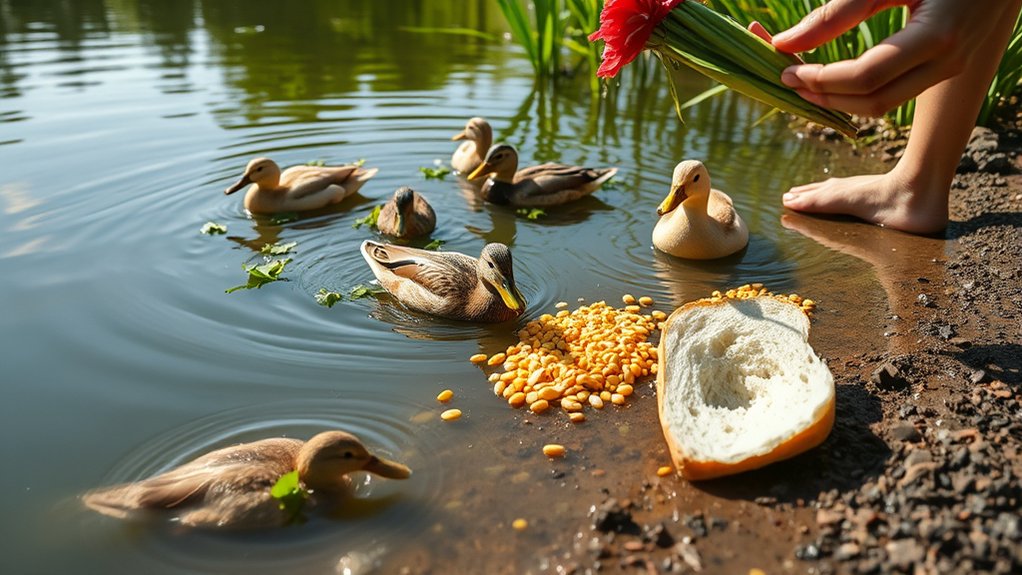
Although it might seem harmless, feeding ducks bread can actually cause them serious health problems. When you’re feeding ducks, bread offers little nutritional value and can lead to malnutrition. Ducks may fill up on bread and ignore healthier natural foods, which impacts their health over time.
Bread dangers don’t stop there. It often pollutes water, promoting harmful algae growth and spreading bacteria that can make ducks sick. You might not realize that uneaten bread also attracts pests like rats.
Feeding ducks bread encourages dependency on humans, reducing their ability to forage naturally. Instead of helping, you could unintentionally harm their environment and wellbeing. It’s best to avoid feeding ducks bread altogether.
If you want to support them, choose safe alternatives that provide real nutrients. Being mindful about what you feed ducks can make a big difference to their health and the ecosystem they live in. So, skip the bread and help keep ducks healthy.
Fresh Vegetables and Leafy Greens Ducks Love
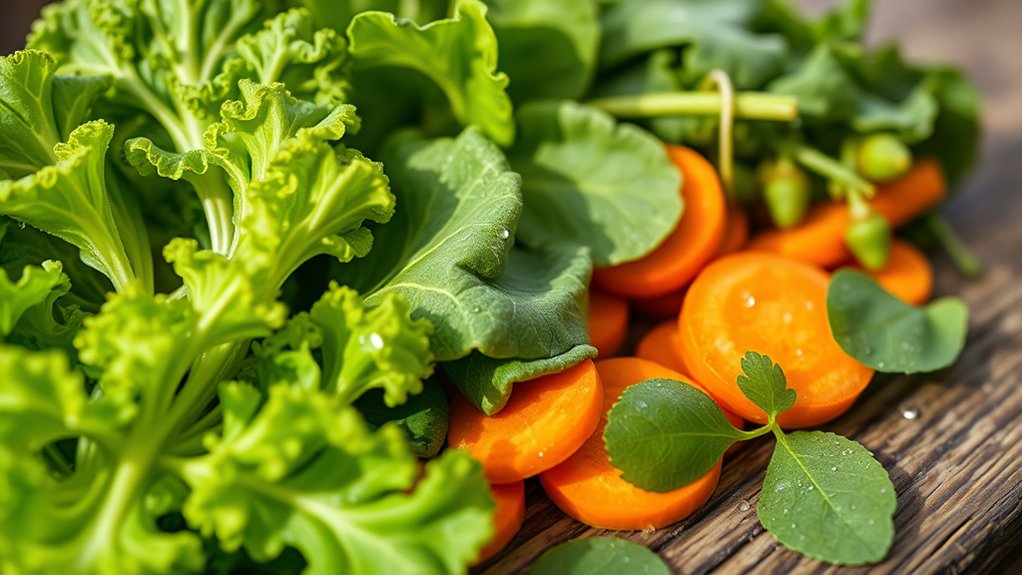
You’ll want to offer ducks fresh vegetables and leafy greens that are packed with essential nutrients to keep them healthy. Things like kale, spinach, and romaine lettuce are great options because they provide vitamins and minerals ducks really enjoy. Picking the right fresh veggies makes sure they get a balanced, natural diet.
Nutrient-Rich Leafy Greens
When feeding ducks, including nutrient-rich leafy greens in their diet gives them essential vitamins and minerals that support their health. These greens provide ducks with the energy and nutrients they need, especially during periods like duck migration when their bodies undergo intense physical demands.
Leafy greens also help prepare female ducks for nesting habits by boosting their overall well-being and supporting egg production. You’ll find that offering greens such as kale, spinach, and romaine lettuce can improve their immune system and promote healthy feathers.
Best Fresh Vegetable Choices
A variety of fresh vegetables can delight ducks while providing essential nutrients for their health. When choosing the best fresh vegetable choices, focus on options like peas, corn, cucumbers, and zucchini, which ducks love and easily digest.
Leafy greens such as kale and spinach also support their diet, especially during breeding habits when they need extra vitamins. These vegetables help maintain energy levels crucial for duck migration, ensuring ducks stay strong on their long journeys.
You’ll want to avoid feeding ducks anything processed or starchy, as it can disrupt their natural diet. By offering these fresh vegetables, you support their overall well-being and natural behaviors, helping them thrive through migration and breeding seasons with balanced nutrition.
Safe Fruits to Feed Ducks
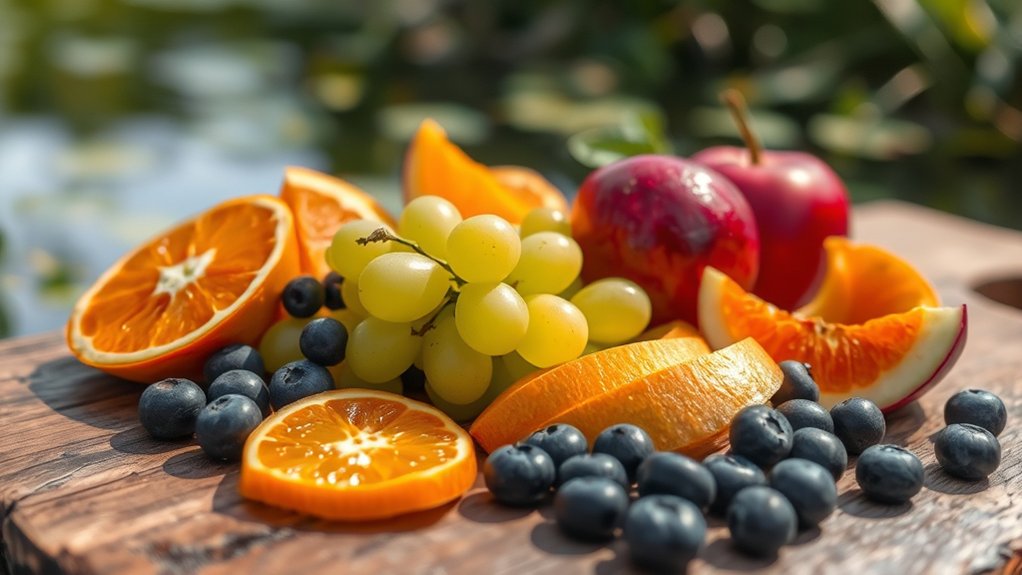
You can offer ducks several nutritious fruits that are both tasty and safe for them to eat. But it’s also important to know which fruits to avoid if you want to keep them healthy. So, let’s take a look at the best options and the ones you should skip.
Nutritious Duck-Friendly Fruits
Although ducks primarily eat grains and insects, they also enjoy fruits that provide essential vitamins and hydration. You can offer them nutritious options like berries, grapes, and apple slices, which support their overall health.
These fruits are rich in antioxidants and vitamins that help maintain vibrant feather coloration, vital during duck migration when energy demands increase. Feeding ducks such fruits can aid in strengthening their immune system and improving their stamina for long flights.
Remember to cut fruits into small, manageable pieces to prevent choking. By including these duck-friendly fruits in their diet, you contribute to their hydration and nutrient intake without disrupting their natural feeding habits.
Always choose fresh, pesticide-free fruits to guarantee their safety and well-being.
Fruits To Avoid
When feeding ducks fruits, it’s important to know which ones can harm their health despite seeming harmless. Some fruits to avoid include those containing seeds or pits that can be toxic or cause choking.
Toxic berries are especially dangerous and should never be given to ducks.
Here’s a quick guide to fruits you should avoid:
| Fruit | Reason to Avoid |
|---|---|
| Grapes | Can cause kidney issues |
| Cherry Pits | Contain cyanide |
| Wild Berries | Often toxic to ducks |
Steering clear of these fruits helps keep ducks safe and healthy. Always check what you’re feeding and stick to duck-safe options.
Insects and Worms: Essential Protein for Ducks
Because ducks need a high-protein diet to stay healthy and active, insects and worms provide an essential source of nutrition. When you offer insects and worms, you’re giving ducks a natural protein source that supports muscle development and overall vigor. These small creatures are rich in nutrients like amino acids and fats, which ducks can easily digest and use for energy.
You can encourage ducks to forage for insects and worms by maintaining a natural environment with moist soil and plants where these protein sources thrive. If you’re feeding ducks directly, mealworms or earthworms from a reputable supplier are excellent options. Avoid processed or artificial protein supplements, as insects and worms remain the most natural, balanced way to meet their dietary needs.
Including these protein sources in their diet helps keep ducks strong, active, and healthy throughout the year.
Aquatic Plants Ducks Eat for Health and Energy
If you want to support your ducks’ health and energy, including aquatic plants in their diet is a smart choice. Ducks naturally forage on a variety of aquatic plants that provide essential nutrients and hydration.
Aquatic plants like duckweed, pondweed, and especially water lilies offer vitamins, minerals, and fiber that aid digestion and boost overall vitality. Water lilies, in particular, have tender leaves and roots that ducks enjoy nibbling on, supplying antioxidants and energy.
Incorporating these plants into their environment encourages natural feeding behaviors and keeps them active. You can cultivate aquatic plants in ponds or provide them fresh to supplement their meals. Just guarantee the plants are free from pesticides and pollutants to keep your ducks healthy.
Best Grains and Seeds for Feeding Ducks
You’ll want to offer ducks grains and seeds that provide essential nutrients for their health. Popular options like corn, oats, and sunflower seeds are not only tasty but also safe for them to eat. Just remember to feed these in moderation, and avoid anything processed or salted. That way, you’re helping keep your feathered friends happy and healthy!
Nutritional Benefits of Grains
When feeding ducks, choosing the right grains and seeds can considerably boost their health and energy. Grain diversity plays a fundamental role in providing balanced nutrition.
Different grains offer varied nutritional content, including carbohydrates for energy, proteins for growth, and essential vitamins and minerals. For example, corn is rich in carbohydrates, while oats supply fiber and B vitamins.
Incorporating a mix of grains ensures ducks receive a wide range of nutrients, supporting their immune system and overall vitality. You’ll want to avoid relying on just one type of grain, as this limits the nutritional benefits.
Popular Seeds Ducks Enjoy
Although ducks can eat a variety of seeds, some stand out as favorites due to their taste and nutritional value. Sunflower seeds, for example, offer high protein and healthy fats that help ducks during duck migration, providing energy for their long flights.
Millet is another favorite; its small size makes it easy for ducks to pick up, and it supports healthy digestion. You’ll also find that cracked corn appeals to many ducks, supplying essential carbohydrates to fuel their activity.
Feeding ducks these popular seeds not only benefits the birds but also supports pond ecosystems by encouraging natural foraging behaviors. By offering these seeds, you help maintain a balanced diet for ducks, ensuring they stay healthy and active throughout their migratory journeys and time spent in local ponds.
Safe Feeding Practices
How can you guarantee that the grains and seeds you offer to ducks are both nutritious and safe? Start by choosing whole grains like cracked corn, oats, and barley, which provide essential nutrients without harming ducks. Avoid processed or salty snacks, as they upset their diet.
Practice proper feeding etiquette by offering food in moderation and scattering it to prevent overcrowding and aggression. Remember, seasonal feeding matters; during spring and summer, ducks naturally find abundant food, so limit your offerings to avoid dependency.
In colder months, small amounts of grains help sustain them when natural sources are scarce. Always feed ducks in clean, safe areas to reduce pollution and keep their habitat healthy. By following these safe feeding practices, you support ducks’ well-being and encourage natural behaviors.
How to Safely Feed Ducks Cooked Rice and Pasta
If you want to offer ducks cooked rice or pasta, make certain the grains are plain and fully cooked without any added salt, butter, or sauces. These additives can be harmful to ducks. When preparing these foods, follow simple cooking tips to guarantee the safest meal possible and consider ingredient substitutions if you want to vary their diet.
Here are some quick tips to help you safely feed ducks cooked rice and pasta:
- Use white or brown rice; avoid instant or flavored packets.
- Choose plain pasta shapes like elbows or shells; skip stuffed or seasoned varieties.
- Cook until soft but not mushy for easy digestion.
- Substitute with quinoa or barley occasionally for nutritional variety.
Healthier Alternatives to Bread for Ducks
Offering ducks cooked rice and pasta is a better choice than feeding them bread, which lacks proper nutrients and can harm their health. You want to support ducks’ well-being, especially during duck migration when they need energy to travel long distances.
Besides rice and pasta, consider healthier alternatives like cracked corn, oats, or birdseed. These provide essential nutrients and mimic what ducks naturally find in waterfowl habitats.
Avoid processed human snacks or anything high in salt and sugar, as they disrupt ducks’ digestion and can pollute their environment. Feeding ducks nutritious foods helps maintain their strength and supports the ecosystems they depend on.
When you choose better options, you contribute positively to conservation efforts and help ducks thrive throughout their migratory routes. Remember, your choices impact not just individual ducks but entire communities in wetlands and ponds, critical stops along their journey. So, ditch the bread and give ducks what they truly need.
Where to Find Natural Duck Food Near You
Wondering where you can find natural, nutritious food for ducks nearby? You don’t have to look far. Engaging in urban foraging lets you uncover edible plants and insects that ducks love. Plus, it supports wildlife conservation by providing food that’s part of their natural diet.
Parks, ponds, and green spaces often have an abundance of these resources.
Here are some places to check out:
- Local ponds and lakes, rich with aquatic plants and insects
- Community gardens, where leftover veggies or seeds might be available
- Wooded areas, where you can find berries and nuts ducks enjoy
- Riverbanks or wetlands, teeming with natural duck food sources
Tips for Feeding Ducks Responsibly and Safely
Although feeding ducks can be a fun and rewarding experience, you need to do it responsibly to protect their health and the environment. First, avoid feeding ducks bread, as it disrupts their natural feeding habits and can lead to malnutrition. Instead, offer healthy options like cracked corn, oats, or chopped vegetables.
Feed them in moderation to prevent over-reliance on human handouts, which can alter their natural foraging behavior. Be mindful of the location where you feed ducks. Choose spots that won’t disturb their habitat or cause overcrowding, supporting habitat preservation.
Don’t leave leftover food behind, as it can pollute waterways and attract pests. Also, avoid feeding near busy roads or areas with predators to keep ducks safe.
Frequently Asked Questions
Can Feeding Ducks Affect Their Migration Patterns?
Yes, feeding ducks can cause migration disruption because it alters their natural behaviors. When you feed them regularly, you influence their instinct to migrate on time, as they rely less on searching for natural food sources.
This feeding influence can make ducks stay in one area longer than they should, potentially affecting their health and survival. So, it’s best to avoid frequent feeding to prevent interfering with their natural migration patterns.
How Often Should I Feed Ducks in the Wild?
How often should you feed ducks in the wild? Ideally, limit your feeding frequency to once or twice a week. This helps prevent them from depending too much on handouts and encourages them to seek out their natural diet.
Overfeeding can disrupt their natural habits and health, so keep it occasional and moderate. Remember, supporting their natural foraging skills is best for their well-being and the ecosystem.
Are There Any Foods Ducks Should Avoid Completely?
Yes, you should avoid feeding ducks bread, junk food, and anything salty or sugary. These duck dietary restrictions exist because harmful food impacts can cause malnutrition, obesity, and even fatal diseases.
Human snacks disrupt their natural diet and can pollute waterways. Stick to natural foods like grains, peas, or duck pellets to keep them healthy. Remember, feeding them the wrong foods does more harm than good.
Can Ducks Eat Human Snacks Like Chips or Crackers?
You might think feeding ducks human snacks like chips or crackers is harmless, but it isn’t. These foods disrupt duck nutrition and don’t align with their natural feeding habits.
Chips and crackers are high in salt and unhealthy additives, which can harm ducks’ health and digestion. Instead, stick to appropriate foods like grains, peas, or chopped greens to support their well-being and maintain their natural diet balance.
What Is the Best Time of Day to Feed Ducks?
The best time to feed ducks is early morning or late afternoon. Sticking to consistent feeding schedules helps ducks expect meals, improving their overall health.
Nutritional timing matters because ducks digest food better during cooler parts of the day, reducing stress on their system. Feeding during these times also avoids the midday heat, which can affect their appetite.
Conclusion
Feeding ducks might seem simple, but it’s important to choose the right foods. Did you know that over 90% of wild ducks’ diets come from natural sources like plants and insects, not bread?
By offering fresh veggies, safe fruits, and protein-rich insects, you’re supporting their health and local ecosystems. So next time you visit a pond, skip the bread and give ducks the nutritious treats they truly need to thrive.
Remember, feeding ducks the right foods helps keep them healthy and benefits the environment. Always aim to provide the best foods good for ducks when you’re near their habitats.