Should You Feed Birds?
Many bird lovers want to help their feathered friends but aren’t sure how to do it right. You’re not alone—many people struggle with choosing the best foods and keeping feeders clean to truly support birds.
It can feel overwhelming to figure out what’s safe and effective, especially with so much conflicting advice out there.
You should feed birds if you choose the right foods, like black oil sunflower seeds and suet, and maintain clean, safe feeders to help them survive harsh winters and migration.
Feeding supports their health but avoid processed or moldy foods that harm birds.
Be mindful that feeding can change natural behaviors and ecosystems.
If you want to understand the best feeding times, how to care for feeders, and alternatives to direct feeding, there’s much more to investigate.
Key Takeaways
- Feeding birds supports survival during harsh seasons by providing reliable, nutritious food when natural sources are scarce.
- Offering appropriate foods like sunflower seeds and suet helps maintain bird health and supports nesting and migration.
- Improper feeding with processed or moldy foods risks bird health, disrupting natural behaviors and increasing predator threats.
- Responsible feeding requires clean feeders, safe placement, and awareness of potential behavioral and ecological impacts.
- Supporting wildlife without feeding is possible through habitat creation, native plants, water sources, and pesticide avoidance.
Why People Feed Birds: The Appeal of Backyard Bird Feeding
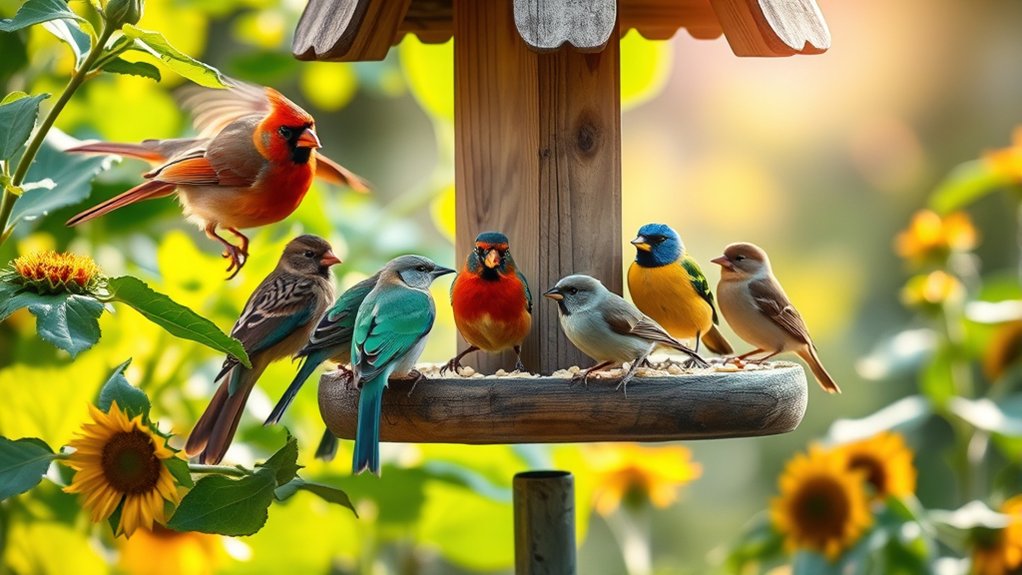
Although you might think feeding birds is just a simple hobby, many people find it deeply rewarding because it brings nature closer to home and offers a peaceful way to connect with wildlife. When you feed birds, you get a front-row seat to their fascinating behaviors, especially during bird migration seasons when flocks pass through your area.
Watching these travelers rest and refuel right outside your window can be truly engaging. You also learn about their nesting habits, observing how different species prepare for and care for their young. This insight helps you appreciate the challenges birds face and encourages you to create a safe environment for them.
Feeding birds isn’t just about providing food; it’s about fostering a deeper understanding of their lives and rhythms. By inviting them into your backyard, you become part of a natural cycle that’s both educational and soothing.
What Are the Most Bird-Friendly Foods to Offer?
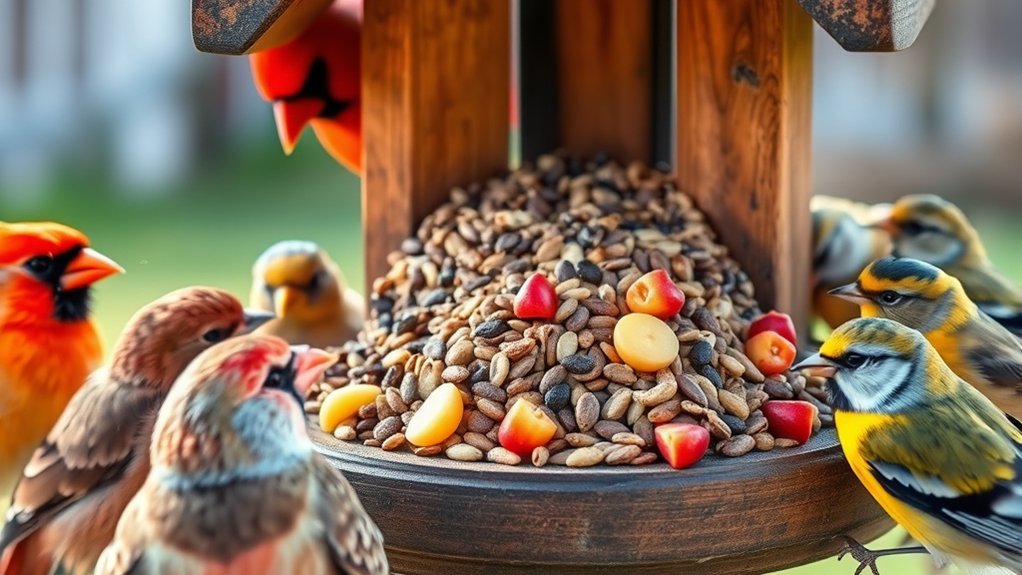
When you choose what to feed birds, selecting nutritious and safe options makes all the difference in attracting a variety of species to your yard. Different birds have unique dietary needs that align with their bird migration patterns and nesting habits. Offering the right foods supports them during critical times.
Here are the most bird-friendly foods to offer:
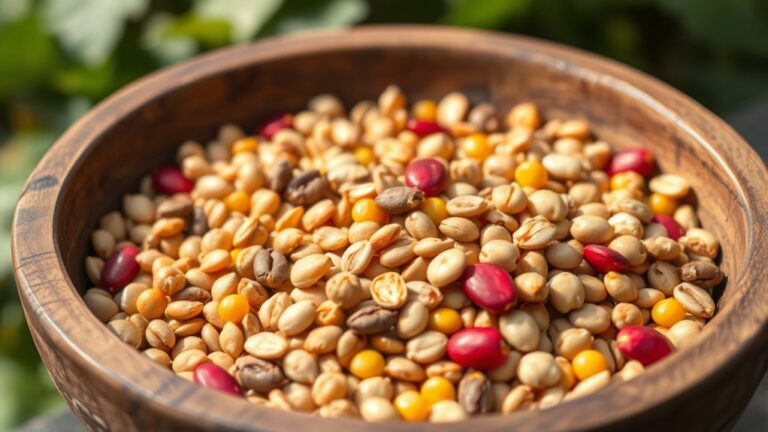
- Black oil sunflower seeds. They’re high in fat and protein, perfect for energy during migration.
- Nyjer (thistle) seeds. Finches especially favor these during nesting season.
- Suet cakes. They provide essential fats for insect-eating birds, especially in cooler months.
- Mealworms. A great protein source that supports growth of chicks during nesting.
Avoid bread and processed foods because they can harm birds. By tailoring your offerings, you help birds thrive through migration and nesting periods. This way, your yard becomes a safe haven they’ll return to year after year.
When Is the Best Time to Feed Birds?

You’ll see the most bird activity if you feed them at certain times of the day and during different seasons. Morning and evening each have their own special benefits. Plus, the weather plays a role in when birds are most likely to drop by. So, let’s take a closer look at how timing can make your feeding efforts more successful.
Seasonal Feeding Benefits
Since birds’ food sources change with the seasons, knowing the best times to feed them can make a big difference in their health and survival. You can support birds during critical times by focusing on seasonal feeding benefits like:
- Early spring: Help birds recovering from seasonal migration by providing high-energy foods.
- Late spring: Offer protein-rich foods to support nest protection and feeding growing chicks.
- Summer: Provide fresh water and supplemental food during dry spells or heatwaves.
- Fall and winter: Supply calorie-dense seeds and suet to help birds build fat reserves for cold months.
Morning Versus Evening
Why does the time of day matter for feeding birds? Feeding in the morning is generally best because birds need energy after overnight fasting, especially during bird migration when they require extra fuel. Early feeding helps them prepare for long flights.
Also, urban noise tends to increase as the day progresses, which can disturb birds and reduce their feeding activity. Evening feeding might seem convenient, but many birds avoid feeders later in the day to stay alert for predators and conserve energy overnight.
If you feed birds in the morning, you support their natural routines and provide food when they need it most. So, aim to fill feeders early to help local and migrating birds thrive in both urban and natural environments.
Weather Considerations
Although birds can adapt to various weather conditions, feeding them during mild, dry periods helps guarantee they get the energy they need without facing extra stress. Paying attention to weather patterns and seasonal shifts is essential for supporting your local birds effectively.
Here are four tips to guide you:
- Feed birds during calm weather to prevent food from being spoiled or washed away.
- Avoid feeding in extreme heat or cold, as birds rely on natural foraging when conditions are harsh.
- Provide extra food during seasonal shifts, especially in late fall and early spring when natural resources dwindle.
- After storms, replenish feeders quickly since birds expend more energy recovering.
How to Keep Bird Feeders Clean and Safe
To keep your bird feeders safe, you’ll want to clean them regularly and pick the right feeding materials. This is important because using the right supplies helps stop mold from growing and keeps the birds healthy. So, let’s talk about how you can maintain a safe feeding environment for your feathered friends.
Regular Cleaning Schedule
Because bird feeders can quickly accumulate mold, bacteria, and old seeds, you should clean them regularly to keep your feathered visitors healthy. Not only does this prevent illness, but it also supports bird migration by ensuring clean, safe food sources along their routes.
To maintain a regular cleaning schedule, follow these steps:
- Clean feeders every two weeks, or weekly during wet weather.
- Use a solution of one part bleach to nine parts water to disinfect.
- Rinse thoroughly and allow feeders to dry completely before refilling.
- Position feeders where you can maintain predator awareness, reducing stress for birds.
Safe Feeding Materials
How do you choose the best materials to keep your bird feeders clean and safe? Start with non-toxic, easy-to-clean materials like stainless steel, glass, or durable plastics. These resist mold and bacteria, which can harm birds during their migration or nesting periods.
Avoid porous materials that trap moisture, as they encourage harmful growth. Since birds’ nesting habits vary, your feeder design should prevent spills and contamination, reducing the risk of disease transmission.
Regularly inspect feeders for cracks or wear that can harbor pathogens. By using safe materials and maintaining cleanliness, you help protect birds throughout their seasonal journeys and nesting cycles. This not only supports their health but also ensures your feeding efforts encourage safe, healthy visits for local and migrating bird populations.
Preventing Mold Growth
Although bird feeders attract a variety of feathered visitors, they also create ideal conditions for mold growth if not cleaned regularly. Mold prevention is essential to keep birds healthy and feeders safe. You can follow these steps:
- Clean feeders every two weeks with hot, soapy water, scrubbing all surfaces.
- Rinse thoroughly and dry feeders completely to prevent moisture buildup.
- Remove and dispose of any moldy or damp seeds promptly to avoid spreading mold.
- Use composting techniques to recycle old, moldy seeds safely instead of discarding them in regular trash.
How Feeding Birds Changes Their Natural Behavior
When you regularly feed birds, you unintentionally alter their natural behaviors. Birds may rely less on foraging and more on the easy food source you provide, which can disrupt their instinctual habits. Urban migration patterns can shift as birds are drawn to areas with consistent feeding rather than following traditional seasonal routes. This change affects ecosystems by concentrating bird populations in human-populated zones.
Feeding can also influence nesting behavior. Birds might choose nesting sites closer to feeding stations, altering their natural preferences and sometimes nesting earlier or later than usual. These shifts can impact breeding success and the timing of raising chicks.
While feeding birds feels rewarding, it’s important to understand that your actions can reshape their behaviors, potentially affecting survival skills and ecosystem balance. You can support birds best by being mindful of these changes and providing food in ways that encourage natural habits.
What Are the Risks of Feeding Birds the Wrong Foods?
Feeding birds can change their behavior, but what you offer them matters just as much. Giving birds the wrong foods can disrupt their natural routines, including bird migration and nesting habits.
Feeding birds alters their behavior, so choosing the right foods is essential to protect their natural routines.
Here’s what you risk when you feed birds inappropriate foods:
- Poor Nutrition: Processed or salty foods can weaken birds, affecting their ability to migrate and reproduce effectively.
- Dependency: Birds may rely too much on easy food sources, which can disrupt their natural foraging instincts and migration timing.
- Illness: Moldy or spoiled food can cause sickness, impacting healthy nesting habits and chick survival.
- Attracting Predators: Certain foods attract unwanted predators, putting nesting birds at risk.
How Bird Feeding Affects Local Ecosystems
Because you provide food regularly, local bird populations can shift in unexpected ways, affecting the entire ecosystem. When birds gather frequently at feeders, some species may outcompete others, altering diversity.
You might notice that birds become less cautious, reducing their natural predator awareness since your feeding spot feels safe even amid urban noise. This change can increase their vulnerability to predators in noisy areas where vigilance is harder.
Moreover, concentrated feeding can attract more predators, impacting not only birds but other wildlife nearby. You should also be aware that feeding can disrupt natural foraging behaviors, making birds reliant on your offerings.
This dependency affects how they interact with the environment and other species. Ultimately, feeding birds isn’t just about helping them; it influences the balance of your local ecosystem. Being mindful of these effects helps you support birds responsibly while maintaining ecological health.
How Bird Feeding Helps With Conservation
When you feed birds, you’re actually giving local bird populations a helping hand by providing them with reliable food sources. This can make a big difference in keeping their numbers healthy and even encourages them to breed right in your neighborhood. Plus, by doing this, you’re also helping to stabilize their habitat, which is great news for the whole ecosystem.
Supporting Local Bird Populations
Although you might think bird feeding is just a simple hobby, it plays an essential role in supporting local bird populations. Urban development often reduces natural food sources and safe nesting areas, making your help vital.
By feeding birds, you can provide reliable nutrition during scarce seasons. You also help young birds survive when natural food is limited. Plus, feeding reduces stress caused by high predator presence by offering easy access to food.
It supports species struggling to adapt to changing environments. Your feeding efforts create a small sanctuary amid urban sprawl, giving birds a better chance to thrive.
While it’s not a complete solution, your role directly boosts local bird survival and helps maintain biodiversity in your area. Keep feeding thoughtfully to make a real difference.
Enhancing Habitat Stability
Feeding birds not only supports individual animals but also strengthens the overall stability of their habitats. When you provide a reliable food source, you help birds cope with challenges caused by habitat fragmentation, which often isolates populations and reduces available resources.
By supplementing their diet, you encourage birds to stay in one area, promoting local biodiversity and ecosystem balance. However, you should be mindful of predator attraction. Leaving feeders in open spaces or unclean conditions can lure unwanted animals that threaten birds.
To minimize this risk, place feeders near natural cover and keep them well-maintained. Your thoughtful feeding practices contribute to a more stable environment, helping bird communities thrive despite human-driven habitat changes.
Alternatives to Direct Bird Feeding for Supporting Wildlife
If you want to support birds without offering food directly, there are several effective alternatives you can try. These methods create natural environments that encourage wildlife to thrive on their own.
- Establish wildlife corridors by connecting green spaces. This allows birds to move safely between habitats.
- Engage in urban planting with native trees and shrubs. They provide shelter, nesting sites, and natural food sources.
- Create water features like small ponds or birdbaths. These supply fresh water, which is essential for bird health.
- Avoid using pesticides in your garden. This protects the insects birds rely on for protein.
Should You Feed Birds? Pros and Cons?
Supporting birds through natural habitats offers many benefits, but you might still wonder whether you should provide food directly. Feeding birds can help them survive harsh conditions and urban environments where natural food is scarce.
Supporting birds by feeding them can aid survival when natural food is limited, especially in urban areas.
However, you should consider the downsides. Urban noise often distracts birds during feeding, making them vulnerable to predator threats like cats or hawks lurking nearby. Feeding birds in your yard might also encourage dependence on human-provided food, reducing their natural foraging skills.
On the other hand, when done responsibly, feeding can support bird populations, especially during winter or migration. You can minimize risks by choosing safe feeding spots, keeping feeders clean, and offering appropriate food.
Ultimately, feeding birds requires balance. Support them without disrupting their natural behaviors or increasing dangers. By weighing these pros and cons, you can decide if feeding birds fits your lifestyle and local environment.
Frequently Asked Questions
What Types of Birds Are Attracted to Different Feeder Designs?
Different bird species preferences depend heavily on feeder design impact. If you use tube feeders, you’ll attract finches and chickadees, while platform feeders bring in cardinals and jays.
Suet feeders draw woodpeckers and nuthatches, and hummingbird feeders lure those tiny nectar lovers. You should match your feeder design to the bird species preferences you want, ensuring you provide the right food and feeder style to attract your favorite birds effectively.
How Can I Identify if a Bird Is Injured or Sick?
You can spot bird illness signs by watching for unusual behavior like lethargy, fluffed feathers, or difficulty flying. Injury identification includes visible wounds, blood, or a limp.
If a bird’s eyes look dull or it’s standing awkwardly, that’s another red flag. You’ll also notice if it’s not eating or drinking. When you see these signs, it’s best to contact a wildlife rehabilitator for help.
What Materials Are Best for Building DIY Bird Feeders?
You’ll want to use materials like untreated wood, recycled plastic bottles, or pine cones for your DIY bird feeders. These are durable and safe for birds.
Make sure you consider bird seed preferences. Different birds like different seeds, so tailor your feeder accordingly.
Keep up with DIY feeder maintenance by cleaning it regularly to prevent mold and pests. This helps keep birds healthy and encourages them to visit your feeder often.
How Do Weather Conditions Affect Bird Feeding Habits?
Weather conditions directly impact bird feeding habits by influencing their migration patterns and seasonal feeding needs. When temperatures drop, you’ll notice birds eating more to build energy reserves.
During migration, they rely heavily on food sources to fuel long flights. You’ll find that seasonal feeding shifts as birds adjust to availability. So offering a variety of foods during harsh weather helps them thrive when natural resources are scarce.
Can Feeding Birds Help With Pest Control in Gardens?
Yes, feeding birds can help with pest control in gardens by encouraging local bird populations to stay rather than migrate. When you provide food, you support their energy needs, so they’re more likely to stick around and eat harmful insects, offering natural pest deterrence.
This reduces the need for chemicals, creating a healthier garden ecosystem. Just make sure you feed them responsibly to maintain balance and avoid attracting unwanted pests.
Conclusion
Feeding birds can be a joyful way to connect with nature, but have you thought about the bigger picture? While offering seeds and suet brings colorful visitors to your yard, it can also alter their natural habits and impact local ecosystems.
You’ll want to weigh the benefits of helping conservation against potential downsides. So, before you fill that feeder, consider if feeding birds is truly the best way to support wildlife in your area.