Where Do Mallard Ducks Live: 5 Places
If you’ve ever tried to spot mallard ducks in the wild, you know it can be tricky to figure out exactly where they like to hang out. You’re not alone—many people struggle with finding the best places to see these beautiful birds. Understanding where mallard ducks live can make all the difference in your birdwatching adventures.
You’ll find mallard ducks living in five main places. They thrive in freshwater wetlands where they nest in dense vegetation near water. Coastal marshes and estuaries offer rich food and shelter, perfect for resting during migration.
Forested and mountain lakes provide calm waters with abundant insects. They also flock to agricultural fields for leftover grains, and urban parks give safe habitats and food. Keep exploring to uncover more about how these adaptable ducks live and thrive.
Key Takeaways
- Mallard ducks primarily live in freshwater wetlands with dense vegetation for nesting and shallow water for foraging.
- They inhabit coastal marshes and estuaries, utilizing rich food sources and nesting in dense marsh vegetation.
- Forested and mountain lakes provide cool, calm waters and abundant insects, ideal for nesting and feeding.
- Agricultural fields attract mallards during planting and harvest seasons, offering leftover grains and insects for food.
- Urban parks and city ponds support mallards with safe nesting spots, diverse food, and calm water bodies.
Mallard Ducks in Freshwater Wetlands

Although mallard ducks can live in various habitats, they thrive best in freshwater wetlands. When you observe these ducks, you’ll notice their migration patterns are closely linked to the availability of these wetlands.
As seasons change, mallards migrate to find ideal breeding sites and food sources, often traveling thousands of miles. Freshwater wetlands provide the perfect environment for their breeding behaviors; you’ll see females building nests hidden in dense vegetation near water.
These areas offer abundant food and shelter for ducklings, increasing their survival chances. You’ll also notice that mallards prefer wetlands with shallow water where they can dabble and forage easily.
Mallard Ducks in Coastal Marshes and Estuaries

When you investigate coastal marshes and estuaries, you’ll find mallard ducks taking full advantage of these rich environments. These areas offer abundant food and shelter, which are vital during their migration.
Mallard migration patterns often lead them to these coastal zones where they can rest and refuel. You’ll notice mallard breeding habits adapt here too, as females nest in dense marsh vegetation that keeps them safe from predators.
| Aspect | Coastal Marshes & Estuaries |
|---|---|
| Food Availability | High—fish, aquatic plants, insects |
| Nesting Sites | Dense reeds and grasses |
| Migration Stopover | Common resting spot |
| Breeding Season Timing | Early spring to summer |
| Predation Risks | Moderate, protected by vegetation |
Mallard Ducks in Forested and Mountain Lakes
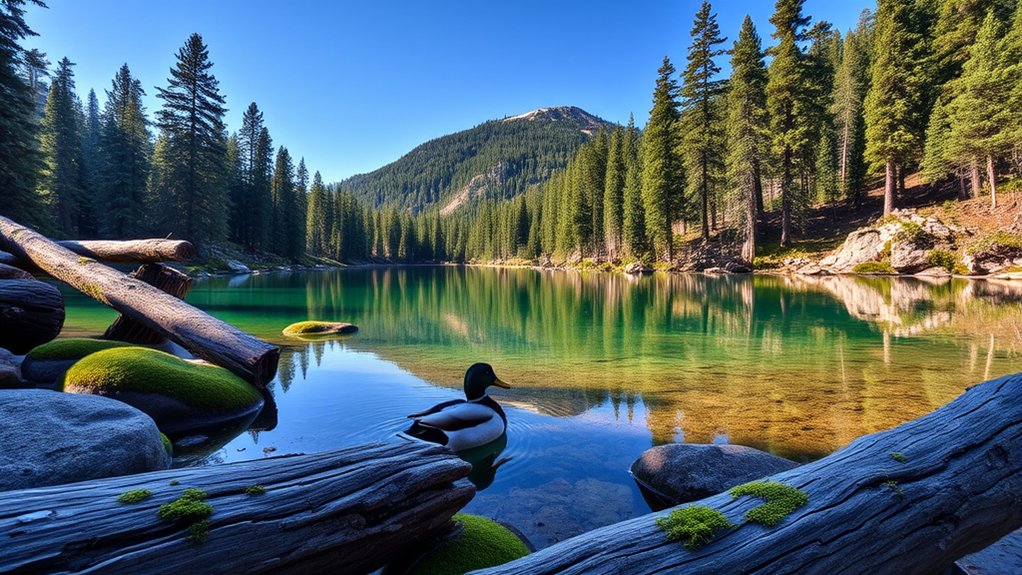
How do mallard ducks thrive in the quieter, cooler environments of forested and mountain lakes? You’ll find that these ducks adapt by relying on traditional migration patterns, moving to lower elevations or warmer areas during harsh winters. Their nesting behaviors also adjust to the dense vegetation surrounding these lakes, where they build concealed nests close to water. This protection helps reduce predation risks and supports successful breeding.
When you observe mallards here, you’ll notice they take advantage of the abundant insect life and aquatic plants unique to these habitats. The cooler temperatures and calm waters suit their needs for feeding and resting. You can often spot them dabbling near the shorelines, making use of the rich food sources. So, if you’re in a forested or mountainous region, look for mallards near clear, freshwater lakes where their traditional migration and nesting behaviors keep their populations thriving.
Mallard Ducks in Agricultural Fields
Because agricultural fields offer abundant food and open space, mallard ducks often flock there, especially during planting and harvest seasons. As you observe them, you’ll notice these fields provide ideal feeding grounds aligned with mallard migration patterns, where ducks stop to refuel.
Their diet preferences include leftover grains, seeds, and insects found in the soil, making crops like corn, wheat, and soybeans irresistible. You’ll see mallards dabbling in shallow irrigation ditches or puddles, taking advantage of both water and food sources.
These open spaces also allow you to spot large groups resting between flights. However, the presence of machinery and human activity means mallards must remain vigilant.
Understanding their habits in agricultural fields helps you appreciate how these ducks adapt to changing environments during migration, balancing safety with the need to feed efficiently before continuing their journey.
Mallard Ducks in Urban Parks and City Ponds
Agricultural fields provide plenty of food, but mallard ducks also thrive in urban parks and city ponds where water is plentiful and human activity is constant. When you visit these urban park ecosystems, you’ll notice how city pond habitats offer mallards safe nesting areas and abundant food sources. You’ll often see them paddling calmly, adapting well to the noise and bustle around them.
Feeding on insects, plants, and small fish, mallards make urban parks their home despite the challenges of city life.
In these settings, you might observe:
- Ducks resting on pond edges while joggers pass by
- Families feeding them breadcrumbs on grassy banks
- Nesting spots hidden among reeds and shrubs
- Ducks preening under shaded trees
- Young ducklings following their mothers across the water
Frequently Asked Questions
How Long Do Mallard Ducks Typically Live?
Mallard ducks typically live around 5 to 10 years in the wild. If you’re observing Mallard breeding, you’ll notice their habitat plays a big role in their lifespan.
In safe Mallard habitats with plenty of food and fewer predators, they tend to live longer. You’d also see that harsh conditions or habitat loss can shorten their lives. So, taking care of their environment helps Mallards thrive and live full lives.
What Do Mallard Ducks Eat During Winter?
You might be surprised to know mallard ducks can eat up to 10% of their body weight daily during winter feeding. When food’s scarce, their dietary habits shift to include seeds, aquatic plants, and even small invertebrates under ice.
You’ll notice they often forage in shallow waters or mudflats, adapting to colder months by seeking out whatever sustenance they can find to stay energized and survive the harsh conditions.
How Do Mallard Ducks Migrate?
Mallard ducks migrate by following their habitat preferences, moving from breeding grounds to warmer areas during colder months. You’ll notice they time their migration to align with breeding behaviors, ensuring they return to suitable wetlands and ponds for nesting.
They fly in flocks, often at night, using landmarks and the Earth’s magnetic field to navigate. This helps you understand their seasonal movement and how they adapt to changing environments.
What Predators Threaten Mallard Ducks?
Predators lurk like shadows in the mallard’s world, constantly testing their duck behavior and adaptability. Foxes, raccoons, and snapping turtles often target eggs or ducklings, while hawks and eagles swoop down on adults.
Your mallard’s survival depends on keen senses and quick moves within habitat diversity, from wetlands to urban ponds. You’ll notice they stay alert, blending into their environment, always prepared to flee those who see them as dinner.
How Do Mallard Ducks Care for Their Ducklings?
You’ll notice mallard ducks show strong parental behavior by leading their ducklings to water soon after hatching. They protect their young from predators and guide them to food sources, ensuring proper duckling development.
The mother keeps them warm and teaches essential survival skills. You’ll see her constantly attentive, helping the ducklings grow healthy and independent through her care and guidance.
Conclusion
Now you know where mallard ducks live in freshwater wetlands, coastal marshes, and forested mountain lakes. You can also spot them in agricultural fields and urban parks with city ponds.
Whether you’re exploring nature, visiting the coast, hiking mountains, farming the land, or strolling through the city, you’ll find mallards nearby. They adapt, thrive, and bring life wherever they go.
Keep watching, keep learning, and keep enjoying these beautiful ducks wherever mallard ducks live.