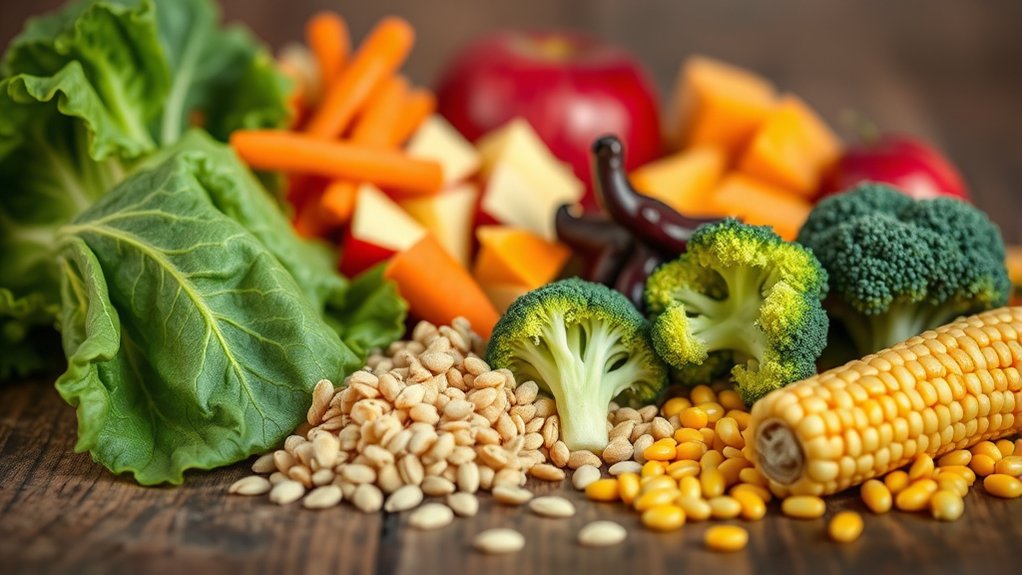
10 Essential Foods Budgies Should Eat
Finding the right diet for your budgie can feel overwhelming—you’re not alone. Many bird owners struggle to balance nutrition with variety, wanting to keep their feathered friend both healthy and happy.
If you’ve ever wondered what foods are truly essential for your budgie’s well-being, this guide is here to help.
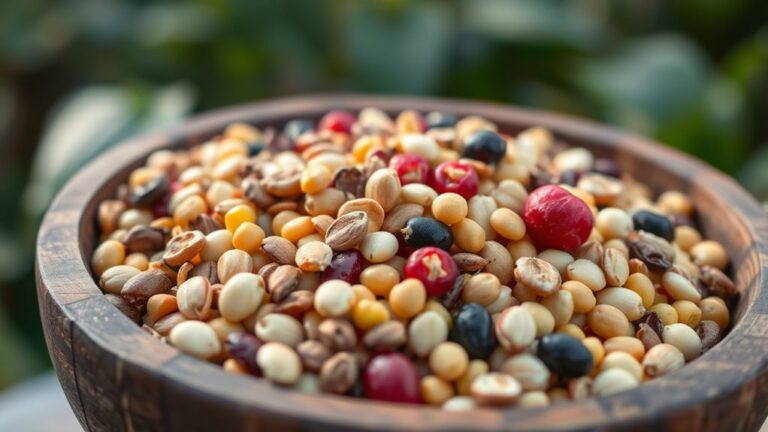
To keep your budgie healthy and happy, feed it a mix of high-quality pellets, a variety of seeds, fresh leafy greens, colorful veggies, and safe fruits.
Add protein sources like cooked eggs or legumes, plus sprouted seeds for extra nutrients.
Don’t forget calcium-rich foods like cuttlebone or leafy greens to support bones and beak health.
Offering this balanced variety supports their natural foraging and liveliness.
There’s much more to investigate about building the perfect budgie diet.
Key Takeaways
- Provide a balanced diet including high-quality pellets, fresh fruits, vegetables, and a variety of seeds for complete nutrition.
- Include leafy greens like spinach and kale daily for vitamins A, C, K, and calcium. These support digestion and bone health.
- Offer protein sources such as cooked eggs, legumes, and sprouted seeds for essential amino acids and growth maintenance.
- Use cuttlebones, mineral blocks, and calcium-rich foods to promote beak health and strong bones.
- Introduce pellets gradually, rotate foods regularly, and always provide fresh water to keep your budgie healthy and interested.
Budgie Dietary Needs: What They Really Require
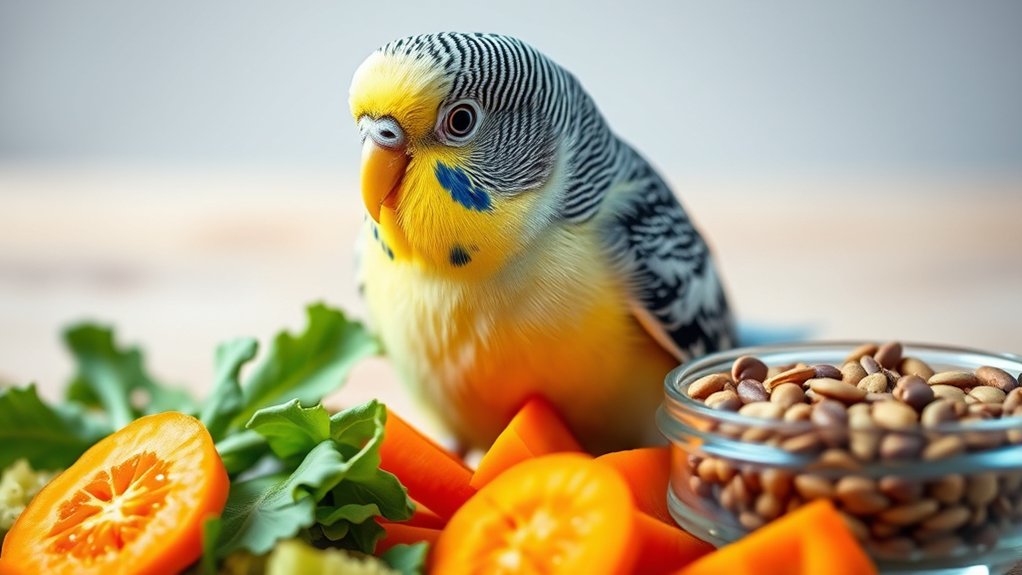
Although budgies are small, their dietary needs are specific and important for their health. You need to offer a balanced diet that includes fresh fruits, vegetables, and high-quality pellets to meet their nutritional requirements. Don’t forget, providing a variety of foods keeps your budgie interested and nourished.
Budgies need a balanced diet with fruits, vegetables, and quality pellets to stay healthy and engaged.
Along with diet, bird cage accessories like cuttlebones and mineral blocks play a vital role in supporting calcium intake and beak health. These help with parakeet grooming by allowing your budgie to naturally trim its beak, preventing overgrowth.
You should also make sure fresh water is always available and clean the cage regularly to maintain a healthy environment. Remember, a well-fed budgie with proper grooming and the right cage setup will be more active and happy.
Meeting these dietary needs isn’t just about food; it’s about creating a supportive habitat that encourages your budgie’s overall well-being.
Why Quality Budgie Seeds Alone Aren’t Enough
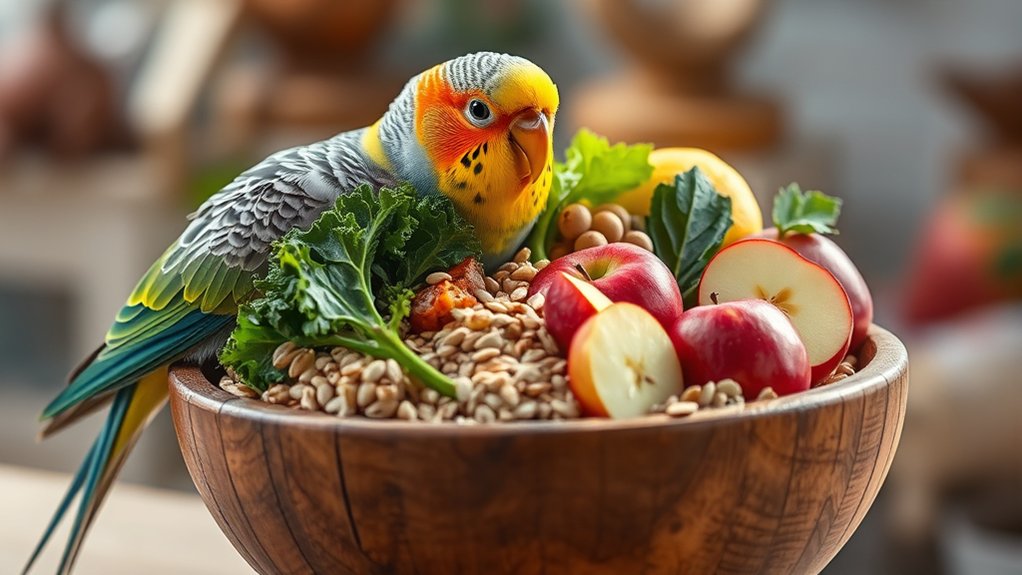
While quality budgie seeds provide essential nutrients, relying on them alone won’t meet all your bird’s dietary needs. Even the best seed quality can’t supply every vitamin and mineral budgies require.
Seed variety matters too. Feeding only one type limits nutrient intake and can lead to deficiencies. Budgies need a mix of seeds, fresh fruits, vegetables, and other foods to thrive.
Overdependence on seeds can cause obesity and malnutrition, impacting their health and happiness.
Here’s a quick look at what seed quality and variety offer versus what they lack:
| Aspect | Seed Variety | Seed Quality |
|---|---|---|
| Nutrient Range | Limited to specific nutrients | High in energy, some vitamins |
| Health Impact | Risk of imbalance if limited | Can spoil, losing nutrients |
| Dietary Role | Part of a balanced diet | Foundation but not complete |
| Deficiency Risk | High if no other foods included | Reduced with fresh, varied diet |
| Bird’s Benefit | Encourages natural foraging | Supports energy needs |
To keep your budgie healthy, don’t depend solely on seeds. Mix up their diet for complete nutrition.
The Role of Pellets in a Balanced Budgie Diet
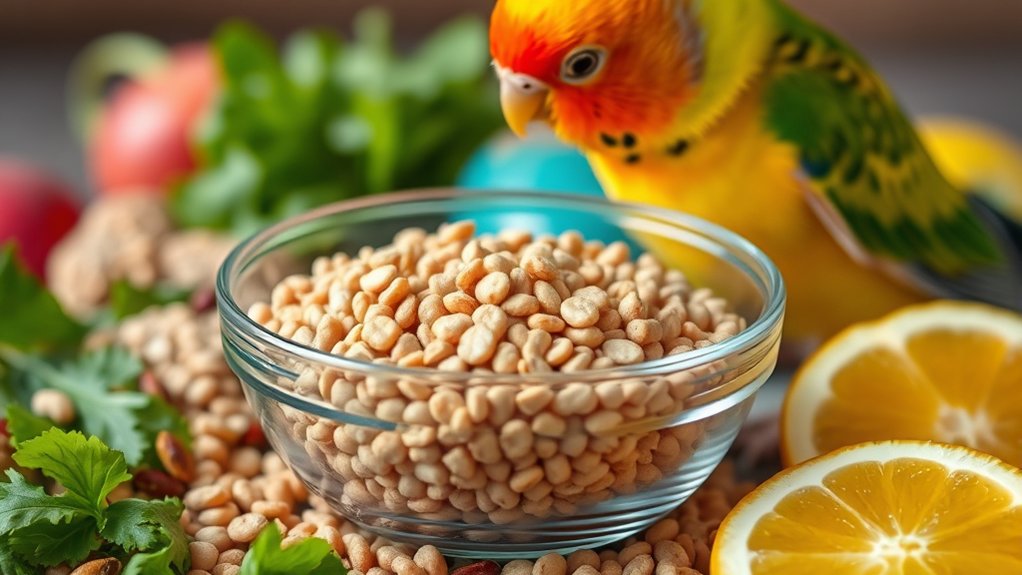
You’ll find that pellets offer a well-rounded mix of nutrients your budgie needs every day. When you start giving pellets, it’s best to introduce them gradually. This way, your bird can adjust without feeling stressed or wasting food. So, let’s take a closer look at how to add pellets safely and why they’re such a smart choice for your budgie’s diet.
Nutritional Benefits of Pellets
Because pellets are specifically formulated to provide balanced nutrition, they play a crucial role in your budgie’s diet. Pellets contain essential vitamins and minerals that support bone health, guaranteeing your bird’s skeleton remains strong and resilient.
They also include nutrients like beta-carotene and vitamin E, which boost feather coloration, helping your budgie maintain vibrant, attractive plumage. Unlike seeds alone, pellets offer a consistent blend of proteins, fats, and carbohydrates, preventing nutritional gaps.
Incorporating Pellets Safely
How can you introduce pellets into your budgie’s diet without causing digestive upset or rejection? Start slowly and monitor your bird’s response to make the shift easier. Follow these steps:
- Mix a small amount of pellets with seeds and gradually increase the pellet ratio over two weeks.
- Offer pellets fresh daily, and keep the cage very clean to prevent mold and bacteria growth.
- Rotate bird toys regularly to keep things safe and stimulate your budgie’s interest in feeding areas.
- Watch your budgie’s droppings and behavior for any signs of digestive upset or refusal, and adjust as needed.
Fresh Vegetables Budgies Should Eat
You should definitely include fresh vegetables in your budgie’s diet to boost its health and energy. Leafy greens are great because they offer essential vitamins. Plus, colorful veggies add variety and important nutrients. So, let’s take a look at which fresh vegetables your budgie will enjoy the most.
Leafy Greens Benefits
When you include leafy greens in your budgie’s diet, you provide essential vitamins and minerals that support their overall health. Leafy greens give your bird a crucial vitamin boost, enhancing immunity and energy. Here’s why you should add them regularly:
- Rich in Vitamins A, C, and K, leafy greens improve your budgie’s vision and blood clotting.
- They supply calcium, which strengthens bones and supports muscle function.
- The fiber content aids digestion and keeps your budgie’s gut healthy.
- Antioxidants in leafy greens combat free radicals, promoting longevity.
Colorful Veggies Variety
Leafy greens provide your budgie with essential nutrients, but adding a variety of colorful vegetables can take their diet to the next level. Colorful veggies like bell peppers, carrots, and sweet potatoes offer a range of vitamins and antioxidants that support your budgie’s health.
Including reds, yellows, and oranges not only boosts nutrition but also makes mealtime visually stimulating. You should focus on food presentation by chopping veggies into small, manageable pieces and arranging them attractively in the cage. This encourages your budgie to investigate different textures and flavors.
Remember to wash all veggies thoroughly and serve them fresh daily. Offering a vibrant mix of colorful veggies keeps your budgie engaged and ensures they receive a balanced, nutrient-rich diet essential for their wellbeing.
Herbs and Greens That Boost Budgie Health
Although budgies enjoy a variety of seeds, incorporating fresh herbs and greens into their diet provides essential vitamins and minerals that support their overall health. These natural additions act as herbal remedies, promoting wellness and aiding in feather conditioning.
To increase your budgie’s vigor, consider including these greens:
- Parsley Rich in vitamins A and C, it supports immune function and bright feathers.
- Dandelion Greens Packed with calcium and antioxidants, perfect for bone health.
- Basil Contains natural antibacterial properties and enhances digestion.
- Spinach Offers iron and fiber but feed in moderation due to oxalates.
Fruits That Boost Budgie Health
Since budgies thrive on variety, adding fruits to their diet provides essential vitamins and natural sugars that boost energy and overall health. You can offer small pieces of apples, pears, berries, or melons. Just make sure to remove seeds and pits, as they can be harmful. These fruits support your budgie’s vibrant plumage and improve bird flight by enhancing muscle strength and stamina.
Including fresh fruits alongside cage accessories like swings and ladders encourages your budgie to stay active and engaged. The natural sugars give quick energy bursts, perfect for playtime and exercise. Remember to introduce fruits gradually to avoid digestive upset and wash them thoroughly to remove pesticides.
Avoid overfeeding fruits; balance them with greens and seeds to maintain a nutritious diet. By incorporating fruits thoughtfully, you’ll help your budgie stay lively and healthy, making their flight more agile and their days full of fun.
Protein Sources Beyond Seeds
When you want to diversify your budgie’s diet, adding protein sources beyond seeds is crucial for their growth and significance. Seeds alone often lack sufficient protein and essential nutrients, so incorporating seed alternatives helps maintain a balanced diet. Here are four excellent protein sources to contemplate:
Diversifying your budgie’s diet with protein beyond seeds supports their growth and overall health.
- Hard-boiled eggs They provide high-quality protein and are easy to digest.
- Cooked chicken Offer small, unseasoned pieces for a lean protein boost.
- Sprouted seeds These are nutrient-rich seed alternatives packed with enzymes and vitamins.
- Commercial vitamin supplements Use these to guarantee your budgie gets essential amino acids and minerals missing from seeds.
Essential Grains and Legumes for Budgies
Including essential grains and legumes in your budgie’s diet helps provide indispensable nutrients and sustained energy. These foods offer a great source of carbohydrates, proteins, and fiber that support your bird’s overall health.
Incorporate seed varieties like millet and oats, which are safe and highly nutritious for budgies. Legumes such as lentils and chickpeas, when cooked and cooled, add protein and essential amino acids to their meals.
To make feeding easier, consider using cage accessories designed for dispensing grains and legumes. Specialized feeders can reduce mess and encourage foraging behavior, keeping your budgie active and engaged.
Rotate different seed varieties and legumes regularly to guarantee a balanced diet and prevent nutrient deficiencies. Avoid feeding raw legumes, as they may be hard to digest or toxic. By thoughtfully including these grains and legumes, you’re supporting your budgie’s vitality and happiness every day.
Benefits of Sprouted Seeds
You’ll find that sprouted seeds give your budgie a powerful nutrient boost, packed with vitamins and minerals. Plus, they’re easier for your bird to digest, which means better nutrient absorption. Adding sprouted seeds can really make a big difference in your budgie’s overall health and energy.
Nutrient Boost for Budgies
Because sprouted seeds contain higher levels of vitamins, minerals, and enzymes, they offer a powerful nutrient boost for your budgie. Including sprouted seeds in their diet can improve their overall health and vigor. Here’s why you should consider them:
- Improved immune support thanks to increased vitamin C and antioxidants.
- Better energy levels from natural enzymes that aid metabolism.
- Enhanced feather quality due to rich minerals like calcium and magnesium.
- Reduced risk of nutritional deficiencies compared to untreated seeds.
Remember to maintain bird toy safety and perform regular cage cleaning when introducing sprouted seeds to prevent mold and bacteria growth. These habits keep your budgie healthy and safe while maximizing the benefits of their nutrient-rich diet.
Enhanced Digestibility Benefits
Though sprouted seeds might look similar to regular seeds, they’re much easier for your budgie to digest. This crucial digestibility means your bird can absorb more nutrients efficiently, supporting vibrant bird feathering and overall health.
Sprouted seeds break down complex starches and proteins, reducing digestive strain and promoting better nutrient uptake. Including them in your budgie’s diet also adds variety, boosting cage enrichment by encouraging natural foraging behaviors.
When you offer sprouted seeds, you’re not just feeding your budgie, you’re improving its digestive comfort and nutrient absorption, which helps maintain glossy feathers and energetic activity. So, incorporating sprouted seeds regularly can make a noticeable difference in your budgie’s vigor and happiness, making them a smart addition to their essential foods.
Calcium-Rich Foods for Strong Budgie Bones
When caring for your budgie, providing calcium-rich foods is crucial to keep its bones strong and healthy. Calcium supplements can be helpful, but natural food sources offer better absorption and bone strengthening benefits. Here are some top calcium-rich foods you should include in your budgie’s diet:
- Cuttlefish bone A classic calcium source that also helps keep beaks trimmed.
- Leafy greens Spinach, kale, and broccoli provide calcium and other essential nutrients.
- Eggshell powder Cleaned, baked, and ground eggshells are an excellent, natural calcium supplement.
- Millet spray Besides being a favorite treat, millet contains small amounts of calcium.
Incorporating these foods regularly ensures your budgie gets the calcium it needs for healthy bone development and maintenance. Avoid relying solely on supplements; instead, focus on a balanced diet with varied calcium-rich options to support your budgie’s overall well-being.
Frequently Asked Questions
How Often Should I Clean My Budgie’s Food and Water Dishes?
You should clean your budgie’s food and water dishes daily to keep them fresh and safe. Proper dish cleaning prevents bacteria buildup and keeps your bird healthy.
When you refill the dishes, wash them with warm, soapy water, rinse thoroughly, and dry before adding fresh food or water. Also, make certain good food storage by sealing leftovers properly to avoid contamination.
Staying consistent with cleaning helps your budgie thrive and stay happy.
Can Budgies Eat Human Snacks or Treats Safely?
Only about 10% of human snacks are safe for budgies, so you need to be very cautious with human snack safety. While you can occasionally offer tiny bits of unsalted nuts or fruits, always avoid sugary, salty, or processed treats.
Treat moderation is key. Too many can cause health problems like obesity or digestive issues. Stick to their recommended diet and use human snacks sparingly as occasional rewards, not regular foods.
What Is the Best Way to Introduce New Foods to My Budgie?
The best way to introduce new foods to your budgie is through gradual tasting. Start by offering tiny amounts alongside familiar favorites, letting your bird investigate at its own pace. Don’t rush; patience helps your budgie feel comfortable with the new food introduction.
You can also try mixing the new food with something they already like, making the changeover smoother. Keep observing their reactions and celebrate small successes to encourage them.
How Much Water Should a Budgie Drink Daily?
Your budgie should drink about 10-15 ml of water daily to meet its hydration needs. Proper bird nutrition depends heavily on consistent access to fresh, clean water.
You’ll want to change the water every day to keep it appealing and prevent bacteria growth. Remember, hydration needs can increase in hot weather or with increased activity, so monitor your budgie closely to guarantee it stays well-hydrated and healthy.
Are There Any Foods That Are Toxic to Budgies?
Yes, you should avoid toxic foods for your budgie because they contain dangerous ingredients that can harm or even kill your bird. Foods like avocado, chocolate, caffeine, alcohol, and onion are toxic foods you must never offer.
Also, avoid salty or sugary snacks, as they can cause health problems. Always double-check ingredients before feeding your budgie to keep them safe and healthy.
Conclusion
Feeding your budgie is like painting a vibrant masterpiece. Each food adds a splash of health and happiness.
Don’t let seeds alone be the brushstroke. Mix in fresh veggies, herbs, and protein to create a colorful, balanced diet.
Think of pellets and sprouted seeds as the foundation, while calcium-rich foods build the sturdy frame.
With this nourishing palette, you’ll watch your budgie’s feathers shine brighter and their spirit soar higher every day. Remember, including 10 essential foods budgies should eat is key to their well-being.