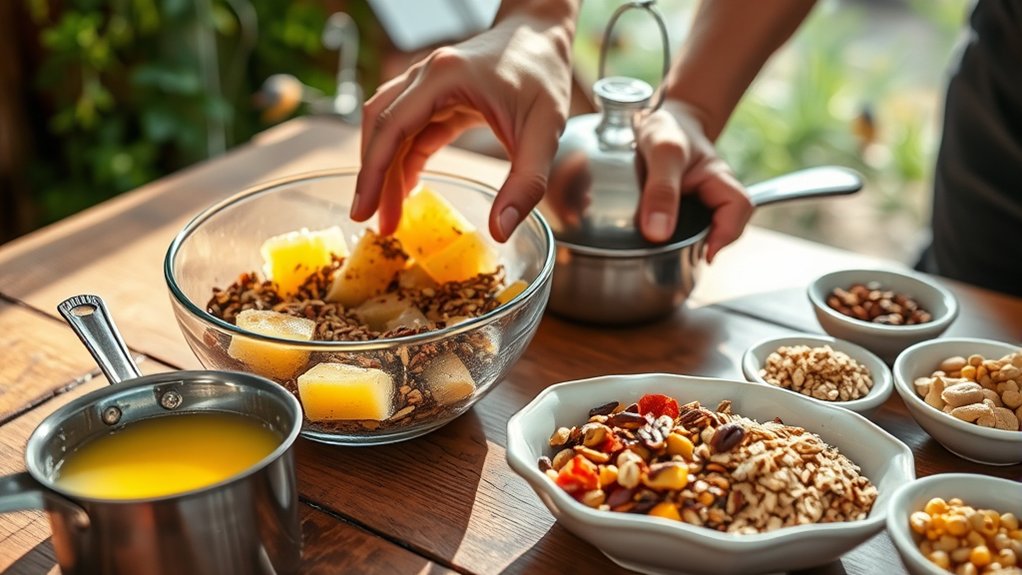
How to Make Suet Cakes for Birds in 10 Easy Steps
Many bird lovers struggle to find the perfect way to feed their feathered friends, especially during colder months when natural food sources are scarce. If you’ve ever tried buying suet cakes only to find they don’t attract the birds you want or melt too quickly, you’re not alone. Creating your own suet cakes can be a rewarding solution that lets you customize ingredients to suit local birds and keep them coming back.
To make suet cakes for birds, start by choosing a high-energy fat like beef suet or lard, then pick seeds and mix-ins suited to your local birds. Gently melt the fat using a double boiler, mix in seeds and extras evenly, and pour into molds designed for outdoor use.
Let the cakes cool fully before unmolding. Store them properly and hang near shelter to attract diverse birds during colder months. Keep going to uncover tips for perfecting your suet cake process.
Key Takeaways
- Melt high-quality suet or fat gently using a double boiler. Be careful to avoid overheating or burning it.
- Mix seeds, nuts, dried fruits, and mealworms evenly. This helps attract various bird species.
- Pour the mixture into clean, sturdy molds designed for birds. Make sure to eliminate air bubbles for smooth cakes.
- Let suet cakes cool at room temperature. Then refrigerate them for 2-3 hours to fully set before unmolding.
- Store cakes in airtight containers. Hang them 5-6 feet high near cover to feed birds during cold months.
Why Make Suet Cakes for Birds?
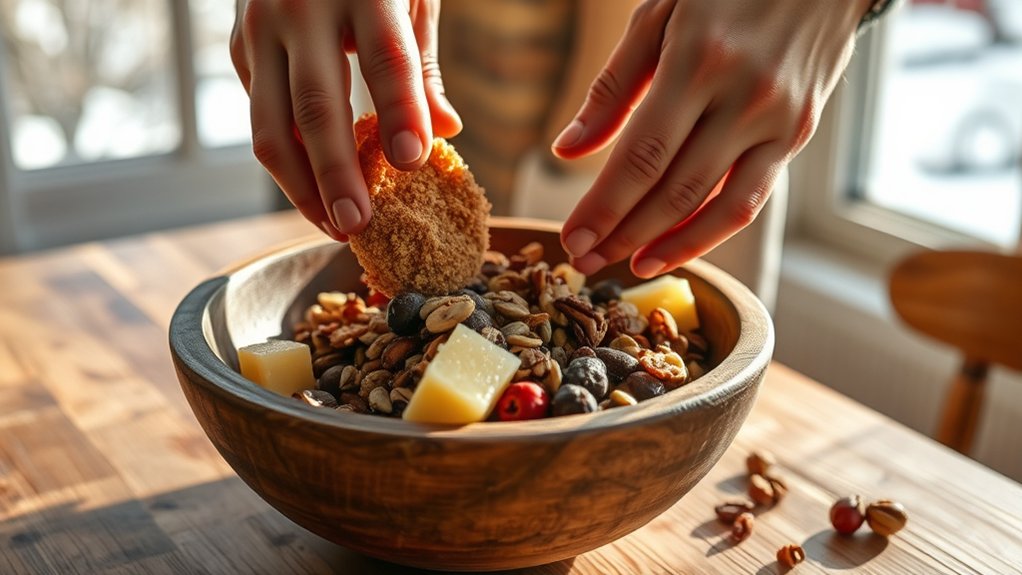
Although you might already provide seeds or nectar, making suet cakes offers birds a high-energy food source that’s especially valuable during cold months. Suet supplies essential fats that many seeds and nectar don’t, helping birds maintain their body heat when temperatures drop.
During bird migration, energy demands skyrocket, and suet cakes become a critical part of their avian diet, giving them the fuel to continue long journeys. You’ll notice that insect-eating birds, like woodpeckers and nuthatches, especially benefit from suet, as it mimics the natural fats they seek out.
By offering suet, you’re supporting a wider variety of species than seeds alone, enriching your backyard ecosystem. Plus, suet cakes stay solid in cold weather, making them easy for birds to peck at without losing nutrients to spoilage.
Gather Ingredients: Fat, Seeds, and Mix-Ins
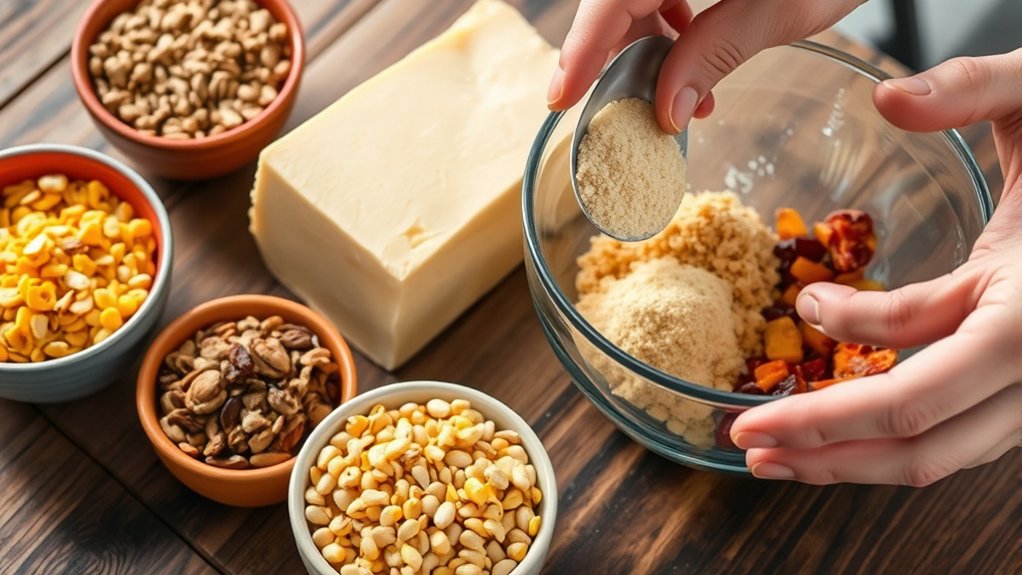
Before you start mixing, gather the right ingredients to create a nutritious suet cake that birds will love. Consider your local bird habitat to choose seeds and mix-ins that appeal to the species in your area.
For example, if you have many finches, include nyjer or thistle seeds. For woodpeckers, add peanuts or sunflower seeds. Seasonal variations affect what’s available and what birds need most, so adjust your ingredients accordingly.
In colder months, high-energy seeds like sunflower and cracked corn help birds stay warm. During spring and summer, you might add dried fruits or mealworms for extra protein.
Remember to include a variety of seeds and mix-ins to attract a diverse range of birds. By tailoring your ingredients to your bird habitat and seasonal needs, you’ll create suet cakes that provide essential nutrition year-round.
Once you’ve gathered everything, you’ll be ready to move on to choosing the right fat base for safe suet cakes.
Choose the Right Fat Base for Safe Suet Cakes
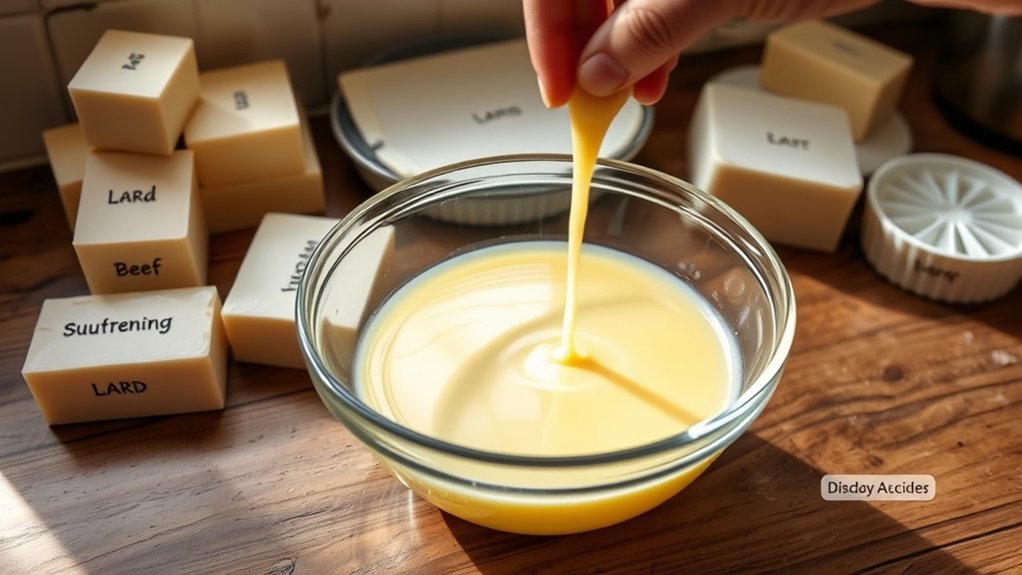
Now that you’ve picked the seeds and mix-ins to attract your local birds, it’s time to select the fat base that will hold everything together and provide energy. Choosing the right fat is essential because it fuels birds during cold months and supports those on long migratory journeys.
Traditionally, suet cakes were made using beef suet, a hard fat from around the kidneys, known for its high melting point and energy density. This is a key part of suet cake history. However, you’ll want to avoid fats that spoil quickly or contain additives harmful to birds.
Vegetable shortening and lard are popular alternatives, but make sure they’re free from preservatives or artificial flavors. Unsalted beef fat and pure suet remain top choices for safe, nutritious suet cakes. By carefully selecting your fat base, you’ll help local and migrating birds maintain energy reserves vital for survival during bird migration seasons.
Pick Bird-Friendly Seeds and Mix-Ins
Once you’ve settled on a fat base, choose seeds and mix-ins that will attract the birds you want to feed. Consider the feeding habits of local species. Some prefer sunflower seeds, while others go for millet or cracked corn.
Black oil sunflower seeds are popular because they appeal to many birds thanks to their high oil content and thin shells. If you’re in an area where bird migration is common, adding a variety of seeds can support different species passing through.
Mix in dried fruits like raisins or chopped apples to provide extra energy for long-distance travelers. Avoid seeds with shells that are too hard, as some birds can’t crack them easily.
You can also include nuts, oats, or even mealworms if you want to attract insect-eaters. By tailoring your seed mix to local feeding habits and migratory patterns, you’ll create suet cakes that nourish a diverse range of birds throughout the seasons.
Get Your Workspace and Tools Ready Safely
Choosing the right seeds and mix-ins sets you up for suet cakes that birds will love, but preparing your workspace carefully helps guarantee the process goes smoothly and safely. Start by clearing a clean, flat surface where you can work comfortably. Organize all your tools, like mixing bowls, spoons, measuring cups, and molds, within easy reach. This workspace organization minimizes clutter and reduces the risk of accidents.
Next, focus on safety precautions. Since you’ll handle raw fat, use gloves to avoid direct contact and keep paper towels nearby for quick cleanups. Make sure your workspace is well-ventilated and away from open flames or heat sources, especially before you begin melting the fat. Also, keep children and pets out of the area to prevent distractions or spills.
Gently Melt the Fat Without Overheating
Before you start melting the fat, make certain to use a double boiler or a heat-safe bowl set over simmering water to prevent overheating. This gentle method helps preserve the nutritional quality of the fat, which is vital for healthy suet cake variations. Overheating can degrade the fat, making it less appealing and nutritious for birds.
As you melt the fat, keep these tips in mind:
- Stir occasionally to ensure even melting without hot spots.
- Avoid direct heat to prevent burning or smoking.
- Monitor the temperature closely; keep it low and steady.
Mix Ingredients Evenly for Balanced Nutrition
You’ll want to mix your ingredients thoroughly to make sure each suet cake offers balanced nutrition for the birds. Just stir gently but consistently—this helps avoid clumps that can keep nutrients from spreading evenly. Taking this step seriously means every bite gives your feathered friends the energy and vitamins they need.
Importance Of Ingredient Balance
Although suet cakes may seem simple to make, mixing ingredients evenly guarantees your bird friends receive balanced nutrition. Getting the balance right ensures each bite offers the right energy, vitamins, and fats they need.
When you adjust for seasonal variations or use ingredient substitutions, maintaining this balance becomes even more vital. Here’s why you should focus on ingredient balance:
- It supports consistent energy levels for birds throughout the day.
- It prevents nutritional gaps that might arise from substituting ingredients.
- It helps birds thrive during different seasons by matching their dietary needs.
Techniques For Even Mixing
Maintaining the right ingredient balance hinges on mixing the components thoroughly to guarantee every bite delivers consistent nutrition. To achieve this, start by softening the suet or fat, making it easier to blend. Use a sturdy spoon or your hands (wear gloves) to fold in seeds, nuts, and dried fruits evenly.
Stir slowly but consistently to avoid clumping. When experimenting with creative flavors or seasonal themes, like adding cranberries for winter or pumpkin seeds for fall, make certain these extras are distributed uniformly throughout the mixture. This way, birds get a well-rounded diet with every peck.
Taking your time during this step ensures that no single nutrient dominates or gets lost, which is key to making suet cakes that satisfy and nourish your feathered visitors consistently.
Avoiding Nutrient Clumps
To keep your suet cakes nutritious and appealing, mix the ingredients evenly to avoid clumps of seeds or nuts that can throw off the balance. Uneven mixing can lead to patches with too much fat or too many seeds, reducing nutrient density and making it less beneficial for birds.
When you’re blending ingredient variations, take these steps: break up larger nuts and seeds before adding them to the mix. Stir continuously with a sturdy spoon or spatula to distribute ingredients evenly. Add wet ingredients gradually, ensuring they coat all dry components without pooling.
Pour and Mold Your Suet Cakes
You’ll want to pick molds that are sturdy and easy to release your suet cakes. When you pour the mixture, do it carefully to avoid air bubbles and make sure the shape comes out nice and even. Using the right technique like this helps your cakes set properly and last longer for the birds.
Choosing The Right Molds
Although selecting the right molds might seem simple, it plays an essential role in shaping your suet cakes effectively. Choosing molds that suit local bird migration patterns and nesting habits guarantees your suet cakes attract the right visitors during different seasons.
Consider these factors when picking molds:
- Size and shape: Opt for molds that match the size of birds common in your area to accommodate their feeding habits.
- Material: Use durable, weather-resistant molds like silicone or plastic for easy removal and repeated use.
- Hanging options: Select molds with hooks or holes if you want to hang cakes near nesting sites or migration stopovers.
Pouring Techniques For Suet
How exactly do you pour suet to create the perfect cake? Start by melting your suet mixture until smooth, then pour it evenly into your chosen mold. Pour slowly to avoid air bubbles, which can weaken the cake.
Keep in mind bird migration and seasonal variations; thicker cakes work better in colder months when birds need more energy.
Here’s a quick pouring guide:
| Season | Pouring Temperature | Cake Thickness |
|---|---|---|
| Early Fall | 120°F (49°C) | Thin (1/2 inch) |
| Late Fall | 110°F (43°C) | Medium (3/4 inch) |
| Winter | 100°F (38°C) | Thick (1 inch) |
| Early Spring | 115°F (46°C) | Medium (3/4 inch) |
Pour carefully and let the suet cool completely before unmolding.
Cool Suet Cakes to Harden Them Properly
Once you’ve poured the suet mixture into molds or containers, let the cakes cool at room temperature to start firming up. This initial cooling is crucial for suet preservation, ensuring the fats solidify properly to attract your favorite bird species. Avoid rushing this step by moving the cakes to the fridge too soon, as it may cause uneven hardening or cracking.
To harden your suet cakes effectively, follow these tips: Leave them undisturbed at room temperature for about 30 minutes to an hour. Once firm, place them in the refrigerator for at least 2-3 hours to fully set. Use molds that allow easy removal to maintain the cake’s shape and texture.
Following these steps respects bird species preferences by delivering a suet texture they find appealing, while securing the cake’s durability. Proper cooling guarantees your suet cakes stay fresh longer and are ready to feed your feathered friends.
Store and Hang Suet Cakes to Attract Birds Safely
Before you hang your suet cakes outside, store them properly to maintain freshness and prevent spoilage. Keep your suet cakes in an airtight container or wrap them tightly in plastic wrap, then refrigerate or freeze until you’re ready to use them. This helps preserve the suet cake benefits, ensuring the fats and nutrients stay intact to nourish visiting birds.
When it’s time to hang the suet cakes, choose a location safe from predators and harsh weather. Hang them on a sturdy wire or suet feeder about 5 to 6 feet above ground, ideally near trees or shrubs for cover.
Since bird migration patterns vary, keep your suet feeder up during colder months when migrating birds need extra energy. This will attract a variety of birds, providing them with essential calories.
Frequently Asked Questions
Can Suet Cakes Attract Specific Bird Species?
Yes, suet cakes can attract specific bird species by choosing the right suet cake varieties and placing your bird feeder strategically. If you want woodpeckers, use suet with peanuts or insects and place your feeder near trees.
For chickadees or nuthatches, try fruit or nut-infused suet cakes and position the feeder where these birds frequent. You’ll see better results by matching suet ingredients and bird feeder placement to your target species.
How Often Should Suet Cakes Be Replaced?
You should replace suet cakes as often as a hummingbird flaps its wings, pretty much constantly during bird migration! If you let suet cake ingredients spoil or melt, you’ll scare off hungry birds faster than you can say “peanut butter.”
Check them every few days, especially in warm weather, to keep your feathered friends happy and healthy. Fresh suet means more visits and a lively backyard full of chirping visitors!
Are Suet Cakes Safe for Squirrels?
Suet cakes aren’t harmful to squirrels, but they can attract them, which may bother you. To manage this, focus on bird feeder placement. Hang feeders away from trees or structures squirrels can jump from.
You can also use squirrel prevention tactics like baffles or weight-sensitive feeders. By controlling where and how you offer suet cakes, you’ll help keep squirrels away while still feeding your feathered friends safely and happily.
Can Suet Cakes Be Made Without Animal Fat?
Yes, you can make suet cakes without animal fat by using vegetarian alternatives like vegetable shortening, coconut oil, or peanut butter. These options cater to bird dietary preferences, especially if you want to avoid animal products.
Just mix your chosen fat with seeds, nuts, and dried fruits to create a nutritious, plant-based suet cake. This way, you’ll attract a variety of birds while respecting dietary considerations.
What Is the Best Season to Offer Suet Cakes?
Think of offering suet cakes like handing out warm blankets during winter. Birds need them most when food is scarce. The best season for bird feeding with suet cakes is fall and winter, especially when insects vanish and natural fats dwindle.
Seasonal considerations matter because suet can spoil in heat, so avoid summer. Providing suet during colder months helps birds stay energized and survive harsh conditions, making your backyard a essential winter oasis.
Conclusion
Making suet cakes is like planting a tiny garden of nourishment for your feathered friends. By choosing safe fats, bird-friendly seeds, and mixing them carefully, you create a delicious energy boost that helps birds thrive, especially in colder months.
Once hardened and hung, your suet cakes will become a welcoming feast, inviting a lively chorus of birds to your yard. Enjoy this simple joy of giving back to nature, one suet cake at a time! Making suet cakes is a rewarding way to support local wildlife and watch your garden come alive with birds.