What Do Birds Eat in the Wild?
If you’ve ever tried attracting birds to your backyard, you know how tricky it can be to figure out what to feed them. You’re not alone—many people struggle with understanding what birds eat in the wild to provide the right food.
Knowing their natural diet can make all the difference in creating a bird-friendly environment that keeps them coming back.
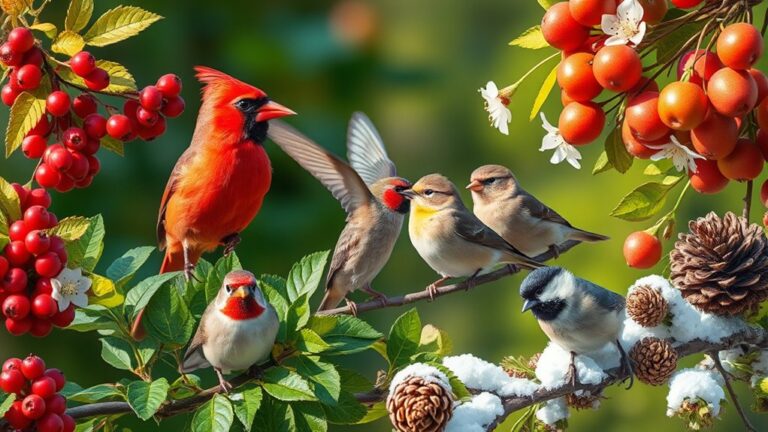
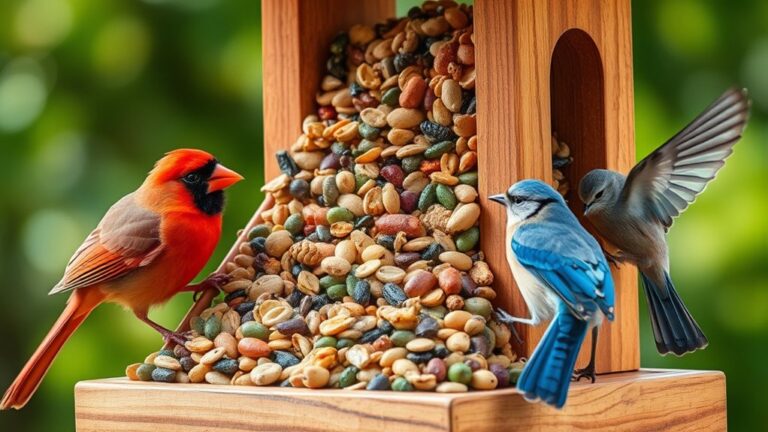
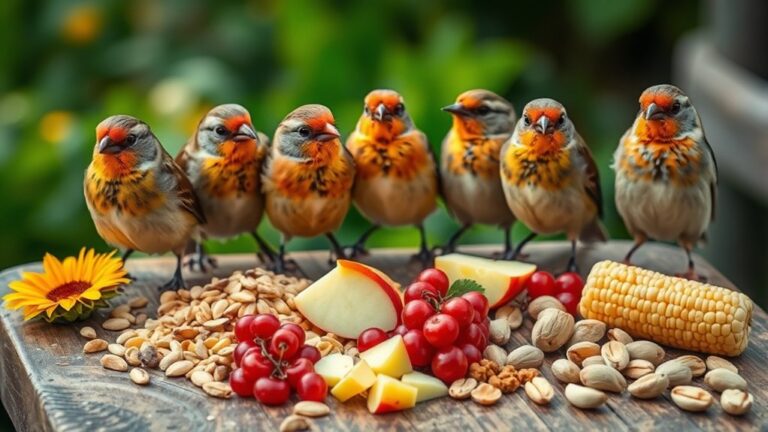
You’ll find that birds eat a variety of foods like seeds, insects, fruits, nectar, small animals, and fish, all depending on their habitat and the season. Their beaks are specially adapted to grab and eat these foods efficiently.
Birds also adjust their diets during migration and store food to survive tough times. Understanding these eating habits can give you deeper insight into how birds thrive and interact with their environment throughout the year.
Key Takeaways
- Birds eat a variety of foods including seeds, insects, fruits, nectar, small animals, and fish to meet their nutritional needs.
- Diets shift seasonally. Insects and fruits are common in warmer months, while seeds or stored foods are more typical in colder seasons.
- Beak shape and adaptations determine how birds access and consume specific food types found in their habitats.
- Some birds cache food to survive periods of scarcity, especially during winter or migration.
- Nutrient-rich foods like fruits and insects support energy demands for migration, breeding, and overall health.
Key Foods in Wild Birds’ Diets
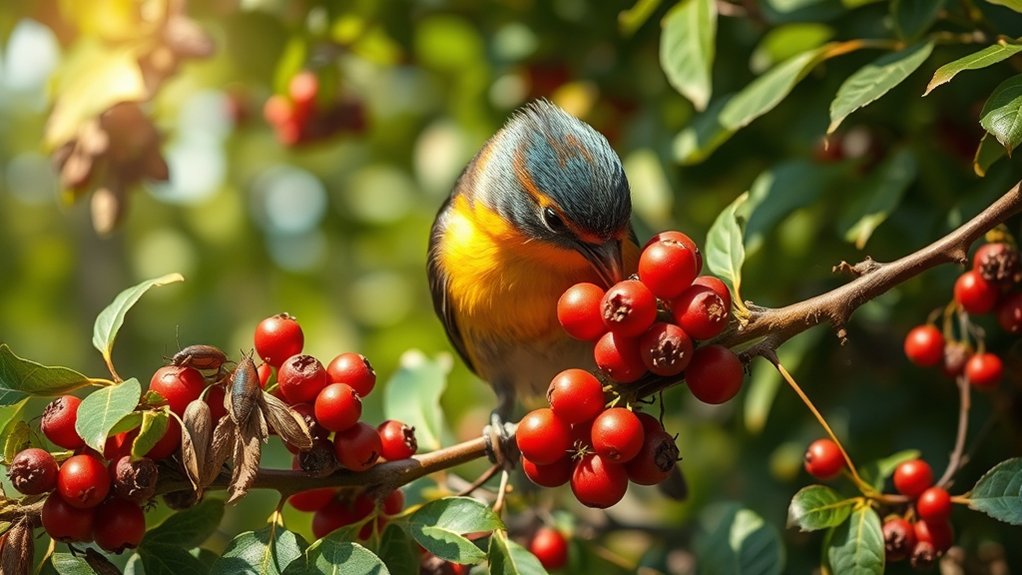
What do wild birds eat to stay healthy and energized? You’ll find that their diets largely depend on key foods like seeds, insects, fruits, and nectar. Birds with urban nesting habits often adapt by feeding on discarded human food or seeds from city plants, but they still rely on natural sources to meet nutritional needs. These foods provide the essential proteins, fats, and carbohydrates birds need to maintain energy.
Migratory patterns also influence what birds eat. Before long flights, many species increase their intake of high-energy foods such as berries and insects to build fat reserves. Throughout migration, birds adjust their diets based on availability, focusing on calorie-rich items to sustain long journeys.
Understanding these key foods helps you appreciate how birds manage to thrive in diverse environments, from city rooftops to vast wilderness areas. So, their diet isn’t random; it’s a carefully balanced intake tailored to survival and energy demands.
How Where Birds Live Affects What They Eat
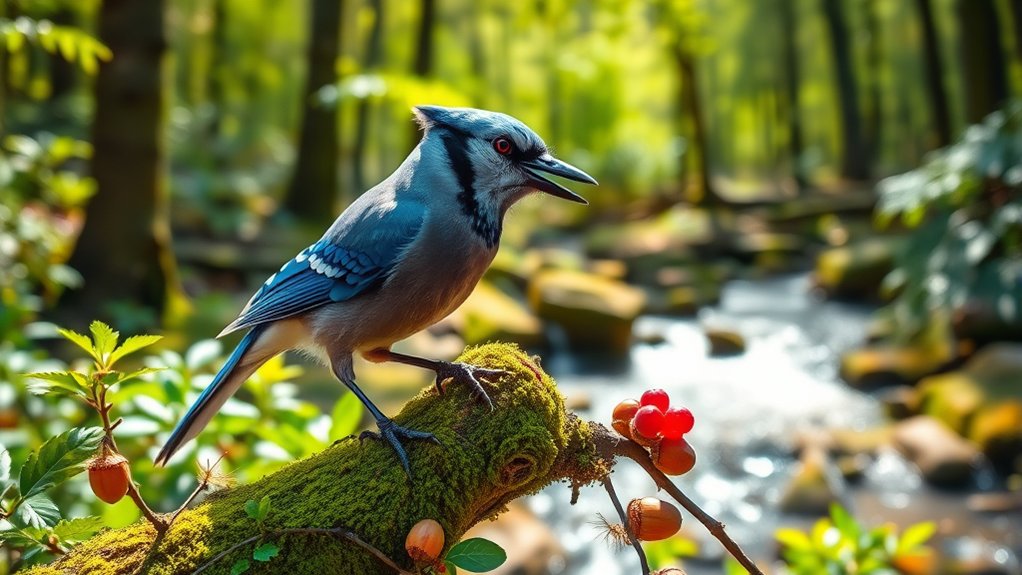
Where birds live really shapes the kind of food they find and eat every day. You’ll notice that different habitats offer unique food sources, and these often change with the seasons. So, it’s pretty interesting to see how birds adapt their diets depending on where and when they live.
Habitat Influences Food Choices
Because different habitats offer unique resources, birds adapt their diets to match the food available around them. When you observe birds, you’ll notice their migration patterns often align with food availability in various regions. This ensures they access the right nutrients throughout the year.
The places they choose for nesting site selection also play a vital role. If a bird nests near water, it might feed on fish or aquatic insects. Birds in forests, on the other hand, rely on seeds, berries, or small insects.
Your local environment shapes what birds eat, influencing their survival and reproduction. By understanding these habitat influences, you can better appreciate how birds thrive in diverse ecosystems and why their diets vary so much depending on where they live.
Seasonal Food Availability
Birds don’t just adjust their diets based on their habitat. They also change what they eat as the seasons shift. You’ll notice that seasonal food availability directly impacts their feeding habits.
Depending on migration patterns and nesting habits, birds seek different foods throughout the year. For example, during spring and summer, you might see them eating:
- Insects and larvae, which are abundant and protein-rich
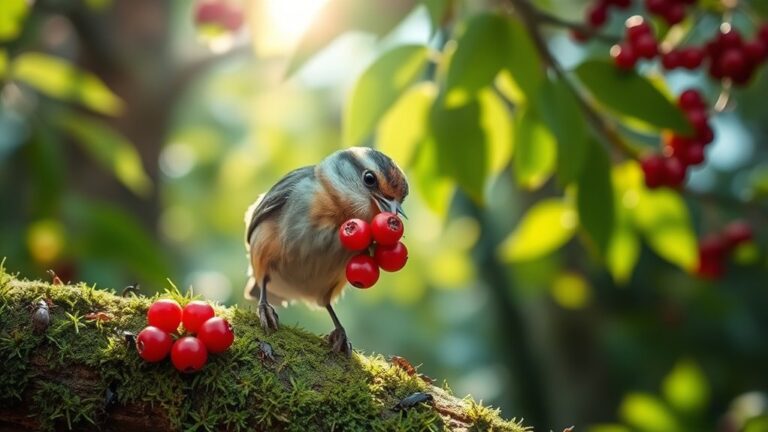
- Fresh fruits and berries as plants bloom
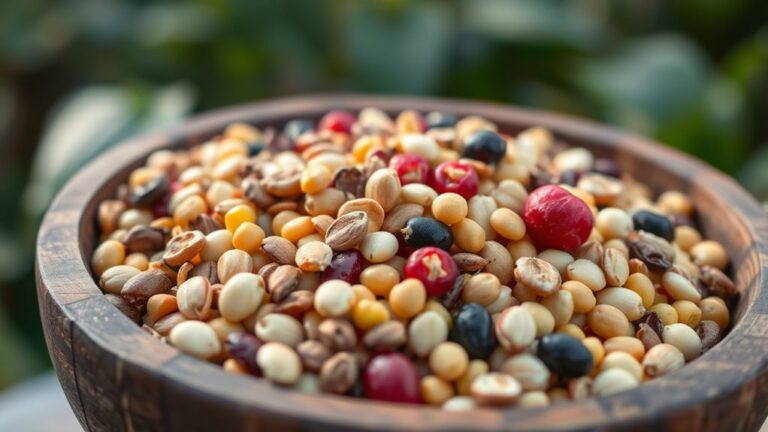
- Seeds and grains in late summer and fall
- Nuts and stored food during harsh winters
Seasonal Changes in Bird Diets
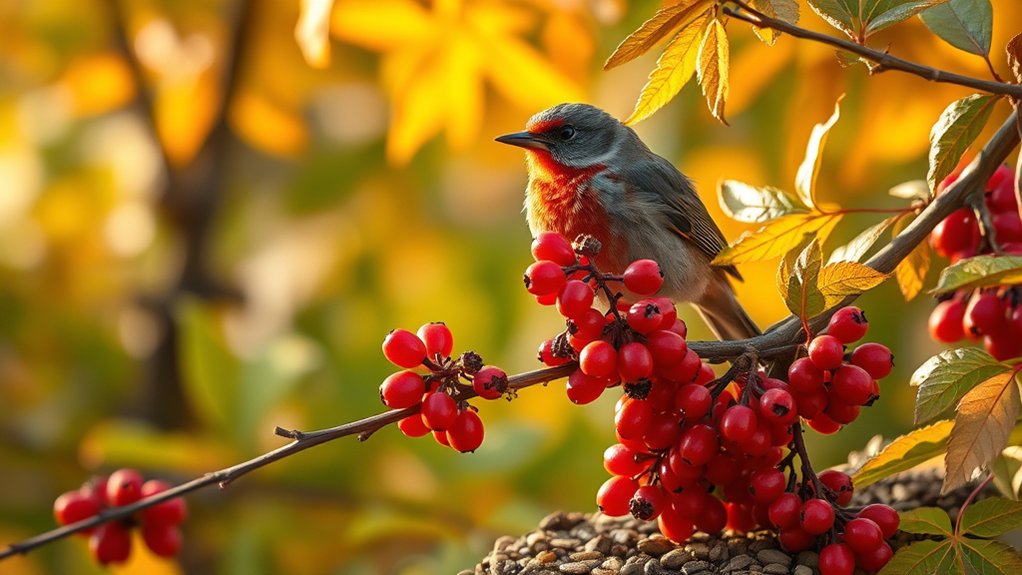
As the seasons shift, you’ll notice many animals adapt their eating habits, and birds are no exception. Birds adjust their diets based on migration patterns and nesting diets, ensuring they get the nutrients they need throughout the year.
During spring and summer, many birds focus on protein-rich foods like insects and larvae to support nesting and feeding their young. As fall approaches, their diets shift toward seeds, nuts, and berries to build fat reserves for migration or winter survival.
Birds that migrate long distances often time their journeys to coincide with food availability along their routes. Meanwhile, those that stay put switch to whatever resources are abundant locally.
Understanding these seasonal changes helps you appreciate how birds thrive in the wild, adapting their eating habits to the natural rhythm of their environment. By paying attention to these patterns, you can better support birds in your area through thoughtful feeding or habitat preservation.
Which Insects Do Birds Eat Most?
If you watch closely during warmer months, you’ll notice many birds enthusiastically catching insects like caterpillars, beetles, and flies. As insect predators, birds rely on these small creatures to fuel their energy, especially during nesting behavior when they need extra nutrients to feed their young.
You might wonder which insects they prefer most. Here’s a quick list of the top four insects birds commonly eat:
- Caterpillars – rich in protein and easy to find on leaves.
- Beetles – provide essential fats and nutrients.
- Flies – abundant and easy to catch mid-air.
- Ants – a steady source of protein, often found on the ground.
Understanding these preferences helps you appreciate how birds adapt their diet based on availability and their role as insect predators, particularly when raising chicks during nesting behavior. Watching birds hunt these insects reveals a crucial part of their survival strategy in the wild.
Why Fruits and Berries Matter to Birds
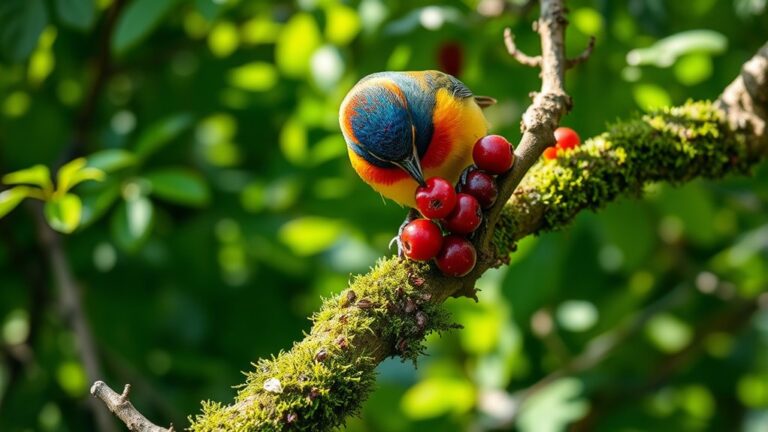
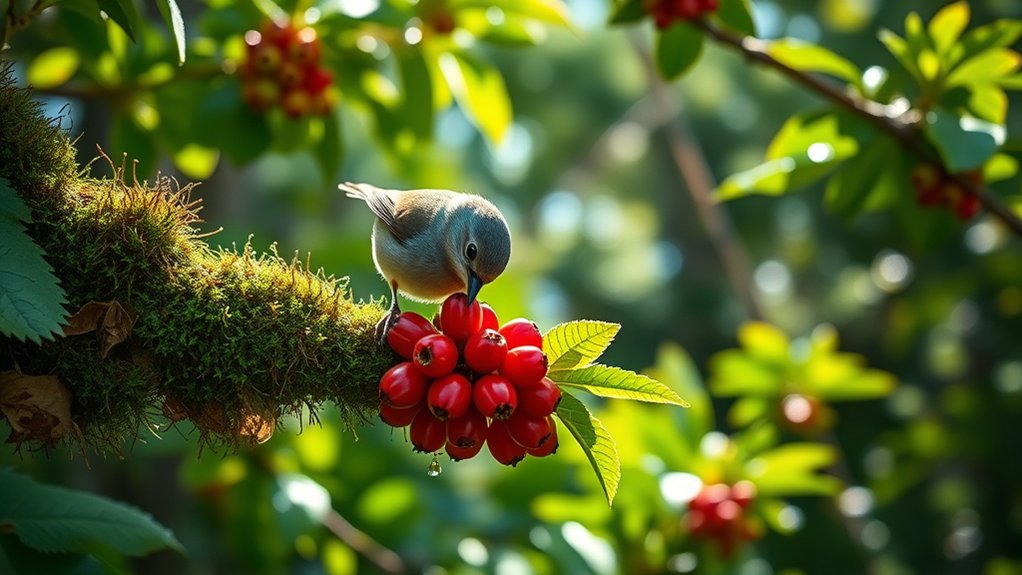
You’ll notice that fruits and berries give birds important nutrients that help boost their energy and keep them healthy. Plus, these tasty treats aren’t always around—they change with the seasons, which means birds adjust their diets depending on what’s available. It’s no surprise that many bird species are naturally attracted to these colorful and flavorful food options.
Nutritional Benefits of Fruits
Why do fruits and berries play such an essential role in a bird’s diet? You’ll find they provide critical nutrients that support bird migration and nesting habits. Fruits supply energy and vitamins birds need during long flights and breeding seasons.
Here are four key nutritional benefits fruits offer:
- High-energy sugars fuel long migrations.
- Vitamins like A and C boost immune health.
- Fiber aids digestion, keeping birds healthy.
- Antioxidants protect cells from damage.
When birds consume fruits, they get a balanced diet that helps them maintain stamina and reproduce successfully. So, by understanding these benefits, you appreciate why fruits and berries are essential to wild birds’ survival and overall well-being.
Seasonal Availability Impact
Because fruits and berries ripen at different times throughout the year, they create an essential food rhythm for birds. You’ll notice that this seasonal availability directly influences their migration patterns, as many species time their journeys to coincide with peak fruit abundance.
When fruits are plentiful, birds fuel up for long flights or prepare for breeding seasons. During nesting habits, fruits provide critical energy and nutrients to both adult birds and their chicks, supporting growth and survival.
If fruits weren’t available seasonally, birds might struggle to find enough food, affecting their health and reproduction. So, understanding the timing of fruit ripening helps you appreciate how indispensable these natural food resources are in shaping the life cycles of wild birds.
Attraction to Bird Species
Although many foods attract birds, fruits and berries hold a special appeal that draws a wide variety of species to your garden or local habitat. You’ll notice that these natural treats align closely with bird migration patterns, offering essential energy during long journeys.
Plus, many birds rely on the availability of fruits and berries for more than just nourishment. Here’s why they matter:
- Provide crucial nutrients for endurance during migration
- Serve as a reliable food source when insects are scarce
- Offer materials like fibrous fruit stems for nest building materials
- Attract diverse bird species, increasing your chances of sightings
How and Why Birds Love Nectar
When you watch birds hovering near flowers, you’re witnessing their skillful search for nectar. This nectar is an essential energy source that fuels their high metabolism and active lifestyle.
Nectar’s importance goes beyond just feeding birds. It plays a fundamental role in bird pollination, where birds transfer pollen between flowers and help plants reproduce.
You’ll notice how their specialized beaks and tongues are perfectly adapted to extract nectar efficiently.
Small Animals and Fish Birds Hunt
While nectar fuels many birds, others rely on a diet rich in small animals and fish to stay energized. You’ll notice that birds with such diets often adjust their migratory patterns to areas where these prey are abundant.
Their nesting diets also reflect this need, as parents bring protein-packed meals to their chicks. Here are four common prey types these birds hunt:
- Small fish found in shallow waters
- Insects like beetles and grasshoppers
- Amphibians such as frogs and tadpoles
- Small mammals including mice and voles
Bird Beak Adaptations and Food Choices
You’ll notice that a bird’s beak shape directly influences what it eats and how it catches food. It’s pretty interesting because different beak types serve different functions. For example, some beaks are great for cracking seeds, while others are perfect for snatching fish. Over time, these adaptations have evolved to help birds thrive on their specific diets. So, the shape of the beak really tells you a lot about what a bird eats and how it lives.
Beak Shapes and Functions
Because a bird’s beak plays a crucial role in its survival, its shape has evolved to match the type of food it eats. You’ll notice that beak coloration often signals a bird’s age or health, affecting social interactions and even bird song patterns used for communication.
When you observe birds, keep these four key beak shapes in mind:
- Cone-shaped beaks for cracking seeds
- Hooked beaks for tearing meat
- Long, slender beaks for probing flowers or mud
- Flat, broad beaks for filtering water
Each shape is perfectly designed to help birds gather and consume their preferred food efficiently. So, by studying beak shapes, you can quickly guess what a bird might eat and how it survives in the wild.
Diet Based on Beak Type
A bird’s beak shape doesn’t just look interesting. It directly reflects what the bird eats. When you observe a bird’s beak, you’re basically seeing its feeding strategy.
Sharp, hooked beaks help birds tear meat, while long, slender beaks are perfect for probing flowers or catching insects. You might also notice how feather coloration often signals dietary preferences or habitat, which ties into their nesting habits.
For example, brightly colored birds with stout beaks often feed on seeds and fruits. They build nests in dense foliage. Meanwhile, birds with thin, pointed beaks might focus on insects and nest in open areas.
Understanding beak types helps you predict a bird’s diet and behavior. It gives you deeper insight into their survival tactics in the wild.
Evolution of Beak Adaptations
When you study bird beaks over time, you see how evolution shapes their form to match food sources. Beak adaptations don’t just reflect diet; they also align with migration patterns and nesting behaviors.
For example, birds that travel long distances may develop beaks that help them exploit diverse food types along their route. Nesting behaviors influence beak shape too, as some birds need tools to build or defend nests.
Here are four key factors driving beak evolution:
- Food availability in different habitats
- Seasonal migration demands
- Nest construction and maintenance needs
- Predation pressure during breeding
Bird Foraging and Food Storage Behaviors
Although you might not always notice, birds display remarkable skill in foraging and storing food to survive changing seasons. When you observe birds in urban nesting areas, you’ll see them adapt their foraging tactics, often exploiting human-provided food sources alongside natural ones. Their ability to adjust helps them thrive despite city challenges.
During migration patterns, birds strategically stock up on high-energy foods, fueling long flights and ensuring survival in unfamiliar environments. You’ll also notice some species cache food, hiding seeds or insects in hidden spots for later use when resources are scarce. This behavior isn’t random; it’s a carefully honed survival tactic.
Using Wild Bird Diets to Support Conservation
Since understanding what birds eat helps you create effective conservation strategies, studying their wild diets is essential. When you focus on wild bird diets, you gain insights that improve habitat management and urban feeding programs. Knowing what birds prefer during different seasons helps you support their migration patterns and overall health.
Here’s how using wild bird diets aids conservation:
- Tailoring food sources to local species promotes healthier populations.
- Adjusting urban feeding stations to mimic natural diets reduces dependency on human handouts.
- Supporting vital stopover sites with appropriate food boosts migration success.
- Identifying food shortages helps you prioritize habitat restoration efforts.
Frequently Asked Questions
How Do Birds Find Water Sources in the Wild?
You find that birds locate water sources in the wild by using their keen eyesight and memory during bird migration. They often follow rivers, lakes, or familiar landmarks that signal water availability.
During long flights, they practice water conservation, reducing their need for frequent stops. You’ll notice they also rely on environmental cues like vegetation and humidity to guide them toward water, ensuring they stay hydrated throughout their journey.
Do Wild Birds Eat Human Food Scraps?
You know what they say: “You are what you eat.” In terms of bird feeding habits, wild birds occasionally eat human food scraps, but it’s not ideal.
Their wild bird diets are naturally balanced with seeds, insects, and fruits, which provide essential nutrients. Feeding on scraps can disrupt their health and behavior.
How Do Baby Birds Get Their First Food?
You’ll see that baby birds get their first food through nestling feeding, where their parents bring them small, soft insects or worms. This parental care guarantees the nestlings get the nutrients they need to grow strong.
The parents carefully feed the chicks directly in the nest, sometimes even opening the babies’ mouths to deposit food. This hands-on care continues until the young birds are ready to leave the nest and find food themselves.
Can Wild Birds Survive on One Type of Food Only?
No, wild birds can’t survive on just one type of food. You need to understand that diet diversity is vital for their health.
Birds have varied food preferences depending on the species, season, and availability. Sticking to a single food source can lead to nutritional deficiencies and weaken their immune system.
How Do Birds Avoid Poisonous Plants and Insects?
You’d think birds could eat anything in sight, but they’re way smarter during bird foraging than that! They use sharp instincts and trial and error to master insect avoidance and steer clear of poisonous plants.
Their taste buds and gut reactions help them learn fast. One bad meal is enough to teach them which foods to avoid. So, you can count on birds to dodge danger while they search for a safe, tasty meal.
Conclusion
You might be surprised to learn that some birds eat up to 50% of their body weight in insects daily to stay energized. This shows just how essential a varied diet is for their survival.
By understanding what birds eat in the wild and how their diets change with seasons and habitats, you can better support their health and conservation. Paying attention to their feeding habits helps you make a real difference in protecting these incredible creatures and promoting what birds eat in the wild.