5 Popular Foods Birds Like to Eat
Attracting a variety of birds to your backyard can be a bit tricky, and if you’re struggling to find the right foods that keep them coming back, you’re not alone. Many bird enthusiasts want to create a lively, colorful space but aren’t sure what to offer.
The good news is that understanding what birds love to eat can make all the difference.
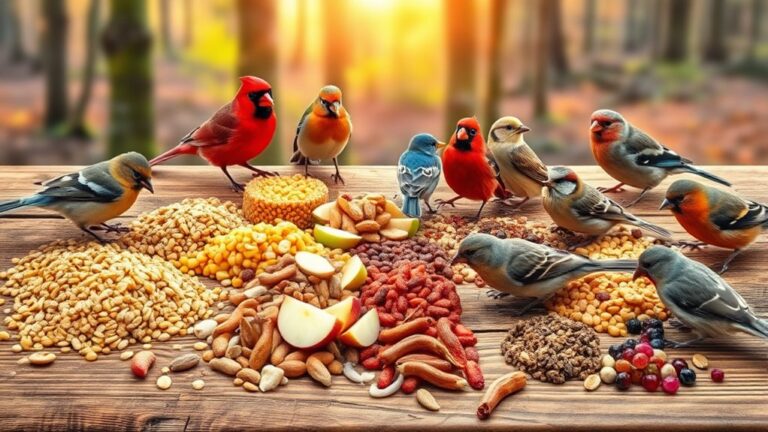
You’ll attract more backyard birds by offering five popular foods they love: seeds, fruits, nuts, insects, and seasonal treats. Black oil sunflower seeds and nyjer attract many colorful species, while berries and apples provide sweet energy and hydration.
Nuts like peanuts and protein-rich mealworms fuel growth and keep birds warm, especially in colder months.
Adjust what you offer through the year to match birds’ changing needs, and you’ll encourage more visits and healthier birds.
Keep exploring to uncover smart feeding tips and strategies.
Key Takeaways
- Black oil sunflower seeds are popular for their high fat content and thin shells, attracting cardinals and chickadees.
- Nyjer (thistle) seeds are favored by finches such as goldfinches and siskins.
- White proso millet is a common seed preferred by sparrows and juncos.
- Fruits like berries, apples, and grapes provide energy and hydration, attracting many bird species.
- Nuts and insects, including peanuts and mealworms, offer essential protein and fats, especially during colder months.
Why Food Choice Matters for Backyard Birds

Because the food you offer directly affects their health and behavior, choosing the right food for backyard birds is essential. When you provide a varied diet, you encourage dietary diversity, which supports their nutritional needs and keeps them strong and active.
Birds quickly develop preferences through habit formation, so the foods you regularly supply influence their feeding habits and visits to your yard.
If you stick to offering the same limited food, birds may miss out on crucial nutrients and become less interested in your feeders. On the other hand, introducing a range of appropriate foods helps you attract different species and promotes healthier eating patterns.
Seeds Backyard Birds Love Most

When you choose seeds that backyard birds love most, you increase the chances they’ll visit your feeders regularly. Understanding bird seed varieties and backyard seed preferences helps you attract a diverse group of feathered friends.
Black oil sunflower seeds are a top choice because many species enjoy their high fat content and thin shells. Nyjer seeds appeal especially to finches, while white proso millet is favored by sparrows and juncos.
Here’s a quick guide to popular seeds and the birds they attract:
| Seed Variety | Birds Attracted |
|---|---|
| Black Oil Sunflower | Cardinals, Chickadees |
| Nyjer (Thistle) | Goldfinches, Siskins |
| White Proso Millet | Sparrows, Juncos |
Why Fruits Are a Favorite for Many Birds

Although seeds provide essential nutrients, fruits offer birds a sweet and energy-packed alternative that many species crave. You’ll notice that fruit varieties like berries, apples, and grapes attract a wide range of birds because they meet various bird diet preferences.
Some birds prefer soft, juicy fruits that are easy to digest, while others enjoy firmer options packed with vitamins and antioxidants. When you offer fruits in your backyard, you’re not only appealing to fruit-eating birds but also supporting their energy needs during migration and breeding seasons.
Plus, fruits provide hydration, which is vital for their survival. Understanding these preferences helps you choose the right fruit varieties to attract and nourish your local bird population effectively. So next time you want to diversify your bird feeding routine, don’t hesitate to include fresh, ripe fruits. They’re a natural favorite for many birds and a delightful way to encourage more feathered visitors.
How Nuts and Insects Fuel Wild Birds
If you want to attract a variety of wild birds, offering nuts and insects is a smart choice. Nuts provide essential fats and proteins crucial for bird nutrition, especially during colder months when energy demands rise.
Insects supply a rich source of protein and nutrients, supporting growth and feather development. Plus, insect diversity in your feeding area encourages different bird species to visit.
Here’s a quick look at popular nuts and insects that fuel wild birds:
| Food Type | Nutritional Benefit | Bird Species Attracted |
|---|---|---|
| Peanuts | High fat & protein | Woodpeckers, Chickadees |
| Mealworms | Rich protein source | Bluebirds, Wrens |
| Sunflower Seeds | Healthy fats & protein | Cardinals, Finches |
Year-Round Bird Feeding Tips and Strategies
To keep your feathered visitors happy throughout the year, you’ll need to adjust your feeding habits with the seasons. During spring and summer, focus on offering high-protein foods like insects and nuts to support breeding and molting. In fall and winter, switch to high-fat seeds and suet to help birds maintain energy and stay warm. Understanding seasonal migration strategies is key. Some species will only visit during certain months, so tailor your offerings to attract local and migrating birds alike.
Pay close attention to bird feeding station placement. Position feeders near natural cover like trees or shrubs to provide shelter from predators and harsh weather. Also, place stations where you can easily observe but avoid busy human traffic to keep birds comfortable. Rotating feeder locations occasionally can reduce disease risk and keep birds curious about your yard. With these tips, you’ll enjoy a vibrant and diverse group of feathered friends year-round.
Frequently Asked Questions
Can Feeding Birds Unhealthy Food Harm Them?
Yes, feeding birds unhealthy food can harm them. When you offer birds anything with harmful additives or low nutritional value, you risk disrupting their nutritious diet.
Birds need balanced food to stay healthy, and unhealthy snacks can lead to malnutrition, illness, or even death. You should always provide them with natural, nutrient-rich options to support their well-being and avoid causing long-term damage to their health.
How Do Bird Feeding Habits Change in Urban Areas?
Like a river changing course, bird feeding habits shift in urban areas. You’ll notice that urban foraging becomes a daily routine, with city bird diets including more human food scraps and less natural seeds or insects.
You’ll see birds adapting by scavenging in parks, trash bins, or even bird feeders filled with processed foods. This change affects their nutrition and behavior, so you should offer healthy options to support their wellbeing.
What Are the Best Feeders to Prevent Squirrel Theft?
To prevent squirrel theft, you should use squirrel-proof feeders designed with weight-sensitive mechanisms that close access when squirrels land. Feeders with metal cages or baffles work well, too.
These designs not only protect your birdseed but also promote effective seed dispersal techniques by allowing only birds to feed. By choosing the right feeder, you’ll reduce seed waste and keep squirrels from raiding your bird food, ensuring a better feeding experience for the birds.
How Can I Attract Rare Bird Species With Food?
You can attract rare bird species by mimicking their native habitat’s food sources. About 70% of rare birds prefer native plants and seeds.
Adjust your offerings with seasonal variations, providing berries and insects in spring and summer, and nuts or suet in fall and winter. This approach not only meets their nutritional needs but also encourages natural foraging behaviors.
That way, you increase your chances of spotting uncommon visitors right in your backyard.
Do Different Bird Species Have Unique Feeding Times?
Yes, different bird species have unique feeding times that often align with their migration patterns and seasonal feeding habits. You’ll notice some birds feed early in the morning, while others prefer dusk or midday.
During bird migration, feeding times can shift as birds need extra energy for long flights. By understanding these patterns, you can better plan when to offer food and increase your chances of attracting specific species.
Conclusion
Now that you know what foods birds love, why not create a backyard feast just for them? Imagine the flutter of wings as they gather around seeds, fruits, nuts, and insects you provide.
Feeding birds is not just fun, it helps them thrive year-round. So, are you ready to turn your outdoor space into a lively haven where these beautiful creatures can fuel up and flourish?
Your backyard friends will thank you for providing popular foods birds like to eat!