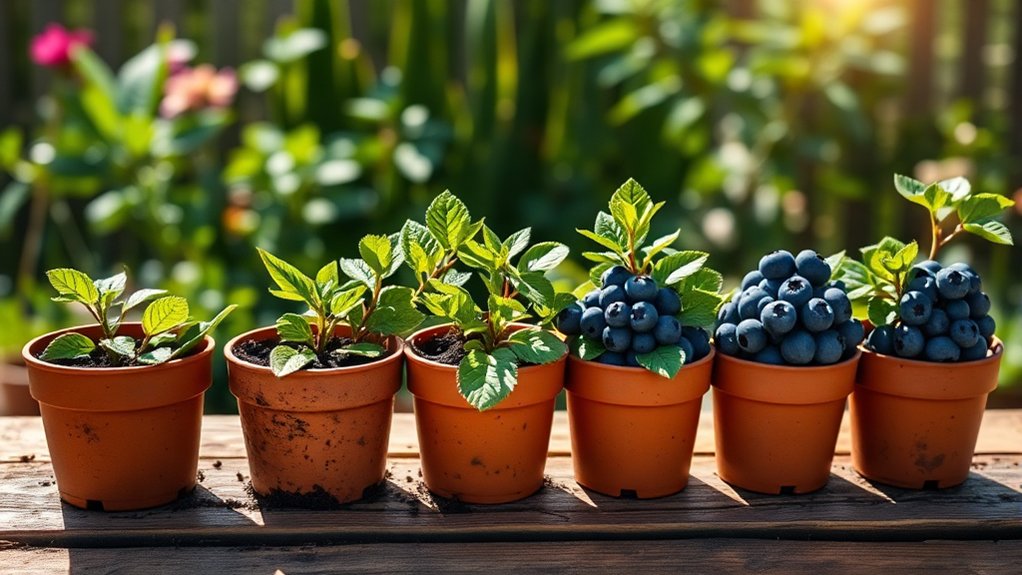
How to Grow Blueberries in Pots in 5 Steps
If you’ve ever wanted to grow your own blueberries but felt overwhelmed by the process, you’re not alone. Many people struggle with finding the right conditions to keep blueberry plants healthy and productive, especially when space is limited.
Fortunately, growing blueberries in pots is a great solution that lets you enjoy fresh berries without needing a big garden.
Grow blueberries in pots in 5 steps by choosing a large container, at least 18 inches wide and deep, with good drainage and a compact variety.
Next, fill it with acidic, peat-based potting mix at pH 4.5 to 5.5.
Plant the crown above the soil line, then water well and keep the mix evenly moist.
Feed with an acid-loving fertilizer, prune in late winter, and harvest ripe berries when they turn fully blue, and there’s more to master after that.
Key Takeaways
- Choose a large pot with drainage and a compact blueberry variety suited to containers.
- Fill it with acidic, loose potting mix at pH 4.5 to 5.5.
- Plant the blueberry with the crown above soil level and roots spread gently.
- Keep the pot in full sun, water consistently, and feed with acid-loving fertilizer.
- Prune in late winter, then harvest berries when they turn fully blue and slightly soft.
Choose the Right Pot and Variety
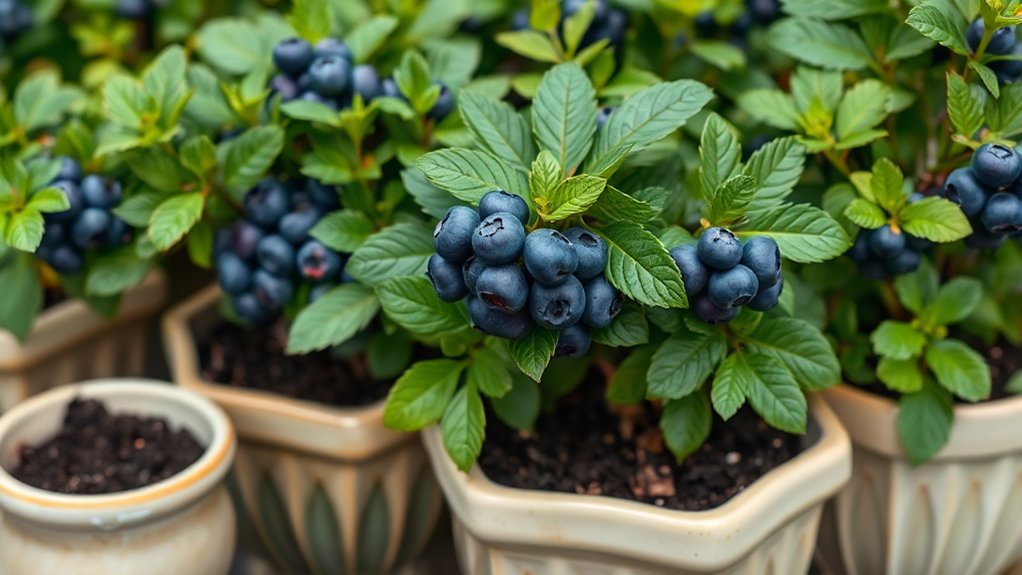
To get blueberries off to a strong start in containers, you need the right pot and the right variety. Choose a container that’s at least 18 inches wide and deep so roots have room to spread. You can use clay, plastic, wood, or fabric, but each option changes how fast the pot dries and how heavy it feels.
Make sure the pot has several drainage holes because standing water can damage the roots. Pick suitable varieties bred for containers, especially compact or dwarf types that stay manageable and produce well in limited space.
Rabbiteye and many highbush selections work well, but you should match the plant to your climate and available sunlight. If you grow more than one plant, select varieties that bloom at similar times so they can support fruit set.
A good pot and the right blueberry type set you up for healthy growth and reliable harvests.
Mix Acidic Soil for Blueberries

Blueberries need acidic soil to thrive, so fill the pot with a mix that drains well and stays in the pH range of about 4.5 to 5.5. Use a peat-based potting mix or another acidic blend, then add pine bark fines or coco coir to improve texture and moisture balance.
Avoid garden soil, which can compact in containers and raise the pH. If your mix isn’t acidic enough, work in sulfur, elemental sulfur, or other approved soil amendments to lower it gradually. If it’s too acidic, blend in a little lime only if pH testing shows you need it.
Check the pH before planting, then retest after mixing so you know the root zone is right. Keep the mix loose, airy, and evenly moist, because blueberries hate soggy conditions and dry-out stress. When you prep the potting medium carefully, you give your plants the best chance to develop strong roots and produce plenty of sweet fruit.
Plant Blueberries in Pots
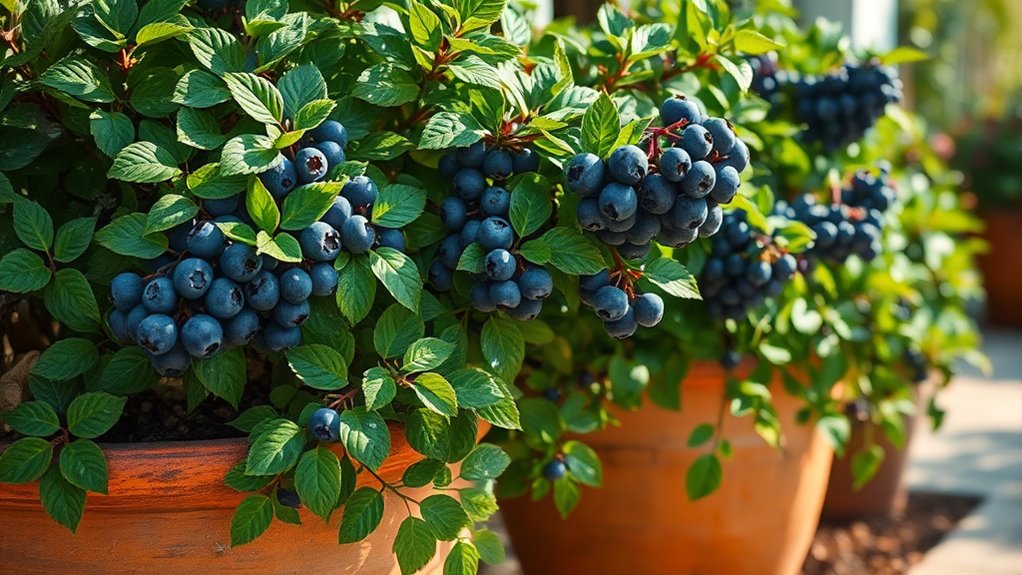
Once your potting mix is ready, set the blueberry plant in the container so the root ball sits at the same depth it grew in its nursery pot. Gently tease circling roots loose, then backfill with mix and firm it lightly to remove air pockets. Keep the crown exposed; burying it can stunt growth.
Choose a roomy pot with drainage holes, then check pot placement before you commit, since blueberries need bright sun and shelter from harsh wind. If you’re grouping plants, leave space for blueberry companions nearby, but don’t crowd the container.
| Step | What You Do | Why It Matters |
|---|---|---|
| Position | Center the plant | Promotes even growth |
| Depth | Match nursery depth | Prevents stem rot |
| Fill | Add mix around roots | Removes air gaps |
| Firm | Press gently | Stabilizes the plant |
| Finish | Settle the pot | Prepares it for care |
Watering comes next, but for now, focus on a clean, stable planting.
Water and Feed Container Blueberries
Water blueberries deeply right after planting, then keep the potting mix evenly moist but never soggy. You should check containers often because pots dry out faster than garden beds, especially in heat or wind.
Water at the base, not over the leaves, to reduce disease pressure. Use rainwater if you can since blueberries prefer acidic conditions.
Feed them with a fertilizer made for acid-loving plants, following the label rate and timing. A light spring application and a second feeding during active growth usually work well. Avoid overfertilizing, which can burn roots and weaken plants.
Mulch the surface with pine bark or needles to slow evaporation and support seasonal care. If leaves yellow or growth stalls, review pH and feeding before adding more nutrients.
Good watering and feeding also support pest management because vigorous plants handle stress better and recover faster.
Prune and Harvest Blueberries
Prune container blueberries in late winter or very early spring while the plants are dormant. Remove dead, weak, or crossing canes to improve airflow and keep the bush productive. Use sharp, clean pruners and follow simple pruning techniques: keep the strongest, youngest canes, shorten overly tall stems, and remove low growth that crowds the center.
Prune container blueberries in late winter, removing weak or crossing canes to keep plants productive and airy.
Don’t overprune; you want a balanced plant that can focus energy on fruiting. After pruning, refresh the pot surface with mulch and continue normal care.
When berries turn fully blue and feel slightly soft, they’re ready to pick. Check the cluster color all over since some berries may ripen a few days apart.
Gently roll each berry from the stem with your fingers instead of tugging. Harvest in the morning for the best flavor and firmness.
These harvesting tips help you avoid bruising and encourage more fruit as the season continues. Pick often, and you’ll keep the plant productive.
Frequently Asked Questions
Can Blueberries Grow Indoors Year-Round?
Yes, you can grow blueberries indoors year-round if you give them enough indoor lighting and keep a close eye on soil moisture. You’ll need a bright sunny window or grow lights, plus a cool spot for best results.
Choose a compact variety, use acidic soil, and water when the top inch dries out. You may also need to hand-pollinate flowers and prune lightly to keep plants productive.
How Do I Protect Potted Blueberries From Winter Frost?
Move your pots to a sheltered spot before temperatures dip; that’s your fastest frost protection. You can wrap containers with burlap or bubble wrap, then mulch the soil to lock in warmth.
Water lightly before a freeze, because moist soil holds heat better. If a cold snap hits, cover plants with frost cloth overnight.
With winter care like this, you’ll help your blueberries survive and bounce back strongly next spring.
What Pests Commonly Attack Container Blueberries?
Aphids, spider mites, thrips, scale insects, and fruit flies commonly attack your container blueberries. You’ll also see birds pecking ripe berries, while caterpillars and root weevils can damage leaves and roots.
For aphid control, blast them off with water or use insecticidal soap. Check leaf undersides for spider mites since they thrive in hot, dry conditions. Keep plants healthy, and you’ll reduce most pest problems fast.
When Should I Repot Blueberries Into Larger Containers?
You should repot blueberries when roots fill the pot, water drains too fast, or growth slows; usually every 2 to 3 years. Increase blueberry container size one step at a time, moving to a pot about 2 inches wider.
Check in early spring before new growth starts, then refresh acidic mix and prune lightly. Don’t wait until the plant becomes rootbound, because that can stunt fruiting and reduce future harvests.
Can I Grow Multiple Blueberry Plants in One Pot?
Yes, you can grow multiple blueberry plants in one pot if you choose a large container and meet their soil requirements. You’ll get better results when you pair compatible varieties for companion planting, since some blueberries fruit more reliably together.
Make sure you leave enough space for roots, keep the soil acidic, and water consistently. Crowding them too much can reduce airflow, limit growth, and lower berry production over time.
Conclusion
Growing blueberries in pots is easier than you might think. With the right pot and variety, acidic soil, careful planting, steady watering, and a little pruning, you can enjoy fresh berries at home.
Imagine a patio dotted with lush green leaves and clusters of blue fruit. Doesn’t that sound rewarding? Keep up with these simple steps, and you’ll help your container blueberries thrive season after season.
By following these tips, your container blueberries will give you sweet harvests to look forward to. Growing blueberries in pots really can bring fresh, delicious fruit right to your doorstep.