English Garden Design Ideas: A Simple Guide
If you’ve ever wanted to create a beautiful English garden but felt overwhelmed by where to start, you’re not alone. Many people struggle with balancing structure and a natural, relaxed feel in their garden spaces.
The good news is, with a few simple ideas, you can transform your outdoor area into a charming retreat that feels both timeless and inviting. English Garden Design Ideas.
You can create an English garden by mixing simple structure with a soft, abundant feel. Start with winding paths, clipped hedges, and layered borders, then group flowers, herbs, and shrubs in loose drifts.
Choose gentle colors like pink, cream, and pale blue for a calm look. Add arches, benches, and birdbaths for charm, and plan for blooms across the seasons.
Even a small space can feel lush, relaxed, and timeless when you add a few thoughtful details.
Key Takeaways
- Blend structure with softness using winding paths, clipped hedges, and layered borders for a classic English garden look.
- Group flowers, herbs, and shrubs in drifts, leaving open spaces and repeating colors for a balanced cottage-garden layout.
- Choose soft palettes like pinks, creams, and pale blues, with staggered bloom heights and seasonal planting for depth.
- Add arches, benches, and birdbaths to create focal points, resting spots, and wildlife-friendly charm.
- For small gardens, use vertical elements, narrow beds, fragrant herbs, and soft lighting to maximize interest year-round.
What Makes an English Garden Design?

An English garden design blends structure with a relaxed, abundant feel, so you get a space that looks natural but still feels intentional. You shape it with layered borders, winding paths, clipped hedges, and a mix of textures that guide the eye without feeling rigid.
Your planting choices often reflect historical influences, from Tudor herb beds to Victorian borders, while plant symbolism adds meaning through roses, lavender, and foxgloves. You also balance formality and softness, letting flowers spill over edges and foliage fill gaps for a lived-in charm.
Color usually feels rich but harmonious, with repeating plants tying the whole scene together. Instead of forcing symmetry, you create rhythm through contrast, seasonality, and generous planting. The result feels timeless, welcoming, and deeply rooted in garden tradition, yet still personal to you.
Start With a Simple Cottage Garden Layout
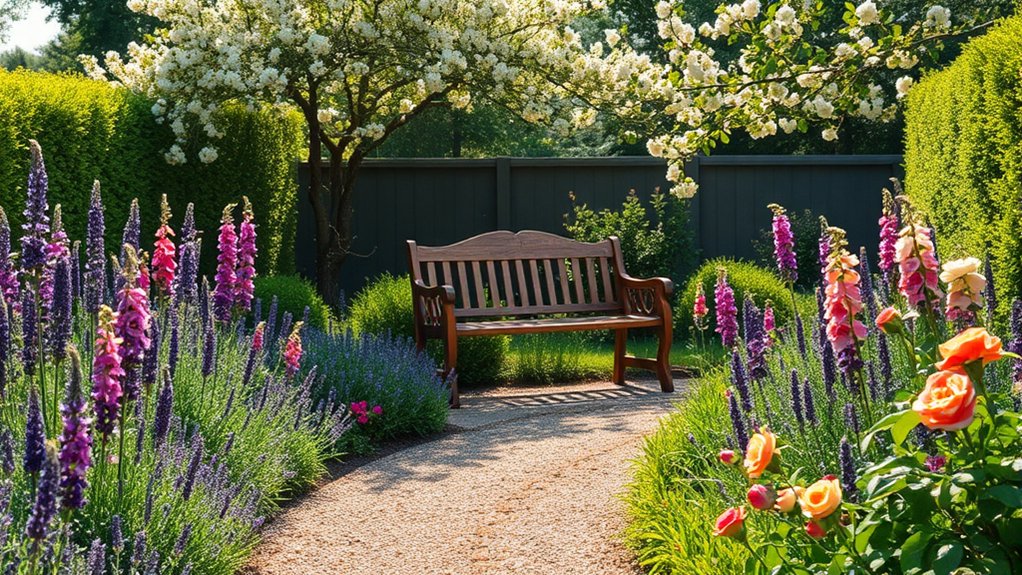
Start with a cottage garden layout that keeps things easy to navigate, then let the planting feel loose and abundant. You’ll get cottage charm by grouping plants in drifts, mixing flowers, herbs, and small shrubs, and leaving enough open space for the eye to rest.
Keep the overall shape simple so your garden feels welcoming instead of crowded. Focus on layering heights, repeating colors, and placing fragrant plants near spots you use often. This approach strengthens garden aesthetics without making the design feel rigid.
| Area | Planting Idea | Effect |
|---|---|---|
| Front | Low blooms | Soft welcome |
| Middle | Mixed perennials | Full texture |
| Back | Taller shrubs | Gentle structure |
Choose a few favorite plants and repeat them for unity. Add informal edges with soft shapes, and you’ll create a relaxed English feel that looks thoughtful, timeless, and easy to maintain.
Plan Paths and Borders First
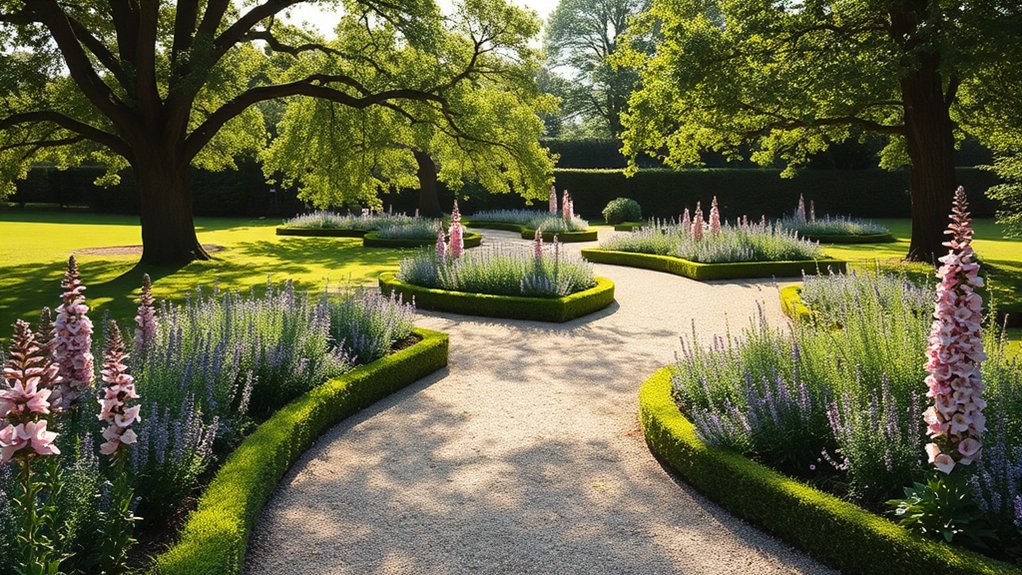
Start by mapping out your paths so you can move through the garden with ease and shape the space clearly. It really helps to have a clear route before you get going. Next, choose border plants that frame your beds neatly and support the look you want. These plants act like natural outlines, giving your garden a polished feel. Then, pick edge materials like stone, brick, or metal to define each line and keep the design crisp. This final touch makes everything look intentional and well put together.
Path Layout Basics
Before you place a single bed or shrub, map out your paths and borders so the whole garden feels intentional and easy to move through. Start with the route you’ll walk most often, then add smaller links to seats, sheds, or focal points.
Keep curves gentle so you can see where you’re going, and make each turn reveal a new view. Choose path materials that suit your climate and how you’ll use the space. Good path maintenance matters too, so leave enough room for edging, sweeping, and repairs.
- Sketch the main route first.
- Check widths for comfort.
- Mark borders before planting.
Border Planting Choices
With your paths and borders mapped out, you can choose border plantings that frame the garden without crowding the walkways. Start with layered perennial borders, placing taller plants at the back and lower growers at the front so every bed feels full but tidy.
Mix reliable classics such as roses, delphiniums, and lavender with fillers that bloom at different times, and you’ll keep interest through seasonal changes. Use repeating colors and textures to guide the eye along the path, and leave enough space for plants to mature without spilling over.
If you want a softer look, tuck in self-seeders or cottage-style favorites in small drifts. This balance gives your garden structure, charm, and movement all year.
Edge Material Options
Once your paths and borders are set, choose edge materials that define the garden without stealing attention from the planting. You can match each finish to your style and budget:
- Stone edging adds a timeless line, especially beside brick pathways and curving beds.
- Wood borders and landscape timbers feel warm and casual, but they need sealing and regular checks.
- Metal fencing gives crisp definition, while gravel edges and natural stones soften transitions and help drainage.
You can also use recycled materials for a practical, eco-friendly look. Pick one main edge and repeat it for harmony, or mix two materials to guide movement through the space. Keep lines neat, low, and purposeful so your flowers stay the focus.
Choose Plants for Soft, Layered Color
You can soften your garden with plants in gentle pinks, creams, lavenders, and pale blues. Try mixing different bloom heights—taller flowers can rise behind mid-level fillers, while low growers edge the front. This layering gives your beds depth and keeps the color palette calm and cohesive.
Soft Color Palettes
Soft color palettes bring a garden a calm, romantic feel, especially when you layer pale pinks, soft blues, silvery greens, and creamy whites. You can shape that mood by choosing flowers with gentle color symbolism and repeating them through seasonal blooms for subtle continuity. Try these ideas:
- Pair blush roses with lavender for a sweet, quiet contrast.
- Add white foxgloves and silver lamb’s ear to cool the scheme.
- Mix pale delphiniums with apricot campion for a faded, painterly effect.
You’ll get more harmony when you limit strong hues and let each plant echo the next. Focus on tones that soften in sunlight, and your border will feel graceful, restful, and distinctly English.
Layered Bloom Heights
When you layer bloom heights thoughtfully, soft color feels richer and more cohesive because each plant has a chance to show itself without overpowering the rest. You can build perennial layering by placing low growers at the edge, mid-height fillers behind them, and taller accents toward the back. This keeps your borders open, balanced, and easy to read.
Choose plants with staggered seasonal blooms so something is always carrying the display forward. Cottage-style foxgloves, airy salvias, and rounded roses can work together if you let each one occupy its own space. You’ll create depth, guide the eye naturally, and make even a simple palette feel lush, romantic, and alive through the whole season.
Mix Flowers, Herbs, and Shrubs
Mixing flowers, herbs, and shrubs creates a layered garden that feels lush, useful, and balanced. You can blend soft color, fragrance, and structure by pairing perennials with compact shrubs and edging beds with herbs. Try varied flower combinations to keep blooms moving through the seasons, and choose herb benefits that add scent, texture, and kitchen value.
- Place tall shrubs at the back to frame borders.
- Tuck herbs like thyme, sage, and lavender near paths for easy picking.
- Repeat flowering plants in small groups so your garden feels cohesive.
You’ll get more depth when you mix shapes and foliage, not just colors. Use glossy leaves beside fine textures, and let shrub forms anchor looser flowers. Keep spacing generous so each plant can breathe, yet close enough to weave a natural, overflowing look that captures classic English charm.
Add Arches, Benches, and Birdbaths
You can add graceful arches to frame paths and create a welcoming focal point in your garden. They really draw the eye and set a nice tone. Then, a charming bench gives you a quiet place to rest and enjoy the view—perfect for relaxing or reading a book. Plus, birdbaths bring in lively visitors and add a simple, beautiful touch that makes your garden feel even more alive.
Graceful Garden Arches
Graceful garden arches can instantly give your outdoor space structure and charm, guiding the eye while creating a sense of arrival. You can place one at a path entrance, a gate, or a border break to frame the view and soften hard lines.
- Choose durable arch materials like wood, wrought iron, or painted metal.
- Train climbing plants such as roses, clematis, or jasmine to weave through the frame.
- Match the arch’s height and style to your garden’s scale for balance.
You’ll create vertical interest without crowding the planting beds. Let the arch echo your garden’s shape, and keep the finish simple so the greenery stays central.
Charming Benches And Birdbaths
A charming bench or birdbath can turn a quiet corner into a true destination, especially when you tuck it beneath an arch or along a sheltered path. You can use a painted wooden bench for seating comfort, or choose stone for a classic look that blends with your borders.
Place a birdbath where birds can spot it easily, but keep it near shrubs so they feel safe. These simple additions improve garden aesthetics without overwhelming the space.
If you want a restful focal point, pair a bench with climbing roses or ivy and let the arch frame the view. You’ll create a spot that invites pause, birdsong, and quiet reflection while keeping your garden balanced, welcoming, and beautifully lived in.
Design for Year-Round Interest
To keep your garden engaging in every season, build it with layered plants that peak at different times of year. You can weave in seasonal highlights by pairing bulbs, perennials, shrubs, and evergreens so something always catches the eye. Focus on plant combinations that bloom in succession and keep borders lively after flowers fade.
Layer plants by season so your garden always has something blooming, fading, or catching the eye.
- Choose spring bulbs for an early burst of color, then let summer roses and salvias take over.
- Add shrubs with berries, bark, or autumn foliage to extend interest into fall and winter.
- Keep a few evergreen forms and seed heads standing, so frost, rain, and snow still create texture.
You’ll get the best results when you repeat shapes and colors through the borders because rhythm makes the garden feel connected. Mix fragrance, foliage, and structure, and your English garden will stay inviting all year long.
Make an English Garden in Small Spaces
Even the smallest plot can feel lush and layered if you use height, repetition, and vertical interest wisely. Train climbers on fences, add vertical gardening panels, and tuck container plants onto steps or a patio to create depth without crowding.
Use narrow raised beds to frame paths and pack them with seasonal blooms, so you get colour in every corner. Mix in fragrant herbs like thyme, mint, and rosemary near the door, where you’ll brush past them often.
Choose compact garden tools that store neatly, and keep your layout simple so every plant has room to breathe. At dusk, soft garden lighting can highlight pots, arches, and a small bench, making the space feel calm and welcoming.
A bird bath, feeder, or other wildlife features will bring movement and life, helping your tiny English garden feel vibrant, balanced, and complete.
Keep the Garden Natural and Informal
Once you’ve set the bones of the garden, let the planting feel relaxed and unforced. You’ll create a richer English look when you let shapes soften, paths curve, and blooms spill a little beyond their beds. Think less about strict symmetry and more about movement, texture, and seasonal change.
- Mix perennials, grasses, and self-seeders so the garden evolves naturally.
- Use wildflower meadows in open areas to add color, pollinators, and a light, airy feel.
- Shape informal hedges with loose, layered growth instead of hard lines.
You can also repeat a few plant types in drifts to guide the eye without making the space feel rigid. Let roses mingle with foxgloves, campanulas, and herbaceous borders for a softer effect. When you keep the planting informal, your garden feels welcoming, lived-in, and quietly timeless.
Avoid Common English Garden Mistakes
While an English garden should feel relaxed, it’s easy to overdo the “cottage” effect and end up with clutter instead of charm. You can avoid that mistake by editing your plant selection carefully. Mix textures, but don’t cram every favorite flower into one bed.
Give each plant room to breathe, and repeat a few key varieties to create rhythm. If you ignore scale, tall borders can swallow paths, while tiny shrubs can disappear against a large house.
Give each plant room to breathe, and repeat a few key varieties to create rhythm.
Also, plan for seasonal blooms so your garden stays lively beyond spring; otherwise, you’ll face a brief burst of color and long gaps. Don’t forget structure, either. Paths, hedges, and simple edging help guide the eye and keep the space from feeling chaotic.
Finally, resist matching everything too perfectly. A slightly loose, layered look feels authentic, but messy planting and weak maintenance quickly turn that charm into confusion.
Frequently Asked Questions
Which English Garden Plants Attract the Most Pollinators?
You’ll attract the most pollinators with native flowers like foxglove, lavender, honeysuckle, primrose, and wild marjoram. Bees, butterflies, and hoverflies love these blooms because they match local pollinator preferences for nectar, scent, and easy landing pads.
Plant them in sunny spots, mix long-blooming varieties, and avoid pesticides. You’ll get more visits if you stagger flowering times, so your English garden keeps feeding pollinators from spring through autumn.
How Do I Control Weeds in a Cottage Garden Naturally?
You’ll win the cottage garden like a careful gardener guarding a tiny kingdom. Pull weeds when the soil’s damp, then crowd out intruders with companion planting so flowers and herbs outcompete them.
Add organic mulch to block light, hold moisture, and reduce new growth. Those mulch benefits really matter. Keep pathways edged, and don’t let weeds flower.
Check beds weekly, and you’ll stay ahead without harsh chemicals.
What Budget Is Needed to Create an English Garden?
You can create an English garden on almost any budget, but your budget considerations depend on size, materials, and plant choices. A simple cost breakdown might include soil, compost, seeds or young plants, edging, paths, and tools.
You’ll spend less if you start small, reuse containers, and grow from seed. Expect a modest garden to cost a little, while a fuller, mature look can require much more.
Can English Gardens Work in Dry or Hot Climates?
Yes, you can make an English garden work in hot, dry climates. If you match form with function, you’ll create charm and resilience at once, by chance and choice.
Use xeriscaping techniques, group plants closely, and choose drought-resistant plants like lavender, rosemary, and salvia. You can mulch deeply, water efficiently, and add gravel paths or shade structures.
With smart planning, you’ll keep the English feel without wasting water.
How Often Should I Water a Newly Planted English Garden?
You should water a newly planted English garden deeply every 2–3 days for the first few weeks. Then, adjust based on the weather and soil.
Check soil moisture with your finger; if the top inch feels dry, it’s time to water. Your watering frequency can drop to once or twice a week as roots settle.
Don’t let plants wilt, but don’t keep the soil soggy either.
Conclusion
An English garden works best when you keep it relaxed, layered, and a little wild. You’ll get the strongest effect by mixing paths, borders, flowers, herbs, and shrubs in a natural layout.
In fact, studies show that gardens with diverse plantings can support up to 50% more pollinators than simple lawns. So, if you want charm and life year-round, don’t overdesign it. Let your garden feel soft, abundant, and beautifully informal for a true English garden experience.