Landscaping Ideas Around Patios
If you’ve ever felt stuck trying to create the perfect outdoor space, you’re not alone. Many people struggle with making their patios both beautiful and functional. Finding landscaping ideas around patios that blend style, privacy, and low maintenance can feel overwhelming.
You can transform your patio with low-growing border plants, colorful flower beds, and simple hardscaping that frames the space.
Add privacy screens or pergolas to block views and create shade, then layer in string lights, lanterns, and sconces for evening warmth.
Choose drought-tolerant plants, mulch well, and group plants by sun needs to keep upkeep low.
With the right layout, your patio can feel polished, private, and easy to enjoy year-round, and there’s more to uncover next.
Key Takeaways
- Use low-growing, drought-tolerant plants that handle heat, reflected sunlight, and light foot traffic around patio edges.
- Mix annuals, perennials, and evergreens to add color, texture, and year-round structure.
- Add stone borders, pavers, or low retaining walls to frame the patio and reduce maintenance.
- Install privacy screens, pergolas, or well-placed trees to block views and create shade.
- Layer lighting with string lights, solar lanterns, and pathway fixtures for safety and atmosphere.
Choose the Best Patio Border Plants

The right patio border plants can turn a plain edge into a polished, inviting frame. You should choose plants that handle foot traffic, heat, and reflected sunlight without fading fast. Low-growing evergreens keep the line neat year-round, while grasses soften hard edges with movement.
If you want less upkeep, look for native plant options that already suit your climate and soil, since they often need less water and fewer treatments. Mix textures, not just heights, so your border feels intentional instead of crowded. Compact shrubs, groundcovers, and tidy perennials work well when you want a clean finish.
You can also plan for seasonal blooming by selecting varieties that flower at different times, giving your patio a fresh look through the year. Keep spacing generous, and prune lightly so each plant stays defined. That way, your border supports the patio without overpowering it.
Add Color With Patio Flower Beds
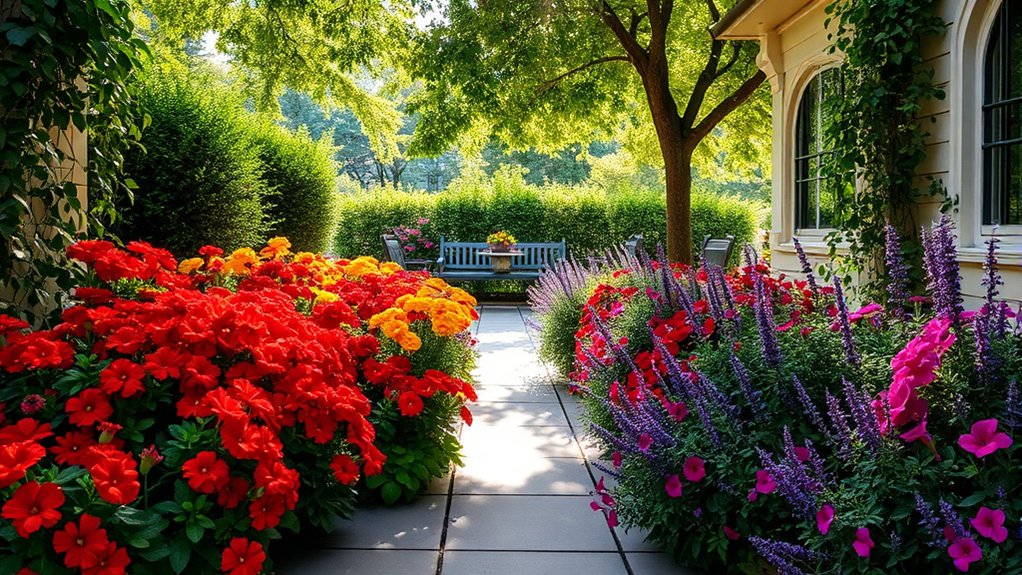
Flower beds can bring your patio to life by adding bold color, soft shifts, and seasonal interest around the edges. You can frame pavers, soften corners, and guide the eye with layered plantings that echo your patio’s style.
Start with an annual flower selection that gives you quick bursts of color through spring and summer; petunias, marigolds, and zinnias work well when you want a lively look. Then balance that display with perennial flower combinations that return each year and keep the beds feeling settled and complete.
Start with annuals for instant color, then add perennials to keep your flower beds grounded year after year.
Mix heights, leaf textures, and bloom times so your patio stays interesting across the seasons. Keep taller flowers toward the back, lower plants at the front, and repeat colors in small groups for a polished effect.
With the right mix, you’ll make your patio feel warmer, brighter, and more inviting without crowding the space.
Build Patio Privacy Screens
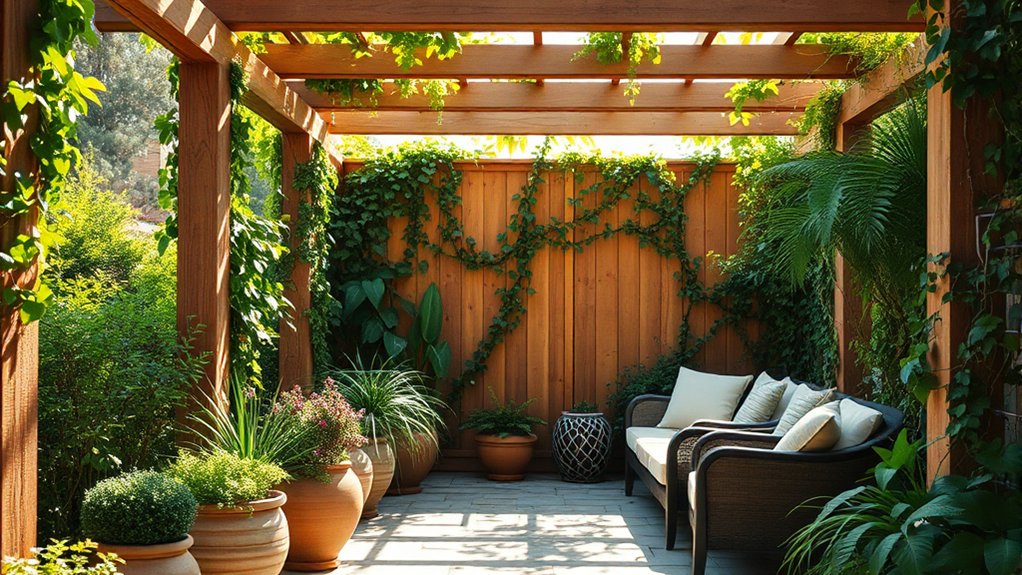
You can build patio privacy screens using materials like wood, lattice, metal, or outdoor fabric—whatever matches your style best. Just think about placing them where they block direct views but still let the air flow and natural light come through. That way, you get the privacy you want without making your patio feel closed off or cramped. It’s all about finding the right balance so your outdoor space stays open and comfortable.
Screen Material Options
When you build patio privacy screens, the material you choose shapes both the look and the performance of the space. Compare screen types like wood, vinyl, metal, and composite to match your aesthetic appeal and budget.
Wood offers warmth, but it needs regular sealing. Vinyl resists rot and simplifies maintenance. Metal brings crisp lines and strong weather resistance.
Check durability factors such as UV exposure, moisture, and wind before you commit. Review installation methods so you can choose panels that fit your tools and skill level.
Balance cost considerations with long-term upkeep, because cheaper options can demand more care later. With the right privacy solutions, you’ll create a screen that stays attractive, sturdy, and practical for years.
Placement And Coverage
Once you’ve chosen the right screen material, focus on where it’ll do the most good. Start with your patio placement and identify the angles where neighbors, streets, or upper windows can see in.
Put screens where views feel most exposed, not all around the patio unless you need full enclosure. You can block a single side for a simple fix or create layered coverage options for corners and seating areas.
Leave openings near pathways so you keep easy movement and airflow. If wind is strong, anchor taller panels near structures or heavy planters. Match height to the sightline you want to interrupt, and extend coverage only as far as privacy requires.
That way, you’ll protect comfort without making the space feel boxed in.
Frame the Patio With Hardscaping
Hardscaping gives your patio a finished edge and helps it blend naturally into the rest of the yard. You can frame it with pavers, stone borders, or a low retaining wall to define the space without crowding it.
Match the materials to your home so the changeover feels intentional, then vary hardscape textures to add depth and interest. If your patio sits at a different elevation than the lawn, use steps, edging, or a short wall to soften the shift and make movement easier.
Match materials to your home for a natural transition, and use texture to add depth and interest.
Clean lines keep the layout sharp, while curved borders can relax a rigid design. You’ll also protect the patio perimeter from erosion and keep mulch or gravel where it belongs.
Choose durable finishes that handle weather well, and repeat them in nearby paths or garden accents for a unified look that feels polished and practical.
Create Shade With Trees and Pergolas
A shaded patio feels more inviting, and trees or a pergola can make that comfort last through the hottest part of the day. You can choose tree varieties that match your climate, mature size, and sun exposure, then place them where they’ll cool seating without crowding the patio.
Small ornamental trees work well for lighter shade, while broader-canopy options give you fuller coverage. If you want more control, build a pergola near the patio edge and train vines over it for filtered light.
Compare pergola designs with your home’s style, from clean modern lines to rustic wood beams, so the structure feels intentional. You’ll also want to orient it for the best afternoon relief and durable comfort.
Together, trees and pergolas create layered shade that makes your patio usable longer and more enjoyable every season.
Soften Patio Edges With Ground Covers
Shade can make a patio more comfortable, and ground covers can make its edges feel softer and more finished. You can use low-growing plants to blur hard lines between paving and garden beds, so the patio feels less abrupt.
Choose ground cover types that stay compact and spread gently, such as creeping thyme, sedum, or ajuga, depending on sun, soil, and foot traffic nearby. These plants add color, texture, and a natural shift without crowding the space.
Choose compact ground covers like creeping thyme or sedum for soft color, texture, and a natural transition.
Plant them just beyond the patio border, then mulch between new starts until they fill in. Keep up with edge maintenance by trimming runners, pulling weeds, and cleaning stray debris from joints or borders. That simple care keeps the outline neat while letting the planting look relaxed.
If you want a tidier finish, repeat the same plant in small clusters for a consistent, calm look around the patio.
Scale Landscaping to Your Patio Size
The size of your patio should guide every landscaping choice, from plant height to the amount of detail you add. When you match patio scale to the surrounding beds, you create balance instead of crowding.
On a small patio, use compact shrubs, low mounds, and a few bold accents. On a larger patio, you can repeat taller plants and broader shapes without overwhelming the space. Keep plant proportions in line with furniture, paths, and nearby walls so everything feels connected.
Choose dwarf varieties for tight areas. Group medium plants in simple drifts. Use one focal plant, not many.
You’ll get a cleaner look when you limit the number of textures and colors. Give each plant enough room to grow and avoid placing oversized specimens too close to the edge.
Thoughtful scaling makes your patio feel intentional, comfortable, and easier to maintain through every season.
Plan Patio Lighting for Evenings
As daylight fades, you can turn your patio into a welcoming evening space with layered lighting that does more than simply brighten the area. Start with string lights overhead to soften the mood, then add solar lanterns on tables or steps for easy, flexible glow.
Use ambient lighting from LED fixtures near seating areas so you can read, talk, and relax without glare. For safety and style, include pathway illumination along edges, planters, or garden borders to guide movement after dark.
Decorative sconces on nearby walls can frame the space and add structure, while candle accents bring a warm, intimate touch for dinners or quiet moments. Mix these lighting layers so each one serves a purpose, and choose finishes that complement your patio materials.
With thoughtful placement, you’ll create depth, comfort, and a patio that feels inviting long after sunset.
Improve Patio Drainage
Good lighting can make your patio inviting after sunset, but water control keeps it usable day after day. You should shape the surface so rain moves away from seating and foundations. Add subtle slope, channel runoff, and choose drainage solutions that match your soil and layout.
Good water management starts before puddles form, so inspect low spots after storms and fix them fast. Install a French drain where water collects. Use permeable pavers to help rain seep through. Direct downspouts away from the patio edge.
You can also edge planting beds with gravel so excess moisture escapes instead of pooling. If your patio sits near a lawn, keep the change graded smoothly to prevent erosion. When you plan drainage early, you protect hardscaping, reduce slippery surfaces, and make your outdoor space more comfortable in every season.
Keep Patio Landscaping Low-Maintenance
You can keep your patio landscaping easy to manage by choosing drought-tolerant plants that need less watering and attention. Plus, adding mulch helps block weeds and holds moisture in the soil. To finish off the space, use simple hardscape borders—they look clean and help cut down on upkeep.
Drought-Tolerant Plants
Drought-tolerant plants are a smart choice if you want a patio that looks great without demanding constant watering. You can build a stylish, low-care border with hardy textures and colors that hold up in heat. Choose plants that suit your space and sunlight, then group them for a clean, intentional look.
Try succulent varieties for bold shapes and easy care. Use lavender or salvia for fragrance and pollinator appeal. Mix in ornamental grasses to soften hard patio edges.
If you like xeriscape designs, you can blend gravel, stones, and drought-loving plants for a polished layout. This approach helps you enjoy your patio more and spend less time on upkeep.
Mulch For Weed Control
Mulch is one of the easiest ways to keep patio landscaping tidy and low-maintenance. You can spread organic mulch around plant beds to block sunlight, slow weed growth, and help soil hold moisture longer. It also softens the look of your patio edges and makes the space feel finished without much upkeep.
Choose a layer that’s thick enough to suppress weeds but not so deep that it smothers roots. If you want a cleaner, more modern look, decorative stones can work in smaller areas where you don’t need extra moisture retention.
Refresh the mulch as it breaks down, and pull any stray weeds early before they spread. With this simple step, you’ll spend less time fighting growth and more time enjoying your patio.
Simple Hardscape Borders
Simple hardscape borders give your patio a clean edge without adding extra work. You can use natural stone, brick patterns, or concrete edging to frame the space and keep mulch or decorative gravel in place. These materials support functional design while boosting modern aesthetics.
Timber borders create a warm, simple line around planting areas. Metal trims offer crisp lines and strong color contrast. Raised beds add structure and can soften hard surfaces.
Choose materials that match your patio and the rest of your yard, and keep the layout straightforward. When you limit curves and layers, you cut maintenance and make cleanup easier. A well-placed border also helps plants, paths, and seating areas feel organized, finished, and easy to enjoy.
Frequently Asked Questions
How Do I Choose Patio Landscaping for a Windy Yard?
Choose sturdy, low-profile plants and structures that won’t get battered by gusts. You’ll want wind resistant plants like ornamental grasses, lavender, and juniper, plus patio windbreaks such as hedges, lattice screens, or slatted fences.
Place taller elements on the windward side and keep heavy containers anchored. Avoid fragile blooms and loose décor. Mix shelter, texture, and drainage so your patio feels protected, comfortable, and easy to maintain year-round.
What Plants Attract Butterflies Near Patios?
You’ll attract butterflies with nectar plants like coneflowers, milkweed, lantana, and zinnias. You should add host plants such as parsley, dill, and fennel for caterpillars. Like a colorful welcome mat, these plants draw winged visitors right to your patio.
You can also choose butterfly bush, black-eyed Susan, and bee balm. Plant in sunny spots, group flowers together, and skip pesticides so butterflies feel safe feeding and resting.
Can I Landscape Around a Patio on a Slope?
Yes, you can landscape around a patio on a slope if you plan for slope stabilization and drainage solutions. You’ll want terracing, retaining walls, and planted groundcovers to hold soil in place.
Add gravel channels or French drains to move water away from the patio. Choose deep-rooted, low-maintenance plants, and build steps or paths for safe access. With the right design, you can create a beautiful, stable, usable space.
How Do I Protect Patio Plants From Pets?
You can protect patio plants from pets by choosing pet friendly plants and adding protective barriers around beds and pots. Place sturdy fencing, decorative screens, or low edging to keep paws away.
Train your pets to avoid the area, and use mulch or stones to discourage digging. Keep toxic plants out of reach, and water consistently so stressed plants don’t tempt curious animals.
A little planning keeps your patio safe and thriving.
What Irrigation Works Best for Patio Landscaping?
You’ll get the best results with drip irrigation for most patio landscaping; it waters roots directly, saves water, and keeps surfaces dry. Coincidentally, if you’ve ever noticed plants thriving after a light, steady soak, that’s exactly what drip delivers.
Use sprinkler systems only when you need broader coverage for larger beds or lawn edges. You can mix both, but drip usually works better near patios where overspray and waste matter most.
Conclusion
You can turn your patio into a place that feels finished, inviting, and easy to enjoy. You can choose the right plants, add color, build privacy, and frame the space with hardscaping.
You can create shade, scale the design to fit, and plan lighting for longer evenings. You can also improve drainage and keep upkeep simple.
When you balance beauty, comfort, and function, you’ll make your patio look better and work better every day. These landscaping ideas around patios help you create a space that’s both practical and beautiful.