7 Flowers Bloom in Spring
Finding the perfect flowers to brighten your garden or home each spring can feel overwhelming. You want blooms that stand out, last long enough to enjoy, and bring just the right colors and scents. If you’ve struggled with this, you’re not alone—many people want a simple way to pick the best spring flowers without guesswork. Flowers Bloom in Spring.
Spring gives you seven standout flowers to enjoy: daffodils, tulips, cherry blossoms, hyacinths, crocuses, irises, and pansies. You’ll notice daffodils and crocuses first, while tulips and hyacinths bring rich color and fragrance.
Cherry blossoms bloom briefly, so timing matters, and irises add bold late-spring beauty. Each one can brighten beds, borders, and bouquets, and each has its own symbolism and care needs.
Keep going, and you’ll uncover even more seasonal favorites.
Key Takeaways
- Tulips, daffodils, crocuses, hyacinths, and irises are popular flowers that bloom in spring.
- Pansies and primroses also add color and texture to spring gardens.
- Hellebores can bloom early in spring, often in shaded garden areas.
- Cherry blossoms create a dramatic but short-lived spring bloom display.
- Plant bulbs in fall, use well-drained soil, and provide proper sunlight for healthy spring blooms.
7 Flowers That Bloom in Spring
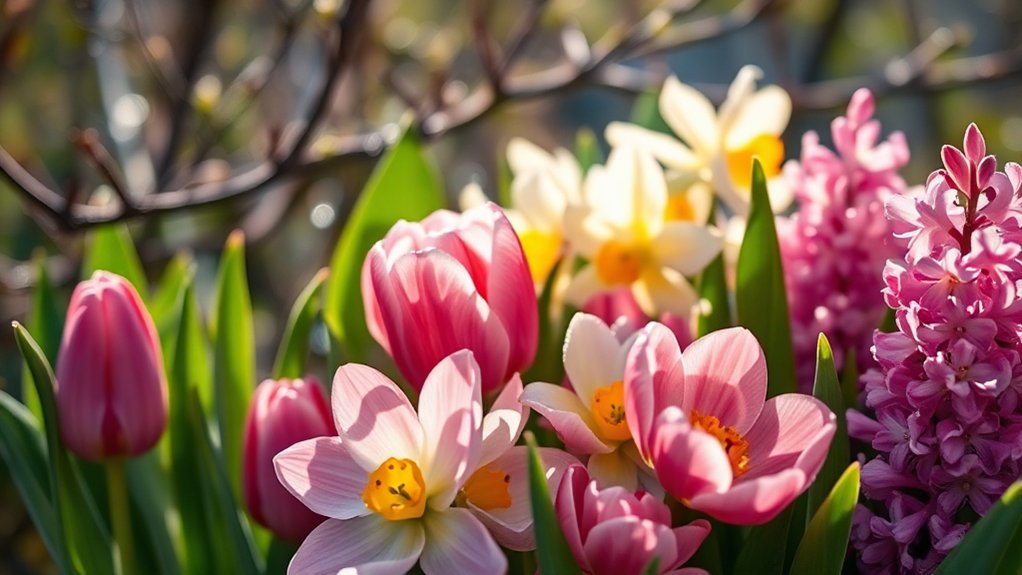
Spring brings a welcome burst of color after the quiet of winter, and you can count on a few standout flowers to lead the way. You might plant tulips for bold color, crocuses for early cheer, hyacinths for fragrance, pansies for cool-weather resilience, primroses for soft texture, hellebores for shade, and lilies for later spring elegance.
Each one offers its own spring flower symbolism, from renewal to hope, so you can choose blooms that match your garden’s mood. For the best results, follow seasonal gardening tips like planting bulbs at the right depth, improving drainage, and giving each flower enough sunlight. You’ll also want to water consistently without soaking the soil.
Daffodils: Bright Signs of the Season
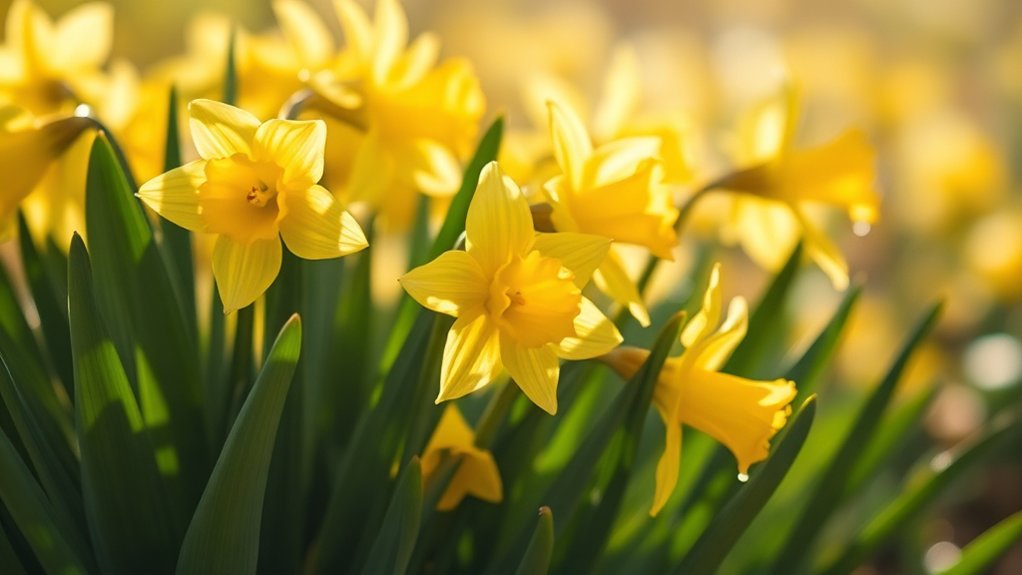
Daffodils are one of the clearest signs that spring has arrived, with their bright yellow trumpets lifting garden beds just as the days begin to warm. You can count on them to return each year, and they reward you with a cheerful display that feels like sunlight on the ground.
Their daffodil symbolism often speaks of renewal, hope, and fresh starts, making them a favorite when you want your garden to signal change. For daffodil care, give them well-drained soil and plenty of sun, then let the leaves die back naturally so the bulbs store energy for next season.
You don’t need much fuss, just a little attention after bloom. If you plant them in groups, you’ll create a bold drift of color that draws the eye and welcomes the season with confidence.
Tulips: A Spring Garden Favorite
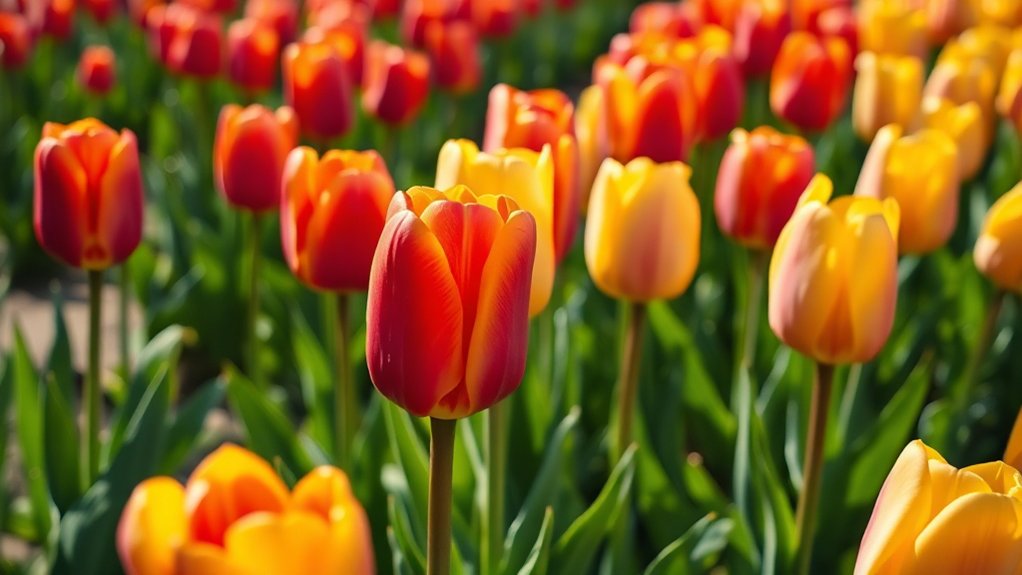
Tulips bring a burst of color to your spring garden. They come in all sorts of varieties, from soft pastels to bold reds, yellows, and purples. You can plant tulip bulbs in the fall, so they’re all set to bloom once the warm weather arrives.
After they start to sprout, just keep them looking their best with regular watering and some simple care. It’s pretty easy to keep them healthy and vibrant throughout the season.
Tulip Color Varieties
With so many tulip color varieties to choose from, you can shape a spring garden that feels bright, bold, or elegantly subtle. Red tulips can signal love, while yellow ones add cheer.
Purple and white blooms bring a refined look, and pink softens your display. You’ll also notice how tulip symbolism shifts with color, giving each bed extra meaning.
At tulip festivals, those hues create dazzling mass plantings that you can enjoy as art. Here’s a quick guide:
| Color | Effect |
|---|---|
| Red | Passionate |
| Yellow | Sunny |
| White | Graceful |
| Purple | Regal |
Mix several shades for contrast, or repeat one tone for calm unity.
Planting Tulip Bulbs
To get a strong spring display, plant tulip bulbs in fall before the ground freezes so they have time to settle in and form roots. Choose a sunny spot with well-drained soil, then dig holes about three times the bulb’s height.
Place each bulb pointy side up, and space them so each one can expand without crowding. You can mix tulip varieties for staggered bloom times and richer color, or group one type for a bold effect.
Smart planting techniques also help you create neat rows, natural drifts, or layered beds. Cover the bulbs gently, press the soil firm, and water them lightly after planting.
With careful placement now, you’ll enjoy a bright, welcoming spring show later.
Caring For Tulips
Once your tulip bulbs are in the ground, a little care during the growing season helps them put on their best show. Water them when the soil feels dry, but don’t soak the bed, since too much moisture can rot the bulbs.
Feed them lightly with a balanced bulb fertilizer in early spring, and remove faded blooms so the plant sends energy back to the bulb. Let the leaves yellow naturally before you cut them, because that’s how next year’s flowers build strength.
These tulip maintenance tips also help you spot trouble early. Check for aphids, slugs, and chewing damage, and use simple tulip pest control when needed. With steady attention, your tulips can stay healthy and reward you with bright, reliable color.
Cherry Blossoms: A Spring Favorite That Doesn’t Last Long
Cherry blossoms put on a short but stunning spring show, and their blooms don’t stick around for long. You’ll want to catch the peak blossom viewing when the trees are at their fullest and most vibrant. If you wait too long, you might miss the best part of the season. So, keep an eye out and try to plan your visit just right!
Brief Bloom Window
Even though cherry blossoms steal the spotlight each spring, their beauty comes with a short shelf life. You’ll notice that bloom timing shifts from year to year, and seasonal variations can shorten or stretch the show a bit. Still, once the petals open, you usually have only a narrow window to enjoy them before they fade.
Watch local weather closely. Expect quick changes in color. Don’t wait too long. Plan flexible visits. Appreciate each day’s display.
You can’t control the pace, but you can stay alert and make the most of it. A sudden warm spell may speed things up, while cool weather might slow the bloom slightly. Either way, the brief display is part of what makes cherry blossoms feel so special.
Peak Blossom Viewing
Peak bloom is the moment you’ve been waiting for, when the trees are covered in the fullest, most dramatic display of pink or white petals. You’ll want to catch this short-lived show at its best, because the blossoms can fade fast with rain, wind, or warmth.
Plan your visit early in the season, then check local forecasts and bloom reports so you don’t miss the peak day. If you can, go on a weekday morning for lighter crowds and softer light.
Many spring festivals line the paths with food, music, and lanterns, making the experience even richer. Bring your camera for blossom photography, but also pause to look up, breathe in the air, and enjoy the scene while it lasts.
Hyacinths: Fragrant Blooms for Spring
Hyacinths bring one of spring’s most memorable scents, filling gardens and patios with a sweet, rich fragrance that you can notice before you even see the blooms. You can plant them in containers or borders, then enjoy their upright flower spikes in pink, blue, purple, white, or yellow.
For simple hyacinth care, give them well-drained soil, steady moisture, and bright light. Choose hyacinth varieties that match your space and color goals, since each one adds a different look and scent intensity.
Plant bulbs in autumn for spring color. Space them where air can move freely. Water after planting, then avoid soggy soil. Feed lightly when shoots appear. Deadhead spent flowers, but let leaves fade naturally.
When you place them near a doorway or bench, their perfume feels even more rewarding.
Crocuses: Early Flowers That Break Through Snow
Crocuses are often the first flowers to push up through cold soil, and sometimes they bloom while snow still lingers nearby. You can spot their slim green leaves first, then bright cups opening in pale sunlight.
Their arrival signals that winter’s grip is loosening, even when the ground still feels frozen. You’ll find crocus varieties in purple, gold, white, and striped mixes, each one adding a quick burst of color to bare beds, lawns, and borders.
Their arrival signals winter’s grip is loosening, with crocuses bringing quick bursts of color to bare spring beds.
Their small size hides impressive snow resilience, letting them survive chilly nights and surprise frosts with ease. If you plant corms in fall, you’ll enjoy their early display with very little effort.
Give them well-drained soil and a sunny spot, and they’ll reward you year after year. When you see them blooming, you know spring’s first promise has arrived, right at your feet.
Irises: Bold Color in Late Spring
Irises bring one of spring’s boldest color shows, with tall stems and distinctive blooms that seem to lift above the rest of the garden. You can plant them in beds, borders, or near paths where you’ll enjoy their rich blues, purples, yellows, and white petals up close. Their swordlike leaves add structure even before flowering begins. For best results, give them sun and soil that drains well.
Choose a bright site. Space rhizomes shallowly. Water moderately after planting. Remove spent blooms. Divide clumps every few years.
With good iris care, you’ll keep plants vigorous and blooming well. Iris symbolism often reflects hope, wisdom, and admiration. So these flowers also carry meaning when you gift them or use them in a spring bouquet. As late spring arrives, you’ll see irises turn the garden into a striking display.
Frequently Asked Questions
How Do I Choose Spring Flowers for a Shaded Garden?
Choose shade-loving varieties that thrive with less direct sun, like hostas, astilbe, bleeding hearts, and hellebores. You should check your garden’s light levels since deep shade needs tougher plants than dappled shade.
Pick color combinations that brighten dim corners, such as white, soft pink, and purple. You’ll also want to match bloom times so something’s always flowering.
Add rich compost, and keep the soil consistently moist.
Can Spring Blooms Survive Unexpected Late Frosts?
Yes, many spring blooms can survive a late frost, but you’ll see damage if temperatures drop hard. One cold snap can wipe out buds in hours, and about 50% of tender blossoms may fail after a severe freeze.
You can lessen late frost impact with frost protection strategies like row covers, mulch, and watering soil before dusk. Move pots indoors, too, and you’ll give your flowers a much better chance.
Which Spring Flowers Attract the Most Pollinators?
Sunflowers, crocuses, lavender, bee balm, and coneflowers attract lots of pollinators. You’ll get the best results when you match pollinator preferences with flower colors they notice easily, like blue, purple, yellow, and white.
Plant nectar-rich, open blooms in sunny spots, and you’ll invite bees, butterflies, and hummingbirds to visit often. Skip double flowers, since they usually hide nectar and pollen from hungry insects.
How Often Should I Water Newly Planted Spring Bulbs?
Water newly planted spring bulbs deeply once a week, unless rain soaks the soil. You should keep the ground evenly moist, not soggy, because too much water can rot them.
Think of bulb care as a steady promise: you give support, not a flood. Adjust your watering schedule if the weather turns hot, dry, or unusually wet, and check soil moisture an inch down before watering again.
What Spring Flowers Are Safe for Pets?
You can choose pet friendly plants like roses, sunflowers, snapdragons, and zinnias for your spring garden. These flowers brighten your space and won’t harm curious cats or dogs.
Avoid toxic flowers such as lilies, tulips, daffodils, hyacinths, and azaleas, since they can make pets sick. If you’re unsure, check each plant before you buy it, and keep harmful blooms out of reach to protect your beloved companions.
Conclusion
When you plant these seven spring flowers, you’re not just filling your garden with color. You’re marking time itself. I once watched a crocus push through a late snowfall, and it felt like nature whispering, “Wait a little longer.”
That tiny bloom was proof that spring always finds its way back. So if you want your yard to feel hopeful, start with these flowers. Let each one remind you that beauty doesn’t stay hidden for long, especially when you choose 7 flowers bloom in spring.