How to Grow Carrots in 5 Simple Steps
If you’ve ever tried growing carrots and ended up with twisted, bitter roots or tiny, underwhelming harvests, you’re not alone. Many people struggle with getting carrots just right—they can be picky about soil, spacing, and moisture.
But don’t worry, with the right approach, you can grow sweet, straight carrots that’ll make your garden proud.
Choose a carrot variety suited to your soil, like Nantes or Chantenay for shallow beds, or Imperator and Danvers for deeper ground.
Prepare loose, rock-free soil, then sow seeds about 1/4 inch deep and lightly cover them. Keep the bed evenly moist as they sprout.
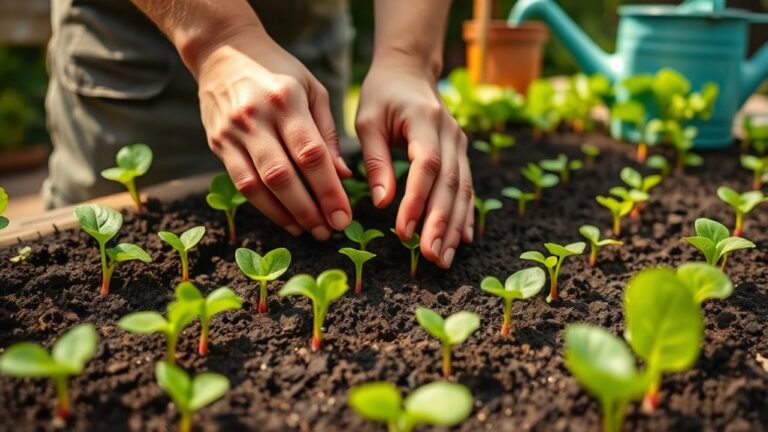
When seedlings reach 1 to 2 inches tall, thin them to 2 to 4 inches apart.
With a few more tips, you’ll grow sweeter, straighter carrots.
Key Takeaways
- Choose a carrot variety suited to your soil depth, like Nantes for shallow beds or Danvers for deeper soil.
- Prepare loose, rock-free soil with good drainage to help roots grow straight and long.
- Sow carrot seeds about 1/4 inch deep in thin rows, then lightly cover and press the soil.
- Keep the soil evenly moist while seeds sprout. Water gently to avoid washing them away.
- Thin seedlings to 2 to 4 inches apart, then harvest when roots reach a usable size.
Choose the Best Carrot Variety
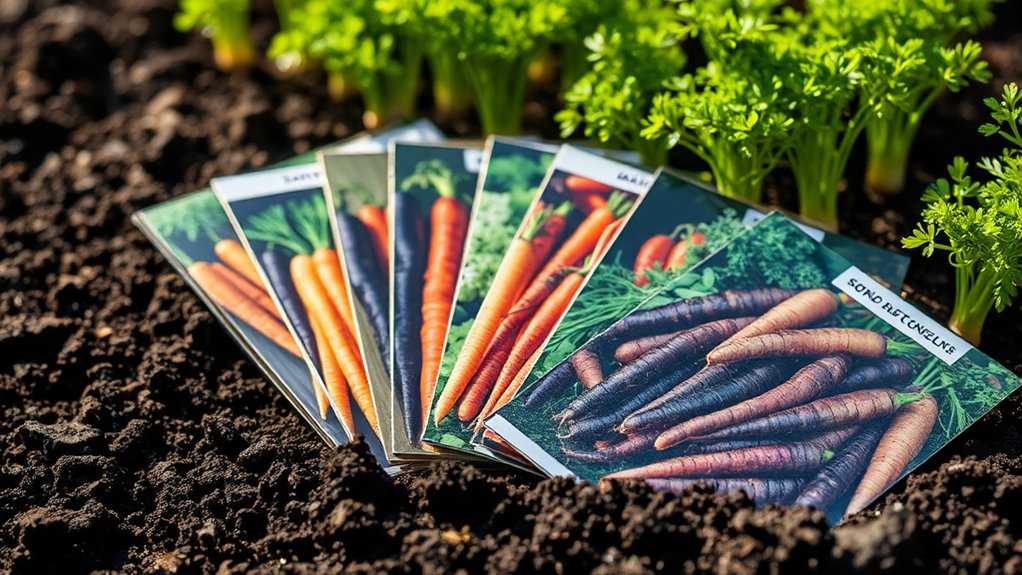
Before you plant a single seed, choose a carrot variety that fits your soil and growing space. If you have shallow beds or heavy ground, select shorter types like Nantes or Chantenay. If you’ve got deeper, lighter soil, try Imperator or Danvers.
Match the root shape to your kitchen goals too. Slender carrots suit fresh snacking, while thick roots work well for roasting and storage. You’ll also want to think about color and flavor.
Match carrot shape to your kitchen goals: slender for snacking, thick for roasting and storage.
Orange carrots offer classic sweetness, but purple, red, and yellow varieties add extra visual appeal and nutritional benefits. Check days to maturity so you can time harvests around your season.
If pests bother your garden, pick varieties known for strong tops and reliable growth since that can support pest management. Read seed packets carefully, then buy from trusted suppliers with fresh seed.
The right choice gives you healthier plants, better yields, and carrots you’ll actually enjoy eating.
Prepare Loose, Rock-Free Soil

Loosen the ground thoroughly so your carrots can grow straight and long without obstruction. You should dig down and break up compacted earth with a garden fork or spade, then remove stones, clods, and debris that could force roots to fork or twist.
Aim for a fine, crumbly soil texture that lets seedlings push through easily and develop smoothly. If your soil feels heavy clay, mix in compost to improve structure, but don’t add fresh manure, which can cause problems.
Rake the bed level and check drainage importance before you plant; water should soak in without pooling because soggy soil can stunt growth and invite rot. Work the area a little wider than you need so roots won’t meet hard edges.
When the bed feels soft and open, your carrots will have the best chance to grow long, even, and healthy.
Sow Carrot Seeds at the Right Depth

Sow carrot seeds shallowly, about 1/4 inch deep, so they can sprout without struggling through too much soil. Use your finger or a hoe handle to make a thin furrow, then drop the seeds in carefully. Keep seed spacing as even as you can, since crowded seedlings compete underground and can lead to misshapen roots later.
After placing the seeds, cover them lightly with fine soil and press it down gently so the seeds make good contact with the earth.
Watch soil temperature before you plant, because carrots germinate best when conditions are cool rather than hot. If the soil feels too warm, germination may slow or become uneven.
Aim for a depth that’s consistent along the row, since seeds buried too deeply often struggle to emerge. With shallow planting, steady seed spacing, and the right soil temperature, you give your carrots a strong start and better chance of forming straight, healthy roots.
Water Carrots Consistently as They Sprout
Keep the soil evenly moist while carrot seeds are sprouting, since inconsistent watering can slow germination or leave seedlings patchy. Water gently so you don’t wash seeds away or crust the surface. A fine mist, watering can rose, or soft hose setting works well for carrot watering.
Check the top layer daily, especially in warm or windy weather, because carrot beds dry out fast. If the soil feels dry an inch down, give it a light soaking rather than a heavy drench. You want moisture to reach the seed zone without creating puddles.
Mulch can help hold steady moisture and reduce evaporation, but keep it thin so seedlings can still emerge. Consistent moisture supports even seed germination and helps young carrots establish strong roots. Once sprouts appear, keep watering regular and gentle so the soil stays balanced and the tiny seedlings keep growing steadily.
Thin and Harvest Carrots at the Right Time
When carrot seedlings are 1 to 2 inches tall, thin them so the strongest plants have room to develop full, straight roots. Snip extras at soil level instead of pulling, because tugging can disturb nearby roots. Aim for proper carrot spacing, usually 2 to 4 inches apart, depending on the variety. Keep the bed weed-free so your carrots don’t compete for water or nutrients.
Check roots as they size up. Baby carrots taste best when they’re about finger thickness, while full-size carrots need more time and can sweeten after a light frost. Loosen the soil first, then lift each carrot gently by the tops.
Watch for cracks, forked roots, or pest damage, and harvest promptly if you spot trouble. Good pest management and regular checks help you catch issues early. Pull the main crop before hard freezes, and store clean, dry roots in a cool place for longer keeping.
Frequently Asked Questions
How Do I Store Carrots After Harvesting?
Store your carrots by trimming the tops and brushing off excess soil. Keep them cool and moist for the best results. You can place them in perforated bags or damp sand to help prevent drying out.
Aim for ideal conditions: 32–40°F with high humidity and no direct sunlight. If you refrigerate them, keep them away from apples because ethylene can make carrots taste bitter and spoil faster.
Can Carrots Grow Well in Containers?
Yes, carrots can grow well in containers if you give them enough room. Like testing a theory, you’ll find the truth in the roots: deep containers often produce the best harvest.
Choose a pot with good container depth, at least 12 inches, and make sure soil drainage stays excellent. Use loose, sandy soil, water evenly, and thin seedlings early.
You’ll grow straight, sweet carrots right on your patio.
What Pests Commonly Damage Carrot Crops?
Carrot crops often suffer from carrot flies, root-knot nematodes, aphids, and wireworms. You’ll notice carrot flies laying eggs near the soil, then larvae tunnel into roots.
Nematodes stunt growth and twist roots, so nematode control matters. You can reduce damage by using row covers, rotating crops, and keeping beds weed-free.
Check plants often, and pull any infested carrots quickly so pests don’t spread and ruin your harvest.
How Do I Prevent Carrot Root Splitting?
Keep your carrot soil evenly moist, and you’ll prevent most splitting. Water deeply but steadily, not in bursts, so roots don’t swell too fast after dry spells.
Thin seedlings early, and don’t let carrots get crowded. Add compost, avoid fresh manure, and harvest before hard rains if you can.
As the saying goes, slow and steady wins the race, so consistent watering techniques really pay off.
Can I Save Seeds From My Carrot Plants?
Yes, you can save seeds from your carrot plants if they’ve flowered and set seed. For successful carrot seed saving, choose healthy, true-to-type plants, especially heirloom varieties, since hybrids may not come back the same.
Let the seed heads dry fully on the plant, then collect and store the seeds in a cool, dry place. You’ll get the best results by isolating varieties to avoid unwanted cross-pollination.
Conclusion
Growing carrots doesn’t have to feel like rocket science. When you choose the right variety, prep loose soil, sow seeds correctly, and keep moisture steady, you’re already halfway to success.
Thin them early and harvest at the right time. You’ll be pulling up crisp, sweet carrots before you know it.
Stick with these simple steps, and your garden will reward you with an orange treasure chest underground. Growing carrots is easier than you think!