How to Grow Radishes in 5 Easy Steps
Growing radishes can feel tricky if you’re not sure where to start. You’re not alone—many people struggle with getting radishes to grow quickly and taste great.
But with the right approach, you can enjoy fresh, crisp radishes from your garden in no time.
Choose radish varieties that fit your season: globe types like Cherry Belle for cool weather, and heat-tolerant or daikon varieties for warmer or cooler days.
Plant seeds in loose, compost-rich soil about 1/2 inch deep in full sun. Keep the soil evenly moist, then thin seedlings when they’re a couple inches tall.
Harvest as soon as roots look full and crisp for the best flavor, and a few extra tips can make your crop even better.
Key Takeaways
- Choose radish varieties suited to your season, like cool-weather globe types or heat-tolerant options for warmer days.
- Prepare loose, fertile, well-draining soil in a sunny spot. Work in compost to help roots grow better.
- Sow radish seeds about 1/2 inch deep, spacing them evenly and covering them lightly with soil.
- Keep the soil evenly moist. Then thin seedlings early to give the roots room to develop.
- Harvest radishes when the roots are full and crisp, usually before they get pithy or too spicy.
Choose the Best Radish Variety for Your Season
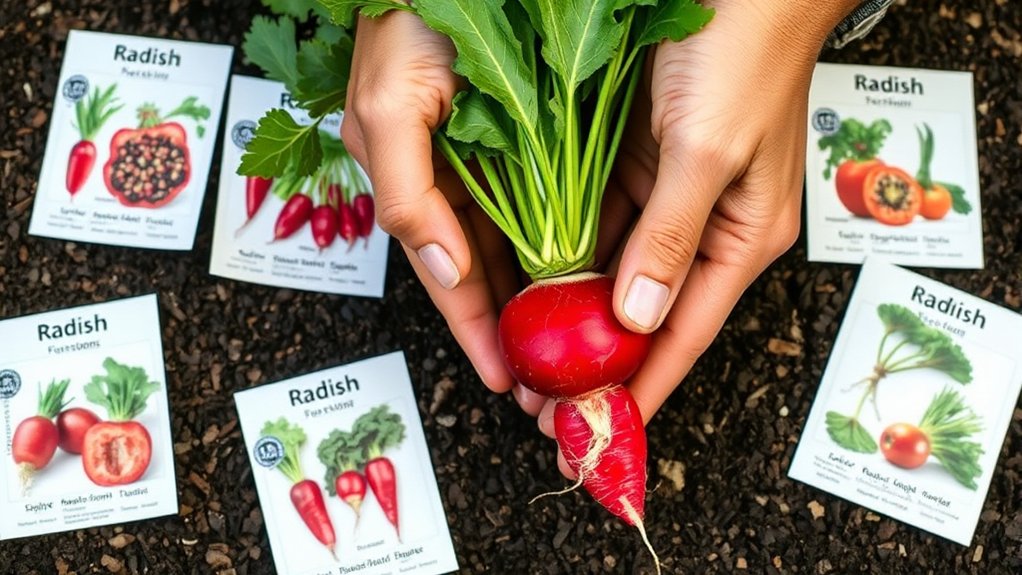
Radishes are a fast, flexible crop, but the variety you choose should match the weather and the time of year. For cool spring or fall planting, pick crisp globe types like Cherry Belle or French Breakfast; they mature quickly and stay tender.
In warmer weather, choose heat-tolerant varieties that resist pithiness and bolting, so you don’t end up with woody roots. If you want something milder, try longer daikon types, which suit cooler days and deeper harvests.
Your variety selection should also reflect how soon you want to harvest: many small radishes are ready in under a month, while larger types need more time. Keep seasonal considerations in mind, because the same radish can taste perfect in one season and harsh in another.
Choose radish varieties by harvest timing and season, since flavor and texture change with the weather.
When you match the seed to your climate, you’ll get better flavor, cleaner texture, and a more reliable crop.
Prepare Loose, Rich Soil for Radishes
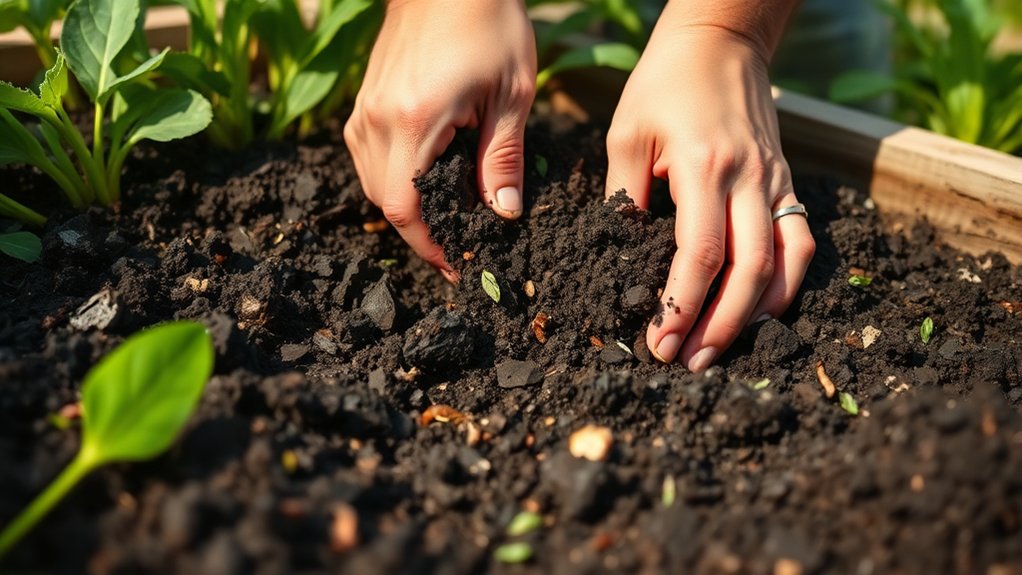
Once you’ve picked the right variety, give it the kind of soil radishes can actually push through. You want loose, crumbly earth that drains well and stays fertile. Aim for a soil pH around 6.0 to 7.0, then work in compost to boost organic matter and feed quick growth.
- Loosen the top layer with a fork, breaking clumps for better root shape.
- Add compost or leaf mold for drainage improvement and steady nutrients.
- Choose a sunny bed, since full sunlight requirements help radishes size up fast.
If your garden holds water, raise the bed a bit or mix in coarse material. Keep the surface smooth so roots meet little resistance. You can also tuck radishes near carrots or lettuce for companion planting that saves space.
Healthy soil supports pest management too, because strong plants handle trouble better. With the right bed, your radishes’ll grow crisp, mild, and ready soon.
Plant Radish Seeds at the Right Depth
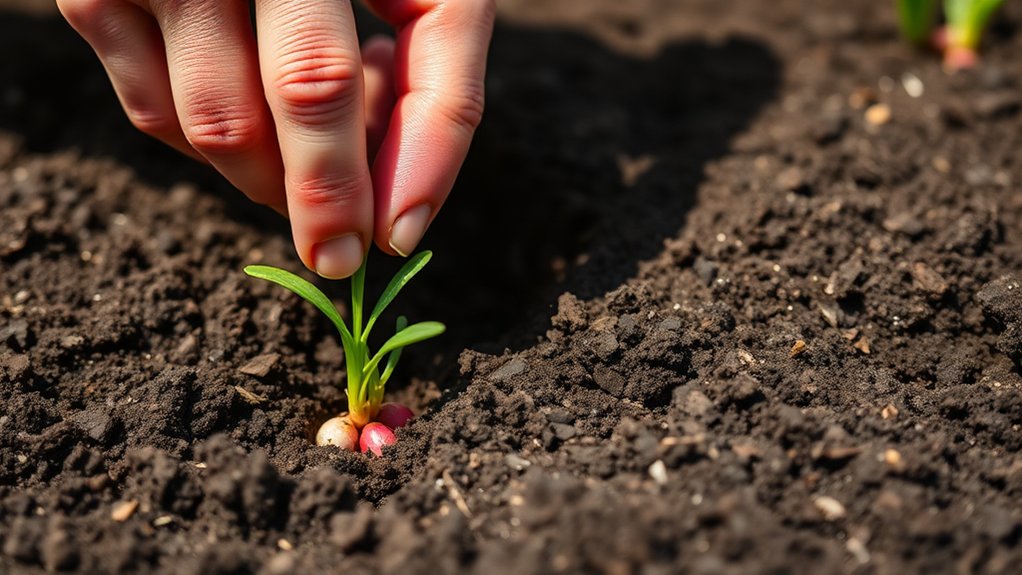
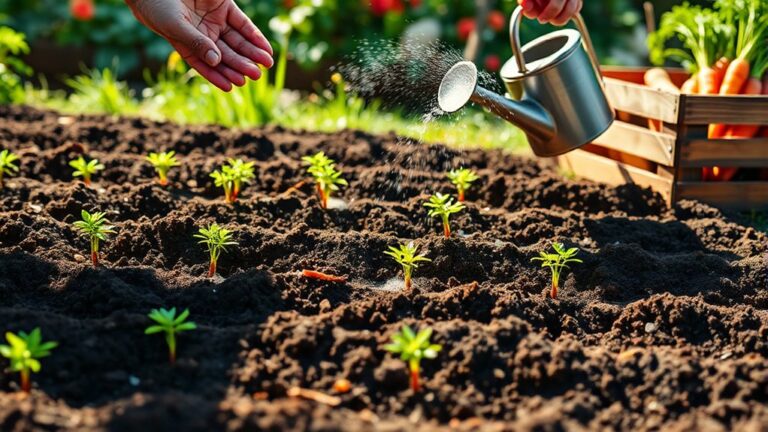
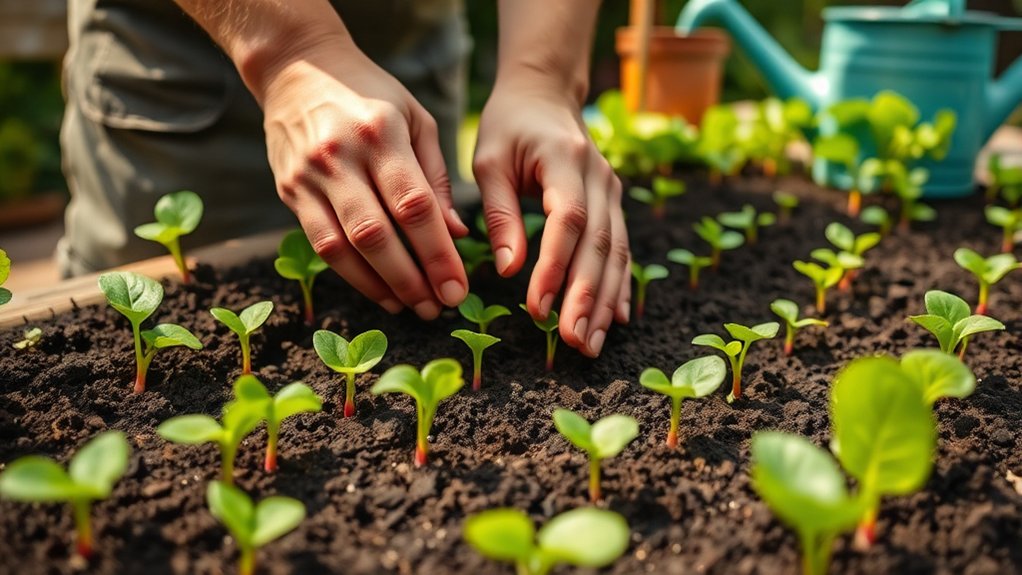
Now that the soil is ready, sow radish seeds about 1/2 inch deep in neat rows or scattered lightly across the bed. This depth gives seeds enough cover to stay moist while still letting sprouts push through easily.
Gently press the soil over them so they make good contact with the earth, but don’t pack it down hard. If you plant too deep, seedlings may struggle to emerge; too shallow, and birds or wind can disturb them.
Keep your spacing even so each seed has room to develop a crisp root. For smart seedling care, label your rows and check daily for the first signs of green growth.
At this stage, simple pest management matters too: watch for flea beetles, slugs, and birds that can nip tender shoots. A light row cover can protect seedlings without blocking light.
With the right depth, your radishes get the strongest start and grow quickly.
Water Regularly and Thin Seedlings Early
Keep the soil evenly moist as the seeds sprout, because radishes grow best when they never dry out completely. Water gently and often so the top layer stays damp, but don’t flood the bed. If you use a hose, aim for a soft spray that won’t disturb the tiny roots.
Pay attention to water quality, too; clean water helps prevent stress and keeps growth steady.
- Check moisture daily with your finger.
- Thin crowded seedlings once they’re a couple inches tall.
- Leave proper seedling spacing so each plant can swell well.
When you thin, snip the weakest plants at soil level instead of pulling them, which can bother nearby roots. Keep the remaining seedlings evenly spaced so they get light, air, and room to develop crisp bulbs.
With steady watering and timely thinning, you’ll help your radishes grow fast and stay tender.
Harvest Radishes at Peak Crispness
When the roots look full and bright at the soil line, harvest them right away for the best crisp texture and mild flavor. You can pull radishes in the morning, when they’re cool and well hydrated, which helps protect their crisp texture.
Check harvest timing often because radishes can turn pithy or spicy if they stay in the ground too long. Loosen the soil with your fingers or a small fork, then lift each root gently by the tops.
Shake off excess dirt, trim the leaves, and rinse the radishes only when you’re ready to eat or store them. If you want extra crunch, place them in cold water for a few minutes before serving.
For storage, keep the greens separate and refrigerate the roots in a sealed bag. Harvesting at the right stage lets you enjoy radishes at their freshest, sweetest, and most satisfying.
Frequently Asked Questions
Can Radishes Grow in Containers Indoors?
Yes, you can grow radishes in containers indoors if you give them enough light and the right container size. You’ll do well with a shallow pot at least 6 inches deep, loose soil, and consistent moisture.
Set the container near a sunny window or under grow lights for your indoor gardening setup. Sow seeds directly, thin seedlings, and harvest quickly so roots stay tender, crisp, and flavorful.
How Do I Store Radish Seeds Properly?
You should store radish seeds in a cool, dry, dark place to keep them viable. Use an airtight container, then add a label with the date and variety.
Avoid humidity, heat, and sunlight since they can reduce seed germination. For ideal conditions, keep the container in a cupboard, basement, or refrigerator. But never freeze damp seeds.
Check them yearly and replace older seeds for better results.
What Pests Commonly Attack Radish Plants?
You’ll usually spot flea beetles and aphids first, and they can damage leaves fast. You might think radishes stay pest-free because they grow quickly, but pests still show up.
Check undersides of leaves often, then use aphid control like a strong water spray or insecticidal soap. Row covers help block flea beetles, and you should keep soil tidy to reduce hiding spots.
Watch closely, and you’ll protect your crop.
Can I Eat Radish Greens Raw?
Yes, you can eat radish greens raw, and they’re tasty in salads, sandwiches, or smoothies. You’ll get good radish nutrition, including vitamins A, C, and K, plus fiber and antioxidants. Choose young, tender leaves for the mildest flavor.
If the greens feel tough or peppery, try different cooking methods like sautéing, steaming, or adding them to soups. Wash them well, and trim any wilted stems before you serve them.
How Long Do Radishes Last After Harvest?
Radishes usually last about 1 to 2 weeks after harvest, and you can stretch that with good post harvest care. About 90% of quality loss comes from moisture loss, so you should trim the tops, don’t wash them until use, and refrigerate them in a perforated bag.
For the best radish shelf life, keep them crisp, cool, and dry. You’ll enjoy fresher flavor and crunch much longer that way.
Conclusion
By following these five easy steps, you’ll give your radishes the best shot at quick, crisp success. Choose the right variety, loosen the soil, plant seeds properly, water well, and thin seedlings early.
Then, almost as if by coincidence, you’ll notice the reward showing up right when you need it: bright, crunchy radishes ready to pull. Stick with the basics, and your garden will keep surprising you with simple, tasty results.
Keep these tips in mind, and growing radishes will become an easy, enjoyable part of your gardening routine.