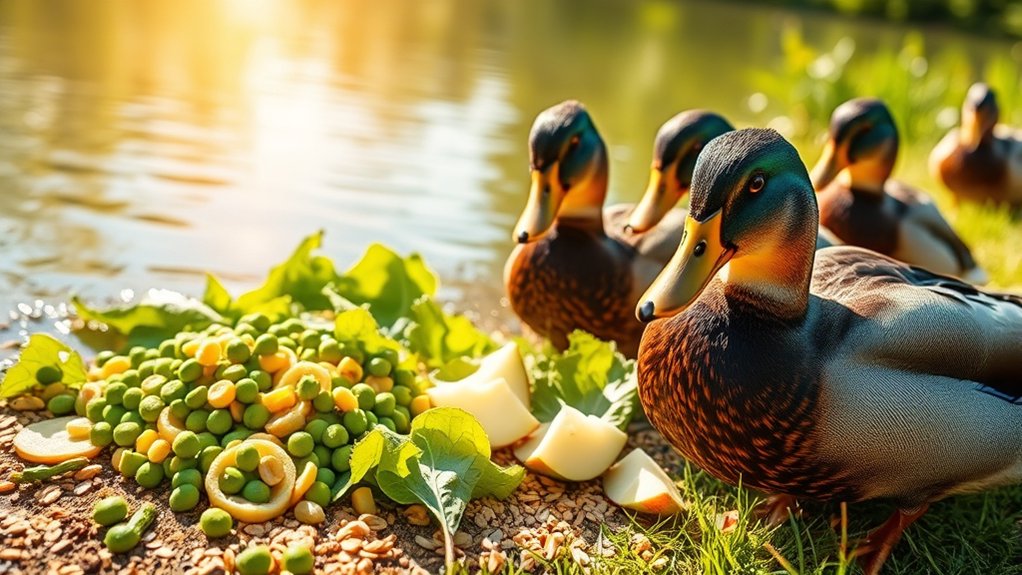
5 Best Foods to Feed Ducks
Feeding ducks can be trickier than it seems, right? Many people struggle with knowing what’s truly good for these charming birds without causing harm. If you’ve ever felt unsure about what to feed ducks or worried about their health and the environment, you’re not alone.
You should feed ducks nutritious foods like peas, corn, leafy greens, oats, and waterfowl birdseed mixes to support their health and migration. Avoid bread since it lacks nutrients and can harm their wings and immune system.
Offer fresh, chopped foods in small amounts using clean containers to keep ducks safe and their habitat clean. Want to know how to prepare these foods properly and the best options for each season? Keep exploring for more helpful tips.
Key Takeaways
- Peas and corn provide essential carbohydrates and proteins vital for ducks’ energy and migration.
- Leafy greens like kale and lettuce supply vitamins and minerals that improve feather health.
- Oats are nutrient-rich, easy to digest, and support overall duck nutrition.
- Birdseed mixes specially formulated for waterfowl offer a balanced diet of seeds and grains.
- Root vegetables such as chopped carrots and sweet potatoes are ideal in colder seasons.
Top 5 Nutritious Foods to Feed Ducks
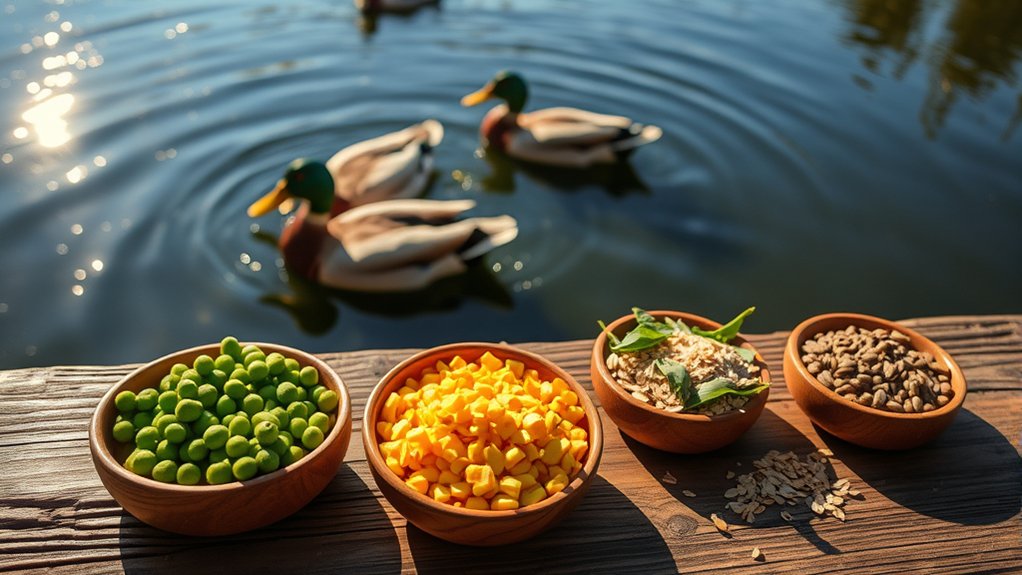
Although ducks can eat a variety of foods, choosing the most nutritious options helps keep them healthy and active. When feeding ducks, focus on foods that support duck migration and feather health, as these are essential for their survival and comfort.
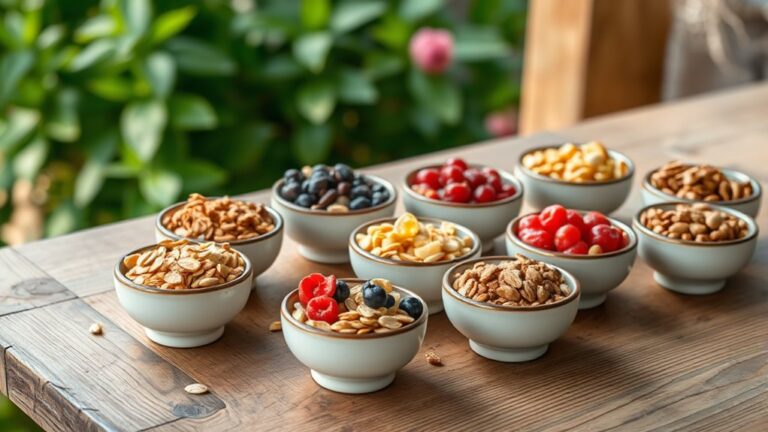
Peas and corn provide essential carbohydrates and proteins that fuel long flights during migration. Leafy greens like kale and lettuce offer vitamins and minerals that boost feather health, ensuring ducks maintain their waterproof, insulating plumage.
You can also give them oats, which are easy to digest and packed with nutrients. Furthermore, birdseed mixes designed for waterfowl offer a balanced diet rich in seeds and grains.
Why You Should Avoid Feeding Ducks Bread
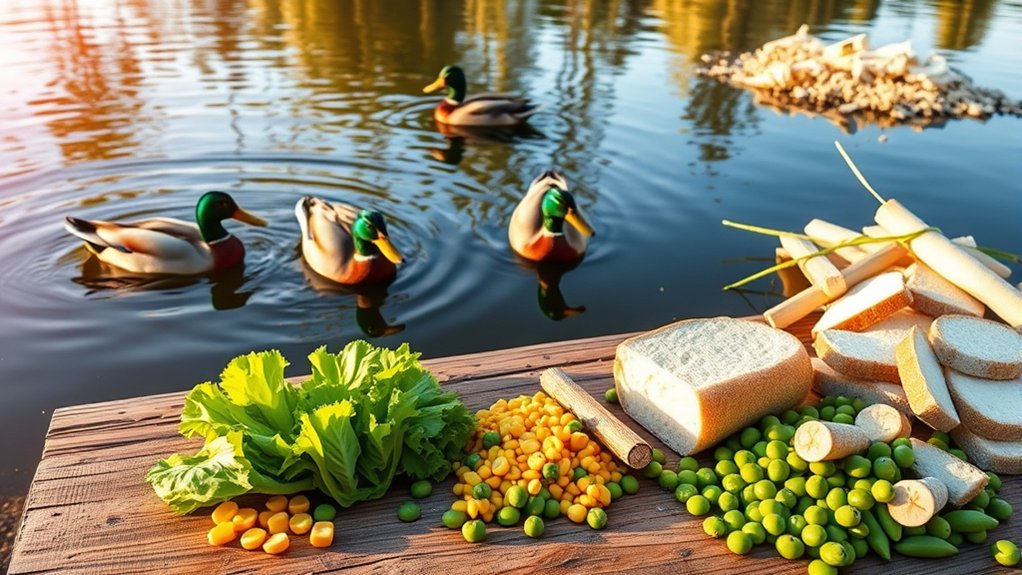
When you feed ducks bread, you might think you’re helping, but it actually harms their health and environment. Bread lacks the nutrients ducks need, leading to malnutrition and weakened immune systems. Over time, feeding ducks bread can cause a condition called “angel wing,” which deforms their wings and prevents them from flying properly. This is a common feeding mistake many people make, even with good intentions.
Feeding ducks responsibly means providing foods that support their natural diet, not filling them up with empty calories. Furthermore, leftover bread often pollutes waterways, encouraging harmful algae growth and attracting pests that disrupt the ecosystem. When you avoid bread, you help maintain a cleaner environment and healthier duck populations.
Instead, focus on nutritious alternatives that benefit ducks and the environment alike. By steering clear of bread, you’ll contribute to better wildlife care and avoid common feeding mistakes that can cause long-term harm.
Best Seasonal Foods to Feed Ducks Year-Round

Choosing the right foods to feed ducks means thinking beyond bread and focusing on what supports their health throughout the year. As ducks move through different seasons and habitats during their seasonal migration, their dietary needs change.
In spring and summer, you can offer leafy greens like lettuce and spinach, along with peas and corn, which provide essential nutrients for breeding and raising ducklings. When fall arrives, switch to grains like oats and barley, which help ducks build energy reserves for colder months.
During winter, root vegetables such as chopped carrots and sweet potatoes help sustain them in harsher conditions. Always consider the duck habitat you’re feeding in, as local plants and natural food sources might already be available.
How to Prepare and Offer Food Safely to Ducks
To keep ducks healthy and safe, you should prepare their food carefully before offering it. Start by choosing fresh, appropriate foods, then cut or crush them into small, manageable pieces to avoid choking. Make sure to rinse any fruits or vegetables to remove pesticides.
When feeding, use clean duck feeding equipment like shallow trays or wide containers to prevent contamination and allow easy access. Avoid tossing food directly onto the ground, which can lead to overcrowding and pollution.
Practice good feeding etiquette by offering food in moderation to prevent overfeeding and encourage natural foraging behaviors. Wash your hands before and after feeding to minimize the spread of germs.
Never feed ducks processed human foods or bread, as these can harm their health. By preparing food thoughtfully and using the right tools, you’ll ensure a safe, enjoyable experience for both you and the ducks.
Tips for Feeding Ducks Safely and Respectfully
Although feeding ducks can be a fun and rewarding activity, it’s important that you do so safely and respectfully to protect their health and natural behaviors. Follow proper feeding etiquette by offering appropriate foods like peas, corn, or oats in small amounts. Avoid bread, as it’s harmful and can lead to malnutrition.
Always feed ducks in moderation to prevent over-dependence on humans. Respect duck habitat preservation by staying on designated paths and not disturbing nesting areas. Dispose of any trash properly to keep their environment clean.
Feeding ducks near water sources is best, but don’t overcrowd them or disrupt their natural foraging habits. Remember, your goal is to support wild ducks, not to alter their behavior or habitat.
Frequently Asked Questions
Can Feeding Ducks Affect Their Migration Patterns?
Yes, feeding ducks can cause migration disruption by altering their natural feeding habits. When you feed ducks regularly, they might rely on easy food sources instead of searching for natural ones.
This change in feeding habits can reduce their instinct to migrate or delay their journey, affecting their survival. So, you should be careful and avoid overfeeding ducks to prevent interfering with their natural migration patterns.
What Are the Signs of Malnutrition in Ducks?
When a duck’s feathers lose their luster and its wings droop like wilted leaves, you’re seeing signs of malnutrition. If you notice lethargy, weight loss, or abnormal behavior, these are red flags of nutritional deficiencies.
A healthy diet keeps ducks vibrant and strong, so spotting dull eyes or slow movements means their body isn’t getting what it needs. You’ve got to act quickly to restore their balance and importance.
How Often Should Ducks Be Fed in the Wild?
In the wild, ducks feed multiple times a day, following their natural feeding habits. They don’t have set meal times like pets; instead, they forage throughout daylight hours, adjusting based on food availability.
Their duck diet includes plants, insects, and small aquatic creatures. You’ll notice they eat whenever they find food, which helps them get enough nutrients and energy. So, they fundamentally feed as often as they need to survive and thrive.
Are There Any Foods Toxic to Baby Ducklings?
Imagine tiny ducklings nibbling enthusiastically, but you need to be careful. Certain toxic foods can harm their fragile bodies.
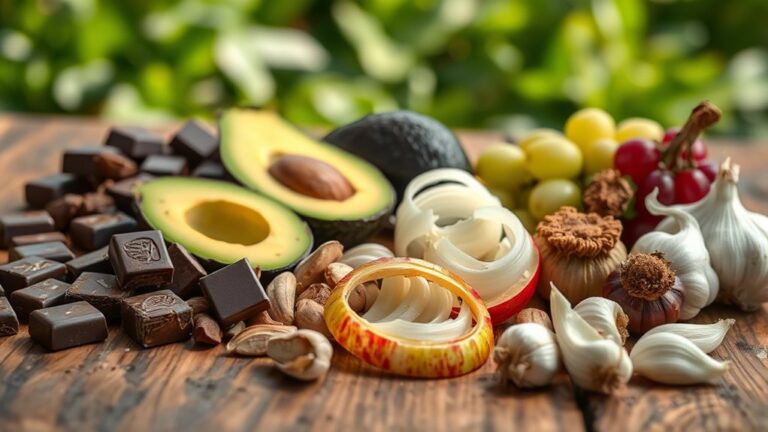
In duckling diets, avoid bread, chocolate, onions, and anything salty or sugary. These toxic foods can cause serious health issues. Instead, stick to safe options like finely chopped greens or starter pellets.
Can Feeding Ducks Attract Unwanted Predators?
Yes, feeding ducks can attract unwanted visitors, including predators like raccoons, foxes, and even stray dogs. When you leave food out, it draws not only ducks but also animals looking for an easy meal.
To minimize predator attraction, avoid overfeeding and don’t leave food overnight. Feeding in moderation and choosing appropriate locations helps keep ducks safe and reduces the chance of inviting unwanted visitors to the area.
Conclusion
Feeding ducks nutritious foods not only keeps them healthy but also supports local ecosystems. Did you know that feeding ducks bread can cause malnutrition and harm up to 70% of their natural diet?
By choosing the right foods and offering them safely, you help maintain their well-being and the environment. So next time you visit a pond, remember to feed ducks thoughtfully. You’ll make a real difference for these lovely creatures by feeding ducks the best foods.