10 Low Maintenance Garden Ideas for Easy Care
Struggling to keep your garden looking great without spending hours on upkeep? You’re not alone. Many people want a beautiful outdoor space but find traditional gardening time-consuming and overwhelming.
That’s why low maintenance garden ideas are becoming so popular—they help you enjoy your garden without the hassle.
You can create an easy-care garden by choosing native, disease-resistant perennials and evergreens, then grouping plants by light and water needs.
Add mulch to suppress weeds, and use drought-tolerant choices like lavender, coneflower, and sedum. Cut back lawn space, and replace tricky areas with ground covers or containers.
Install simple paths, patios, and drip irrigation to save time and water. Keep borders clean, and you’ll soon see a few more smart ways to make upkeep even easier.
Key Takeaways
- Choose native, drought-tolerant perennials and evergreens for reliable structure, seasonal color, and less watering.
- Group plants with similar light and water needs to simplify care and reduce plant stress.
- Use drip irrigation and timers to water efficiently while limiting disease and waste.
- Replace part of the lawn with ground covers, native grasses, or hardscape to cut mowing and upkeep.
- Add simple edging, mulch, and gravel paths to suppress weeds and keep beds tidy with minimal effort.
Choose Low-Maintenance Plants
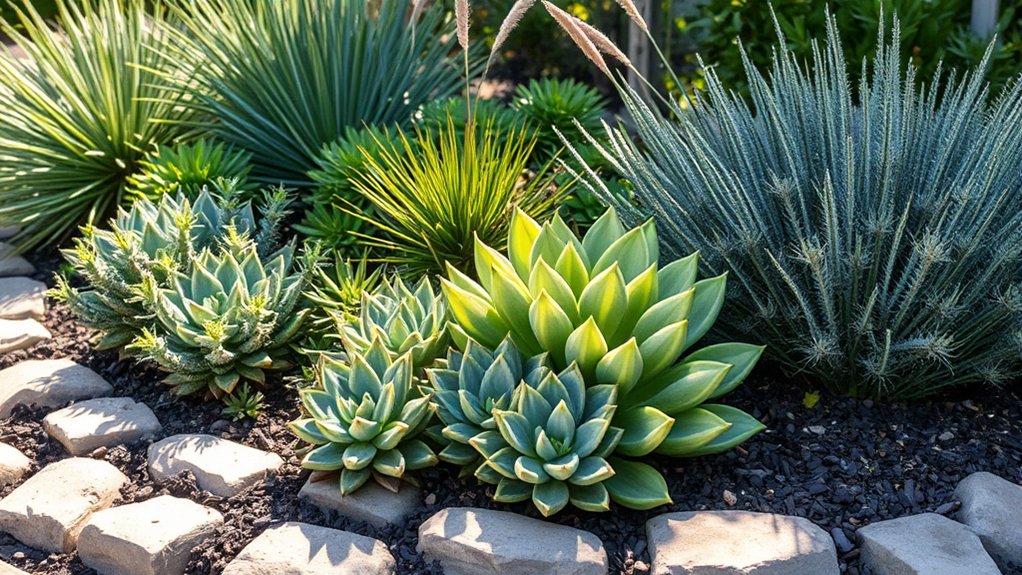
When you choose low-maintenance plants, you set yourself up for a garden that looks great without demanding constant attention. You’ll save time by picking native species that already suit your climate and soil, so they settle in faster and need less help from you.
Look for plants with strong structure, disease resistance, and compact growth habits, because they stay tidy with minimal pruning. Mix in perennials that offer seasonal blooms, so your garden stays attractive through the year without constant replanting.
Choose plants with strong structure and disease resistance for tidy growth, minimal pruning, and lasting seasonal color.
You can also group plants with similar light and water needs, which makes care simpler and more efficient. Avoid high-drama varieties that wilt easily or need frequent feeding.
Instead, choose dependable options that thrive with basic watering and occasional cleanup. With smart plant choices, you’ll create a garden that feels lush, balanced, and easy to enjoy, even when your schedule gets busy.
Use Mulch to Stop Weeds
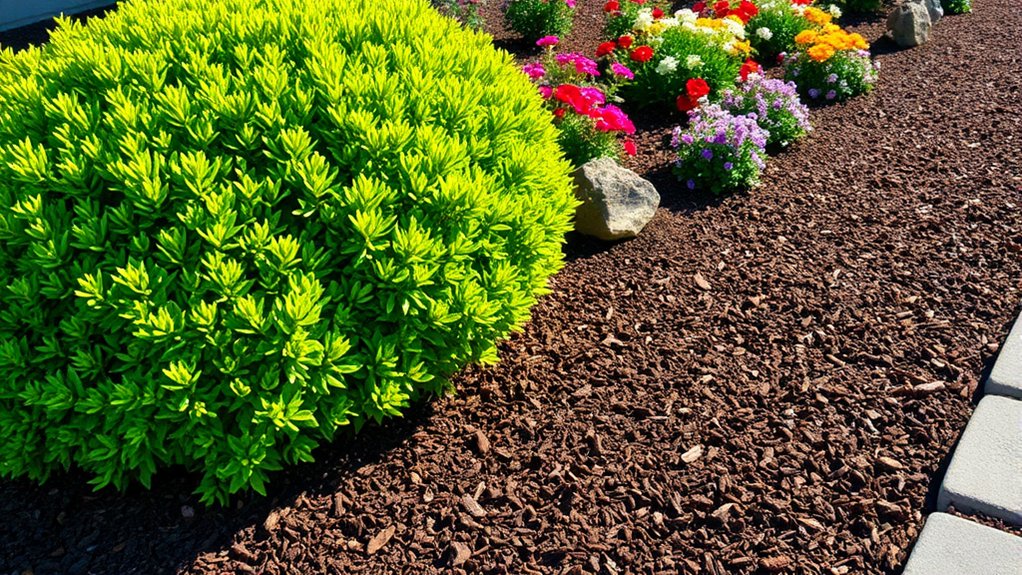
Mulch keeps weeds down so your garden needs less pulling and stays neater with less effort. You improve weed prevention by spreading a 2- to 3-inch layer around plants, leaving stems clear. This simple weed control step also supports soil health by insulating roots and reducing erosion.
Choose from several mulch types, such as bark, shredded leaves, compost, or gravel, based on your landscape design and planting style.
- You block light that weed seeds need to sprout.
- You boost moisture retention, so soil stays evenly damp.
- You add mulch benefits like cleaner beds and fewer bare spots.
- You strengthen garden aesthetics with a polished, finished look.
Refresh the layer when it thins, and pull any weeds before mulching. With steady care, mulch works as a low-effort barrier that saves time and keeps your garden tidy.
Choose Drought-Tolerant Plants

Choosing drought-tolerant plants cuts down on watering, so your garden stays easier to maintain during hot, dry spells. You’ll save time, reduce stress, and still enjoy color, texture, and seasonal interest.
Look for tough perennials, shrubs, and grasses that handle heat with minimal fuss. Native plant benefits matter here because local species often adapt to your soil and climate with less help. Xeriscaping techniques also support smart plant choices by favoring low-water varieties that thrive in dry conditions.
| Plant type | Benefit |
|---|---|
| Lavender | Fragrant, sun-loving, low water |
| Coneflower | Pollinator-friendly and resilient |
| Sedum | Stores moisture and spreads easily |
Choose healthy starter plants, then give them a deep soak at planting time. After that, let them settle in and grow with less frequent watering.
Group Plants by Water Needs
You can make garden care easier by grouping plants with similar water needs together. For example, place drought-tolerant plants in one area so you don’t accidentally overwater them. Then, set up moisture-loving beds where you can water more often without any hassle. This simple layout not only saves you time but also helps each plant get just the right amount of moisture. It’s a smart way to keep your garden happy and healthy!
Drought-Tolerant Zones
Group drought-tolerant plants together so they can share the same watering schedule and thrive with less fuss. You’ll save time when you cluster succulents, herbs, and tough perennials in one zone.
Use xeriscaping techniques to reduce runoff and help each plant get only what it needs. Choose native flora that already handles your climate, so you won’t spend weekends rescuing stressed roots.
- Group plants by sun and water needs
- Add gravel or mulch to hold moisture
- Use drip irrigation for targeted watering
- Pick deep-rooted, resilient varieties
When you design these dry areas well, you create a garden that looks intentional and stays easy to maintain. Keep the layout simple, and you’ll water less without sacrificing color or texture.
Moisture-Loving Beds
Not every part of a low-maintenance garden should stay dry, and that’s where moisture-loving beds come in. You can group plants that prefer consistently damp soil in one spot, so you won’t waste time watering scattered beds.
Place ferns, astilbes, ligularia, and irises together, then enrich the soil with compost to improve moisture retention. Add mulch to slow evaporation and reduce weeds, which cuts upkeep even more.
Smart plant placement helps you match sun, shade, and drainage conditions, so each plant gets what it needs without extra effort. If your yard has a low area that holds water, turn it into a feature instead of a problem.
With the right grouping, you’ll spend less time adjusting irrigation and more time enjoying a thriving, easy-care garden.
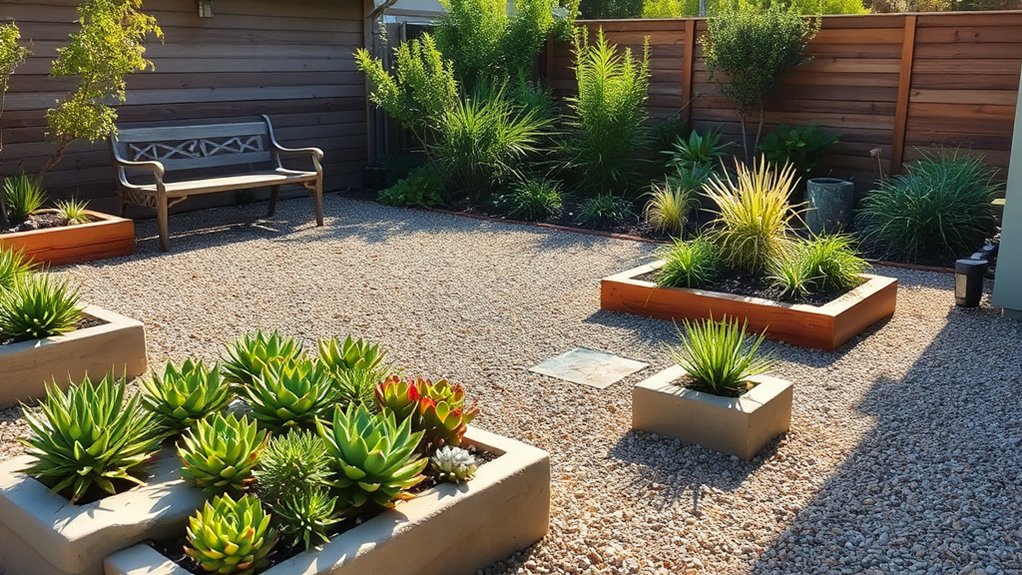
Add Paths and Patios
Paths and patios can make a garden feel organized and easy to care for while reducing the amount of lawn or planting space you need to maintain. You can use simple patio design to create a practical outdoor room, then link it with narrow paths that guide movement and limit trampling.
Choose durable pathway materials like gravel, pavers, or stepping stones, since they stay tidy and need little upkeep.
- Define clear routes through beds
- Reduce weeding and soil compaction
- Add structure with low-maintenance surfaces
- Make cleaning and edging quicker
Keep your layout straightforward so you spend less time trimming around awkward corners. A well-placed patio gives you a spot to relax, while paths help you reach plants without disturbing them.
If you plan the hardscape carefully, your garden will look polished and stay easier to manage throughout the season.
Install Drip Irrigation
Drip irrigation is a great way to save water because it delivers it right where your plants need it most. Plus, you can set up a simple timer to keep your garden watered consistently without much effort from you.
This system waters the roots directly, which not only helps your plants grow healthier but also cuts down on water waste. It’s an efficient and easy way to keep your garden thriving!
Water Savings Benefits
By installing drip irrigation, you can cut water waste and keep your garden healthier with less effort. You deliver moisture right to the roots, so less water evaporates or runs off. Your plants use every drop more efficiently.
This helps you protect your budget and support a low-maintenance yard. Pair it with rainwater harvesting, and you can collect stormwater for smart reuse. Native landscaping also boosts savings because these plants need less supplemental watering once established.
- Targets roots directly
- Reduces evaporation losses
- Limits weeds and disease
- Supports steady plant growth
Easy Timer Setup
Once you’ve installed your drip lines, adding a simple timer makes watering almost effortless. You can connect the timer to your outdoor faucet, set your preferred schedule, and let automated watering handle the rest.
Start with short run times, then adjust timer settings based on your soil and weather. If mornings stay cool, water early so moisture reaches roots before heat rises. On hotter days, add a second cycle instead of a long soak.
Keep the system straightforward, and you won’t need to babysit it daily. Check the timer monthly to confirm batteries, pressure, and connections are working properly. With this setup, you save time, reduce guesswork, and keep your garden on a consistent routine without constant effort.
Targeted Root Hydration
When you want to water efficiently, drip irrigation sends moisture straight to the roots instead of soaking the whole garden bed. You’ll save time, reduce runoff, and help plants build stronger root systems with less stress.
Place emitters near each plant, then let the slow flow improve moisture retention in the soil.
- You water only where plants need it
- You keep foliage drier, which can limit disease
- You cut evaporation by delivering water slowly
- You make garden upkeep simpler each week
Choose a timer, check pressure, and adjust lines as plants grow. With targeted root hydration, you can support healthier beds while using less water and fewer chores.
Plant Perennials and Evergreens
Perennials and evergreens are the backbone of a low-maintenance garden because they return year after year and keep structure in place through every season. You’ll save time when you choose native species that suit your climate, since they need less watering and support stronger soil health.
Mix in seasonal blooms for color changes, then anchor beds with evergreen shrubs for year-round form. In pollinator gardens, perennials like coneflowers and salvia keep bees and butterflies coming back.
Seasonal blooms add color, while evergreen shrubs provide lasting structure and keep pollinators returning year after year.
Use companion planting to pair sturdy growers with softer accents, improving pest control without extra sprays. Plan your garden design around mature sizes so your garden layout stays open and easy to manage.
A balanced color palette and layered heights make the space look intentional, not crowded. You’ll also create valuable wildlife habitat with seed heads, shelter, and reliable cover.
Reduce Lawn Space
You can cut back on mowing and watering by shrinking the amount of grass in your yard. Try replacing those wide lawn sections with low-maintenance ground covers instead. They fill in space nicely and stay attractive with less effort.
It’s a simple change that gives you a cleaner-looking landscape. Plus, it frees up time for other garden tasks you might enjoy more.
Shrink Grass Areas
Shrinking grass areas is one of the easiest ways to cut garden chores without sacrificing curb appeal. You can replace high-maintenance turf with practical choices that fit your style and climate. Try these ideas:
- Use sod alternatives in narrow strips or shady spots.
- Choose lawn substitutes and grass alternatives for cleaner edges.
- Build eco friendly lawns with native grasses that need less water.
- Install synthetic turf in play zones or hard-to-mow corners.
You’ll spend less time mowing, watering, and feeding while your yard still looks polished. Mix in ornamental grasses and other ground cover options where grass struggles, and you’ll create a simpler landscape that’s easier to maintain all season.
Add Ground Covers
Ground covers can do a lot of the work that grass usually handles, but with far less upkeep. You can replace thin turf strips with plants that spread fast, hold soil, and crowd out weeds. The ground cover benefits include less mowing, fewer bare spots, and better moisture retention.
Choose ideal ground covers for your site, such as creeping thyme for sunny paths or ajuga for shady corners.
| Space | Best Choice |
|---|---|
| Sunny slope | Creeping thyme |
| Shady border | Ajuga |
When you plant them close together, they knit into a living carpet that softens hard edges and makes your yard feel fuller. You’ll save time, water, and energy while keeping the garden polished.
Use Containers for Easy Care
Containers make low-maintenance gardening easier because they let you control soil, water, and placement with far less effort than an in-ground bed. With container gardening, you can grow herbs, flowers, and compact shrubs in spots that suit your routine, so you spend less time fixing problems.
Choose pots with drainage, use quality potting mix, and group plants with similar needs together. Portable arrangements also help you move stressed plants into shade or shelter during heat, wind, or storms.
Water only when the top inch feels dry. Pick self-watering pots for steadier moisture. Use large containers to reduce daily care. Refresh soil and trim plants seasonally.
You’ll also avoid constant weeding because pots limit stray growth. Place containers near doors, patios, or paths so you can check them quickly and enjoy them often.
Create Simple Borders and Edges
Simple borders make your garden look tidy without adding much work. You can define beds with low-maintenance border materials like stone, metal, brick, or treated timber, and each one helps keep mulch and soil in place.
Choose straight lines or gentle curves so your edge designs stay easy to mow, trim, and sweep around. If you want a cleaner look, install edging between lawns and planting areas to stop grass from creeping in.
You don’t need elaborate shapes or fancy patterns; simple lines usually look best and save time. Match the border to your garden style, then repeat the same material in a few spots for a calm, unified feel.
Keep the height low enough that you can see and reach the plants easily. When you maintain clear edges, your garden looks organized, and you spend less time correcting overgrowth or fixing messy shifts.
Frequently Asked Questions
How Often Should a Low-Maintenance Garden Be Fertilized?
You should fertilize a low-maintenance garden about once or twice a year, usually in spring and again in midsummer if plants need a boost. You can use organic fertilizers for gentle feeding or choose slow-release options for less frequent care.
Don’t overdo it because too much fertilizer can cause weak growth and extra pruning. Check your soil and plants first, then adjust based on their color and vigor.
What Garden Tools Make Easy-Care Planting Simpler?
You’ll want a few essential tools: a sturdy trowel, pruning shears, a hand fork, and a lightweight weeder. Add a hose nozzle and smart irrigation, and you’ve already cut your workload.
But here’s the real secret: choose tools that save time every day. A wheelbarrow or garden cart helps with hauling, while gloves and kneeling pads keep you comfortable. With these, you’ll plant faster and maintain less.
Which Soil Type Works Best for Low-Maintenance Gardens?
Sandy loam usually works best because you get good soil drainage and enough moisture retention. You can also improve clay soil by adding organic matter, which helps roots breathe and reduces compaction.
Check pH levels so your plants thrive, since the right range matters as much as texture. If your soil drains well and stays slightly moist, you’ll spend less time watering and fixing problems in your garden.
How Can I Prevent Pests Without Much Effort?
You can stop pests by spraying, planting, and cleaning with little effort. Use natural pest repellents like neem oil or garlic spray, and add companion planting so marigolds, basil, and chives help protect your beds.
You’ll also want to remove dead leaves, keep weeds down, and check plants weekly for early damage. These simple habits cut pest problems fast, and you won’t need constant treatments or extra work.
When Is the Best Time to Prune Easy-Care Plants?
You’ll usually get the best results by pruning easy-care plants in late winter or early spring, just before new growth starts. You can also trim spring-flowering shrubs right after they bloom.
Use sharp tools and simple pruning techniques to remove dead, damaged, or crossing stems. For seasonal tips, avoid heavy pruning during extreme heat or frost, since that can stress your plants and slow recovery.
Conclusion
You don’t need to spend every weekend wrestling your garden to enjoy it. Even if you think a low-maintenance yard might look plain, it can still be full of color, texture, and charm.
By choosing easy-care plants, adding mulch, reducing lawn space, and using simple hardscaping, you’ll save time and water without sacrificing beauty. Start small, and you’ll quickly see how effortless gardening can be.
Embracing these low maintenance garden ideas makes caring for your outdoor space simple and enjoyable.