Is It Good to Feed Ducks Bread?
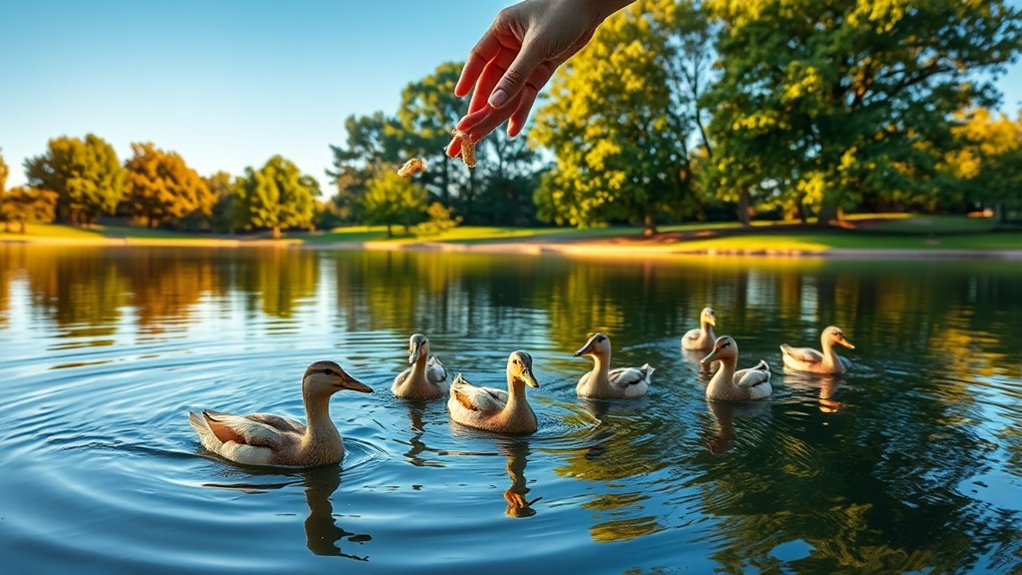
Feeding ducks bread is something many people do with good intentions, but you’re not alone if you’ve wondered whether it’s actually okay. Lots of duck lovers struggle with this because it feels like a fun way to help, but it can cause more harm than good.
Feeding ducks bread isn’t a good idea because it lacks the nutrients they need, like protein and vitamins, and can cause health problems. Bread also pollutes water, attracts pests, and disrupts natural behaviors, making ducks dependent on handouts.
Instead, you can offer healthier foods and support their habitats to help them thrive. There’s more to learn about how to care for ducks responsibly and protect their environment.
Key Takeaways
- Feeding ducks bread harms their health by providing poor nutrition. It causes malnutrition and weakens their immune systems.
- Uneaten bread pollutes water and promotes harmful algae growth. This degrades aquatic habitats and affects other wildlife.
- Bread feeding encourages dependency, which reduces ducks’ natural foraging skills. It also disrupts local ecosystems.
- Overcrowding from bread feeding increases stress and aggressive behavior among ducks. It also helps spread diseases more easily.
- Instead of bread, feed ducks nutritious alternatives like cracked corn, oats, or birdseed. Just give these in small amounts to keep ducks healthy.
Why Feeding Ducks Bread Is Harmful to Their Health
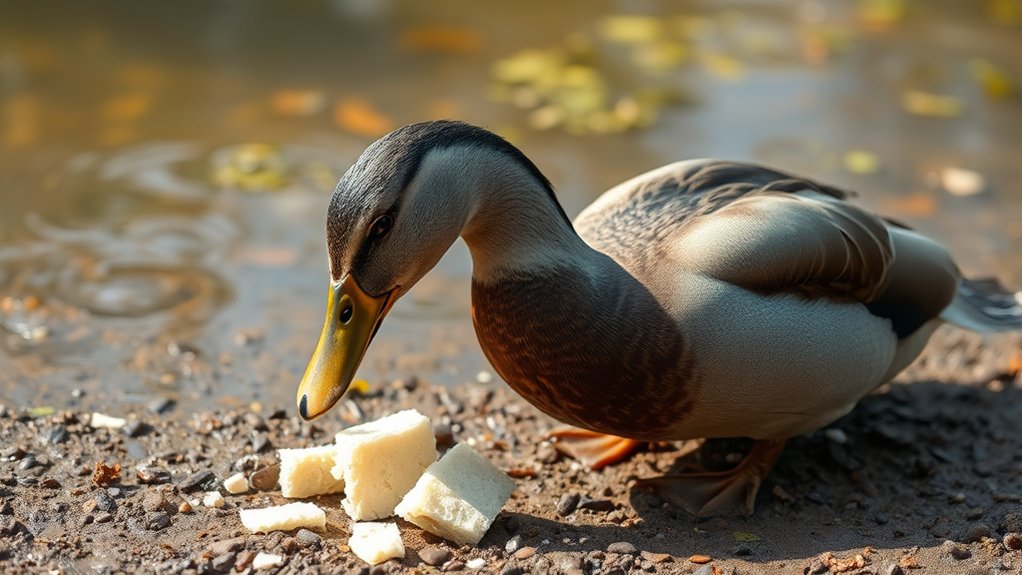
Although feeding ducks bread might seem like a kind gesture, it actually harms their health. When you give ducks bread, you’re ignoring their natural dietary preferences, which include aquatic plants, insects, and small fish.
Bread lacks the essential nutrients ducks need, leading to nutritional deficiencies that can weaken their immune systems and stunt their growth. Over time, this poor diet can cause serious health issues, such as deformities and reduced lifespan.
You might not realize it, but feeding bread regularly encourages ducks to rely on human handouts instead of foraging for a balanced diet. This dependency disrupts their natural behaviors and harms their ability to survive in the wild.
To truly help ducks, you should respect their dietary preferences and avoid offering bread, which does more harm than good despite your good intentions. Instead, consider healthier feeding options that align with their nutritional needs.
What Nutrients Ducks Need That Bread Doesn’t Provide
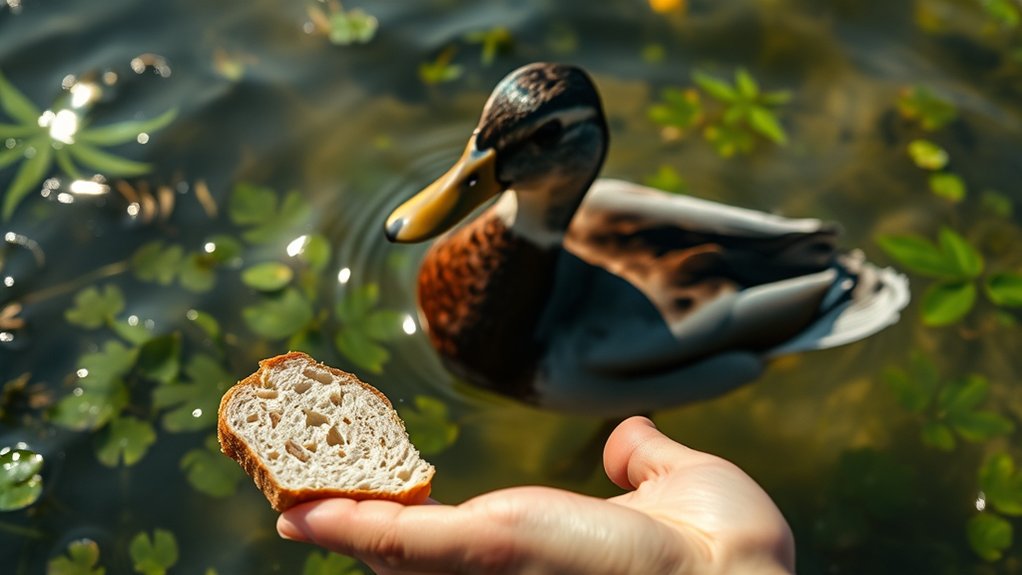
When you feed ducks bread, you miss out on providing essential nutrients like protein, vitamins, and minerals that they need to stay healthy. These nutrients support their energy for duck migration and maintain a balanced diet in their natural waterfowl habitat. Bread mainly provides empty calories from carbohydrates and lacks the nutrients vital for ducks’ growth and survival.
Here’s a quick look at what ducks really need compared to what bread offers:
| Nutrient | Importance for Ducks | Bread Content |
|---|---|---|
| Protein | Builds muscle, supports migration | Negligible |
| Vitamins (A, D, E) | Boosts immunity, bone health | Very low |
| Minerals (Calcium, Iron) | Strengthens bones, oxygen transport | Almost none |
Providing ducks with nutrient-rich foods helps them thrive, especially during migration seasons when their energy demands increase. Bread simply doesn’t cut it in sustaining their health in waterfowl habitats.
How Feeding Bread Harms Water and Wildlife
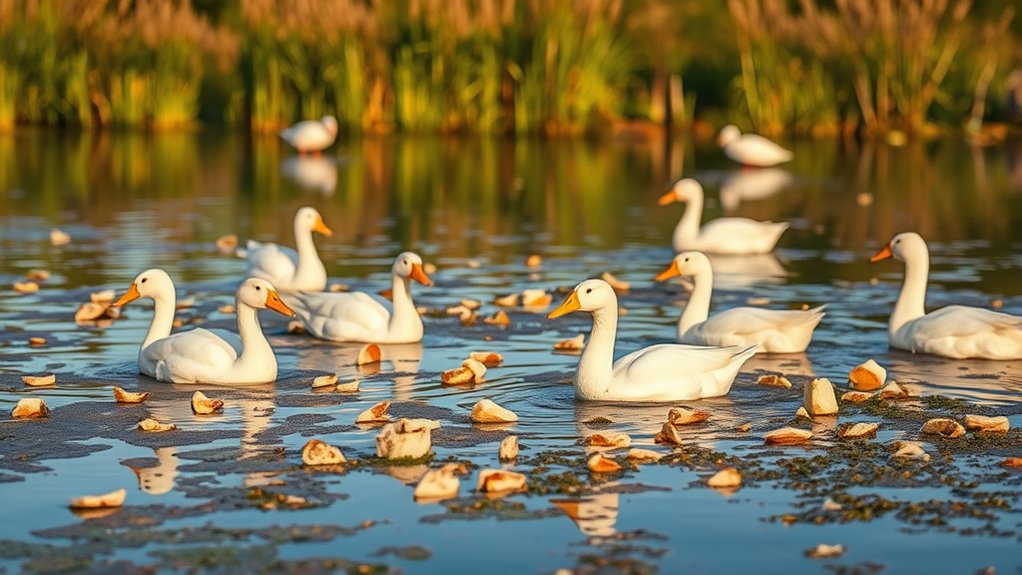
Feeding ducks bread doesn’t just shortchange their nutrition. It can also damage the environment they live in. When you toss bread into urban ponds, uneaten pieces sink and rot, leading to poor water quality.
This decay encourages harmful algae blooms, which reduce oxygen levels and threaten aquatic life. You might not realize it, but your well-meaning gesture disrupts this delicate balance.
Moreover, bread encourages ducks to crowd in unnatural numbers, stressing local wildlife and spreading disease. It’s important to follow proper feeding etiquette. If you do feed ducks, offer healthier alternatives in moderation and avoid overfeeding.
Why Feeding Bread Attracts Pests and Disrupts Ecosystems
When you feed ducks bread, you might not realize that you’re actually helping pests like rats and insects to thrive. It sounds harmless, but this extra food can really upset the natural balance of the ecosystem.
Plus, it often leads to overcrowding of unwanted wildlife, which causes even more problems. Once you understand these effects, it’s easier to see why feeding bread does more harm than good.
Pest Population Increase
Although offering bread to ducks may seem harmless, it actually encourages unwanted pests to gather in large numbers. When you feed bread, you inadvertently create an easy food source that attracts pests like rats, pigeons, and insects.
This leads to increased pest populations that thrive near urban development areas, making pest control efforts more complicated. It also raises the risk of water pollution because leftover bread and pest waste degrade water quality.
Plus, there’s greater competition among wildlife since pests outnumber native species drawn to the same habitat.
Ecosystem Imbalance Effects
Because you provide bread, pests gather and disrupt the natural balance of the ecosystem. When pests multiply due to easy food sources like bread, they outcompete native species, creating an imbalance that affects the entire food chain.
This disruption compromises ecosystem balance, making it harder for plants, insects, and animals to thrive naturally. You might not realize it, but feeding bread harms wildlife conservation efforts by encouraging unnatural population spikes and altering animal behaviors.
Instead of supporting the environment, you inadvertently promote conditions that weaken habitats and biodiversity. To help maintain ecosystem balance and aid wildlife conservation, it’s best to avoid feeding bread and let ducks and other animals find their natural food sources.
This approach supports a healthier, more sustainable environment for everyone.
Attracting Unwanted Wildlife
If you feed ducks bread, you’ll likely attract more than just the birds you intend to help. Bread leftovers can lure unwanted wildlife, disrupting urban habitats and natural bird migration patterns. Here’s why you should think twice:
- Pests Increase: Bread attracts rats, pigeons, and invasive species that thrive near humans.
- Ecosystem Harm: These pests compete with native wildlife, upsetting the balance in your local environment.
- Bird Migration Disruption: Regular feeding can cause ducks and other birds to stop migrating, making them dependent on unnatural food sources.
Healthy Alternatives to Feeding Ducks Bread
When you want to feed ducks without harming their health, choosing nutritious alternatives to bread makes a big difference. Instead of offering bread, try feeding ducks cracked corn, oats, birdseed, or chopped vegetables like peas and lettuce. These options provide essential nutrients that support their well-being and natural diet.
As you enjoy birdwatching tips, remember that feeding ducks healthy foods encourages natural foraging behaviors and supports wild habitat preservation. Offering appropriate foods helps maintain the balance of the local ecosystem and prevents water pollution caused by uneaten bread.
You’ll also notice ducks staying active and healthy, which enhances your outdoor experience. By choosing better feeding options, you actively contribute to protecting wildlife and their habitats while enjoying your time observing ducks.
How to Feed Ducks Safely Without Harming Them or the Environment
Choosing the right foods is just one part of feeding ducks responsibly. To feed ducks safely without harming them or the environment, you need to consider their natural behaviors and habitat needs. Here’s how you can help:
- Feed in Small Quantities: Overfeeding can disrupt ducks’ natural foraging and affect their feather molt, which is vital for healthy feathers and flight.
- Use Appropriate Foods: Stick to healthy options like peas, corn, or duck pellets. These support ducks’ nutrition without causing digestive problems or pollution.
- Avoid Feeding Near Nesting Areas: Feeding near nesting sites can disturb ducks during their feather molt and affect their ducks’ flight readiness.
When and Where Is It Okay to Feed Ducks Responsibly?
You’ll want to pick quiet, natural spots like ponds or lakes where ducks usually hang out. Feeding them there is a good way to do it responsibly. Also, try to feed the ducks early in the morning or late in the afternoon. That helps keep things from getting too crowded and stressful for the birds. When you choose the right times and places, you’re actually helping keep the ducks healthy and protecting their environment.
Best Locations For Feeding
Where you feed ducks makes a big difference in their health and the environment. To follow proper feeding etiquette and respect natural duck behavior, consider these best locations:
1. Parks with Natural Water Sources
Choose ponds or lakes where ducks already gather. These spots support their dietary needs and reduce environmental harm.
2. Areas Away from Crowds
Feeding ducks in quieter places helps avoid stressing them and prevents aggressive behavior caused by overcrowding.
3. Designated Feeding Zones
Some parks have specific areas for feeding to minimize habitat disruption. Stick to these zones to protect local ecosystems.
Ideal Times To Feed
Although feeding ducks can be enjoyable, timing plays a crucial role in ensuring their well-being. You should practice proper timing by feeding ducks during calm, daylight hours, typically early morning or late afternoon. This helps avoid disturbing their natural foraging patterns and keeps them safe from predators.
Feeding etiquette also means steering clear of busy or noisy times when ducks might feel stressed. Furthermore, avoid feeding right before dusk or during extreme weather, as ducks need to focus on finding natural food and shelter.
Signs Ducks Show When They Have a Poor Diet or Malnutrition
When ducks suffer from a poor diet or malnutrition, they often show clear signs that you can spot early. Paying attention to their behavior and feeding habits helps you identify when they’re struggling. Here are three common signs to watch for:
1. Lethargy and Weakness
Ducks with inadequate nutrition often appear sluggish. They rest more and show less interest in swimming or exploring.
2. Feather Problems
Poor diet leads to dull, ragged feathers or patchy bald spots. Ducks can’t maintain healthy plumage without proper nutrients.
3. Changes in Feeding Habits
Malnourished ducks may either lose their appetite or become overly aggressive around food. Both behaviors signal distress.
How to Support Healthy Duck Populations Beyond Feeding
To support healthy duck populations beyond feeding, you can focus on preserving their natural habitats and encouraging biodiversity. Ducks rely heavily on wetlands, ponds, and lakes for shelter, nesting, and food sources. By protecting these areas from pollution and development, you help maintain the natural balance that supports their feeding habits.
Healthy habitats provide diverse plants and insects ducks need, reducing their dependence on human-provided food like bread, which can harm them.
You can also advocate for sustainable landscaping practices that promote native vegetation and minimize chemical use around water bodies. This approach boosts local ecosystems and supports a variety of wildlife, including ducks.
Monitoring water quality and preventing invasive species from spreading further ensures ducks have safe environments. Remember, supporting habitat preservation is the most effective way to help ducks thrive naturally and assure their populations remain robust without relying on supplemental feeding.
What You Can Do to Help Ducks Thrive in Your Community
If you want ducks to thrive in your community, you can take simple yet effective actions that create a safer and healthier environment for them. Supporting ducks goes beyond feeding and involves understanding their needs, especially in an urban park setting.
Here are three ways you can help:
- Provide natural food sources by planting native aquatic plants. These support ducks’ diets much better than bread.
- Maintain clean water bodies to prevent pollution and disease. This ensures ducks have a safe place to swim and feed.
- Protect their nesting habits by preserving natural vegetation near water edges. Also, avoid disturbing them during breeding season.
Frequently Asked Questions
Can Ducks Eat Bread Occasionally Without Harm?
You can feed ducks bread occasionally without causing immediate harm, but it’s not ideal for their nutrition. Bread lacks essential nutrients ducks need and can lead to health problems if given often.
Focusing on wildlife conservation means you should offer healthier options like grains, seeds, or duck pellets instead. By choosing better food, you help maintain ducks’ natural diet and support their well-being while protecting the environment they live in.
Why Do People Traditionally Feed Ducks Bread?
You probably feed ducks bread because it feels like a simple way to connect with nature and enjoy wildlife. For example, imagine a family visiting a park, tossing bread crumbs to ducks while bonding.
However, this tradition often overlooks nutritional deficiencies bread causes in ducks, leading to unhealthy birds. It can also trigger behavioral changes, like dependency on humans for food, which disrupts their natural foraging habits and overall well-being.
How Did Feeding Ducks Bread Become Popular?
Feeding ducks bread became popular because people saw it as an easy way to connect with wildlife and enjoy nature. You might not realize that this practice overlooks proper wildlife nutrition, which ducks need to stay healthy.
If you want to feed ducks, following feeding etiquette is essential. Opt for healthier options like grains or vegetables. This way, you support their well-being without disrupting their natural diet or environment.
Are All Types of Bread Equally Bad for Ducks?
Not all breads are uniformly bad for ducks, but most have a poor nutritional impact. They’re like empty promises, filling but offering little. White bread, for example, lacks essential nutrients and can harm their health.
Whole grain breads are slightly better but still not ideal. You’d do better choosing alternative foods like cracked corn, oats, or duck pellets, which provide the nutrients ducks truly need to thrive and stay healthy.
Can Feeding Ducks Bread Be a Bonding Activity?
Yes, feeding ducks can be a bonding activity if you understand ducks’ dietary habits and feeding behavior patterns. You’ll enjoy observing how ducks interact with food and each other, which strengthens your connection with nature.
However, you should choose healthier snacks than bread to support their nutrition. By respecting their natural diet and behavior, you’ll create a meaningful experience without harming their health or environment.
Conclusion
Feeding ducks bread might seem like a kind gesture, but it’s really more harmful than helpful. Instead of tossing them old-fashioned crumbs like a Victorian street vendor, choose nutritious treats like seeds or vegetables.
You’ll help ducks stay healthy, protect their watery homes, and keep ecosystems balanced. Remember, your thoughtful actions today can guarantee ducks thrive tomorrow. So feed smart, care deeply, and be a true friend to our feathered friends by avoiding bread.