7 Best Foods Good for Healthy Ducks
Finding the best foods good for healthy ducks can feel overwhelming, especially if you want to ensure your feathered friends thrive. You’re not alone—many duck owners struggle with knowing what to feed their ducks for optimal health and energy.
Choosing the right diet is key to keeping them vibrant and happy.
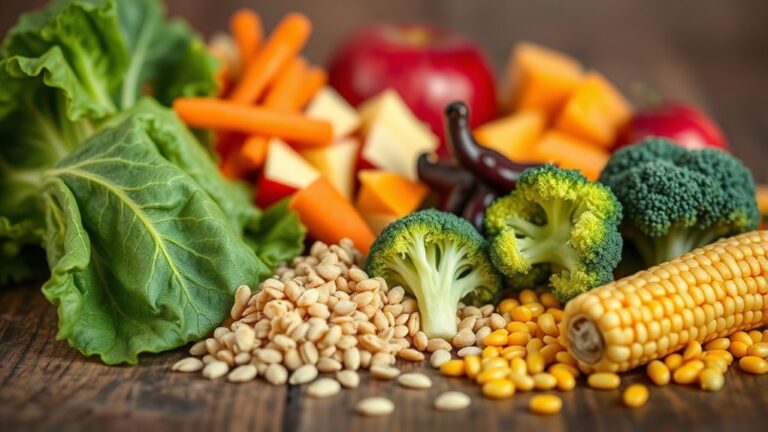
To keep your ducks healthy and energetic, feed them a balanced mix of whole grains like oats and barley, fresh greens such as kale and peas, and protein-rich options like mealworms and cooked eggs.
Add safe fruits like berries and melons for variety and vitamins.
Offer nutritious treats in moderation to support feather care and mental stimulation.
Avoid processed or harmful foods to prevent illness.
Investigate how these choices help your ducks thrive and stay vibrant.
Key Takeaways
- Whole grains like oats, barley, and brown rice provide sustained energy and essential nutrients for healthy ducks.
- Fresh leafy greens such as kale and spinach offer vital vitamins and encourage natural foraging behavior.
- Protein sources like mealworms, cooked eggs, and peas support muscle development and feather growth.
- Safe fruits including berries, melons, and mangoes add antioxidants and vitamins to boost immunity.
- Nutritious snacks like chopped vegetables and whole grains promote feather health and mental stimulation.
The Importance of a Balanced Diet for Healthy Ducks
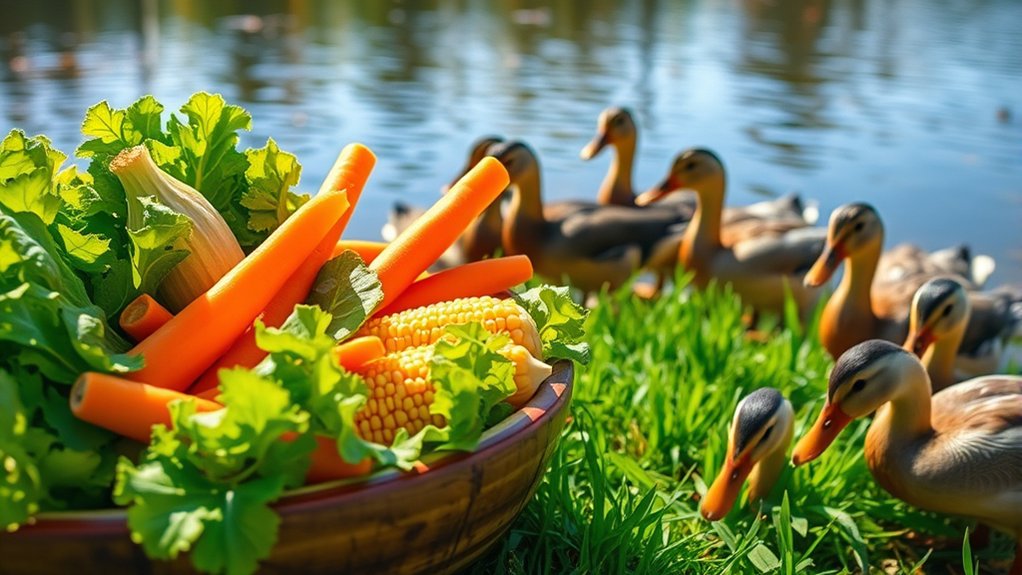
Although ducks can eat a variety of foods, maintaining a balanced diet is essential for their overall health and well-being. When you provide ducks with the right mix of nutrients, you help support their energy needs, especially during intense periods like duck migration.
Providing ducks with balanced nutrition supports their energy needs during critical times like migration.
During migration, ducks rely heavily on nutrient-rich foods found in diverse waterfowl habitats to fuel their long journeys. If their diet lacks balance, they risk weakened immune systems and poor stamina.
By understanding the importance of a balanced diet, you guarantee ducks thrive in both natural and managed environments. Feeding ducks appropriately helps them build fat reserves, maintain their feathers, and stay healthy in fluctuating conditions.
When you replicate the natural variety found in waterfowl habitats, you contribute to their ability to adapt and survive. So, focusing on a balanced diet is key to supporting healthy ducks throughout the year.
Whole Grains That Boost Duck Energy
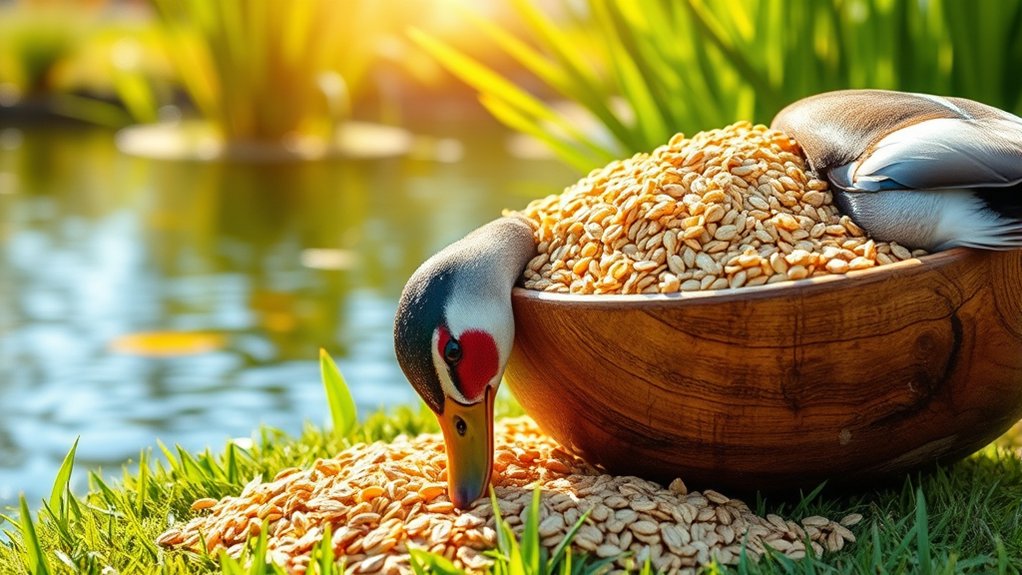
When you include whole grains in a duck’s diet, you provide a powerful source of sustained energy that supports their daily activities and long migrations. Whole grains like oats, barley, and brown rice are rich in complex carbohydrates, which digest slowly and offer a steady energy boost throughout the day. This helps ducks stay active and healthy without sudden energy crashes.
You can easily mix whole grains into their feed, ensuring they get enough fiber and essential nutrients like B vitamins and minerals. These nutrients improve digestion and overall crucial. Whole grains also help maintain a balanced diet by complementing proteins and fats ducks consume. Avoid processed grains, as they lack nutritional value and don’t offer the same energy benefits.
Fresh Greens Ducks Love to Eat

You’ll want to offer your ducks plenty of nutrient-rich leafy greens like kale and spinach to keep them healthy. Safe garden vegetables such as peas and lettuce are also great additions to their diet. Plus, letting your ducks forage for fresh greens encourages natural behaviors and provides mental stimulation.
Nutrient-Rich Leafy Greens
Since ducks thrive on a diet rich in vitamins and minerals, incorporating nutrient-rich leafy greens is essential for their health. You should offer diverse leaf varieties like kale, spinach, and romaine lettuce, which provide a broad spectrum of nutrients.
These nutrient-dense greens support digestion, boost immunity, and promote strong bones. Ducks love nibbling on these fresh leaves, making mealtime enjoyable and beneficial.
Make sure to wash the greens thoroughly to remove any pesticides or contaminants before feeding. Avoid iceberg lettuce, as it lacks nutritional value.
Safe Garden Vegetables
Which garden vegetables do ducks enjoy most? You’ll find that safe, fresh greens like peas, cucumbers, and zucchini make great snacks for your feathered friends. These veggies not only provide hydration but also essential nutrients without risking exposure to harmful garden pests.
Always rinse vegetables well to remove any residues before feeding. Using vegetable compost in your garden helps grow healthy plants, ensuring your ducks get the best quality produce.
Here’s a quick guide to some duck-friendly veggies:
| Vegetable | Benefits | Notes |
|---|---|---|
| Peas | High in protein | Feed fresh or shelled |
| Cucumbers | Hydrating | Remove seeds if large |
| Zucchini | Rich in vitamins | Serve chopped |
| Lettuce | Low calorie | Avoid iceberg variety |
These safe garden vegetables keep your ducks happy and healthy.
Foraging Benefits for Ducks
Although ducks enjoy fresh garden vegetables, foraging for wild greens offers them natural variety and essential nutrients. When you let ducks investigate a wild habitat, they instinctively use foraging strategies to find diverse plants, insects, and algae that boost their diet.
This natural scavenging keeps their digestion healthy and provides crucial vitamins and minerals that you might not easily supply. Encouraging ducks to forage also stimulates their minds and promotes physical activity, which supports overall well-being.
You can improve their environment with safe, native plants to mimic their natural wild habitat, helping them practice these strategies. By allowing ducks to forage, you give them a balanced, fulfilling diet that goes beyond just fresh garden vegetables.
Protein-Packed Foods Ducks Love
When you feed ducks protein-packed foods, you help support their muscle development, feather growth, and overall energy. Protein is essential for feather growth and maintaining strong muscles. These are crucial for their daily activities.
Including high-quality protein in their diet improves waterfowl nutrition and keeps them healthy.
Here’s a quick guide to some protein-packed foods ducks love:
| Food Item | Benefits | Why Ducks Love It |
|---|---|---|
| Mealworms | Rich in protein & fat | Tasty and easy to catch |
| Cooked Eggs | High-quality protein | Soft and digestible |
| Peas | Plant-based protein & fiber | Sweet and satisfying |
Safe Fruits That Add Nutrients and Variety
You can boost your ducks’ health by offering nutrient-rich fruits like berries and melons. Just be sure to feed these treats in safe amounts and remove any seeds or pits first. Seasonal fruits are great because they add variety and provide fresh vitamins that support your ducks all year long.
Nutrient-Rich Fruit Choices
Including nutrient-rich fruits in your ducks’ diet boosts their health and keeps mealtime interesting. You can offer tropical fruits like mango, papaya, and pineapple, which provide essential vitamins and antioxidants.
These fruits not only support their immune system but also add a sweet, juicy treat that your ducks will enjoy. Dried berries, such as blueberries and cranberries, are another excellent option.
They pack a concentrated source of nutrients and can be sprinkled over their regular feed for variety. Just make sure to offer these fruits in moderation to avoid digestive upset.
Safe Feeding Practices
Offering a variety of safe fruits can greatly improve your ducks’ diet while providing important nutrients. To keep your ducks healthy, pay attention to feeding frequency. Offer fruits as treats two to three times a week rather than daily to avoid overfeeding sugary foods.
Always introduce new fruits gradually and observe how your ducks respond. Proper food storage is essential; store fruits in a cool, dry place and discard any spoiled or moldy pieces promptly to prevent illness.
Wash fruits thoroughly before serving to remove pesticides and contaminants. Cut fruits into small, manageable pieces to make eating easier and reduce choking risks. By following these safe feeding practices, you’ll provide your ducks with a nutritious, varied diet that supports their well-being and keeps them happy.
Seasonal Fruit Benefits
Four seasonal fruits stand out for their ability to boost your ducks’ health while adding variety to their diet. Apples, berries, melons, and pears are excellent seasonal fruit varieties that provide essential vitamins and hydration.
Apples offer fiber and vitamin C, supporting digestion and immunity. Berries pack antioxidants that help protect your ducks from illness. Melons, rich in water content, keep ducks hydrated during warmer months.
Pears supply natural sugars and dietary fiber, promoting energy and gut health. Including these safe fruits in moderation improves your ducks’ diet without risking digestive upset.
Healthy Treats and Snacks for Ducks
When you want to treat your ducks without compromising their health, choosing nutritious snacks is key. Healthy treats like chopped vegetables, peas, and whole grains provide essential vitamins and minerals that support duck feather care, keeping their plumage glossy and strong. These snacks also encourage natural foraging behavior, which benefits their overall well-being.
Remember to offer treats in moderation to maintain a balanced diet and avoid overfeeding. Providing snacks near clean water sources promotes water hygiene, preventing contamination from leftover food. Avoid giving processed or salty human snacks that can harm their digestive system.
Foods to Avoid Feeding Your Ducks
Although it might be tempting to share your snacks with ducks, you should avoid feeding them certain foods that can harm their health. Avoid processed foods like chips, bread, and sweets, as they lack proper nutrients and can cause digestive issues.
Bread, in particular, can lead to malnutrition and pollution in their aquatic habitats. Also, steer clear of feeding ducks aquatic plants that aren’t native or safe, since some can be toxic or disrupt their natural diet.
Avoid giving them anything moldy or spoiled, which can cause illness. Raw beans, onions, and anything salty or sugary are also harmful. Instead, stick to fresh, natural options like grains, vegetables, and safe aquatic plants.
Frequently Asked Questions
How Often Should I Feed My Ducks per Day?
You should feed your ducks two to three times a day to maintain a consistent feeding schedule. This helps guarantee they get the right nutritional balance they need to stay healthy and active.
Avoid overfeeding by offering measured portions each time, so they don’t overeat or waste food. Keep their feeding area clean and fresh water available.
Sticking to a routine supports their digestion and overall well-being effectively.
Can Ducks Eat Bread Occasionally Without Health Risks?
Yes, you can feed ducks bread occasionally, but you should be cautious about duck nutrition and feeding safety. Bread offers little nutritional value and too much can cause health problems like malnutrition or obesity.
When you give bread, make sure it’s in small amounts and not a regular part of their diet. Focus on providing healthier foods to keep your ducks happy and healthy while ensuring their feeding safety.
What Water Conditions Are Best for Ducks While Feeding?
Water quality is the lifeblood of ducks while feeding, so you need to keep it clean and fresh. Stagnant or dirty water can cause illness, so change it regularly and avoid overcrowding.
Feeding frequency matters too. Offer food in small amounts several times a day to prevent leftover scraps from fouling the water. By maintaining good water quality and managing feeding frequency, you’ll help your ducks stay healthy and happy every day.
How to Tell if a Duck Is Allergic to Certain Foods?
You can tell if a duck has food allergies or dietary sensitivities by watching for signs like itching, swelling, or changes in behavior after eating certain foods. Digestive issues, such as diarrhea or vomiting, also signal a problem.
If you notice these symptoms, stop feeding that food immediately and consult a vet. Keeping a food diary helps you pinpoint which foods might trigger allergic reactions or sensitivities in your duck.
Are There Seasonal Food Changes Recommended for Ducks?
Of course, your duck will totally thrive on the same diet year-round, said no expert ever. You’ll want to make seasonal diet changes to mimic what ducks naturally eat.
Nutritional adjustments are key, like offering more leafy greens and insects in warmer months and grains or seeds during colder seasons. These tweaks help your duck stay healthy and energetic, adapting to nature’s rhythms rather than sticking to a boring, unchanging menu.
Conclusion
Feeding your ducks well is key to keeping them happy and healthy. Remember, you can’t make a silk purse out of a sow’s ear; quality food leads to quality health.
By offering whole grains, fresh greens, protein-rich options, and safe fruits, you’ll give your ducks the balanced diet they need. Avoid harmful foods, and don’t forget to treat them occasionally.
With the right choices, your ducks will thrive and bring you endless joy. Feeding your ducks the best foods is essential for their overall well-being and happiness.