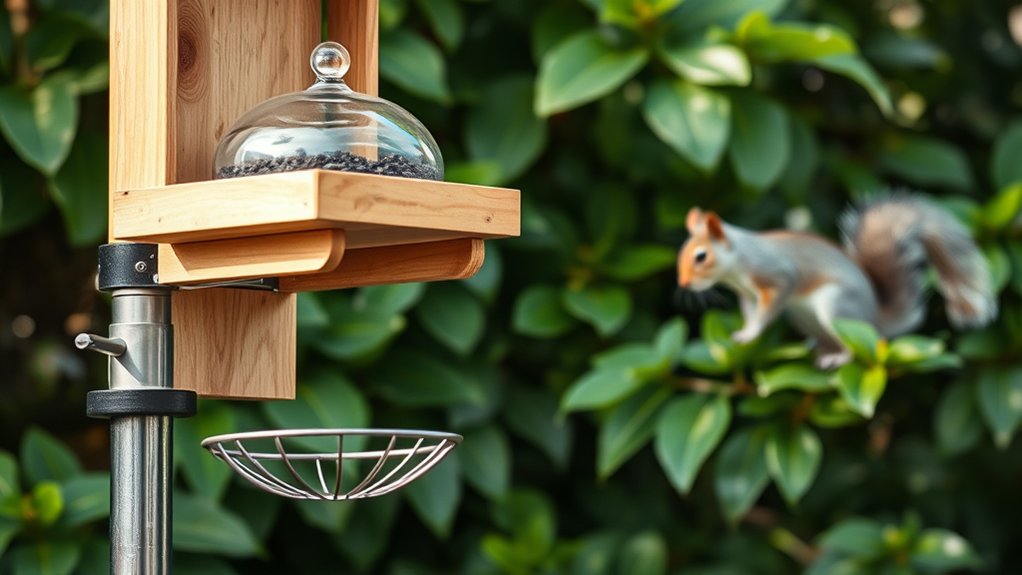
How Do I Squirrel Proof a Bird Feeder Step by Step
If you’ve ever set up a bird feeder only to find squirrels quickly taking over, you’re not alone. Many people struggle to keep those pesky critters at bay while still enjoying watching the birds.
The good news is, with the right strategies and tools, you can squirrel-proof your bird feeder and create a peaceful feeding spot for your feathered friends.
To squirrel-proof your bird feeder, place it at least 10 feet from jump points like trees and 5 feet off the ground, with a clear drop zone below.
Use weight-activated or cage-style feeders, and install pole collars or dome-shaped baffles to block squirrels.
Choose seeds like nyjer or safflower that squirrels dislike, and keep feeders clean to avoid attracting them.
Secure poles with smooth metal and try natural repellents too.
These steps lay the groundwork for effective squirrel prevention and more ways to outsmart them.
Key Takeaways
- Place feeders at least 10 feet from jump points and 5 feet off the ground with a clear drop zone beneath.
- Use weight-activated or cage-style squirrel-proof feeders combined with securely mounted baffles.
- Select squirrel-resistant seeds like nyjer or safflower and avoid high-fat seeds that attract squirrels.
- Install physical barriers such as pole collars and metal mesh guards, and keep the feeder clean regularly.
- Apply natural repellents like cayenne pepper and rotate feeder locations seasonally to disrupt squirrel patterns.
Why Squirrels Target Bird Feeders and How They Outsmart You

Because squirrels are naturally curious and opportunistic, they often target bird feeders as an easy food source. You’ll notice that squirrel behavior is all about cleverness and persistence.
They watch your bird feeding habits closely, learning when and where you refill the feeder. This keen observation helps them time their raids perfectly.
Squirrels use their agility to jump onto feeders, and they’re skilled at figuring out simple deterrents. You might think a feeder is squirrel-proof, but these creatures quickly adapt, exploiting any weakness.
Their strong teeth allow them to chew through many materials, and their problem-solving skills help them bypass obstacles. Understanding these behaviors is key to outsmarting them.
When you recognize how squirrels interpret your feeding routine and feeder design, you can anticipate their moves and take effective steps to protect your birdseed. It’s a constant game of wits between you and these determined foragers.
Where to Place Bird Feeders to Keep Squirrels Away

You’ll want to place your bird feeders in spots that make it hard for squirrels to reach them. So, try to avoid areas near trees, fences, or roofs where squirrels can easily jump from. Picking the right location is really the first step to keeping those pesky squirrels away from your feeders.
Ideal Feeder Locations
When choosing where to place your bird feeder, consider spots that make it difficult for squirrels to reach. This not only helps protect your feeder but also improves feeder aesthetics by keeping it clean and inviting for your favorite bird species.
Ideal locations balance accessibility for birds with challenges for squirrels. Look for places that are at least 10 feet away from launching points like trees or fences. They should have a clear drop zone below to prevent squirrels from jumping up.
Also, choose spots that offer natural cover for birds but no easy squirrel pathways. This way, you create a safe and welcoming space for birds while keeping pesky squirrels at bay.
Avoiding Squirrel Hotspots
Finding the right spot for your bird feeder goes beyond just keeping squirrels at a distance. To avoid squirrel hotspots, place your feeder away from trees, fences, or structures squirrels can jump from. Aim for a spot at least 10 feet from launching points and 5 feet off the ground.
Consider birdhouse placement too; situate birdhouses separately from feeders to reduce squirrel traffic near both. When decorating your feeder, avoid bright colors or shiny feeder decoration that might attract squirrels. Opt for natural tones that blend with your surroundings.
Choosing the Best Squirrel-Proof Bird Feeder Design
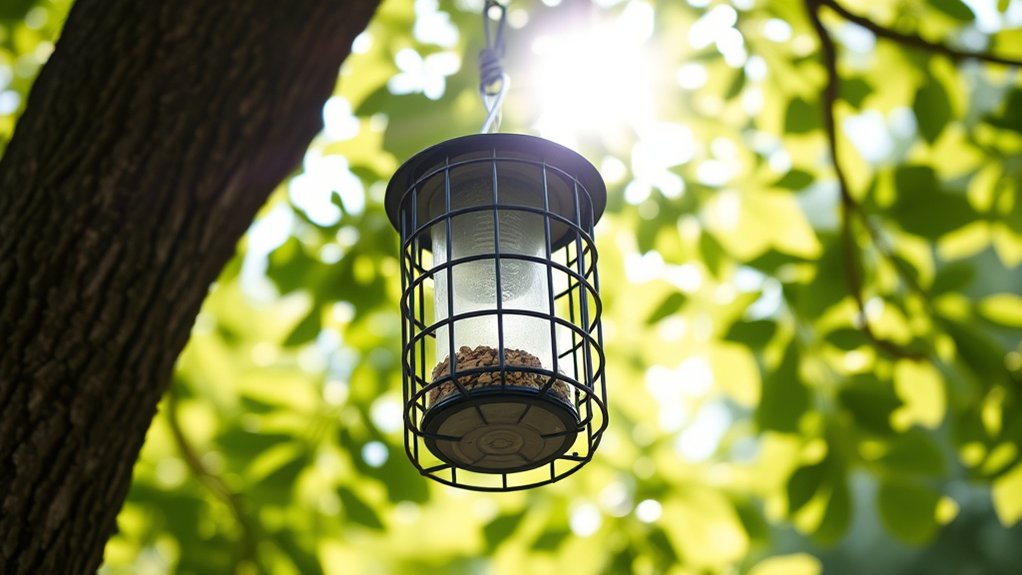
Although squirrels are clever and determined, selecting the right bird feeder design can considerably reduce their access to your birdseed. When choosing a feeder, you want to balance feeder aesthetics with practical squirrel-proof features while also attracting the bird species you enjoy most.
Choosing a bird feeder means balancing style, squirrel-proof features, and attracting your favorite birds.
Here are key design elements to take into account:
- Weight-activated feeders close access ports when a heavy squirrel lands. This allows birds to feed but blocks squirrels.
- Cage-style feeders enclose the feeder in a metal cage. It lets small birds in but keeps larger squirrels out.
- Seed type compatibility matters. Some feeders work best with specific seeds favored by target bird species but less appealing to squirrels.
How to Use Physical Barriers to Block Squirrels
Since squirrels are agile climbers and jumpers, you’ll need to install physical barriers that effectively block their access to your bird feeder. Start by placing barriers like metal cages or mesh guards around the feeder. These stop squirrels from grabbing seeds while still allowing birds to feed.
Remember, understanding squirrel behavior helps you position these barriers where squirrels usually approach.
You should also keep up with bird feeder cleaning. Seeds and debris can attract squirrels, so regular cleaning reduces temptation and keeps feeders safe. Physical barriers work best when combined with good maintenance.
| Barrier Type | Material | Best Placement |
|---|---|---|
| Mesh Guard | Metal | Around feeder body |
| Pole Collar | Metal or Plastic | On feeder pole |
| Cage Enclosure | Metal | Surrounding entire feeder |
Using these barriers thoughtfully blocks squirrels while keeping your bird feeder inviting for feathered friends.
How to Install Baffles to Stop Squirrels
If you want to stop squirrels, you’ll need the right kind of baffle and to place it properly. Different baffles work better depending on where your feeder is. So, let’s check out the common types and how to install them the right way.
Types Of Baffles
When you want to keep squirrels away from your bird feeder, installing a baffle is one of the most effective solutions. Understanding squirrel behavior helps you choose the right type of baffle to prevent them from reaching your feeder.
Here are three common types of baffles you can consider:
- Dome-shaped baffles: These are placed above or below the feeder, making it hard for squirrels to climb or jump.
- Tube baffles: Installed on poles, they create a slippery barrier that squirrels can’t grip.
- Cone baffles: These wide, cone-shaped shields block squirrels from climbing up poles or hanging feeders.
Selecting the right baffle supports bird feeder maintenance by reducing damage and keeping feeders clean. This way, birds can enjoy their food without interruption.
Proper Baffle Placement
Although choosing the right baffle is essential, placing it correctly makes all the difference in stopping squirrels. You’ll want to install the baffle at least 3 feet below or 3 feet above your bird feeder to exploit typical squirrel behavior. They’re reluctant to jump past open spaces.
Mount the baffle on the pole or hanger supporting your feeder, ensuring it’s secure and stable. Keep feeder aesthetics in mind by selecting a baffle that complements your feeder’s style and color so it doesn’t detract from your garden’s look.
Positioning the baffle properly blocks squirrels from climbing or jumping onto the feeder while letting birds feed easily. By understanding squirrel behavior and placing your baffle strategically, you’ll protect your feeder effectively without sacrificing its visual appeal.
Using Weight-Activated Squirrel-Proof Feeders
Since squirrels can quickly empty traditional feeders, you’ll appreciate how weight-activated squirrel-proof feeders work by closing access ports when heavier animals land on them. These feeders use a smart mechanism that lets smaller birds feed freely while blocking squirrels, making your birdhouse maintenance easier and more effective.
Weight-activated feeders smartly block squirrels while allowing smaller birds to feed freely and easily.
To get the most from your weight-activated feeder, keep these points in mind:
- Regular feeder cleaning prevents jams in the weight mechanism and keeps birds healthy.
- Check for wear and tear on moving parts during birdhouse maintenance to ensure smooth operation.
- Position the feeder away from launching points like nearby trees or fences to reduce squirrel attempts.
Using these feeders not only protects your birdseed but also reduces the need for constant refilling. With proper upkeep, you’ll enjoy watching birds without the frustration of squirrels stealing the show.
Selecting Bird Seed That Discourages Squirrels
You can keep squirrels away by picking bird seed they don’t like. Some seeds are favorites for birds but not so much for squirrels. So, it really helps to know which ones to choose.
Types Of Bird Seed
How can the type of bird seed you choose help keep squirrels away? Understanding squirrel behavior is key. They’re attracted to certain bird seed varieties because of taste and ease of access.
By selecting seeds that squirrels find less appealing, you can reduce their visits to your feeder. Consider these options:
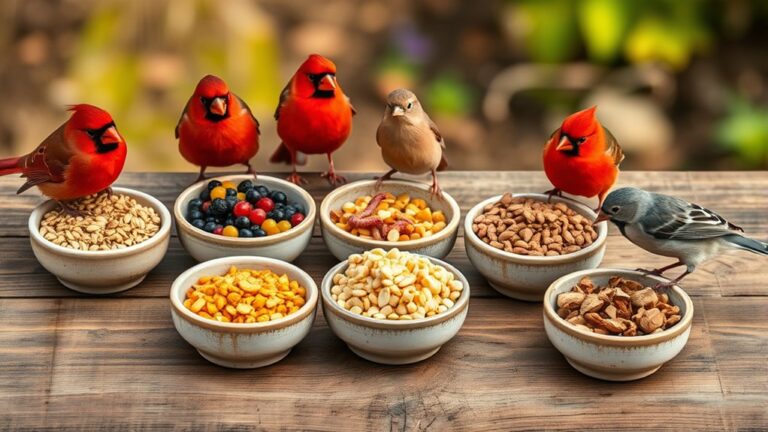
- Nyjer seed: Tiny and hard to shell, making it difficult for squirrels to eat.
- Safflower seeds: Many birds love them, but squirrels tend to avoid their bitter taste.
- Mixed seed blends without corn or sunflower: These are less attractive to squirrels, who favor high-fat seeds.
Choosing the right bird seed varieties aligns with how squirrels behave. This helps you maintain a squirrel-proof bird feeder and keep your feathered friends well-fed without unwanted guests.
Seeds Squirrels Avoid
Although squirrels are notorious for raiding bird feeders, certain seeds can help deter them from visiting your feeder. Understanding squirrel nutrition helps you choose bird seed varieties they tend to avoid.
Squirrels prefer high-fat, energy-rich seeds like sunflower and safflower, but you can select seeds less appealing to them. For example, safflower seeds are a favorite for many birds but disliked by squirrels due to their bitter taste.
Millet and nyjer seeds also tend to discourage squirrels because these seeds provide less nutritional value for their needs. By focusing on bird seed varieties that meet birds’ dietary needs but don’t satisfy squirrels, you reduce unwanted visits.
This approach helps keep your feeder stocked for birds, limiting squirrel interference without harmful deterrents.
Mixing Seeds Strategically
Choosing seeds that squirrels dislike is only part of the solution. Mixing those seeds strategically can further discourage them from raiding your feeder. By combining high seed quality with a thoughtful blend, you make your feeder less appealing to squirrels while still attracting birds. You should focus on mixing seeds that birds love but squirrels tend to avoid.
Consider these tips:
Use nyjer or safflower seeds as a base; they’re less attractive to squirrels. Add a small amount of sunflower seeds to maintain bird interest without inviting squirrels. Rotate seed mixes regularly to prevent squirrels from adapting.
Maintaining your feeder’s cleanliness is just as vital. Spilled seeds attract squirrels, so consistent feeder maintenance keeps your strategy effective and your feathered friends happy.
Securing Poles and Mounts Against Squirrel Climbs
When you secure poles and mounts properly, you can considerably reduce squirrels’ chances of reaching your bird feeder. Understanding squirrel behavior and feeding habits helps you position feeders where squirrels find it difficult to climb.
For instance, squirrels excel at climbing rough surfaces but struggle on smooth, slippery poles. Installing a baffle below the feeder or on the pole creates a physical barrier that interrupts their climb.
Here’s a quick guide to securing poles and mounts:
| Method | Purpose |
|---|---|
| Smooth metal pole | Prevents grip for climbing squirrels |
| Pole-mounted baffle | Blocks squirrels mid-climb |
| Distance from trees | Avoids squirrel jumping access |
| Stable mount | Prevents feeder wobbling or tipping |
Natural Repellents and Deterrents to Keep Squirrels Off
If you want to keep squirrels away without harming them, natural repellents and deterrents offer effective and eco-friendly options. These methods help protect your bird feeder while respecting wildlife. You can use natural repellents that squirrels find unpleasant, encouraging them to stay clear of your feeding area.
Combining these with physical garden barriers creates a strong defense that squirrels struggle to bypass.
Try these natural repellents and deterrents:
- Sprinkle cayenne pepper or chili powder around your feeder; squirrels dislike the spicy smell.
- Use predator urine scents, like fox or coyote, to create a sense of danger.
- Plant squirrel-repellent herbs such as mint or lavender near your garden barriers.
Keeping Your Squirrel-Proof Feeder Working Year-Round
To keep your squirrel-proof feeder effective throughout the year, you’ll need to perform regular maintenance and adjust strategies as seasons change. Clean your feeder frequently to prevent mold and seed buildup, which can deter birds and attract squirrels. Check moving parts like baffles or weight-sensitive mechanisms to guarantee they function properly.
Remember, squirrel behavior patterns shift with the seasons. Squirrels are more persistent in late summer and fall when they’re storing food. Adjust your feeder placement or add new deterrents accordingly.
Don’t overlook bird feeder aesthetics either. A clean, well-maintained feeder not only attracts birds but also discourages squirrels that prefer easier targets. If your feeder looks neglected, squirrels may exploit that weakness.
Rotate feeder locations occasionally to stay ahead of squirrels’ learning habits. By staying proactive and adapting to seasonal changes, you’ll keep your squirrel-proof feeder working effectively year-round. This way, you provide a safe, enjoyable space for birds without constant squirrel interference.
Frequently Asked Questions
Can Squirrels Damage Bird Feeders Besides Stealing Seeds?
Yes, squirrels can damage bird feeders beyond just stealing seeds. Their behavior includes chewing and clawing, which can break feeder parts or cause leaks.
If your feeder design isn’t sturdy or squirrel-resistant, these critters might bend metal, crack plastic, or even topple the feeder. To protect your feeder, you’ll want to take into account materials and designs that withstand their persistent behavior and prevent them from causing physical damage while trying to get to the seeds.
How Do Weather Conditions Affect Squirrel-Proof Feeders?
Weather impact hits squirrel-proof feeders like a wild dance, testing your setup’s strength. You’ve got to remember squirrels adapt quickly. They’re like nature’s little ninjas, adjusting their tactics with every rain, wind, or snowstorm.
Harsh weather can weaken feeder materials or loosen squirrel baffles, so you need sturdy, weather-resistant designs. By anticipating these squirrel adaptations and weather impact, you’ll keep your feeder standing strong, no matter what the skies throw your way.
Are There Any Safe Homemade Squirrel Repellents?
Yes, you can make homemade repellents that are safe for birds. Try mixing water with a few drops of hot sauce or cayenne pepper and spray it around your feeder. The spicy smell deters squirrels but doesn’t harm birds.
Another option is a garlic-based spray. Just make sure you avoid harsh chemicals to maintain bird safety. Regularly reapply after rain to keep squirrels away effectively without risking your feathered friends.
What Types of Birds Are Most Affected by Squirrel-Proof Feeders?
You’ll notice that finches, chickadees, and titmice are most affected by squirrel-proof feeders because these bird species prefer feeders with smaller perches or tube designs.
When choosing feeder attachment methods, you’ll want something secure but not too restrictive. Some feeders use weight-sensitive perches that close for squirrels but open for lighter birds.
This balances keeping squirrels out while still attracting your favorite small bird species to enjoy the feeder.
How Often Should I Clean a Squirrel-Proof Bird Feeder?
You wouldn’t want your bird feeder to turn into a moldy mess, right? You should clean your squirrel-proof feeder at least once every two weeks, especially if you use oily seed types that can spoil quickly.
Also, consider feeder placement. Keep it away from trees or structures squirrels can leap from. Regular cleaning helps keep seeds fresh and birds healthy, making your feeder a safe haven for feathered friends, not a squirrel playground.
Conclusion
You might think squirrels are just clever acrobats outsmarting your bird feeder, but with the right steps, you can flip the script. Imagine a fortress around your feeder: baffles, barriers, and the perfect seed all working together to keep those nimble thieves at bay.
By placing feeders thoughtfully and using natural deterrents, you’ll create a squirrel-proof haven. Stay consistent, and watch birds feast peacefully while squirrels stay frustrated and empty-pawed. With these tips, you’ll successfully squirrel proof a bird feeder and enjoy uninterrupted birdwatching.