What Is a Mallard?
If you’ve ever tried to spot wildlife in your local park or near wetlands, you know it can be tricky to find animals that are both common and easy to identify. You’re not alone—many people struggle with recognizing different bird species in their natural habitats. That’s why learning about the mallard can be a great starting point.
A mallard is a common, adaptable duck you’ll find from city parks to wild wetlands across the Northern Hemisphere. Males are easy to spot with their glossy green heads and bright markings, while females blend in with mottled brown feathers.
They eat plants, insects, and small fish and can thrive in both natural and urban areas. Facing threats like habitat loss, they play key roles in ecosystems. Keep exploring to uncover more about their behavior and importance.
Key Takeaways
- Mallards are common ducks native to the Northern Hemisphere. They adapt well to urban and wild habitats like parks, wetlands, and rivers.
- Male mallards have glossy green heads and bright plumage. Females have mottled brown feathers, which help them blend in while nesting.
- Their diet includes aquatic plants, insects, small fish, and seeds. They forage both in water and on land.
- Mallards migrate seasonally to find open water and food. However, some populations stay year-round in mild climates.
- They play vital roles in wetland ecosystems by controlling insects, dispersing seeds, and serving as indicators of environmental health.
What Is a Mallard and Where Do They Live?
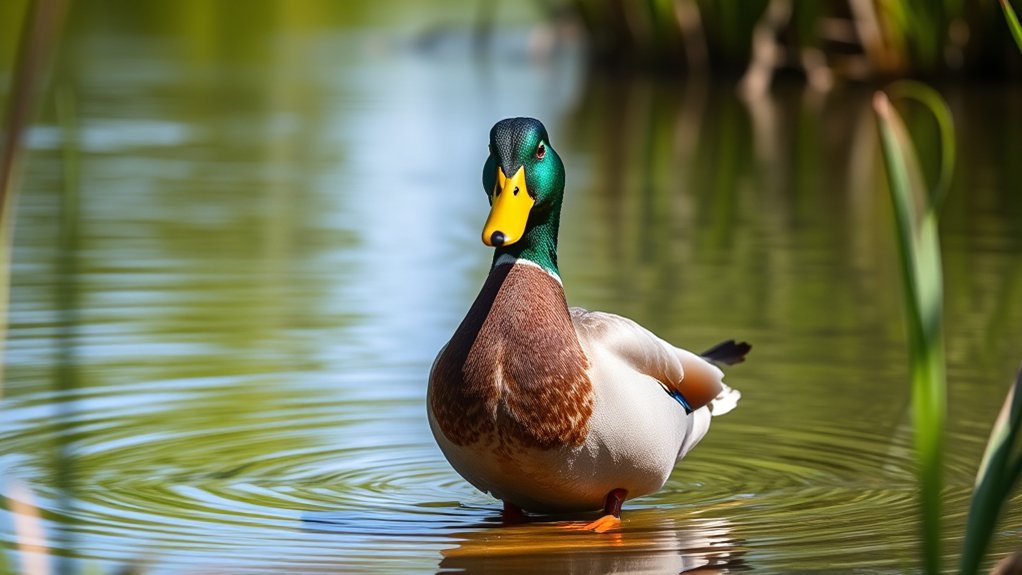
What makes a mallard so recognizable? You can spot one easily by its vibrant colors and distinctive shape, traits deeply rooted in mallard genetics. These ducks have a fascinating history, tracing back thousands of years to their historical origins across the Northern Hemisphere.
Mallard genetics have allowed them to adapt to various environments, making them one of the most widespread duck species worldwide. When you look around, you’ll find mallards living in diverse habitats, from urban parks and ponds to wetlands and rivers.
Their adaptability comes from both their physical traits and behavior, shaped by their genetic makeup over centuries. Understanding where mallards live helps you appreciate their resilience and ability to thrive near human settlements and in the wild.
How to Identify Male and Female Mallards

Recognizing the differences between male and female mallards makes spotting them even more interesting. You’ll notice that male mallards flaunt vibrant mallard coloration: a glossy green head, white neck ring, chestnut-brown chest, and gray body. In contrast, female mallards have mottled brown feathers, which help them blend into their surroundings.
Male mallards display vibrant colors, while females wear mottled brown feathers for camouflage.
This difference is essential during nesting habits, as the female’s camouflaged plumage protects her and her eggs from predators while she incubates.
When you watch mallards, look for the male’s iridescent blue wing patches bordered by white, visible in flight or at rest. Females have the same wing patches but less vivid.
The males also tend to be slightly larger and more vocal during the breeding season. By focusing on these details, you’ll quickly learn to tell males and females apart, enhancing your appreciation of these adaptable waterfowl.
What Do Mallards Eat and How Do They Forage?
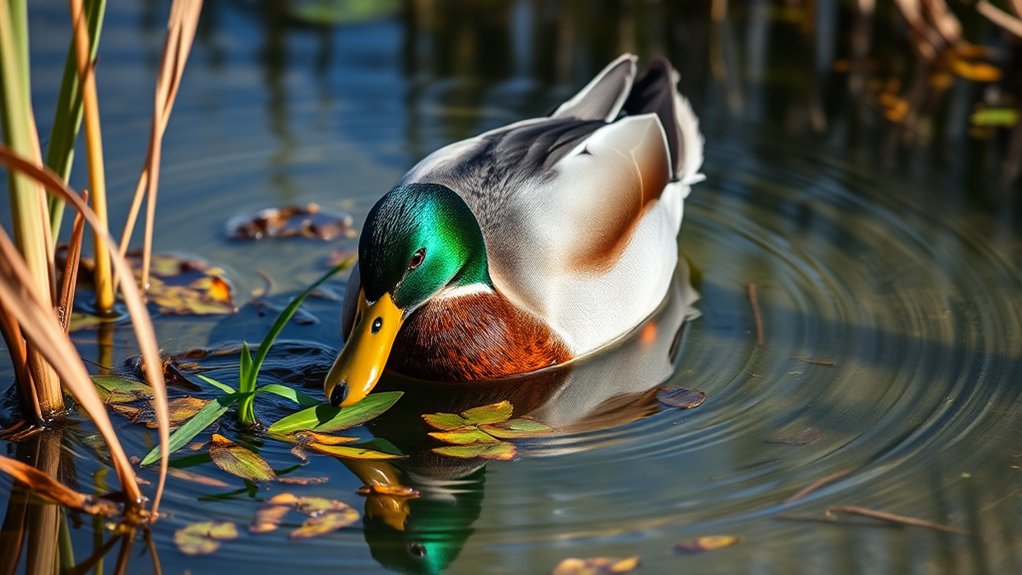
Although mallards are often seen dabbling on the water’s surface, they have a varied diet that includes aquatic plants, insects, and small fish. When you watch them forage, you’ll notice they tilt their bodies forward to reach underwater vegetation or scoop up insects and larvae.
They also graze on land, nibbling seeds, grasses, and grains near their nesting sites. During mallard migration patterns, food availability influences where they stop to rest and feed.
You’ll find mallards taking advantage of wetlands, ponds, and agricultural fields rich in food. Their flexible diet helps them adapt to different environments as they travel.
If you’re near mallard nesting sites, you might see females foraging carefully to gather enough energy for egg-laying and raising ducklings. By understanding what mallards eat and how they forage, you get a clearer picture of their survival strategies and how they thrive across diverse habitats.
How Do Mallards Behave in the Wild?
Mallards don’t just rely on their diet to survive. They also show a range of behaviors that help them adapt to their environment. When you watch mallards in the wild, you’ll see how these behaviors boost their chances of survival despite threats from predators.
Here are four key behaviors to watch for:
- Mallard mating rituals: Males display vibrant plumage and perform intricate courtship dances to attract females.
- Vigilance: Mallards stay alert, frequently scanning for predators like foxes, raccoons, and birds of prey.
- Social interactions: They often gather in groups for safety and cooperation, especially during feeding.
- Nesting and protection: Females choose concealed sites and aggressively defend their nests from potential threats.
When and Where Do Mallards Migrate?
When the seasons shift and temperatures drop, you’ll notice these ducks moving from their summer habitats to warmer areas. Mallard migration patterns typically begin in late fall, as they head south to find open water and more abundant food sources.
You’ll see them traveling along seasonal flight routes that often follow rivers, lakes, and coastlines, providing reliable stopover points for rest and refueling. These routes vary depending on their breeding grounds, which stretch across North America, Europe, and parts of Asia.
In spring, mallards reverse course, returning north to breed and raise their young. You might be surprised that some populations in milder climates don’t migrate far or at all.
Understanding mallard migration patterns helps you appreciate their adaptability and the importance of wetland conservation along their seasonal flight routes. Recognizing when and where mallards migrate allows you to observe these impressive journeys firsthand.
How Do Mallards Choose Their Mates?
When you watch mallards during mating season, you’ll notice their courtship displays are super important for attracting a partner. The males’ bright plumage really helps catch the females’ attention. Plus, females tend to pick mates based on certain traits that show off health and strength. It’s like they’re looking for the best of the best!
Courtship Displays And Behaviors
Although courtship can seem simple, mallards perform a variety of elaborate displays to attract mates. When you watch mallard courtship, you’ll notice specific display behaviors males use to impress females. These actions help females decide which mate is strongest and most suitable.
Key mallard courtship display behaviors include:
- Head-bobbing: Males repeatedly bob their heads to catch a female’s attention.
- Tail-shaking: Vibrating the tail feathers signals importance.
- Wing-flapping: Loud wing beats show physical fitness.
- Vocal calls: Distinct quacks and whistles communicate interest.
Role Of Plumage Color
Since mallards rely heavily on visual cues, the color of a male’s plumage plays a crucial role in attracting a mate. You’ll notice that males flaunt bright feather coloration, especially their iridescent green heads and striking blue wing patches.
These vivid colors catch the female’s eye and signal health and vitality. Plumage patterns also matter; distinctive markings can set one male apart from others, helping females identify the best partner.
When you observe mallards, you’ll see how the sheen and contrast in feather coloration influence a female’s response during courtship. So, the role of plumage color isn’t just decorative, it’s a key factor in communication and mate attraction, guiding females toward strong, fit males in the wild.
Mate Selection Criteria
Because mallards depend on more than just plumage color, they evaluate several traits when choosing a mate. You’ll find that their selection involves a keen assessment of qualities linked to survival and reproduction. Here are four key factors influencing mate choice:
- Genetic compatibility You want a partner whose mallard genetics complement yours, ensuring healthy offspring.
- Physical fitness Strong, agile mates signal good genes and better chances in breeding habitats.
- Territory quality Males holding prime breeding habitats attract females by offering safer nesting sites.
- Behavioral displays Courtship rituals like head-bobbing or vocalizations show vigor and readiness to breed.
Why Mallards Matter to Wetlands
You might not realize it, but mallards play a key role in keeping wetlands healthy. They help maintain ecosystem balance, spread seeds, and act as indicators of environmental changes.
When you think about it, these ducks do a lot more than just swim around. By spreading seeds, they actually help new plants grow, which keeps the wetland thriving. Plus, because they react to changes in their environment, they give us clues about the health of the ecosystem.
Ecosystem Balance Support
Although you might not notice them at first, mallards play a crucial role in maintaining the health of wetlands. Their presence supports ecosystem balance thanks to their behaviors tied to mallard migration patterns and mallard nesting habits.
Here’s how they help:
- Control insect populations by feeding on larvae and aquatic insects, reducing pest outbreaks.
- Promote aquatic plant growth by grazing selectively, preventing overgrowth that can deplete oxygen.
- Support nutrient cycling through their droppings, enriching wetland soil and water.
- Provide food for predators, sustaining the wetland food web.
Seed Dispersal Role
Mallards do more than keep insect populations in check and support wetland nutrients. They also play a key part in spreading plant seeds. As you observe a mallard moving through its habitat, you’re witnessing an essential seed disperser in action.
Seeds stick to their feathers or pass through their digestive system, traveling to new locations within the wetland. During duck migration, mallards cover vast distances, carrying seeds far from their original sites. This natural process helps maintain plant diversity and promotes healthy wetland ecosystems.
Indicator Species Importance
Because they respond quickly to changes in their environment, these ducks serve as valuable indicators of wetland health. When you observe mallard populations, you’re fundamentally monitoring the overall ecosystem’s condition. Here’s why mallards matter to wetlands:
- Population shifts reveal habitat quality changes.
- Variations in mallard genetics signal environmental stress.
- Declines warn of pollution or invasive species threats.
- Their presence supports ongoing mallard conservation efforts, ensuring wetland protection.
How Mallards Thrive in Urban Environments
When you visit city parks or ponds, you’ll often see mallards adapting quickly to urban life. Their ability to use urban nesting sites like rooftops, gardens, and even drainage pipes shows remarkable mallard adaptation. These ducks take advantage of human-made environments to find food, shelter, and safety from predators.
Here’s a glimpse of how mallards thrive in cities:
| Urban Feature | Mallard Adaptation |
|---|---|
| Rooftop Gardens | Nesting spots away from threats |
| Park Ponds | Reliable food and water sources |
| Green Spaces | Shelter and foraging areas |
You’ll notice mallards are flexible, adjusting their behaviors to urban challenges. They exploit abundant food from people’s handouts and urban insects, while nesting in hidden corners. Their success in urban nesting highlights nature’s resilience and reminds you how wildlife can coexist with city life.
What Threats Do Mallards Face in Nature?
Living in urban environments offers many advantages, but these adaptable ducks still face several threats in the wild. Understanding mallard behavior helps you recognize how these threats impact their survival. You should be aware of the following challenges mallards encounter:
- Predators: Foxes, raccoons, and birds of prey often target mallards, especially ducklings.
- Habitat Loss: Wetland drainage and urban expansion reduce essential nesting and feeding areas.
- Pollution: Chemicals and litter contaminate water sources, affecting mallard health and reproduction.
- Climate Change: Altered migration patterns and food availability disrupt their natural cycles.
Mallard conservation efforts focus on mitigating these risks by protecting habitats and educating the public. By understanding these threats and mallard behavior, you can appreciate why conservation is critical to maintaining healthy mallard populations in both urban and natural settings.
How Can You Attract Mallards to Your Local Pond?
If you want to attract mallards to your local pond, start by creating the right habitat. They love shallow water with lots of vegetation around.
Also, providing fresh food sources like grains and aquatic plants will keep them coming back again and again.
And don’t forget, keeping the water clean and easily accessible is key to supporting their needs. It really makes a difference!
Ideal Habitat Features
Although mallards can adapt to various environments, you’ll attract more of them to your pond by providing shallow waters with abundant aquatic vegetation. Understanding mallard genetics and breeding behaviors helps you create the right habitat that encourages nesting and pairing.
Here’s what to focus on:
- Shallow Water Zones: Ideal for dabbling and feeding, supporting natural breeding behaviors.
- Aquatic Plants: Offer shelter and nesting materials, essential for mallard genetics that favor secure sites.
- Natural Cover: Shrubs and grasses nearby protect from predators, aiding successful breeding.
- Calm Water Areas: Reduce stress and encourage courtship displays tied to mallard genetics.
Food and Water Sources
Three key elements make your pond irresistible to mallards: fresh water, diverse food sources, and easy access. Understanding their feeding habits, mallards enjoy seeds, aquatic plants, and small insects.
Their drinking habits require clean, shallow water. You can attract them by providing these essentials consistently.
| Food Source | Description |
|---|---|
| Aquatic plants | Offer natural vegetation |
| Seeds | Scatter grains or corn |
| Small insects | Encourage insect-friendly areas |
| Shallow water | For easy drinking and feeding |
| Access points | Gentle slopes or floating docks |
Frequently Asked Questions
Can Mallards Be Kept as Pets?
Yes, you can keep mallards as pets, but you need to mimic their natural Mallard habitat to keep them happy and healthy. They thrive near water, so providing a pond or a water source is essential.
You’ll also have to manage their Mallard diet, which includes aquatic plants, insects, and small fish. Remember, they need space to roam and social interaction, so be prepared for their care demands before deciding.
How Long Do Mallards Live in Captivity?
You’ll find mallards live around 5 to 10 years in captivity, thriving when you mimic their natural habitat preferences and support their breeding behaviors. You’ll need to provide clean water, ample space, and safe nesting areas to encourage healthy breeding.
You’ll see they adapt well when you replicate their environment, making them live longer and breed successfully, so creating a habitat that suits their instincts is key to their well-being.
Do Mallards Have Any Cultural or Symbolic Meanings?
Yes, mallards carry rich mallard symbolism and cultural significance of ducks in many traditions. You’ll find they often represent adaptability, resourcefulness, and emotional balance.
In some cultures, ducks symbolize love and fidelity because they mate for life, so mallard symbolism can inspire loyalty. When you delve into art or folklore, you’ll notice ducks appear as messengers between worlds, showing you how deeply these birds resonate in human culture.
Are Mallards Protected by Law?
You might spot mallards during migration, and yes, they’re protected by law. Since mallard migration covers vast areas, laws help preserve their habitats and guarantee their mallard diet, mainly aquatic plants and small insects, remains sustainable.
These protections prevent overhunting and habitat destruction, letting you enjoy watching them year after year. So, when you see a mallard, remember it thrives thanks to legal safeguards designed to keep their migration routes and food sources intact.
Can Mallards Interbreed With Other Duck Species?
Yes, you can expect mallards to interbreed with other duck species due to their hybridization potential. This ability allows them to *plunge* with closely related ducks, increasing genetic diversity within populations.
When you observe hybrids, you’re witnessing how mallards contribute to gene flow across species boundaries, which can affect traits and adaptability. So, their interbreeding isn’t just common; it’s a significant factor in duck evolution and diversity.
Conclusion
Now that you know what a mallard is, you can appreciate these vibrant ducks as they glide across ponds like living jewels. Whether you spot a male’s shimmering green head or a female’s mottled brown feathers, you’ll understand their habits, diet, and migration patterns.
By learning how they thrive even in urban areas, you can help protect their wetlands and maybe even attract them to your local pond. This way, you’ll ensure these beautiful birds continue to brighten our world. Understanding a mallard is the first step to keeping their presence alive and thriving.