10 Essential Tips to Protect Endangered Birds
If you care about endangered birds, you’re not alone. Many people struggle with how to make a real difference in protecting these vulnerable species. It can feel overwhelming to know where to start or what actions truly help. That’s why we’ve put together some practical tips to guide you in making a positive impact.
You can protect endangered birds by supporting conservation areas and groups that preserve their habitats. Reduce window collisions with bird-friendly decals and lower light pollution during migration.
Set up safe feeders and clean water, avoid harmful pesticides, and plant native flora to create bird-friendly gardens.
Keep pets indoors to prevent predation, raise community awareness, and join citizen science projects to track birds. These practical actions make a real difference, and more tips await to help you safeguard these essential species.
Key Takeaways
- Support conservation areas and local groups through donations, volunteering, and awareness. This helps preserve endangered bird habitats.
- Reduce window collisions by using bird-friendly decals, external screens, or positioning houseplants near windows.
- Minimize light pollution with shielded, low-intensity, or motion-activated outdoor lighting during migration seasons.
- Provide clean, safe food and water sources placed away from predators. This supports healthy bird populations.
- Avoid harmful pesticides by using organic methods and planting native flora to offer natural food and shelter.
Support Conservation Areas To Protect Endangered Bird Habitats
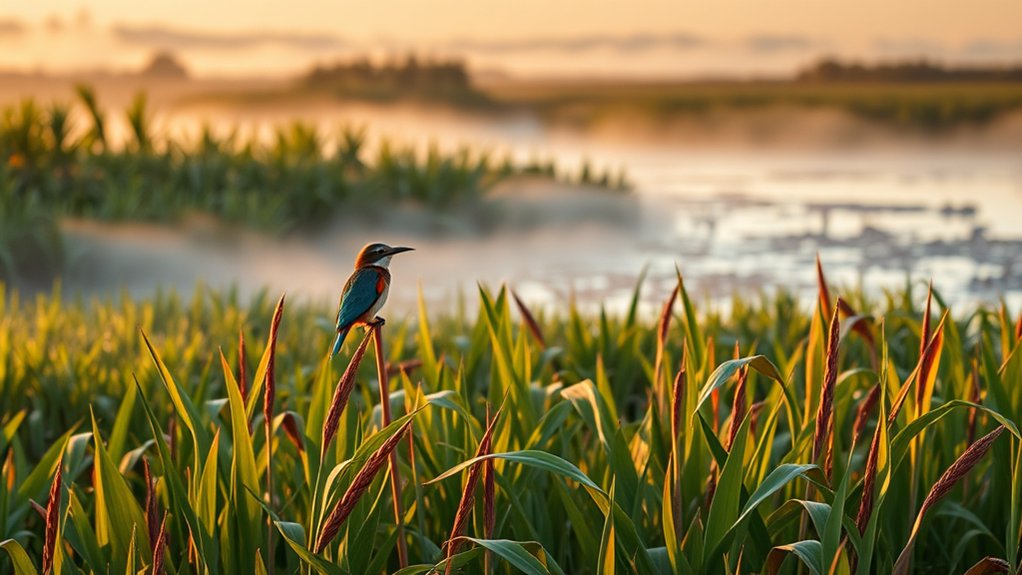
Although it may seem small, supporting conservation areas plays an essential role in protecting endangered bird habitats. When you contribute to these protected zones, you directly aid habitat preservation, ensuring birds have safe places to live, breed, and feed.
Supporting conservation areas is vital for preserving safe habitats where endangered birds can thrive.
These areas act as crucial sanctuaries against urban development and deforestation, which threaten countless species. Your support also boosts conservation funding, helping organizations maintain and expand these critical habitats.
Without sufficient funding, efforts to restore damaged environments or enforce protection laws can stall. By backing conservation projects, you empower experts to monitor bird populations and implement strategies that prevent further decline.
You don’t have to do much to make a big difference. Donations, volunteering, or spreading awareness all contribute to stronger conservation initiatives. Remember, every bit of support counts in creating a safer world for endangered birds, safeguarding the delicate balance of ecosystems they depend on.
Reduce Window Collisions With Simple Home Adjustments
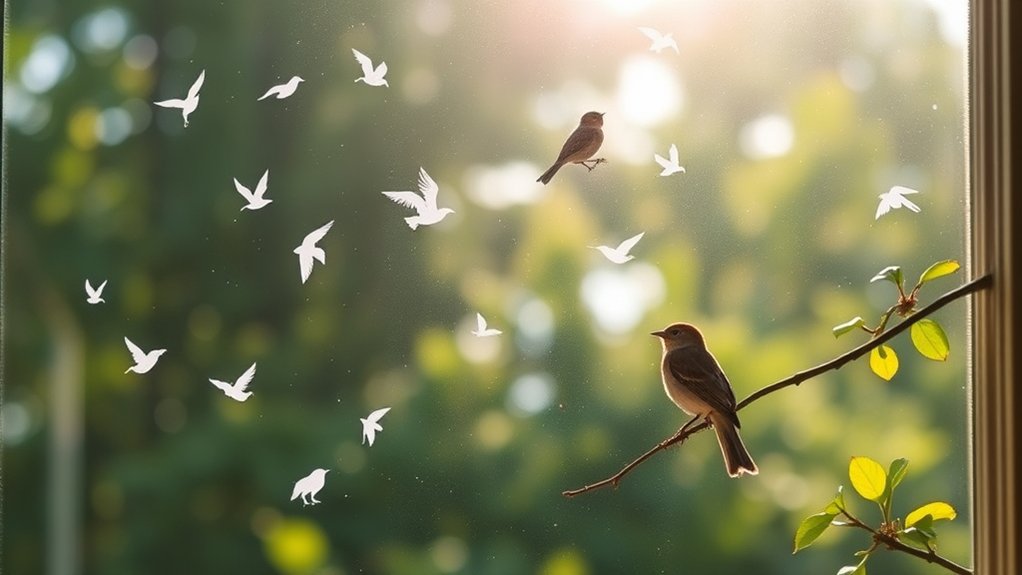
You can help prevent birds from flying into your windows by using bird-friendly decals and installing external screens. Another easy trick is placing houseplants near windows, which helps break up reflections that often confuse birds. These simple changes really make your home safer for endangered birds.
Use Bird-Friendly Window Decals
Because birds often can’t see clear glass, they frequently collide with windows, causing serious injuries or fatalities. You can prevent this by applying bird-friendly window decals, which break up reflections and signal to birds that glass is a barrier.
These decals come in various shapes and patterns, including colorful signage styles that add visual interest while protecting wildlife. Placing them closely together ensures birds recognize the surface as a solid object.
You might even coordinate decals with seasonal decorations to improve your home’s aesthetic without compromising safety. Remember, the goal is to make windows visible to birds without obstructing your view.
Install External Window Screens
Applying bird-friendly window decals is a great start, but adding external window screens offers another effective way to prevent bird collisions. These screens create a physical barrier that breaks reflections and reduces the chance birds mistake glass for open space.
By installing external screens, you improve window safety while providing an additional layer of bird deterrents. They’re easy to fit on most windows and don’t obstruct your view. Plus, external screens absorb the impact if birds do fly toward the window, greatly lowering injury risks.
To maximize effectiveness, ensure screens cover the entire window and maintain them regularly. Taking this simple home adjustment seriously helps protect endangered birds and promotes safer outdoor environments right at your doorstep.
Position Houseplants Strategically
When you position houseplants near windows, you can reduce bird collisions by breaking up reflections and making glass surfaces more visible. Strategic plant placement is a simple yet effective way to protect birds.
By incorporating indoor gardening into your home, you create natural barriers that alert birds to the presence of glass. Place plants both inside and outside near windows to disrupt clear reflections that often confuse birds.
Varying the types and sizes of plants amplifies this effect. Avoid placing large, flat pots or empty window sills that can still cause collisions. Instead, use a mix of leafy and flowering plants to create a more complex visual field.
With thoughtful plant placement, you’ll contribute to safer flight paths for endangered birds visiting your area.
Set Up Safe Feeders And Clean Water For Endangered Birds
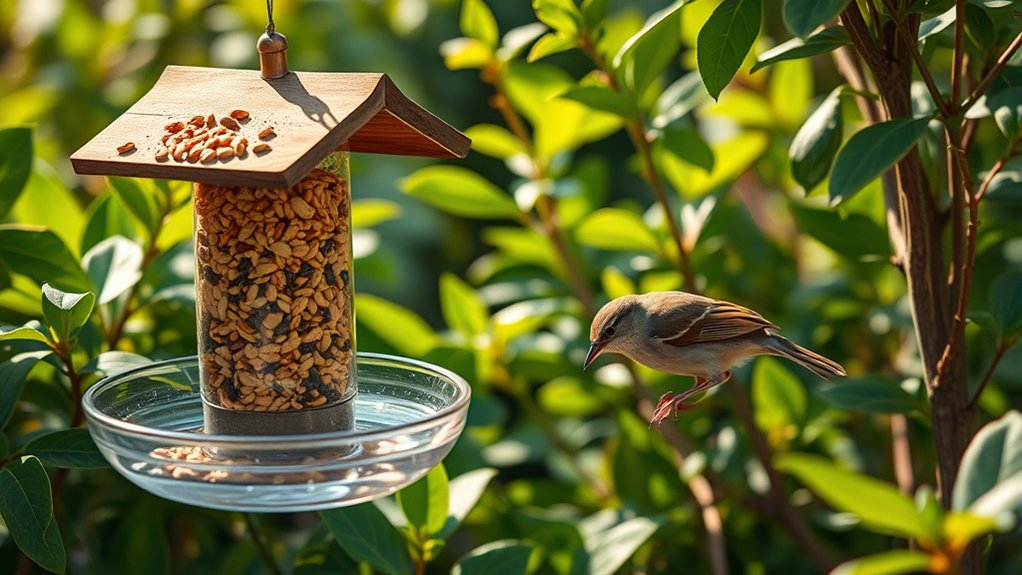
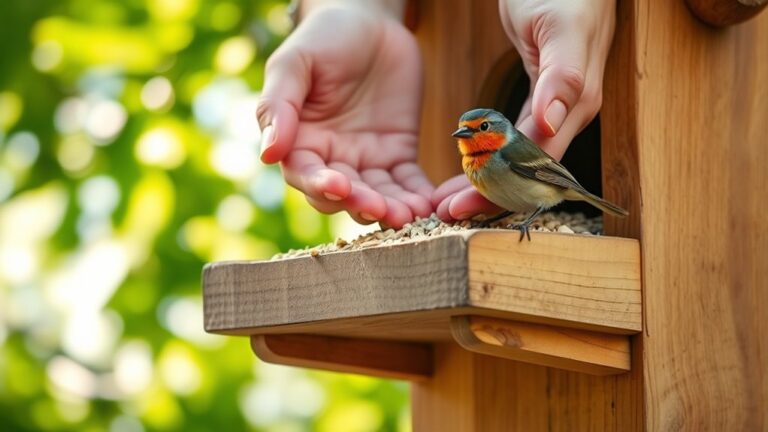
Providing safe feeders and clean water is essential for supporting endangered birds in your area. Proper feeder placement reduces risks from predators and contamination, so place feeders away from dense bushes where cats hide.
Confirm water quality by changing water daily and cleaning containers frequently to prevent disease. Use shallow dishes to make drinking and bathing easier for birds.
Here’s a quick guide to help you set up safe feeders and maintain clean water:
| Task | Tips |
|---|---|
| Feeder placement | Place feeders 5-10 feet from cover |
| Avoid crowded spots | |
| Water quality | Change water daily |
| Clean water dishes weekly | |
| Container choice | Use shallow, wide dishes |
Avoid Harmful Pesticides To Keep Birds Safe
Keeping feeders and water sources clean helps create a safe environment, but protecting birds goes beyond that. One major threat to endangered birds is exposure to harmful pesticides commonly used in conventional gardening and farming. These chemicals can poison birds directly or reduce the insects they rely on for food.
To keep birds safe, you should avoid using toxic pesticides altogether. Instead, investigate pesticide alternatives that are bird-friendly and environmentally safe.
You can protect birds by:
- Choosing organic gardening methods that eliminate synthetic chemicals
- Using natural pest control like neem oil, insecticidal soaps, or beneficial insects
- Encouraging biodiversity to keep pest populations balanced naturally
Create Bird-Friendly Gardens Using Native Plants
Since native plants have evolved alongside local bird species, they offer the best food and shelter for endangered birds in your garden. By focusing on native planting, you create a natural habitat that supports birds’ specific needs, providing seeds, berries, and insects they rely on.
When you choose native shrubs, trees, and flowers, you contribute directly to habitat restoration, helping to rebuild the ecosystems birds depend on.
To make your garden truly bird-friendly, avoid non-native species that may not support local wildlife or could outcompete native plants. Incorporate a variety of plants that bloom and fruit at different times, ensuring year-round resources.
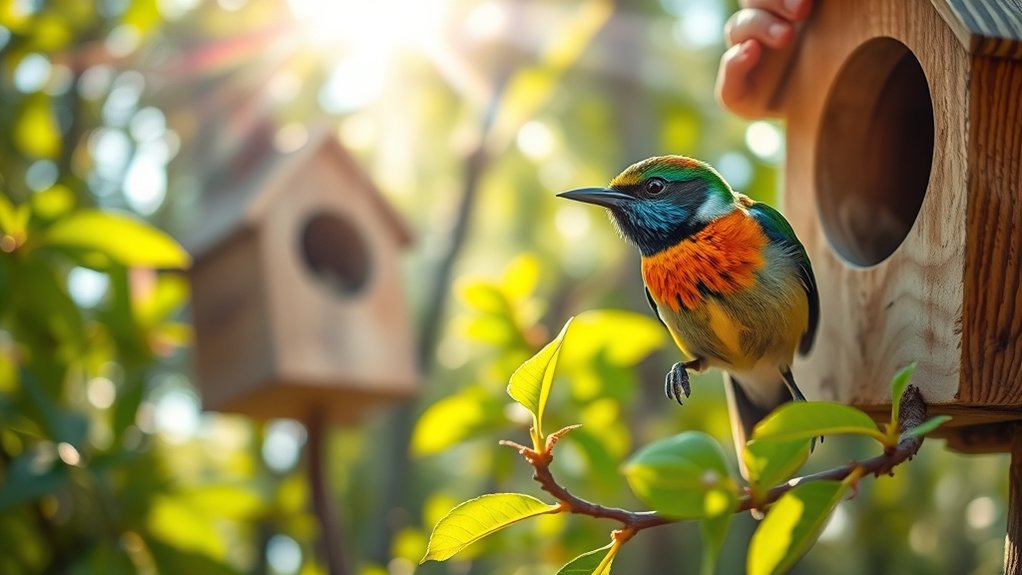
Adding brush piles, nesting boxes, and water sources complements native planting and improves habitat restoration efforts. Your garden then becomes a safe haven where endangered birds can feed, breed, and thrive, making a meaningful difference in their survival.
Reduce Light Pollution To Protect Migrating Birds
You can help protect migrating birds by cutting down on light pollution. It often messes with their navigation, making their journey much harder.
Switching to better lighting options, like shielded and low-intensity bulbs, can really make a difference.
Let’s take a closer look at how these simple changes affect migration patterns and help keep birds safe.
Impact On Migration Patterns
Although city lights brighten our nights, they disrupt the natural migration routes of many endangered birds. This migration disruption confuses birds, causing them to stray from their paths. Often, this leads to fatal collisions or exhaustion.
You can help by understanding how light pollution contributes to habitat fragmentation. It breaks up the continuous landscapes birds rely on during migration.
To reduce the impact on migration patterns, consider these actions:
- Minimize outdoor lighting during peak migration seasons.
- Use motion-activated lights to limit constant illumination.
- Shield lights to direct them downward, preventing skyward glow.
Effective Lighting Alternatives
Reducing light pollution plays a vital role in keeping migrating birds safe. You can make a significant difference by adopting innovative lighting solutions that minimize harmful glare and skyglow.
Switching to bird safe illumination, such as low-intensity, warm-colored LED lights, helps prevent disorientation during migration. Consider installing motion sensors or timers to limit the duration of artificial lighting, reducing unnecessary exposure.
Shielding outdoor lights directs illumination downward, cutting light scatter into the night sky. By choosing fixtures designed to reduce light trespass, you protect birds without sacrificing safety or visibility.
Taking these steps not only safeguards vulnerable species but also creates a healthier environment for everyone. Implement these effective lighting alternatives, and you’ll actively contribute to preserving endangered birds on their migratory journeys.
Keep Pets Indoors To Prevent Bird Predation
When you keep your pets indoors, you considerably reduce the risk of them harming local bird populations. Cats and dogs, especially cats, can unintentionally prey on endangered birds, disrupting fragile ecosystems.
Keeping your pets inside promotes their safety by protecting them from outdoor dangers while safeguarding vulnerable wildlife. To make indoor life enjoyable for your pets and reduce their instinct to hunt, focus on indoor enrichment.
Try these tips to keep your pets happy and birds safe:
- Provide interactive toys and puzzle feeders to stimulate your pet’s mind.
- Set up bird-watching spots by windows so your pets can observe birds safely.
- Engage in regular playtime sessions to burn off excess energy.
Support Endangered Bird Protection Groups Locally And Globally
You can really make a difference by getting involved with local conservation groups that protect endangered birds nearby. It’s a great way to see the impact up close. Plus, when you support global organizations with donations, you’re helping fund important research and habitat restoration projects around the world. Together, these actions boost the efforts to save these vulnerable species. Every little bit counts!
Join Local Conservation Efforts
Joining local conservation efforts can make a big difference in protecting endangered birds. When you get involved, you help create safer habitats and raise awareness in your community.
You don’t have to be an expert. Many groups offer community workshops that teach you about bird species and how to protect them. Plus, volunteer programs let you contribute hands-on, whether it’s restoring habitats or monitoring bird populations.
Here’s how you can start:
- Attend community workshops to learn about local endangered birds and their needs.
- Join volunteer programs to participate in habitat restoration and bird monitoring.
- Connect with local conservation groups to stay updated on events and initiatives.
Your involvement boosts local efforts and creates a network dedicated to saving these precious birds.
Donate To Global Organizations
Several global organizations rely on donations to fund critical projects that protect endangered birds and their habitats. When you donate to these groups, you’re directly supporting bird habitat preservation efforts worldwide.
Your contribution helps fund research, habitat restoration, and anti-poaching activities that are essential for the survival of many species. By participating in global donation initiatives, you join a community committed to conserving biodiversity and ensuring future generations can enjoy these birds.
Even small donations can make a significant impact when pooled together. Look for reputable organizations that focus on endangered bird protection locally and globally, ensuring your support reaches where it’s needed most.
Your generosity fuels the ongoing fight to save birds from extinction and protect the delicate ecosystems they depend on.
Spread Awareness About Endangered Birds In Your Community
One powerful way to protect endangered birds is by spreading awareness within your community. When you engage in community outreach, you help others understand the importance of conserving these vulnerable species.
Spreading awareness in your community is a powerful step toward protecting endangered birds and their habitats.
Hosting or attending educational workshops can equip people with the knowledge to identify endangered birds and the actions needed to protect their habitats.
You can make a real difference by:
- Organizing local talks or presentations about endangered birds.
- Sharing informative posts on social media to reach a wider audience.
- Collaborating with schools to introduce bird conservation topics.
Join Citizen Science Projects To Help Track Endangered Birds
Raising awareness is a great start, but you can take your commitment a step further by participating in citizen science projects that monitor endangered birds. These projects rely on everyday people like you to collect valuable data through bird tracking, helping scientists understand migration patterns, population sizes, and habitat use. By joining, you’ll contribute directly to conservation efforts and help identify critical areas that need protection.
Getting involved is easier than you might think. Many organizations offer apps and online platforms where you can report sightings, upload photos, and even record bird calls. This real-time data improves the accuracy of bird population studies and informs policy decisions. Plus, citizen science connects you with a community of bird lovers who share your passion and dedication.
Frequently Asked Questions
How Do Climate Change Effects Impact Endangered Bird Populations?
You’ll see climate impact hitting endangered birds hard by causing habitat disruption. As temperatures rise, their natural homes change or disappear, making it tough for them to find food and shelter.
You’ll notice shifts in migration patterns and breeding cycles too, which can reduce their survival rates. If you want to help, understanding how climate change alters their environment is key to supporting their conservation effectively.
What Are Common Diseases Affecting Endangered Birds?
You face challenges like avian pox, aspergillosis, and avian influenza when protecting endangered birds. You see habitat loss increasing stress, making birds more vulnerable to disease transmission.
You spot parasites spreading quickly in crowded environments. You notice weakened immune systems unable to fight off infections.
How Can I Identify Different Endangered Bird Species?
You can identify different endangered bird species by focusing on bird identification techniques like observing size, color patterns, and unique markings. Use field guides or apps designed for species differentiation to compare features accurately.
Pay attention to calls and behaviors, as these often help separate similar species. Taking photos and noting habitat also supports accurate identification.
With practice, your ability to distinguish endangered birds will improve markedly.
What Role Do Migratory Patterns Play in Bird Conservation?
Migratory patterns play a vital role in bird conservation because they reveal migration challenges birds face, like habitat loss and climate changes along their routes. When you understand these patterns, you can help create and protect habitat corridors that allow birds to travel safely between breeding and wintering grounds.
Supporting these corridors reduces risks and boosts survival rates, making your conservation efforts more effective in safeguarding endangered species during their long journeys.
Are There Legal Protections for Endangered Birds I Should Know About?
Yes, you should know that legal frameworks play a vital role in protecting endangered birds. Laws like the Endangered Species Act and international agreements create strict conservation policies that prevent hunting, habitat destruction, and trade of these birds.
Conclusion
You can make a real difference in protecting endangered birds by taking simple actions every day. Did you know that nearly one-third of bird species worldwide are at risk of extinction?
By supporting conservation efforts, creating safe spaces, and spreading awareness, you help guarantee these beautiful creatures thrive. Every small step counts, so get involved, stay informed, and watch how your efforts help bring hope to endangered birds in your community and beyond.
Remember, protecting endangered birds starts with you. Your dedication and care can ensure these amazing animals continue to flourish for generations to come.