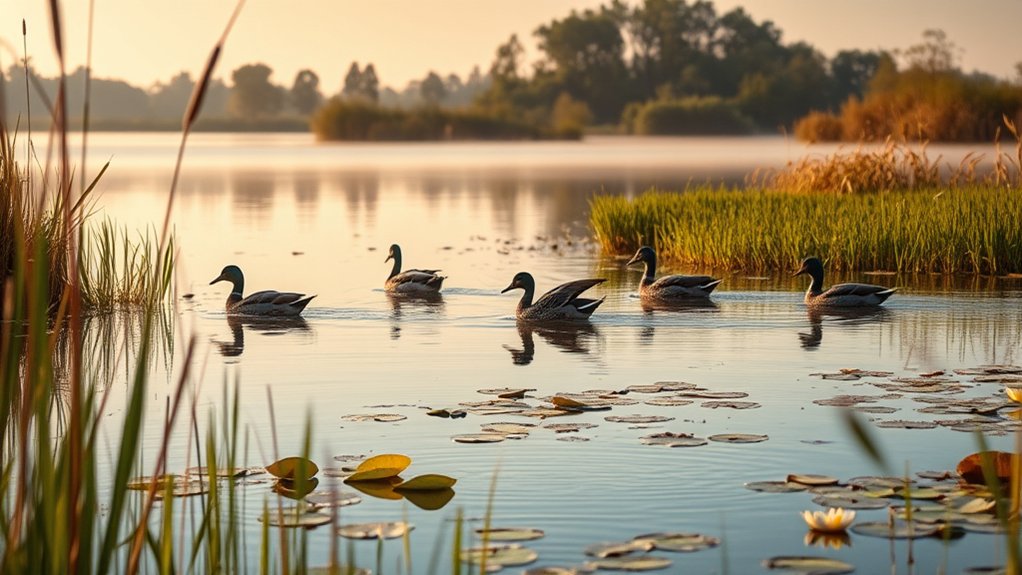
Where Do Wild Ducks Live: 7 Common Habitats
Finding the perfect spot to observe or attract wild ducks can be tricky. You’re not alone if you’ve struggled to understand where these birds live and thrive. Many people want to connect with nature but don’t know which habitats support wild ducks best.
You’ll find wild ducks living in a variety of habitats that support their feeding, nesting, and migration needs. They thrive in calm freshwater lakes and flowing rivers, rely on wetlands and forested swamps for shelter and food, and adapt well in urban parks and ponds.
Farmlands provide extra nourishment, while coastal estuaries offer rich, sheltered feeding grounds. Each habitat plays an essential role in their survival, and exploring these can reveal how ducks stay healthy year-round.
Key Takeaways
- Wild ducks commonly inhabit freshwater lakes, which provide calm waters, abundant food, and safe nesting sites.
- Rivers and streams offer flowing water, natural cover, and diverse food sources essential for wild ducks.
- Wetlands and marshes provide dense vegetation, abundant food, and critical shelter for nesting and migration stopovers.
- Forested swamps offer protection from predators and harsh weather, plus rich food sources like aquatic plants and insects.
- Urban parks, ponds, farmlands, and coastal estuaries serve as refuges with food, shelter, and safe resting habitats for wild ducks.
Freshwater Lakes: Why Wild Ducks Prefer Calm Waters
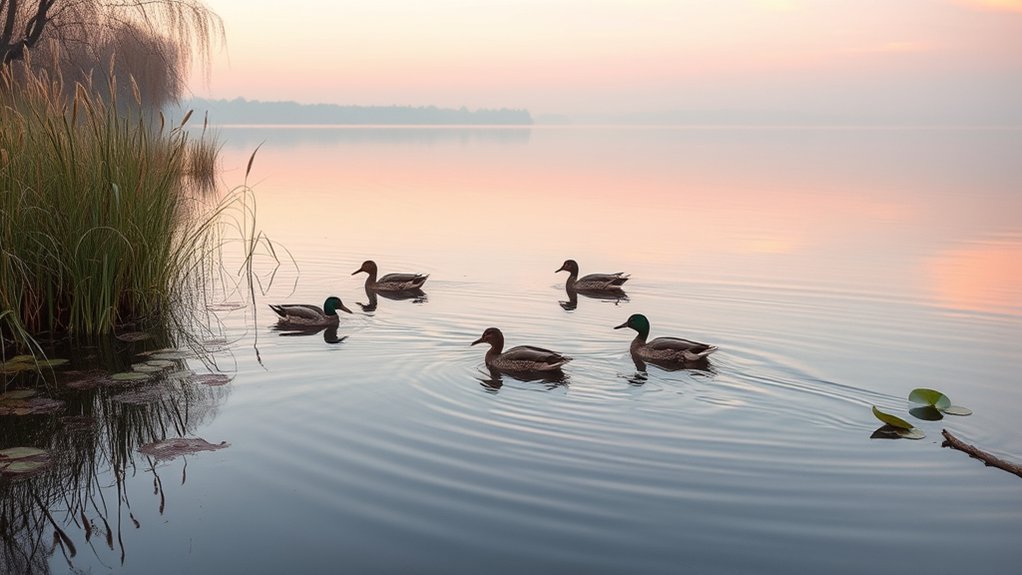
Although wild ducks can be found in various water bodies, they prefer freshwater lakes because the calm waters provide a safe and stable environment for feeding and nesting. When you observe these lakes, you’ll notice how the stillness supports their breeding habits, allowing ducks to build nests along the shorelines without worrying about strong currents washing them away.
You’ll also see that freshwater lakes offer abundant food sources like aquatic plants and small invertebrates, making it easier for ducks to feed efficiently.
As you track their migration patterns, you’ll find that many wild ducks return year after year to these lakes, drawn by the reliable habitat conditions. Because the lakes remain relatively undisturbed, they serve as ideal stopover points during migration seasons, helping ducks conserve energy.
Rivers and Streams: How Wild Ducks Thrive in Flowing Water
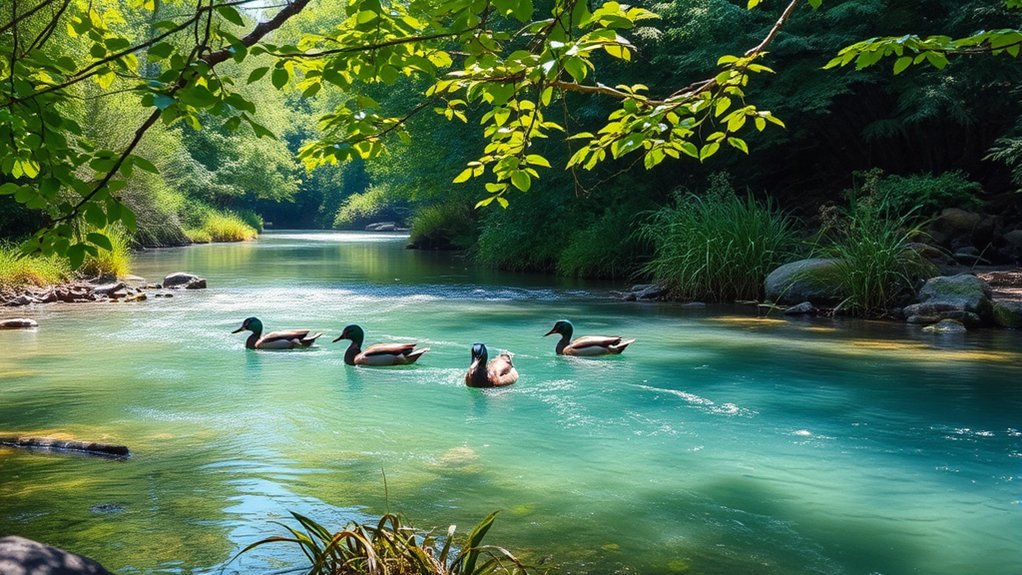
When you voyage rivers and streams, you’ll notice wild ducks skillfully steering the flowing water to find food and shelter. These habitats offer dynamic environments where ducks adapt their migratory patterns to seasonal water flow changes.
You’ll see them nesting along riverbanks, using natural cover and elevated spots to protect their young from floods. Flowing water brings a constant supply of insects, plants, and small fish, which wild ducks rely on for nutrition.
Here’s a quick look at how rivers and streams support wild ducks:
| Habitat Feature | Importance to Wild Ducks |
|---|---|
| Flowing Water | Provides food and fresh oxygen |
| Riverbanks | Offer safe nesting locations |
| Seasonal Changes | Affect migratory patterns |
| Natural Cover | Protects ducks from predators |
Understanding these factors helps you appreciate how wild ducks thrive in moving waters, balancing survival and reproduction with nature’s rhythms.
Wetlands and Marshes: Ideal Feeding and Nesting Grounds for Wild Ducks
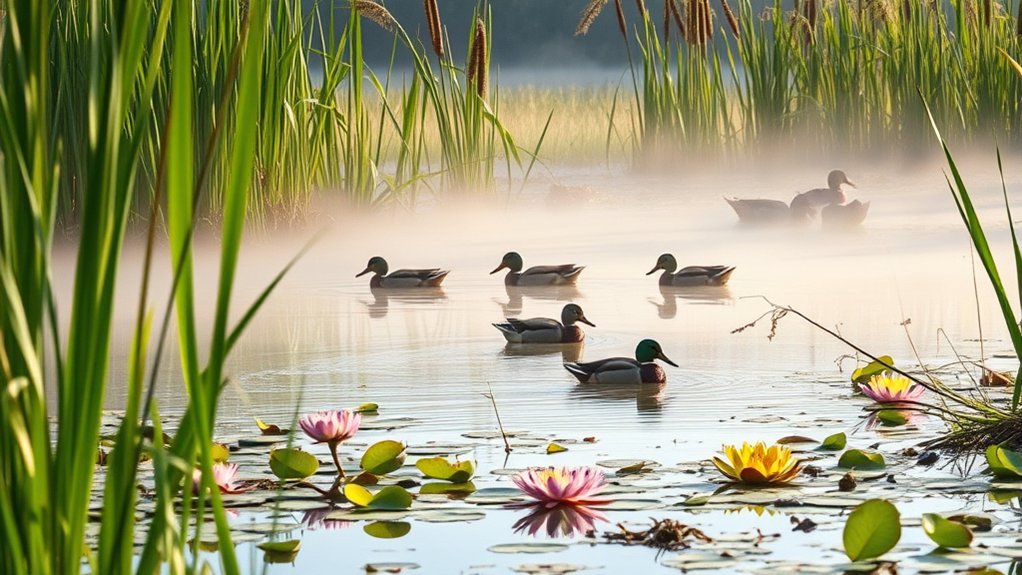
Because wetlands and marshes offer abundant food and shelter, wild ducks rely on these areas as prime habitats for feeding and nesting. When you investigate these environments, you’ll notice plants and insects that provide essential nutrition for ducks. The shallow waters make it easy for them to forage, while dense vegetation offers safe nesting spots.
Protecting these habitats through wetland conservation directly supports wild duck populations by preserving their natural food sources and breeding grounds.
You’ll also find that wetlands and marshes play a crucial role in migratory patterns. Ducks use these areas as stopover points to rest and refuel during long journeys. Without healthy wetlands, their migratory success declines, threatening overall survival.
Forested Swamps: Safe Shelter for Wild Ducks
You’ll find that forested swamps offer wild ducks dense vegetation that keeps them protected from predators. Plus, these areas provide plenty of food sources to keep the ducks nourished. So, let’s take a closer look at how this safe shelter supports their survival.
Dense Vegetation Protection
Dense vegetation in forested swamps offers wild ducks essential protection from predators and harsh weather. When you investigate these habitats, you’ll notice how wetland restoration efforts have enhanced the growth of aquatic vegetation. This creates dense cover that ducks rely on.
This thick foliage shields ducks and provides a safe space to rest and nest. To understand its importance, consider these points:
- Dense plants reduce visibility, making it harder for predators to spot ducks.
- Aquatic vegetation stabilizes water levels, maintaining a consistent habitat.
- Thick roots and stems offer shelter during storms and extreme temperatures.
- Wetland restoration increases plant diversity, improving habitat quality.
Abundant Food Sources
When you investigate forested swamps, you’ll find that abundant food sources play a crucial role in attracting and sustaining wild duck populations. These areas offer a rich variety of aquatic plants, insects, and small fish, which provide essential nutrition throughout the year.
You’ll notice that wild ducks rely on these plentiful resources to support their migration patterns, ensuring they have enough energy to travel long distances. During breeding seasons, the availability of food directly influences their breeding habits, as well-fed ducks can lay more eggs and care better for their young.
Urban Parks and Ponds: Where Wild Ducks Adapt to City Life
You’ll notice wild ducks have really adjusted their behavior to thrive in urban parks and ponds. These city spots provide plenty of food and shelter, which helps them survive. But, of course, there are some unique challenges too. When you think about it, understanding how ducks navigate this environment shows just how adaptable they are. It’s pretty impressive!
Duck Behavior in Cities
How do wild ducks manage to thrive amid the hustle and bustle of city life? You’ll notice they adapt their behavior to urban settings, much like how ducks in deserts adjust to harsh environments. Their migratory behavior also shifts. They may shorten migrations or stay put if cities provide ample resources.
When observing duck behavior in cities, consider these key points:
- They exploit human-provided food but maintain natural foraging instincts.
- Ducks use urban green spaces as safe resting and nesting sites.
- Noise and pollution cause them to adjust their activity patterns, often becoming more nocturnal.
- Social behavior changes, with ducks forming tighter groups for protection against urban predators.
You’ll see urban ducks are remarkably flexible, balancing survival instincts with city challenges.
Urban Pond Ecosystems
Where do wild ducks find refuge amid urban sprawl? Urban pond ecosystems in city parks offer surprising sanctuaries. You’ll notice ducks adapting well here, adjusting their migration patterns to local conditions.
These ponds provide safe spots for feeding and resting during travel. You’ll also see changes in their breeding habits, as some ducks nest close to human activity, taking advantage of reduced predators.
| Factor | Impact on Ducks |
|---|---|
| Water Quality | Influences health and food sources |
| Human Activity | Alters migration and breeding |
| Vegetation | Provides shelter and nesting sites |
| Food Availability | Affects energy for migration |
Visiting urban ponds, you witness wild ducks thriving, proving adaptability even in city life.
Agricultural Fields: How Wild Ducks Use Farmland to Survive
Although agricultural fields might seem unlikely habitats, wild ducks rely on farmland for food and shelter throughout the year. When you observe these birds, you’ll notice how agricultural practices directly affect their survival. Crop rotation plays an essential role by providing a variety of food sources across seasons.
Here’s how wild ducks use farmland to thrive:
- Foraging on leftover grains and seeds after harvest, benefiting from crop diversity.
- Nesting in tall crops or field margins, which offer protection from predators.
- Resting in flooded fields or irrigation ditches that mimic natural wetlands.
- Utilizing cover crops that offer both food and shelter during colder months.
Coastal Estuaries: Rich Feeding Areas for Wild Ducks
Because coastal estuaries blend fresh and saltwater, they create nutrient-rich environments that attract wild ducks year-round. You’ll find these areas teeming with aquatic plants, invertebrates, and small fish, which are ideal food sources for wild ducks.
Thanks to these rich feeding grounds, estuaries play an essential role in supporting diverse migratory patterns. They serve as stopping points where ducks can refuel during long journeys.
Many wild ducks prefer estuaries for breeding site selection because they offer both abundant food and sheltered waters. This increases the chances of successful nesting and raising ducklings.
If you’re observing wild ducks, you’ll notice these birds rely heavily on estuaries not just for feeding but as strategic locations that meet their survival and reproductive needs.
Understanding how wild ducks use coastal estuaries helps you appreciate the importance of preserving these habitats amid environmental changes and human development.
Frequently Asked Questions
What Do Wild Ducks Eat in Different Habitats?
You’ll notice wild ducks’ feeding habits change depending on their habitat. In freshwater areas, they mostly eat aquatic plants, insects, and small fish.
In marshy or grassy spots, their diet shifts to seeds, roots, and snails. Coastal ducks often feed on crustaceans and mollusks.
These dietary variations help them adapt and thrive in diverse environments, so you’ll see them foraging a wide range of foods based on where they live.
How Do Wild Ducks Migrate Between Habitats?
You’ll notice wild ducks migrate between habitats by following specific migration patterns tied to seasonal changes. They use landmarks, the sun, and Earth’s magnetic field to navigate.
Their breeding behaviors drive them to descend from wintering grounds to breeding sites, ensuring they find safe places with abundant food for raising ducklings. You’ll see this migration happens annually, helping ducks survive and reproduce in diverse environments.
What Predators Threaten Wild Ducks in These Areas?
You’ll find that wild ducks face predators like foxes, raccoons, and birds of prey, all of which use predator adaptation to hunt effectively in their environments. To help protect ducks, habitat preservation is essential because it maintains safe nesting and feeding areas, reducing predator encounters.
How Do Wild Ducks Communicate in Their Habitats?
Think of wild ducks’ communication behaviors as a symphony where every quack plays a part. You’ll notice their vocalization patterns vary. Mothers use soft calls to soothe ducklings, while loud quacks warn of danger.
When you watch closely, you’ll see ducks use body language too, like head bobbing or wing flapping, to express themselves. These combined signals keep the flock connected and safe in their environment.
What Impact Does Climate Change Have on Wild Duck Habitats?
You’ll see that climate shift causes significant habitat loss for wild ducks, forcing them to adapt quickly or relocate. As temperatures rise and weather patterns change, wetlands dry up or flood unpredictably, reducing available nesting and feeding areas.
This disrupts their breeding cycles and migration routes. If these changes continue, you’ll notice fewer ducks in traditional habitats, making conservation efforts critical to protect their future.
Conclusion
Now that you know where wild ducks live, you’ll see they adapt amazingly well to different habitats. Did you know that over 90% of North American ducks rely on wetlands at some point in their life?
Whether it’s calm lakes, bustling rivers, or even urban parks, these habitats are essential for their survival. Next time you spot a duck, remember how diverse their homes truly are and how important it is to protect these special places where wild ducks live.