What Are the 3 Best Foods to Feed a Duck?
Feeding ducks can be tricky, right? You want to help these charming creatures thrive but figuring out what to feed them safely can be confusing. You’re not alone—many people struggle with choosing the right foods that are both healthy and beneficial for ducks.
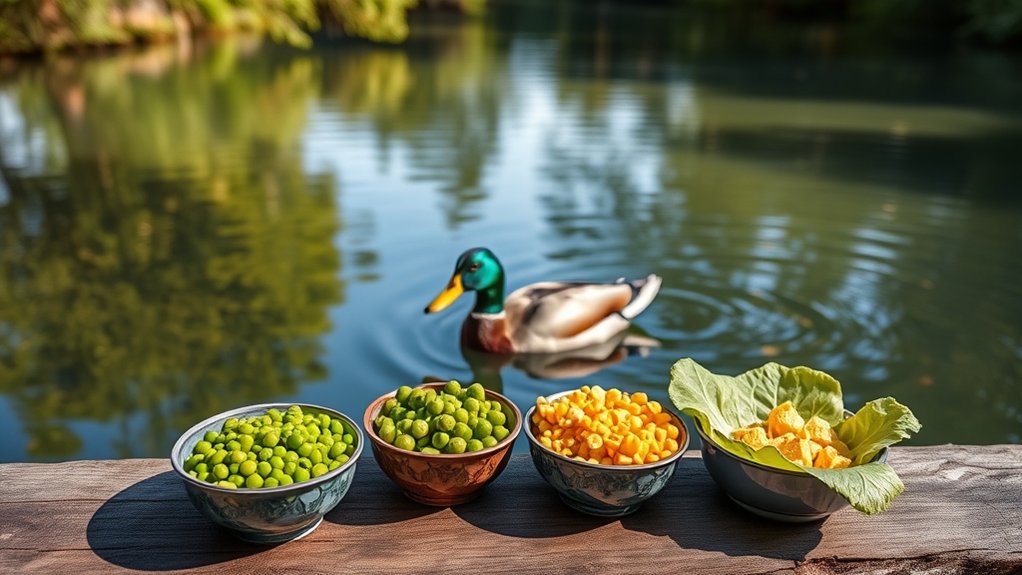
You’ll want to feed ducks leafy greens like kale or lettuce, peas, and oats because these mimic their natural diet and provide essential nutrients. These foods support their health, energy, and migration needs without causing harm.
Avoid giving them bread, which offers little nutrition and can harm their health and environment. If you want to learn more about why these choices matter and how to feed ducks safely, there’s plenty more to uncover.
Key Takeaways
- Leafy greens like kale, lettuce, or spinach provide essential vitamins and mimic ducks’ natural diet.
- Peas and corn kernels offer energy-rich carbohydrates to support strength and migration.
- Oats and birdseed blends resemble wild foraging foods and promote overall well-being.
- Avoid bread as it lacks nutrition and harms ducks’ health and environment.
- Scatter small amounts of nutritious foods to prevent overeating and encourage natural foraging behavior.
Top 3 Nutritious Foods for Feeding Ducks
Although ducks can eat a variety of foods, you should focus on providing the most nutritious options to support their health. When you consider a duck’s natural habitat and migration patterns, you’ll understand why certain foods work best.
Prioritize nutritious foods for ducks by considering their natural habitat and migration habits.
Ducks often feed on aquatic plants, insects, and small fish found in wetlands and ponds along their migration routes. To mimic this diet, offer leafy greens like kale or lettuce, which provide essential vitamins.
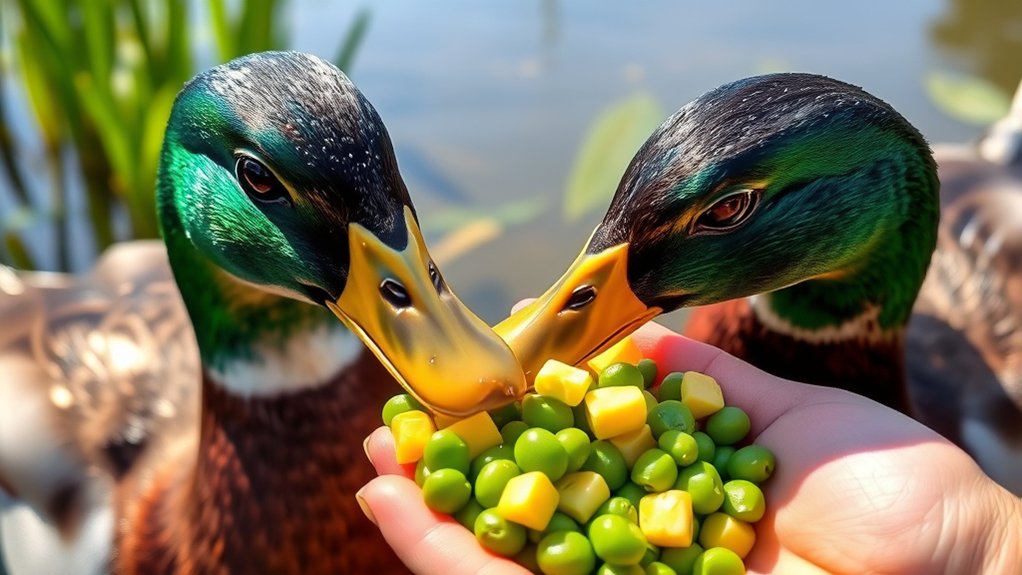
Peas or corn kernels are excellent too, giving ducks energy-rich carbohydrates. Finally, you can provide oats or birdseed blends, closely resembling what ducks forage in the wild.
These foods help maintain their strength during migration and support overall well-being. By choosing these nutritious options, you’re respecting their natural feeding habits and promoting healthier ducks.
Feeding ducks thoughtfully also helps preserve the balance of their habitat, ensuring they thrive through their seasonal journeys.
Why Bread Isn’t Good for Ducks
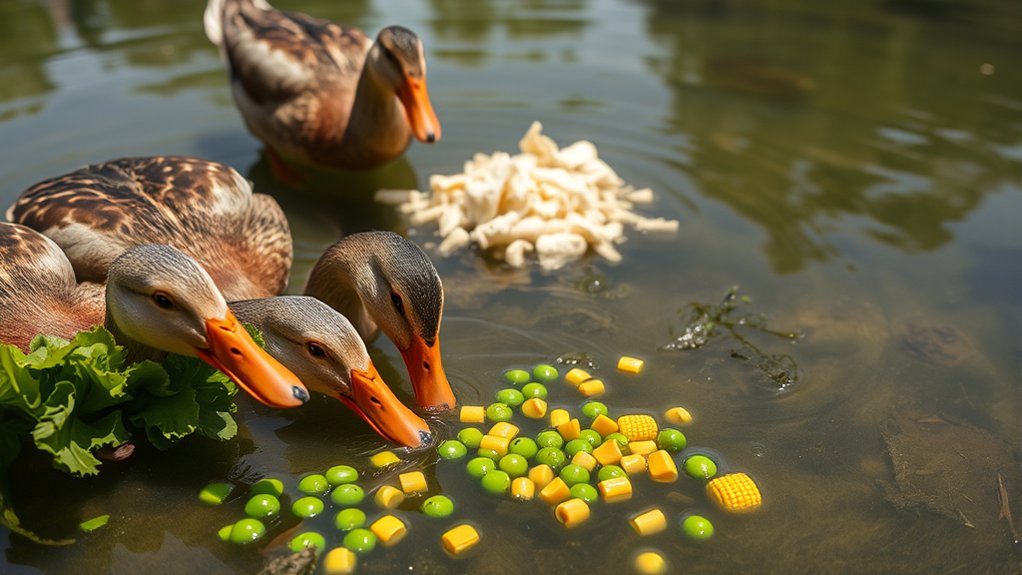
While bread might seem like an easy and harmless snack to share with ducks, it actually offers little nutritional value and can harm their health. Feeding bread disrupts duck migration patterns by providing an unnatural food source, which can lead to malnutrition. It also pollutes waterfowl habitat, causing water quality issues and attracting pests.
Here’s why bread isn’t good for ducks:
| Issue | Impact on Ducks | Environmental Effect |
|---|---|---|
| Poor Nutrition | Weakens immune systems | Increases water pollution |
| Overfeeding | Obesity & flight problems | Alters natural behavior |
| Habitat Damage | Reduces food diversity | Degrades waterfowl habitat |
| Mold Growth | Causes illness | Spreads harmful bacteria |
| Disrupts Migration | Delays seasonal travel | Affects ecosystem balance |
Avoid feeding bread to protect ducks and their habitats during critical times like migration.
How to Safely Feed Ducks Healthy Foods
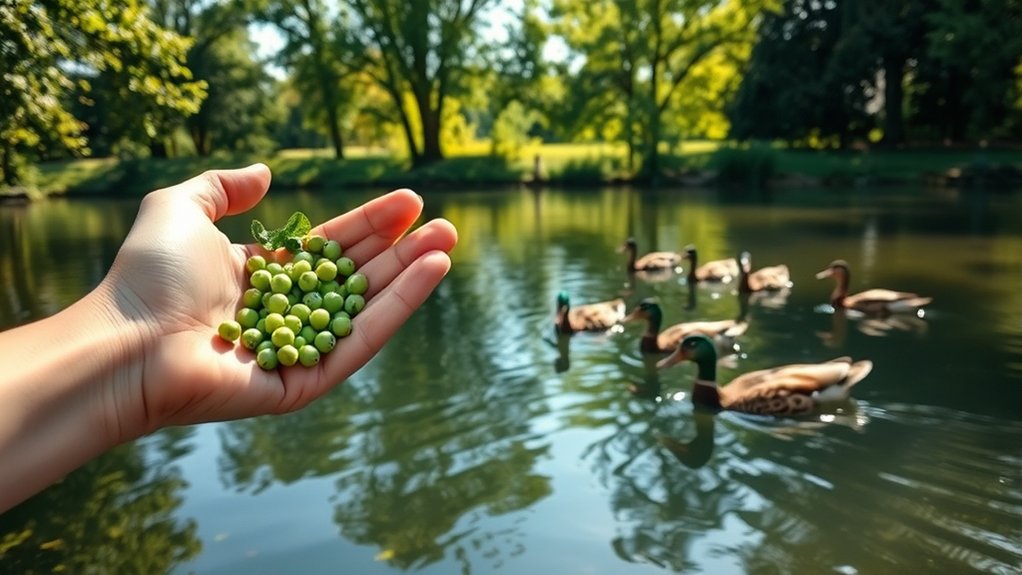
Feeding ducks something nutritious helps support their health and the environment. When you offer healthy foods, you encourage natural feeding habits that keep ducks strong and vibrant. Instead of bread, choose options like cracked corn, oats, birdseed, or chopped vegetables. These foods provide essential nutrients without harming the ducks or polluting their habitat.
To feed ducks safely, scatter food in small amounts to prevent overeating and dependency. Avoid feeding near busy roads or crowded areas to reduce stress and injury risks. Feeding at consistent times helps maintain natural foraging behaviors, which is crucial for their survival.
Frequently Asked Questions
Can Ducks Eat Fruits and Vegetables?
Yes, you can feed ducks fruits and vegetables as treats, but don’t rely on them too much. Feeding treats like berries, peas, or leafy greens can add variety to their diet.
You need to maintain a duck diet balance by providing their main food, like grains or pellets. Too many treats can upset their digestion, so keep fruits and veggies as occasional supplements to a healthy, balanced diet.
How Often Should I Feed Wild Ducks?
Feeding wild ducks is like sprinkling little moments of joy into their day. You should keep your feeding frequency to once or twice a week, ensuring you offer appropriate portions each time.
Overfeeding can upset their natural routine, so think of it as a gentle, occasional gift rather than a daily meal. This way, you help sustain their health without turning them into couch potatoes by the pond.
What Are Signs of Malnutrition in Ducks?
You’ll notice signs of malnutrition in ducks through symptoms like dull feathers, lethargy, and weight loss. Nutritional deficiencies can cause poor growth, weak bones, and a compromised immune system.
If you’re not following proper feeding guidelines, ducks might also show decreased egg production or behavioral changes. To keep them healthy, stick to balanced, species-appropriate diets and avoid overfeeding processed foods that lack essential nutrients.
Is It Safe to Feed Ducks in Urban Areas?
Yes, you can feed ducks in urban areas, but you need to be cautious. Urban pollution can harm their health, so avoid feeding them near busy roads or contaminated water.
Always check local feeding regulations, as many cities restrict feeding to prevent overpopulation and pollution. Stick to safe, approved foods and feed in moderation to keep ducks healthy and protect the environment.
Your responsible actions make a big difference for urban wildlife.
Can Ducklings Eat the Same Food as Adult Ducks?
Of course, you can feed ducklings the exact same food as adult ducks if you want them to suffer nutritional deficiencies! Ducklings need a special feeding schedule with higher protein and nutrients to grow strong.
Adult duck food often lacks what little ones require, so mixing in starter feed designed for ducklings is key. Don’t skip this step; otherwise, you’ll stunt their growth and health without even realizing it.
Conclusion
If you want to be the ultimate duck hero, ditch the bread and go for those top three nutritious foods instead. Feeding ducks healthy treats like cracked corn, oats, or chopped greens isn’t just good—it’s like giving them superpowers!
You’ll watch them thrive, flap with joy, and quack their thanks louder than ever. So, don’t just feed ducks, fuel their happiness and health like a true champion by choosing the best foods to feed a duck!