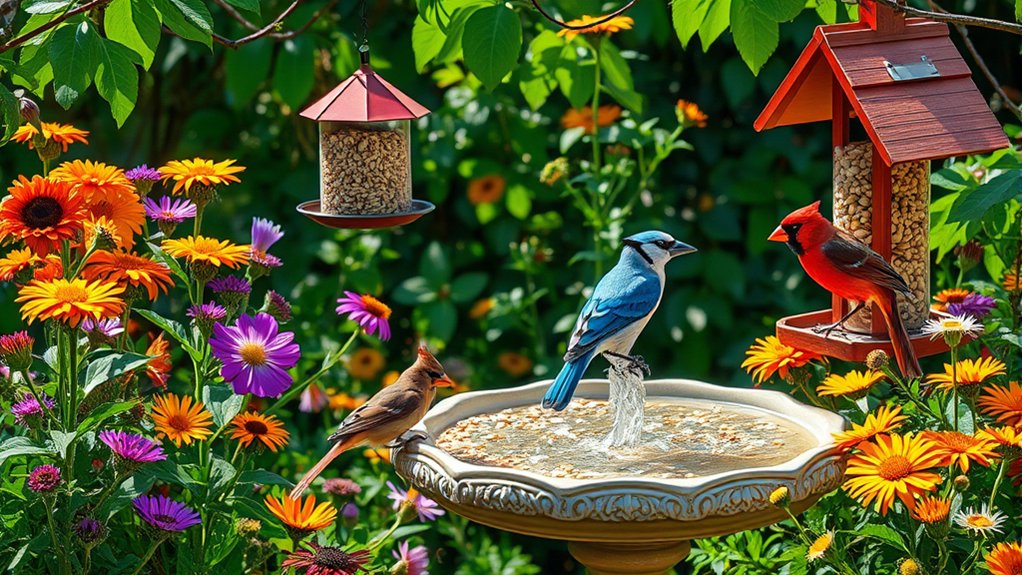
10 Tips to Attract Birds to Your Yard
Attracting birds to your yard can feel like a real challenge. You’re not alone if you’ve spent hours trying to get feathered visitors to stop by, only to be met with silence or the occasional quick flyover. Many people struggle with creating a space where birds feel safe and welcome, especially when they don’t know where to start.
To attract birds to your yard, plant native species that provide seasonal food and shelter year-round. Offer fresh, clean water in shaded birdbaths and regularly maintain feeders stocked with bird-friendly seeds. Create safe nesting spots with proper birdhouses and protect birds by keeping cats indoors.
Minimize pesticides and maintain your yard with natural pest control. These steps help build a welcoming habitat, and exploring more ideas will show you how to support birds even better throughout the seasons.
Key Takeaways
- Plant native trees, shrubs, and flowers that provide year-round food and shelter for local bird species. These plants create a natural habitat that birds love.
- Provide clean, fresh water in shaded birdbaths or small ponds. Make sure to maintain them regularly to keep the water safe and prevent disease.
- Use a variety of feeders with preferred seeds placed near natural cover. This helps attract a diverse group of birds while keeping them safe.
- Install appropriately sized birdhouses away from predators. Also, keep cats indoors to protect nesting birds from harm.
- Minimize pesticides by using natural pest control methods. Maintaining healthy soil supports native plants and pollinators, which benefits birds too.
Choose the Right Plants to Attract Local Birds
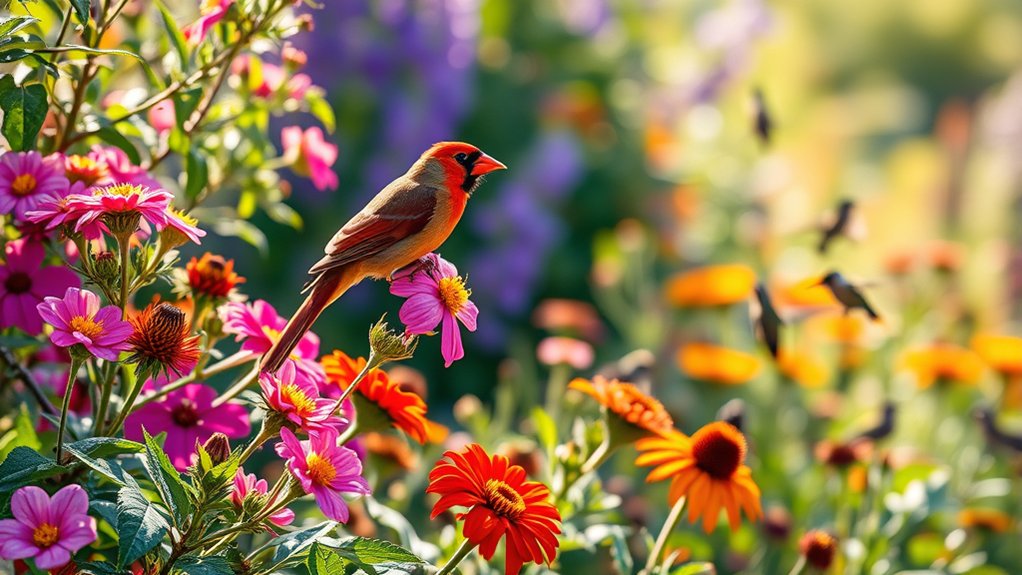
If you want to attract local birds, start by planting native species that provide food and shelter. Native plant selection is key because these plants are well-adapted to your region’s climate and soil, offering the right berries, seeds, and insects birds rely on. When you choose native plants, you’re creating a natural habitat that supports the local bird population year-round.
Focus on seasonal planting to ensure your yard offers food and shelter throughout the year. Include a mix of trees, shrubs, and flowers that bloom or produce fruit in different seasons. For example, spring-flowering plants attract insects, while fall berries provide essential nutrition before winter. By planning your garden with seasonal planting in mind, you’ll keep birds coming back from early spring to late fall. This thoughtful approach not only benefits birds but also helps maintain a balanced ecosystem right in your backyard.
Provide Fresh Water for Birds to Drink and Bathe
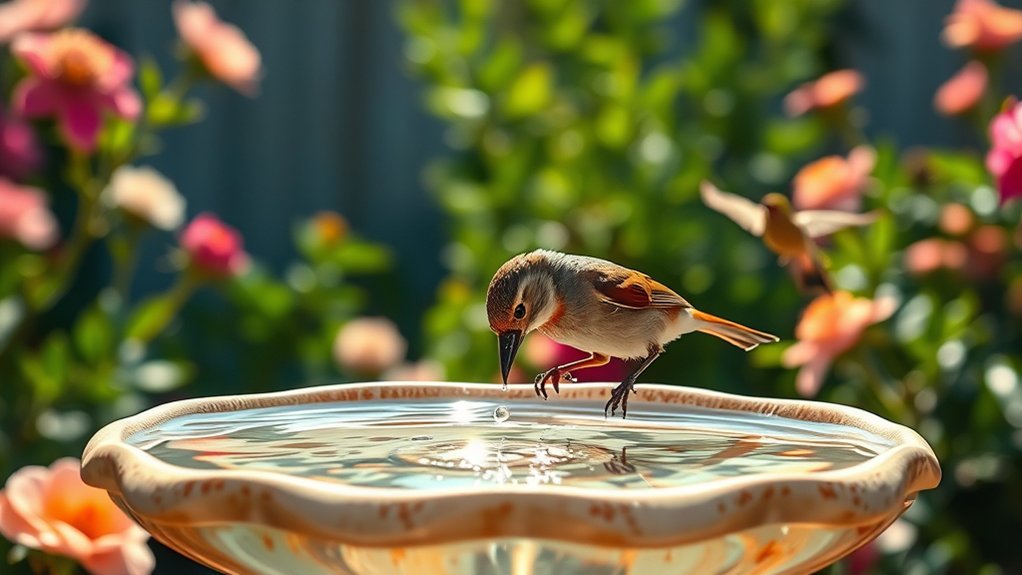
If you want to attract more birds, offering fresh, clean water for them to drink and bathe in is a great start. Just make sure to clean your birdbath regularly so algae and bacteria don’t build up. When the water stays fresh, birds are more likely to visit—and even stick around—in your yard.
Choose Clean Water Sources
Providing birds with clean water is one of the simplest and most effective ways to attract them to your yard. You’ll want to choose water sources that support natural water filtration and promote water conservation.
Fresh, uncontaminated water encourages birds to visit often for drinking and bathing. Consider shallow birdbaths or small ponds with natural filtration plants to keep the water clear without chemicals.
Here’s a quick guide to selecting water sources:
| Water Source | Benefits | Tips |
|---|---|---|
| Shallow Birdbath | Easy access, promotes bathing | Keep water fresh |
| Small Pond | Supports natural filtration | Add aquatic plants |
| Drip Fountain | Continuous movement, fresh | Use recycled water |
Choose clean water sources thoughtfully to create a bird-friendly habitat that conserves water and keeps birds healthy.
Maintain Birdbath Regularly
Keeping your birdbath clean and filled with fresh water encourages birds to return regularly for drinking and bathing. Proper birdbath maintenance is key to providing a safe, inviting spot that supports their health and happiness.
Focus on water quality management to avoid stagnant water that deters birds or spreads disease. Here’s how you can maintain your birdbath appealing:
- Change the water every 2-3 days to ensure freshness and prevent algae growth.
- Scrub the basin weekly with a brush and mild soap to remove dirt and bacteria.
- Position the birdbath in a shaded area to slow evaporation and keep the water cool.
Set up Bird Feeders With Bird-Friendly Food
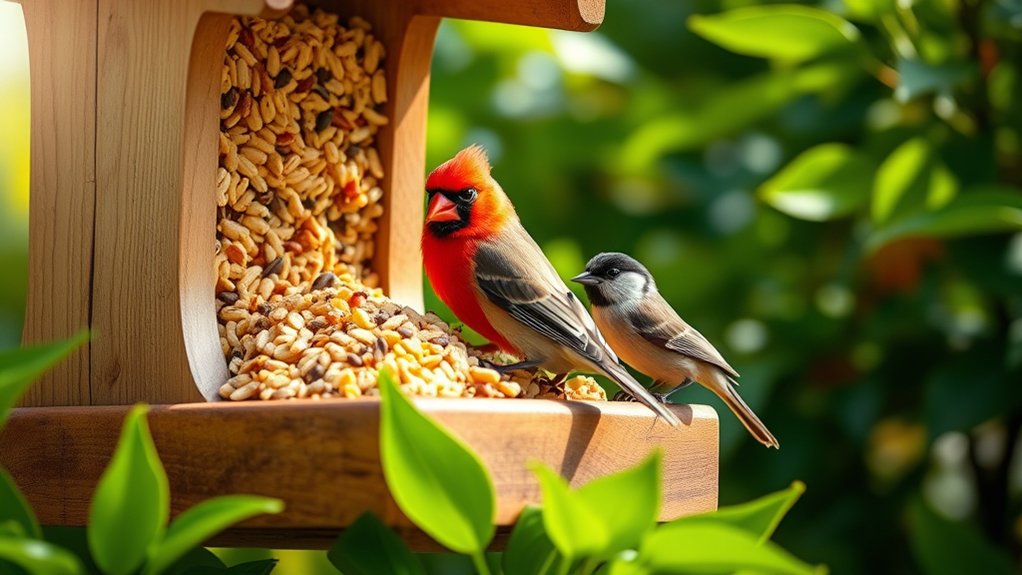
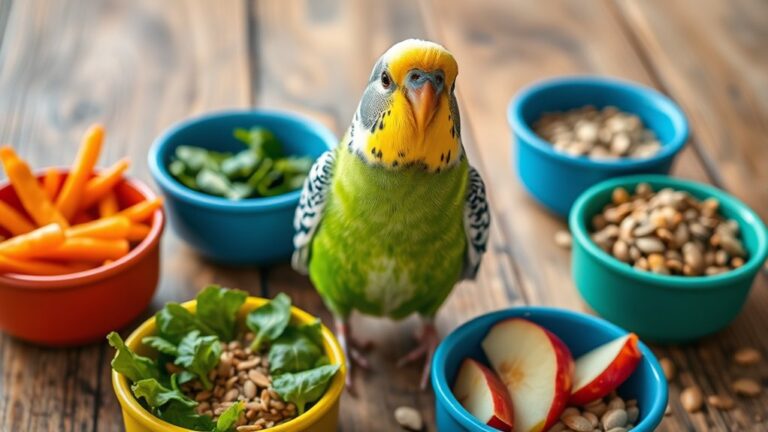
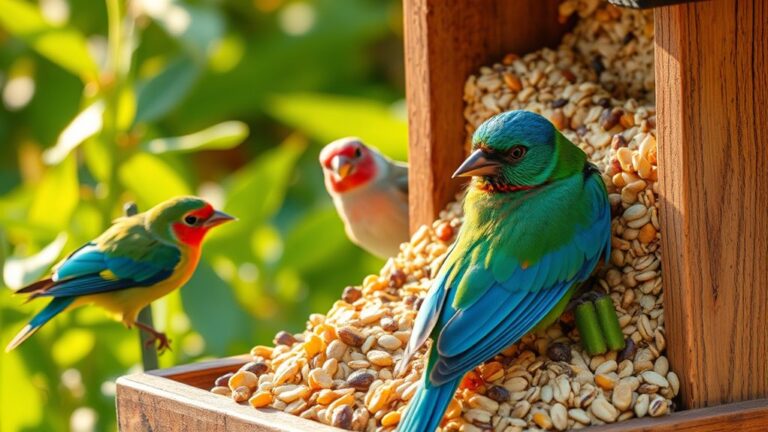
When you set up bird feeders, choosing the right food makes all the difference in attracting a variety of birds. Start by selecting bird seed varieties that appeal to your local species. Black oil sunflower seeds attract many songbirds, while nyjer seeds are favored by finches. Avoid generic mixes with fillers like millet, which some birds may ignore.
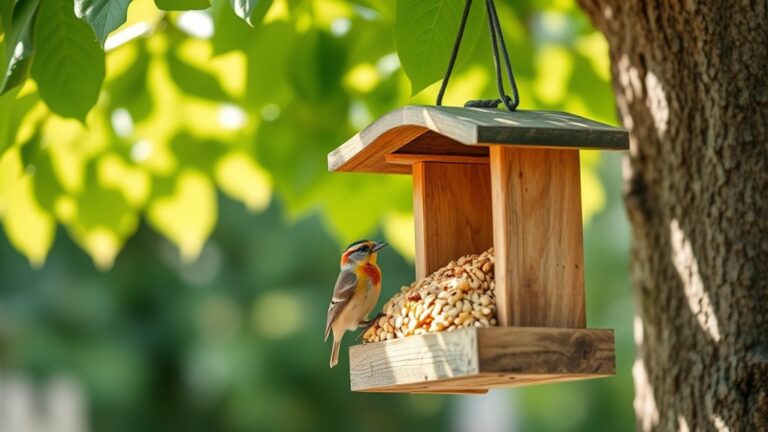
Next, consider feeder placement carefully. Position feeders near trees or shrubs to provide shelter and perching spots but far enough from windows to prevent collisions. Keep feeders at a height that’s easy for you to refill but safe from predators like cats.
Regularly clean your feeders to prevent mold and disease. By offering appropriate bird seed varieties and thoughtfully placing your feeders, you’ll create a welcoming environment that encourages birds to visit and stay longer in your yard.
Offer Various Foods and Feeders to Attract More Birds
You’ll attract more birds by offering a variety of seed types like sunflower, millet, and nyjer. Plus, different feeder styles—such as tube, platform, and suet feeders—appeal to different bird species. Mixing it up keeps your yard lively and welcoming to a wider range of birds. It’s a simple way to make your outdoor space more fun and full of feathered visitors.
Diverse Seed Types
Offering a variety of seed types can greatly improve the number and diversity of birds visiting your yard. By embracing seed diversity, you support bird biodiversity, creating a vibrant and lively environment.
Different bird species prefer different seeds, so mixing it up attracts a wider array of feathered friends.
Here are three seed types to contemplate:
- Black oil sunflower seeds Loved by finches and cardinals for their high fat content and easy-to-crack shells.
- Nyjer seeds Perfect for small birds like goldfinches and siskins, offering a rich source of energy.
- Millet Attracts ground-feeders like sparrows and doves, encouraging more variety close to the ground.
Offering these diverse seeds will make your yard a bustling bird sanctuary.
Varied Feeder Styles
Mixing up the types of seeds you provide is just one way to invite more birds to your yard. To maximize visits, try varied feeder styles that offer different foods and attract diverse species. Use decorative feeder styles like hanging mesh bags for suet, tube feeders for sunflower seeds, and platform feeders for fruit or mealworms.
Changing your feeders seasonally keeps birds interested. Switch to high-energy suet in winter and fresh fruit or nectar in warmer months. Seasonal feeder arrangements also help you match bird populations’ needs throughout the year.
Make Cozy Shelter and Nesting Spots for Birds
Creating cozy shelter and nesting spots encourages birds to stay and raise their young in your yard. Providing natural shelter and easy access to nesting materials makes your space a safe haven.
You can support birds by offering places that protect them from weather and predators, helping them feel secure.
Here are three ways you can create inviting shelter and nesting spots:
- Plant dense shrubs or evergreens to serve as natural shelter where birds can hide and rest.
- Leave small piles of twigs, leaves, and grass clippings for birds to collect nesting materials easily.
- Preserve dead trees or branches if safe, as they offer ideal spots for birds to nest and perch.
Add Birdhouses to Encourage Nesting
You’ll want to pick birdhouses that fit the species you’re hoping to attract because size really matters. Then, place them in safe, sheltered spots where predators and harsh weather won’t be a problem. That way, birds will feel secure enough to make your yard their home.
Choose Proper Birdhouse Sizes
Adding a few well-sized birdhouses can make a big difference in attracting nesting birds to your yard. Proper sizing is essential. Birdhouse dimensions must match the needs of the birds you want to welcome. Too large or too small, and they might pass by. Here’s how to get it right:
- Research the species common in your area to understand their preferred birdhouse dimensions.
- Choose birdhouses with entrance holes sized just right. This keeps predators out and makes birds feel safe.
- Offer a variety of sizes to attract different species, increasing the chance of successful nesting.
Position Birdhouses Safely
Although placing birdhouses in your yard is important, positioning them safely is just as essential to encourage nesting. You want to guarantee safe placement by mounting birdhouses at least 5 to 10 feet above the ground, away from busy areas and direct sunlight. This height helps protect birds from predators like cats and raccoons.
Avoid placing birdhouses near feeders or birdbaths, which can attract unwanted attention. Use predator guards or baffles on poles or trees to improve predator prevention. Position entrances facing away from prevailing winds and harsh weather to keep nests dry and secure.
Keep Cats Indoors to Protect Birds
Since cats are natural hunters, letting them roam outdoors can pose a serious threat to local bird populations. To protect birds while keeping your cat safe, it’s best to keep your feline friends indoors. Outdoor cats often hunt birds, which can lead to big drops in bird numbers around your yard.
Here’s why keeping cats indoors matters:
- Protect Birdlife: Outdoor cats can kill dozens of birds each year, disrupting your yard’s ecosystem.
- Ensure Cat Safety: Indoor cats avoid dangers like traffic, predators, and diseases.
- Promote Peace: Birds will visit more often when they don’t feel threatened by prowling cats.
Plant Native Flowers to Attract Birds
When you plant native flowers, you create a natural habitat that birds recognize and prefer. These wildflower varieties provide food, shelter, and nesting materials that non-native plants often can’t. By choosing native plants, you not only support local wildlife but also enjoy benefits like lower maintenance and better resistance to pests and drought.
Here’s a quick look at some excellent native flowers and their bird-attracting benefits:
| Wildflower Variety | Bird Benefit |
|---|---|
| Purple Coneflower | Nectar source for hummingbirds |
| Black-eyed Susan | Seeds for finches |
| Cardinal Flower | Attracts hummingbirds |
Planting these wildflower varieties enriches your yard’s ecosystem, inviting more bird species to visit. Native plant benefits extend beyond bird attraction. They also promote biodiversity and sustain your local environment naturally.
Minimize Pesticides to Protect Bird Health
If you want to keep birds healthy and thriving in your yard, cutting back on pesticides is essential. Chemical-free gardening not only protects the birds but also supports the entire ecosystem.
When you avoid harmful chemicals, you’re preserving the natural habitat that birds rely on for food and shelter. Here’s how you can make a difference:
- Choose natural pest control methods like introducing beneficial insects or using homemade sprays.
- Plant diverse native species that naturally resist pests, reducing the need for chemicals.
- Create a welcoming environment by maintaining healthy soil and encouraging pollinators.
Maintain Your Yard by Cleaning Feeders and Managing Plants
Although attracting birds is important, maintaining your yard by regularly cleaning feeders and managing plants guarantees they stay healthy and keep coming back. Feeder maintenance is essential to prevent mold, bacteria, and disease that can harm birds.
Clean your feeders at least once every two weeks with warm, soapy water, and rinse thoroughly. Check for moldy or spoiled seeds and replace them immediately.
Plant management also plays a key role in creating a safe environment. Trim overgrown bushes and remove dead branches to reduce hiding spots for predators.
Choose native plants that provide natural food and shelter, and rotate plantings seasonally to support year-round bird activity. Regularly watering and mulching your plants helps keep them healthy, offering consistent resources for birds.
Frequently Asked Questions
What Time of Day Do Birds Visit Yards Most Often?
You’ll notice birds visit yards most often in the early morning. That’s when bird song fills the air, signaling their active search for food and mates.
During this time, birds use bird perches to rest and watch for predators. If you want to enjoy their presence, focus on setting up perches and feeders early in the day.
Birds are less active at midday and evening, so mornings are your best bet.
How Can I Identify Different Bird Species in My Yard?
You’ll spot bird species like a painter reads colors on a canvas by focusing on bird coloration. Notice hues and patterns unique to each visitor.
Listen closely, too; their songs are nature’s melodies, each with a distinct rhythm and pitch. Use a field guide or apps to match their colors and songs.
Over time, you’ll tune into these avian signatures, turning your yard into a living symphony of feathered friends.
Do Bird Feeders Attract Unwanted Pests or Animals?
Yes, bird feeders can attract unwanted pests or animals like squirrels and rodents. To manage this, you’ll want to focus on pest prevention by choosing feeders designed to deter these critters.
Using squirrel baffles and keeping the area clean helps a lot. You can also practice animal control by placing feeders away from structures where pests hide.
These steps make sure you enjoy birdwatching without dealing with extra nuisances.
How Does Weather Affect Bird Activity in My Yard?
When it rains cats and dogs, you’ll notice fewer birds in your yard because harsh weather patterns make them seek shelter. Seasonal migration also plays a big role; birds follow food and temperature changes, so your yard’s activity shifts with the seasons.
Can Playing Bird Calls Attract More Birds to My Yard?
Yes, playing bird calls can attract more birds to your yard if you use a good bird call variety and make sound frequency adjustments. Different species respond to specific calls, so mixing various calls increases your chances of drawing diverse birds.
Also, adjusting the frequency to mimic natural volumes prevents scaring them away. Just don’t overdo it. Keeping it natural and varied will make your yard a popular spot for feathered visitors.
Conclusion
By welcoming birds into your yard, you’re opening a vibrant doorway to nature’s symphony right outside your window. With fresh water glistening like morning dew, cozy shelters whispering safety, and native blooms painting the air with color, you create a sanctuary where feathers dance and songs soar.
Keep your space safe and clean, and watch as your yard transforms into a lively canvas of life. Attract birds to your yard, and fill your heart with the sweet music of wild friends.