What Do Waterfowl Eat and How Do They Feed?
If you’ve ever tried to attract waterfowl to your local pond or simply wanted to understand what these beautiful birds eat, you’re not alone. Many people struggle with knowing the best way to feed waterfowl or what foods support their health throughout the year.
Waterfowl eat a mix of plants, insects, and small aquatic animals, adjusting their diet with the seasons. You’ll see dabbling ducks tip forward in shallow water to filter food, while diving species plunge deep to catch underwater plants and prey.
Some even graze on land, nibbling grasses and seeds. Their sensitive bills and keen eyesight help them find food in different habitats. Keep exploring to uncover how these habits impact their health and survival.
Key Takeaways
- Waterfowl primarily eat plants, insects, seeds, and small aquatic animals. Their diets vary seasonally to support energy needs and reproduction.
- Dabbling ducks feed at the water’s surface by tipping forward. They use their sensitive bills to filter food in shallow waters.
- Diving waterfowl dive underwater, propelled by strong legs, to reach submerged plants, small fish, and invertebrates.
- Habitat quality and vegetation types directly affect food availability. This, in turn, influences waterfowl foraging behavior.
- Waterfowl rely on keen sensory adaptations in their bills and eyes. These help them detect and select food efficiently across habitats.
Main Food Types Waterfowl Eat
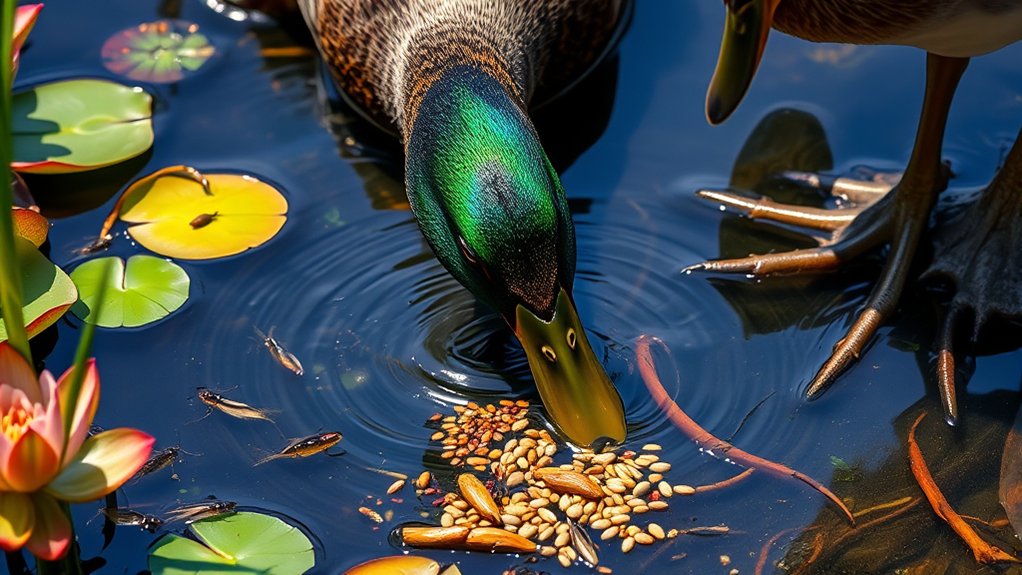
Although waterfowl vary in species, they primarily eat a mix of plants, insects, and small aquatic animals. When you observe waterfowl migration, you’ll notice their diet shifts to meet energy demands for long flights. They rely heavily on high-energy seeds and aquatic vegetation during these journeys.
Once they arrive at breeding grounds, their feeding habits adjust again to support breeding behaviors. Females often increase their intake of protein-rich insects and small invertebrates to guarantee proper egg development and chick growth. You’ll find that waterfowl balance their diet seasonally, focusing on what’s available and necessary for survival and reproduction.
How Dabbling Ducks Feed on Water
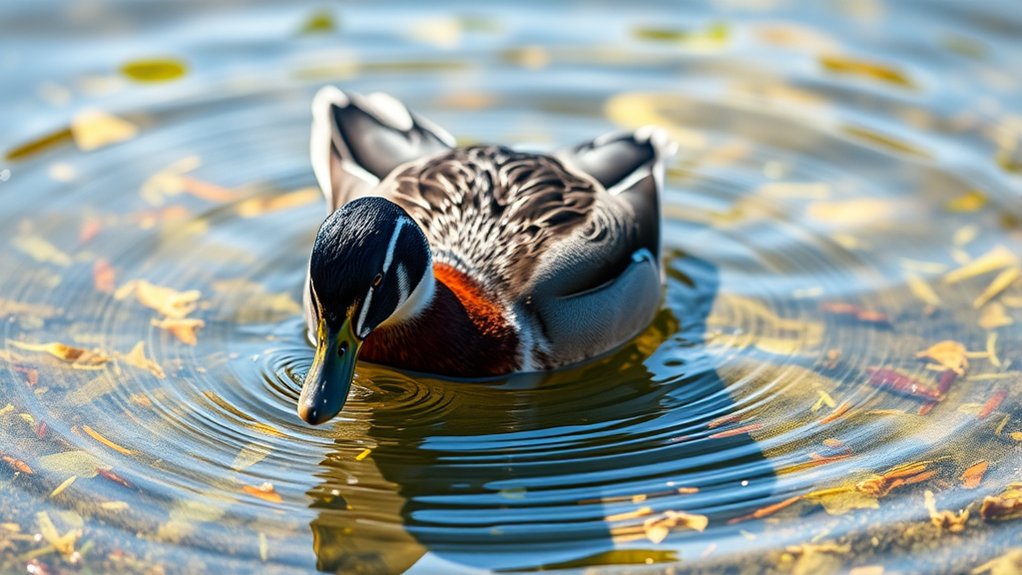
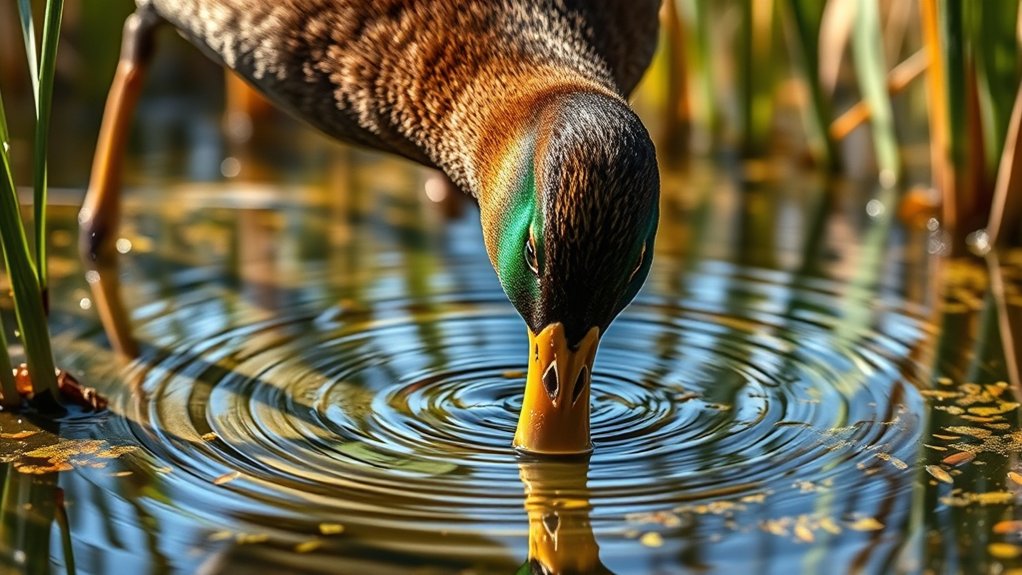
When you watch dabbling ducks, you’ll notice they mostly feed right at the water’s surface. They tip forward, kind of like a little teeter-totter, to reach plants and small animals just below. They really like shallow waters because it’s easier for them to get to seeds, insects, and all kinds of aquatic plants. Once you understand how they feed on the surface, it’s pretty cool to see how they find and pick out their favorite foods.
Surface Feeding Techniques
Since dabbling ducks don’t submerge underwater, they use surface feeding techniques to gather their food efficiently. You’ll often see them tipping forward in shallow water, reaching down just below the surface to grab aquatic plants and small invertebrates.
This method allows them to feed without fully diving, conserving energy during long migratory patterns. By skimming or dabbling, they can quickly access nutritious food sources found near the water’s surface or in floating vegetation.
You’ll notice how they use their sensitive bills to filter and sort edible items while expelling excess water. This surface feeding approach suits their lifestyle, helping them stay alert for predators while taking advantage of the rich resources in wetlands and ponds along their migration routes.
Preferred Food Sources
If you watch dabbling ducks closely, you’ll see they prefer a varied diet that includes aquatic plants, seeds, and small invertebrates. They feed mostly on aquatic vegetation like pondweeds and duckweed, which they reach by tipping forward in shallow water.
This method lets them access food without plunging fully, helping with predator avoidance since they stay near the surface and can quickly escape if needed. Dabbling ducks also forage along shorelines, picking up seeds and insects from mud or floating debris.
Their feeding technique balances energy intake and safety, allowing them to thrive in diverse wetland habitats. By focusing on these preferred food sources and feeding strategies, you’ll understand how dabbling ducks sustain themselves efficiently while staying alert to potential threats.
Diving Techniques Waterfowl Use to Find Food
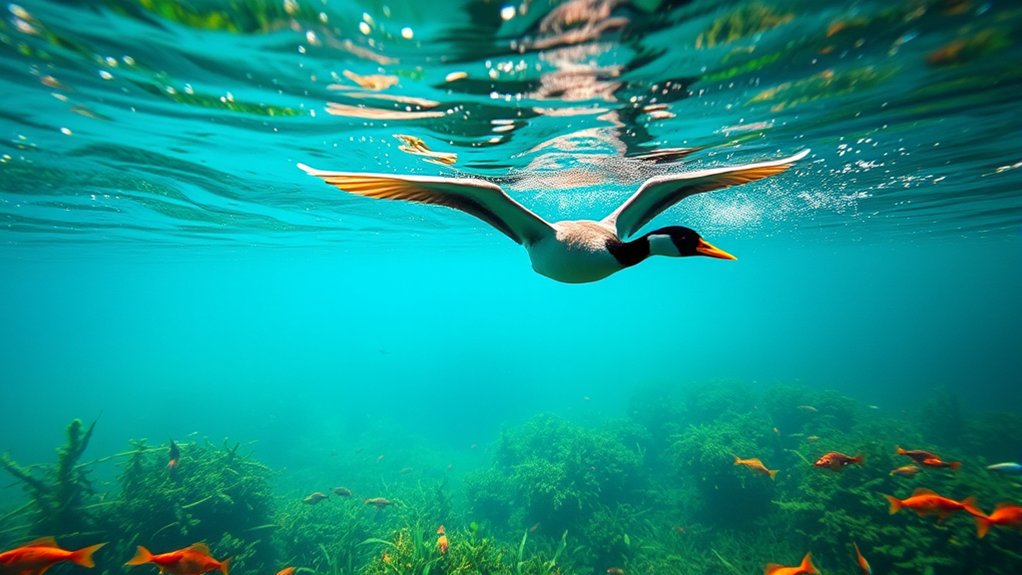
When you watch waterfowl searching for food below the surface, you’ll notice they use deep submersion methods to reach their meals. They’ve developed clever underwater foraging strategies to spot and catch prey efficiently. Plus, their breath-holding adaptations let them stay submerged longer while feeding. It’s pretty fascinating how these birds have honed their skills to make the most of their underwater hunts. You can really see how nature has equipped them perfectly for finding food beneath the water.
Deep Diving Methods
How do waterfowl manage to reach food far below the surface? They use deep submerging methods, plunging straight down to access aquatic plants and small animals hidden underwater.
You’ll notice species like pochards and scaups propelling themselves with powerful legs and webbed feet, allowing them to submerge efficiently and stay submerged longer. These birds adjust their submerged depth depending on food availability and water clarity.
Deep submerging also influences their nesting behavior. Waterfowl often choose nesting sites near deep waters to ensure easy access to feeding grounds for their young.
Underwater Foraging Strategies
Although underwater foraging demands skill and energy, waterfowl have developed specialized plunging techniques to efficiently locate and capture food beneath the surface. When you watch them plunge, they use a combination of quick, controlled movements to navigate through aquatic plants, searching for hidden snacks.
Some waterfowl expertly sift through vegetation to find edible roots and shoots, while others focus on spotting predatory fish or small aquatic animals. You’ll notice they adjust their approach depending on the environment. Sometimes they hover just below the surface, other times they submerge deeper to outmaneuver swift prey.
These strategies maximize their chances of finding nutritious food while conserving energy. By mastering these underwater foraging techniques, waterfowl thrive in diverse habitats rich in aquatic plants and prey like predatory fish.
Breath-Holding Adaptations
Since waterfowl often plunge to catch food underwater, they’ve developed remarkable breath-holding adaptations that let them stay submerged longer. You’ll notice these birds excel at aquatic respiration and oxygen conservation, enabling efficient feeding below the surface. Here’s how they do it:
- Enhanced Oxygen Storage: Waterfowl store more oxygen in their muscles and blood, allowing longer submersion without surfacing.
- Slow Metabolism Underwater: They reduce their metabolic rate while submerged, conserving oxygen and extending submersion time.
- Efficient Lung and Air Sac System: Their specialized respiratory system maximizes oxygen extraction and recycles air, supporting longer breath-holds.
Grazing Behavior: How Waterfowl Eat on Land
When waterfowl venture onto land, they shift their feeding habits to grazing, using their bills to nip at grasses, seeds, and other vegetation. You’ll notice they often choose open fields or marsh edges where plant matter is abundant.
During waterfowl migration, this grazing behavior becomes essential, allowing them to refuel with high-energy plant foods before continuing their long journeys. You might also see adult waterfowl grazing near their nests, practicing nest feeding behaviors that help them build strength for incubating eggs and caring for hatchlings.
Grazing not only provides fundamental nutrients but also supports energy demands unique to land-based activities. By watching closely, you’ll spot how waterfowl use their specialized bills to selectively harvest tender shoots and seeds, maximizing intake efficiently.
This shift from aquatic feeding to grazing on land highlights their adaptability and plays a critical role in their survival throughout varying habitats and life stages.
Role of Insects and Small Animals in Waterfowl Diets
How do insects and small animals fit into the waterfowl diet? You’ll find that insect predation and small animal consumption play crucial roles, especially for growing ducks and geese. These protein-rich food sources help waterfowl meet their nutritional needs beyond plant matter. When you observe their feeding habits, keep these points in mind:
- Waterfowl actively forage in shallow waters and mudflats, picking off insects like aquatic larvae and adult flies to boost protein intake.
- Small animal consumption extends to crustaceans, snails, and even tiny fish, providing essential fats and nutrients.
- During breeding seasons, insect predation intensifies as waterfowl require more energy for egg production and chick rearing.
How Seasonal Changes Affect Waterfowl Feeding
Although waterfowl adjust their diets year-round, seasonal changes dramatically shift their feeding habits and food availability. During spring and summer, you’ll notice waterfowl focusing on high-protein foods like insects and small aquatic animals to support nesting behaviors and chick development.
As temperatures drop, their feeding shifts toward energy-rich seeds and tubers to build fat reserves. Migration patterns play a pivotal role, too. Before migrating, waterfowl intensify feeding to prepare for long flights, targeting nutrient-dense foods.
After migration, they adapt again to local seasonal resources. You’ll see changes in feeding locations and methods depending on the season’s offerings. Understanding these seasonal shifts helps you appreciate how waterfowl survive and thrive throughout the year, adjusting to both their biological needs and the environment’s changing resources.
How Habitat Influences What Waterfowl Eat
Since waterfowl rely on their surroundings for food, the type of habitat they inhabit directly shapes their diet. Different environments provide unique resources and challenges that influence what waterfowl eat. When you observe waterfowl, consider these habitat factors:
1. Water Quality
Clean, nutrient-rich waters support diverse plants and aquatic invertebrates, giving waterfowl access to a wide variety of food. Poor water quality limits their options.
2. Available Vegetation
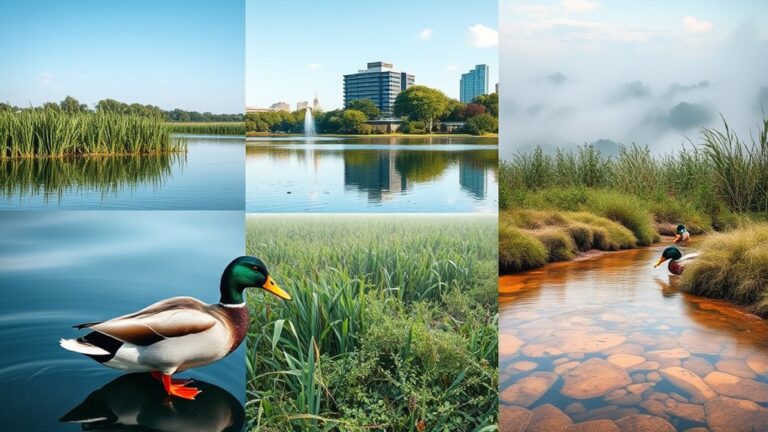
Marshes and wetlands with dense vegetation offer seeds, roots, and insects, while open lakes may force waterfowl to plunge into fish or plankton.
3. Predator Avoidance
Waterfowl choose habitats that help them avoid predators, which can restrict feeding areas and influence diet choices. Safer spots might have abundant but less nutritious food, so they balance safety with sustenance.
Understanding these factors helps you appreciate how waterfowl adapt their feeding habits to thrive in diverse habitats.
How Waterfowl Find and Choose Their Food
You’ll notice waterfowl pick their food based on the habitat they’re in and what the season has to offer. They rely on their sharp senses to find and choose the best options for them. When you understand these habits, it’s easier to see how they adapt to changing environments.
Habitat Influences Food Choices
When waterfowl search for food, their habitat plays a crucial role in shaping what they eat and how they find it. You’ll notice that water pollution can limit available food sources, forcing waterfowl to adapt their diets or move to cleaner areas. Predatory threats also influence where and when they feed, pushing them toward safer spots.
Here are three key habitat factors affecting waterfowl food choices:
- Water quality: Polluted waters reduce plant and insect life, cutting down food options.
- Vegetation type: Different plants offer seeds or roots, guiding what waterfowl consume.
- Safety: Areas with fewer predators let waterfowl feed more openly and longer.
Understanding these helps you see how waterfowl balance survival with finding nourishment.
Sensory Adaptations for Foraging
Although waterfowl rely heavily on their environment, they’ve developed keen sensory adaptations that help them locate and select food efficiently. You’ll notice they use a combination of sensory signals, such as sight, touch, and even subtle vibrations, to detect foraging cues in their surroundings.
Their bills are especially sensitive, allowing them to feel movements and textures underwater or in mud. This helps you understand how they pinpoint hidden prey or edible plants.
Additionally, their eyes are adapted to spot contrast and movement, so they can quickly identify potential food sources. By tuning into these sensory signals and foraging cues, waterfowl can make smart choices about what to eat, maximizing their energy intake while minimizing effort.
This adaptation ensures they thrive in diverse habitats.
Seasonal Diet Variations
Since food availability shifts with the seasons, waterfowl adjust their diets to match what’s accessible and nutritious at any given time. You’ll notice how their migratory patterns influence feeding habits as they move to areas rich in preferred food sources.
During warmer months, they focus on aquatic plants, insects, and small fish found in abundant wetlands. When colder months arrive, they shift to seeds, grains, and roots that are easier to find.
Here’s how you can understand their seasonal diet variations:
- Spring/Summer: Eat mostly aquatic plants, insects, and larvae.
- Fall: Transition to seeds, grains, and remaining aquatic vegetation.
- Winter: Rely on roots, tubers, and stored food in milder climates.
This flexibility helps waterfowl thrive year-round.
Why Feeding Habits Matter for Waterfowl Health
Understanding why feeding habits matter is essential if you want to support waterfowl health effectively. These habits influence their energy levels, reproduction success, and overall well-being. When waterfowl follow natural feeding rituals, they not only get the nutrients they need but also prepare for critical behaviors like courtship displays.
These displays require plenty of energy and good health, so feeding habits directly impact mating success. If waterfowl can’t access proper food or follow their typical feeding routines, their immune systems weaken, making them vulnerable to diseases.
You’ll also notice less vibrant plumage and reduced fertility, which can affect population stability. By respecting their feeding habits and natural behaviors, you help maintain their health and the delicate balance of their ecosystems.
Why Understanding Waterfowl Diets Helps Conservation
Recognizing how waterfowl feed and what they eat gives you powerful insight into their survival needs. Understanding their diets helps you support conservation efforts effectively. Waterfowl rely on a mix of aquatic plants and small animals, and knowing this balance is vital.
Here’s why it matters:
- Habitat Protection: You can advocate for preserving wetlands rich in aquatic plants, essential for waterfowl nutrition.
- Managing Predatory Behavior: Recognizing their feeding strategies helps you understand predator-prey dynamics, ensuring balanced ecosystems.
- Food Availability Monitoring: Tracking diet changes alerts you to environmental threats, like pollution or invasive species, that disrupt food sources.
Frequently Asked Questions
How Do Waterfowl Digest Different Types of Food?
You digest different foods thanks to your waterfowl dietary adaptations. Your specialized digestive system, including a strong gizzard, grinds tough plant material and seeds efficiently.
Feeding strategies in waterfowl help you select and process various food types, from aquatic plants to small invertebrates. Your intestines then absorb nutrients effectively, while enzymes break down proteins and carbohydrates.
These adaptations guarantee you get the energy you need regardless of your food source.
What Time of Day Do Waterfowl Prefer to Feed?
When it comes to feeding behaviors, waterfowl often rise with the sun and prefer early morning or late afternoon to feed. It’s when they’re most active and food is abundant.
You’ll notice their foraging techniques shine during these cooler parts of the day, which helps them conserve energy and avoid midday heat. If you watch closely, you’ll see they don’t waste time. They seize the day and make the most of these prime feeding windows.
Do Waterfowl Migrate to Find Better Feeding Grounds?
Yes, waterfowl migrate to find better feeding grounds when food becomes scarce. You’ll notice their feather adaptations help them endure long flights and changing climates during migration.
Migration triggers, like shorter daylight and dropping temperatures, signal you to expect their movement. These cues prompt waterfowl to travel to areas with abundant food and suitable habitats, ensuring they stay nourished and healthy throughout the seasons.
How Do Waterfowl Protect Themselves While Feeding?
You can observe waterfowl using clever predator evasion tactics while feeding. They stay alert, often feeding in groups so someone’s always watching for danger.
Their feeding strategies include quick, efficient bites and frequent head lifts to scan surroundings. Some even feed near cover like reeds or shallow waters to escape swiftly if threatened.
Can Waterfowl Eating Habits Affect Local Ecosystems?
Imagine a painter’s brush sweeping across a pond, each stroke stirring aquatic plants and life beneath. When you watch waterfowl feed, you’re seeing nature’s balance in motion.
Their eating habits shape local ecosystems by controlling plant growth and insect populations, reducing predatory threats for smaller creatures. If waterfowl overconsume, it can disrupt this harmony, letting some species dominate while others vanish.
This shows how delicate and interconnected your local waters truly are.
Conclusion
Imagine waterfowl as skilled chefs crafting meals from nature’s pantry—plants, insects, and small creatures. Just like you choose fresh ingredients, they pick food suited to their habitat and needs.
Understanding their feeding habits is like knowing the secret recipe to their health and survival. When you appreciate their diet, you help protect their table. This ensures these graceful diners continue to thrive in the wild for generations to come, highlighting what waterfowl eat and how they feed.