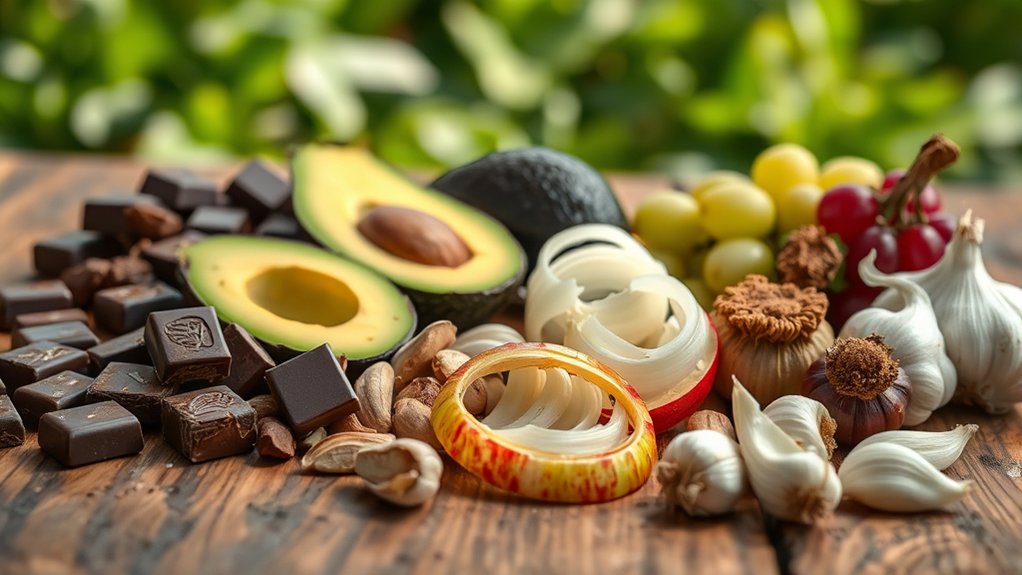
7 Foods Birds Can’t Eat
If you’re a bird owner, you know how tempting it can be to share your snacks with your feathered friend. But you’re not alone in worrying about what’s safe for them to eat. Many people struggle to figure out which foods can harm their birds and which are okay.
That’s why understanding the 7 foods birds can’t eat is so important—it helps keep your pet happy and healthy.
You shouldn’t feed your bird onions, avocado, caffeine, chocolate, alcohol, salt, or apple seeds. These foods contain toxins like thiosulfates, persin, caffeine, and cyanide that can cause serious problems like anemia, heart damage, seizures, and even death.
Avoid giving your bird any foods with seeds or high salt content to keep them safe. If you want to protect your feathered friend, understanding why these foods are harmful helps you make better choices.
Key Takeaways
- Birds should never eat avocado, as persin causes breathing difficulty, weakness, and heart damage.
- Onions and garlic contain thiosulfates that cause oxidative damage and hemolytic anemia in birds.
- Caffeine and chocolate stimulate the nervous system, leading to rapid heartbeat, seizures, and hyperactivity.
- Apple seeds contain cyanide, which can cause respiratory distress, interfere with cellular oxygen, and potentially lead to death.
- Salt and salty foods cause dehydration, kidney damage, lethargy, seizures, and neurological problems in birds.
Why Some Human Foods Are Dangerous for Birds
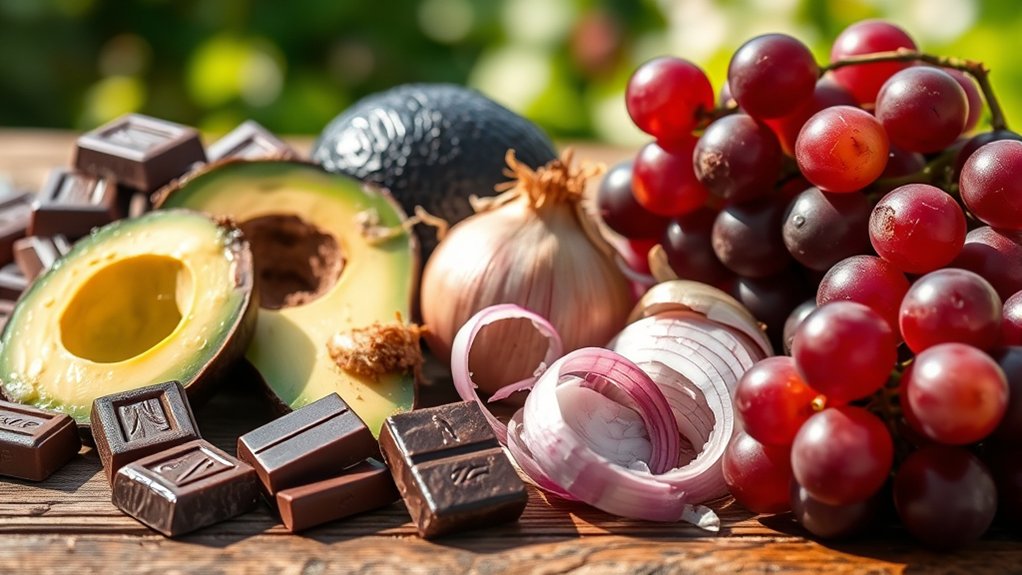
Although many human foods seem harmless, they can pose serious risks to birds. When you care for a bird, understanding bird diet safety is essential. Birds have sensitive digestive systems that react differently to certain foods compared to humans.
Common food hazards like onions, garlic, avocado, and caffeine can cause severe health problems or even be fatal. You might think sharing your snack is harmless, but these foods contain toxins that interfere with your bird’s metabolism or damage their organs.
Onions, garlic, avocado, and caffeine can be deadly to birds due to toxic effects on their metabolism and organs.
Even small amounts can lead to symptoms such as vomiting, diarrhea, weakness, or respiratory distress. To keep your feathered friend safe, you should avoid feeding them anything outside their recommended diet.
Stick to bird-safe fruits, vegetables, grains, and specially formulated pellets or seeds. By being cautious and informed, you’ll protect your bird’s health and longevity, ensuring a happy, thriving companion.
Why Chocolate Is Toxic to Birds
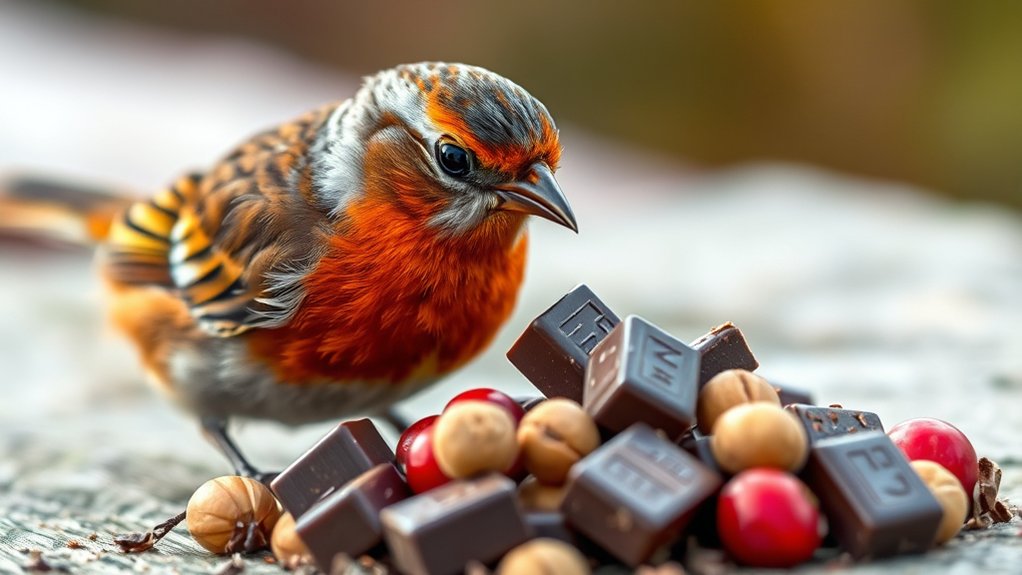
Because chocolate contains substances called theobromine and caffeine, it can be extremely harmful to birds. These compounds affect your bird’s nervous system and heart, causing symptoms like vomiting, diarrhea, rapid breathing, seizures, and even death. Understanding bird dietary restrictions is essential since their metabolism can’t process these stimulants like ours can.
You might have heard toxic food myths suggesting small amounts of chocolate are safe for birds, but that’s not true. Even tiny doses can be dangerous. Birds are much more sensitive to theobromine and caffeine than mammals, so it’s best to avoid giving them any chocolate at all.
If you care about your feathered friend’s health, keep all chocolate products far out of reach. Stick to bird-safe treats and always check ingredient labels carefully. Protecting your bird means respecting their unique dietary needs and steering clear of harmful foods like chocolate.
How Avocado Harms Birds
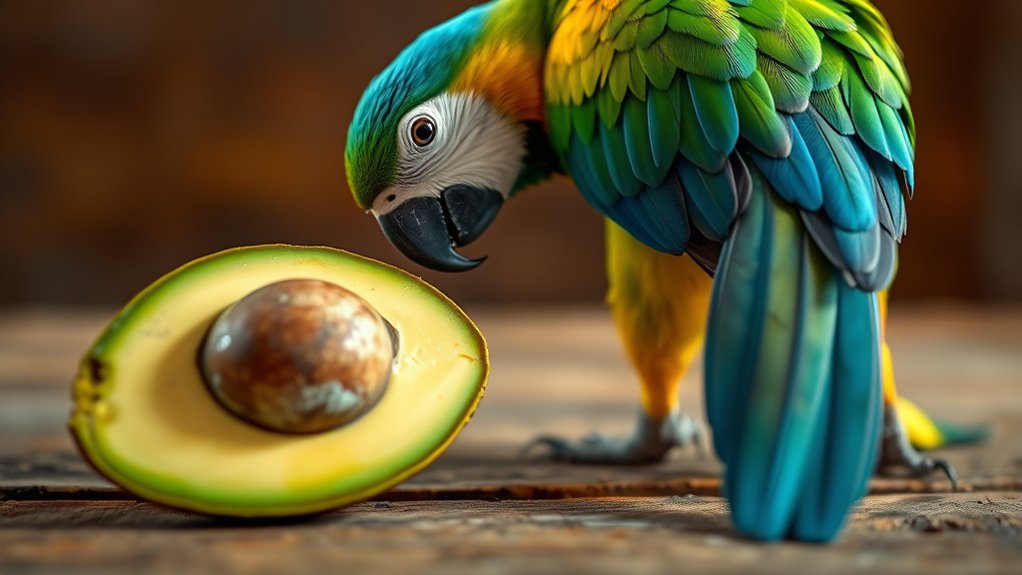
You might not realize it, but avocado contains a toxic compound called persin that can harm your bird. If your feathered friend ends up eating avocado, they could show symptoms like difficulty breathing, weakness, or even heart damage. So, it’s really important to keep avocado far away to protect your bird’s health.
Toxic Compound In Avocado
When birds consume avocado, they risk exposure to a toxic compound called persin, which can cause serious health problems. While avocado’s nutritional content benefits humans, it contains persin in the leaves, skin, and pit, posing dangers to birds.
As you manage your bird’s diet, it’s essential to understand their dietary restrictions and avoid feeding them avocado. Birds lack the enzymes to break down persin, making them highly susceptible to its effects.
Even small amounts can disrupt their health. To keep your feathered friend safe, steer clear of avocado and any products containing it. Prioritizing safe foods ensures they get the nutrients they need without risking exposure to harmful substances like persin found in avocado.
Symptoms Of Avocado Poisoning
Although avocado may seem harmless, its toxic effects can quickly harm your bird’s health. Avocado toxicity can cause serious symptoms, so it’s essential to understand the risks and follow strict bird dietary restrictions.
If your bird consumes avocado, watch for signs like difficulty breathing, weakness, and lethargy. You might also notice swelling around the eyes and neck, along with heart and respiratory distress.
In severe cases, avocado toxicity can lead to heart failure and death. Because birds metabolize toxins differently than humans, even small amounts are dangerous.
To protect your feathered friend, avoid feeding any part of the avocado: flesh, pit, skin, or leaves. Staying vigilant about bird dietary restrictions helps prevent these symptoms and keeps your pet safe and healthy.
Why Caffeine and Alcohol Are Harmful to Birds
You might not realize just how dangerous caffeine and alcohol can be for birds. For example, caffeine can cause a rapid heartbeat and even seizures. And when it comes to alcohol, it depresses their nervous system, which can lead to poisoning. Knowing these effects really helps you keep your feathered friends safe.
Effects of Caffeine
Because caffeine stimulates the nervous system, it can seriously harm birds if they ingest it. When you consider bird dietary restrictions, caffeine consumption is a major no-no.
Unlike humans, birds can’t process caffeine efficiently, leading to increased heart rate, restlessness, and even seizures. If your pet bird accidentally consumes caffeinated products like coffee, tea, or chocolate, it could suffer from poisoning.
You should never offer these items as treats or allow access to them. Even small amounts can cause severe health problems, including dehydration and hyperactivity.
To keep your feathered friend safe, always be mindful of what they eat and avoid anything containing caffeine. Understanding these risks helps you provide a healthy environment that respects their unique dietary needs.
Dangers of Alcohol
While caffeine disrupts a bird’s nervous system, alcohol targets their metabolism and organs, causing similarly dangerous effects. You need to be aware of bird dietary restrictions to keep your feathered friends safe. Even small amounts of alcohol can be toxic, leading to severe health issues or death.
Here are essential bird safety tips regarding alcohol:
- Avoid giving birds any food or drink containing alcohol, including fermented fruits.
- Know that alcohol impairs their liver function, causing long-term damage.
- Recognize symptoms like lethargy, loss of coordination, or difficulty breathing as signs of alcohol poisoning.
Why Onions and Garlic Are Toxic to Birds
Although onions and garlic are common ingredients in many kitchens, they pose serious health risks to birds. You need to be aware that bird dietary restrictions are strict because birds have sensitive digestive systems.
Both onions and garlic contain toxic plant chemicals called thiosulfates, which can cause oxidative damage to a bird’s red blood cells. When ingested, these chemicals may lead to hemolytic anemia, resulting in weakness, lethargy, and even death.
Even small amounts can be harmful, so it’s vital not to offer any food containing these ingredients to your feathered friends. Keep in mind that these toxic effects aren’t always immediate, making it harder to detect until symptoms worsen.
Why Salt and Salty Foods Are Dangerous for Birds
When you give your bird salty foods, you risk disrupting their delicate balance of fluids and electrolytes. Birds have a low tolerance for salt intake, and even small amounts can lead to salt poisoning. This condition can cause severe dehydration, kidney damage, and neurological issues.
You should avoid salty snacks, processed foods, and salty seasonings, as these can quickly escalate salt levels in your bird’s body. Salt poisoning symptoms to watch for include excessive thirst and urination, lethargy and weakness, and seizures or tremors.
Because birds can’t efficiently process excess salt, it accumulates and causes toxicity. To protect your feathered friend, always provide fresh, plain water and avoid feeding them anything with added salt. Keeping their diet salt-free ensures their health and longevity.
How Apple Seeds Can Poison Birds
If your bird accidentally swallows apple seeds, it could face serious health risks. Apple seeds contain amygdalin, a compound that releases cyanide when digested, leading to seed toxicity.
Birds swallowing apple seeds risk cyanide poisoning due to amygdalin in the seeds.
Even small amounts can be harmful since cyanide interferes with your bird’s oxygen use, causing respiratory distress and potentially fatal outcomes. You need to understand that the nutritional hazards of apple seeds go beyond just the seeds themselves; the cyanide can quickly build up in your bird’s system.
To keep your feathered friend safe, always remove seeds before offering apples. While the fruit’s flesh is generally safe and nutritious, the seeds pose a hidden danger.
Avoid giving your bird any apple parts containing seeds, as the risks outweigh any benefits. Remember, preventing seed toxicity is much easier than treating poisoning, so stay vigilant and protect your bird from these avoidable nutritional hazards.
Frequently Asked Questions
Can Birds Eat Dairy Products Safely?
You shouldn’t feed birds dairy products because their digestive systems can’t handle lactose well. Their bird digestive health relies on foods that meet their specific nutritional needs, and dairy doesn’t fit that profile.
Offering milk or cheese could upset their stomachs or cause long-term issues. Instead, focus on providing seeds, fruits, and insects that naturally support their well-being and keep their digestive system running smoothly.
Are Cooked Bones Safe for Birds to Consume?
You might think cooked bones are safe, but bird bone dangers make them risky. Cooking bones changes their texture, making them brittle and prone to splintering.
When birds consume these sharp fragments, they can cause serious internal injuries, choking, or blockages. So, despite seeming harmless, cooking bones risks your bird’s health.
It’s best to avoid giving any cooked bones to your feathered friend to keep them safe and healthy.
How Can I Tell if a Bird Has Eaten Something Toxic?
You can tell if a bird has eaten something toxic by watching for bird poisoning symptoms like vomiting, diarrhea, excessive drooling, or difficulty breathing.
If your bird acts lethargic, loses coordination, or shows seizures, it’s a clear sign of toxic symptoms. Don’t wait, contact an avian vet immediately.
Quick action can save your bird’s life, so knowing these signs helps you respond fast and keep your feathered friend safe.
Are Artificial Sweeteners Harmful to Birds?
Imagine your bird strolling through a garden filled with shiny, tempting berries. Some look sweet but hide a toxic ingredient. Artificial sweeteners are like those deceptive berries; they may seem harmless but can harm your feathered friend.
You shouldn’t let your bird consume anything with artificial sweeteners because these chemicals can cause serious health issues. Always stick to natural, bird-safe foods to keep your companion safe and happy.
What Should I Do if My Bird Ingests a Toxic Food?
If your bird ingests toxic food, act fast. Watch for bird poisoning symptoms like vomiting, lethargy, or difficulty breathing. Immediately contact an avian vet for guidance. Don’t wait for symptoms to worsen.
Provide the vet with info on what was eaten. To avoid this, practice toxic food prevention by keeping harmful foods out of reach and educating yourself on unsafe items. Quick action can save your bird’s life.
Conclusion
You might think sharing your snacks with birds is harmless, but what if that treat quietly harms them? Chocolate, avocado, caffeine, and even apple seeds hide dangers you don’t see.
Next time you offer food, pause and think could this be the one that causes harm? Protecting birds means knowing what not to feed them.
Sometimes, the kindest act is the one you don’t do. Their lives depend on it. Remember, keeping birds safe starts with understanding what foods to avoid.