What Is Bird Food Made Of?
If you’ve ever stood in front of a dizzying array of bird food options, unsure which one is truly best for your feathered friends, you’re not alone. Many people struggle to find the right mix that keeps birds healthy and happy without breaking the bank or filling the feeder with useless fillers.
Choosing quality bird food can feel overwhelming, but understanding what goes into these mixes can make all the difference.
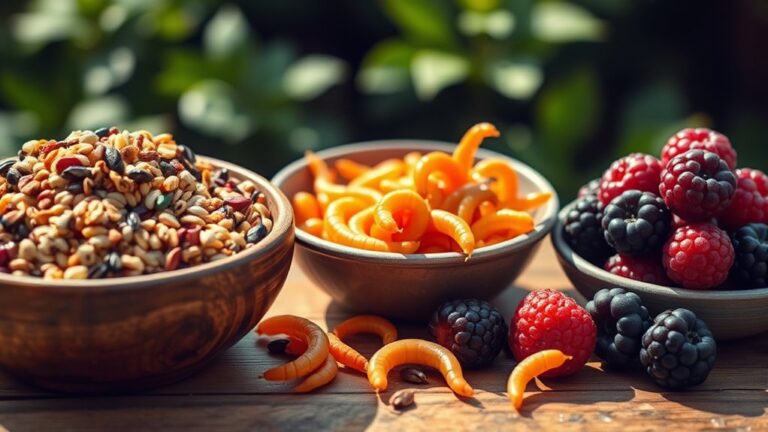
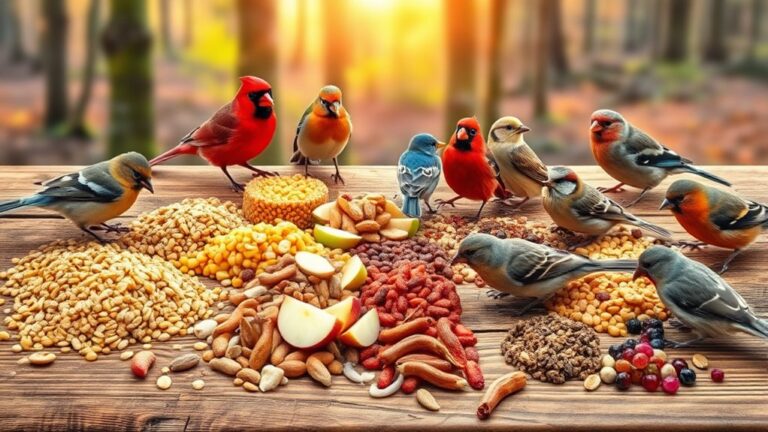
You’ll find bird food made mainly of seeds like sunflower and millet, plus nuts, legumes, and dried fruits to provide energy, protein, and essential vitamins. Sometimes insects or additives are included for extra nutrition.
Fillers like cracked corn may bulk up the mix but offer little value. Choosing quality food helps support bird health and natural behaviors.
Keep exploring to uncover how different ingredients affect birds’ diets and well-being.
Key Takeaways
- Bird food primarily consists of seeds and grains such as millet, sunflower seeds, and cracked corn. These ingredients attract a variety of bird species.
- Nuts, legumes, and dried fruits provide essential energy, amino acids, vitamins, and antioxidants that help with bird health and feather quality.
- Fillers like milo and wheat increase volume but offer limited nutritional value. They are often used to reduce costs.
- Vitamins and minerals, including calcium, iron, and vitamin A, support birds’ immune systems, reproduction, and feather development.
- Quality bird food avoids harmful additives and emphasizes nutrient-rich ingredients. It also balances macronutrients to meet energy, growth, and migration needs.
Common Ingredients in Bird Seed Mixes
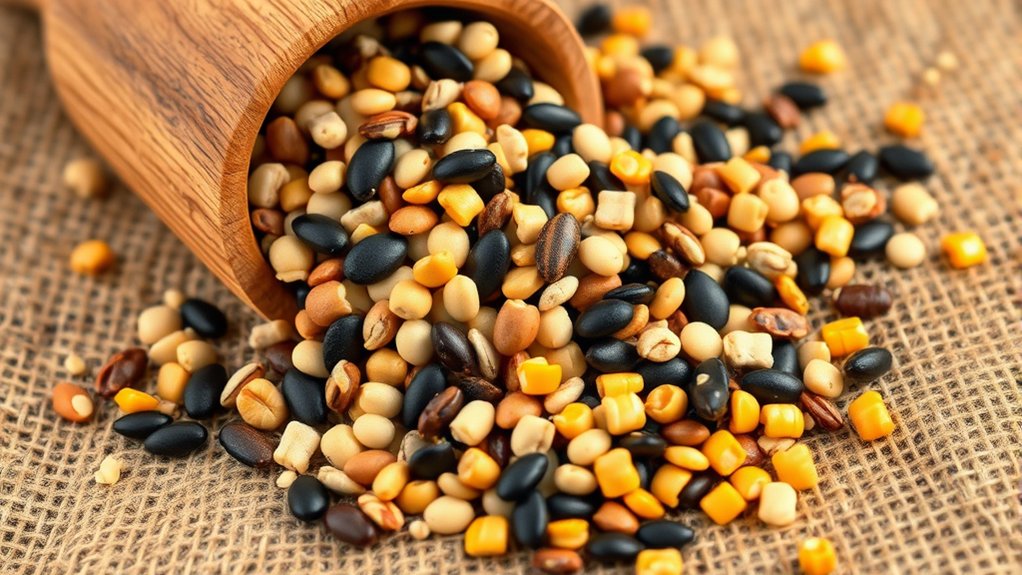
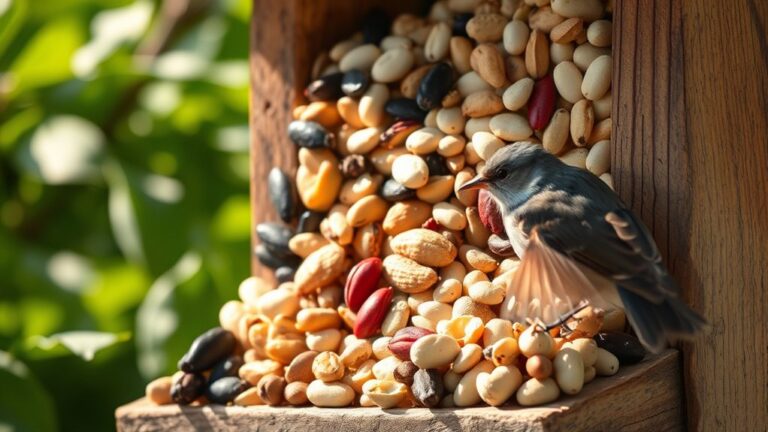
Although bird seed mixes vary widely, you’ll often find several common ingredients that appeal to a broad range of bird species. Millet, sunflower seeds, and cracked corn are staples in many mixes because they provide essential nutrients that attract diverse birds during migration.
When you scatter these seeds, you encourage a natural gathering spot where birds communicate through their unique calls and songs, engaging in avian communication that’s crucial for social interaction and survival.
You’ll also notice safflower seeds and nyjer seeds in many blends, each targeting specific birds like cardinals and finches. These ingredients not only cater to different dietary needs but also support the birds’ energy requirements during long migration journeys.
Why Seeds and Grains Are Essential in Bird Food
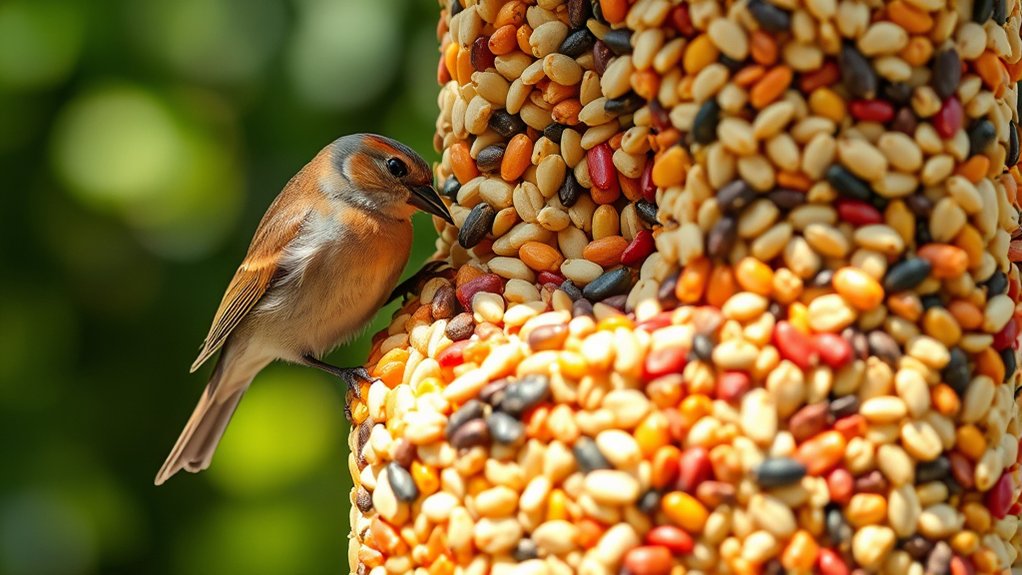
You’ll find that seeds and grains pack essential nutrients birds need to stay healthy and active. For example, common grains like millet and corn give them steady energy throughout the day. When you understand these ingredients, it’s easier to choose the best food for your feathered friends.
Nutritional Benefits of Seeds
Since seeds and grains provide a concentrated source of energy and essential nutrients, they form the foundation of a balanced bird diet. You’ll find that seeds deliver vital proteins, healthy fats, and carbohydrates, fueling birds through daily activities and long journeys.
During bird migration, these nutrients are essential, helping birds maintain stamina and body heat. Plus, seeds support seed dispersal, enabling plants to reproduce as birds carry and drop seeds across different areas.
Common Grains in Diet
Seeds provide birds with essential nutrients, but grains also play a significant role in their diet. You’ll find that grains support not only physical health but also crucial behaviors like avian vocalizations and vibrant feather coloration.
Including common grains in bird food guarantees a balanced intake of proteins, vitamins, and minerals essential for these functions.
| Grain | Nutrient Focus |
|---|---|
| Millet | Protein, Fiber |
| Corn | Carbohydrates |
| Oats | Vitamins B & E |
| Barley | Minerals |
| Wheat | Energy, Antioxidants |
When you feed birds a mix of seeds and grains, you help maintain their energy and improve features like their song quality and bright plumage, which are essential for communication and mating.
Energy Provided by Grains
Although grains might seem simple, they pack a powerful energy punch that keeps birds active and healthy throughout the day. When you provide seeds and grains, you’re giving birds a rich source of carbohydrates and fats, essential for sustaining their high energy needs.
During bird migration, these energy-dense foods fuel long flights, helping birds maintain stamina and endurance. Even when birds focus on nesting habits, grains supply the necessary calories to build nests, care for eggs, and feed hatchlings.
Without this steady energy source, birds would struggle to perform these critical activities. So, including a variety of grains in bird food guarantees they get the fuel needed for survival and productivity, supporting their natural behaviors throughout the year.
How Nuts and Legumes Boost Bird Food Nutrition
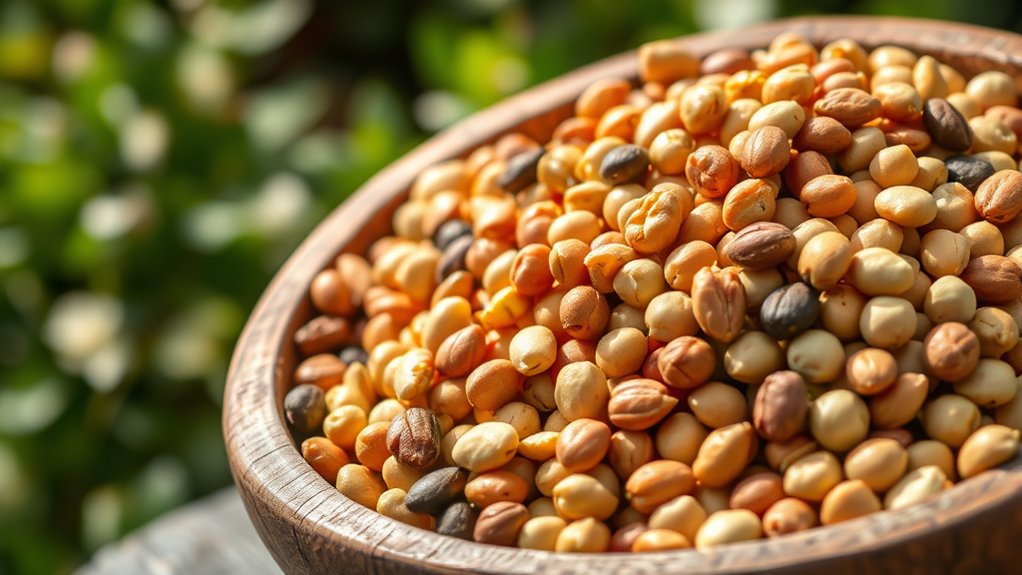
When you include nuts and legumes in bird food, you provide essential proteins, healthy fats, and vital nutrients that many birds need to thrive. These ingredients support birds during demanding periods like bird migration, where energy reserves and muscle repair are critical. Nuts offer high-calorie content, helping birds fuel long flights, while legumes supply amino acids necessary for tissue growth and maintenance.
Additionally, nuts and legumes play a significant role in supporting nesting habits. Birds require extra protein and fat to build nests and feed their young. Including these foods helps guarantee they get the nutrients needed for successful reproduction and chick development. You’ll notice that species relying heavily on nuts and legumes tend to have stronger, healthier offspring.
The Role of Dried Fruits in Bird Diets
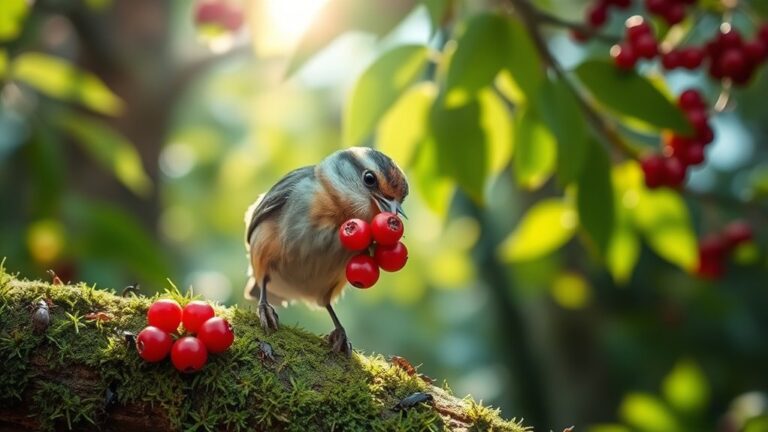
Nuts and legumes supply birds with the proteins and fats they need, but dried fruits add another layer of benefits to their diet. When you offer dried fruits like raisins, apricots, or figs, you provide essential vitamins and antioxidants that support overall health. These nutrients are especially important during bird migration, when birds need extra energy and stamina to complete long journeys.
Dried fruits are also a natural source of sugars, giving birds quick bursts of fuel. Additionally, the pigments in dried fruits can improve feather coloration, helping birds maintain vibrant plumage. This is vital for attracting mates and signaling health.
When you include dried fruits in bird food mixes, you mimic the variety birds find in the wild, supporting their dietary needs throughout the year. Just remember to avoid added sugars or preservatives, as natural dried fruits are healthiest. By understanding the role of dried fruits, you help birds thrive both during migration and in their daily lives.
Why Insects and Protein Matter in Bird Food
Since birds require a balanced diet to stay healthy, insects and protein play a vital role in their nutrition. You’ll find that protein supports muscle development, energy needs, and overall growth, especially during demanding times like bird migration.
When birds prepare for long flights, protein helps build stamina and repair tissues, ensuring they stay strong throughout their journey.
Additionally, protein is essential during nest building. Birds use protein-rich food sources to fuel the intense activity of gathering materials and caring for their young.
Without enough protein, their ability to create sturdy nests and raise healthy chicks diminishes.
Key Vitamins and Minerals in Bird Food
You need to know which vitamins and minerals are essential for your bird’s health. Things like calcium, vitamin A, and vitamin D are super important to include. Getting the right balance of these nutrients can really make a big difference. That way, your feathered friend stays strong and active.
Essential Vitamins for Birds
Why do vitamins and minerals play such an essential role in your bird’s diet? They’re indispensable for maintaining health, supporting bird migration, and enhancing feather coloration. Vitamins like A, D, and E boost your bird’s immune system and help repair tissues after long flights.
Vitamin A promotes healthy skin and feathers, which directly impacts vibrant coloration. Vitamin D aids calcium absorption, critical for strong bones during migration. Vitamin E acts as an antioxidant, protecting cells from damage.
B-complex vitamins support energy metabolism, helping your bird stay active and alert. Without these vitamins, your bird could face weakened immunity, dull feathers, and poor stamina.
Important Minerals in Diet
How do minerals impact your bird’s health beyond vitamins? Minerals like calcium, iron, and zinc play essential roles in maintaining strong bones, supporting metabolism, and enhancing feather coloration.
For example, calcium is indispensable for eggshell formation and muscle function, while iron helps transport oxygen in the blood, critical during bird migration when energy demands soar. Zinc supports immune function and feather growth, directly affecting your bird’s appearance and vitality.
Without these minerals, your bird might face weak feathers, poor flight performance, or compromised health. Including a balanced mix of minerals in their diet guarantees they stay active, vibrant, and ready for long migratory journeys. So, when choosing bird food, look for ingredients rich in these key minerals to promote overall well-being.
Benefits of Nutrient Balance
Although vitamins and minerals each serve distinct functions, their combined balance in bird food creates a synergy that keeps your feathered friend healthy and energetic. Proper nutrient balance supports bird migration by boosting stamina and aids nesting behaviors by enhancing reproductive health. When feeding your bird, you want to guarantee key vitamins and minerals are included for overall wellness.
| Nutrient | Benefit |
|---|---|
| Vitamin A | Supports vision and immunity |
| Calcium | Strengthens bones and eggshells |
| Vitamin D3 | Aids calcium absorption |
| Iron | Prevents anemia, boosts energy |
Balanced nutrients help your bird thrive during demanding times like migration and nesting, making each season a success.
Common Fillers and Additives in Bird Food
When you pick up a bag of bird food, you’ll often find ingredients that don’t add much nutritional value but help manufacturers stretch the product. Common fillers like milo, wheat, and cracked corn bulk up the mix without providing essential nutrients.
While these fillers can keep costs down, they don’t support a bird’s natural diet linked to its bird habitat or mating behaviors. For example, many wild birds rely on protein-rich seeds and insects during mating season to fuel their energy needs and reproductive success.
Fillers lower costs but fail to meet birds’ natural dietary and reproductive needs during critical seasons.
Additives such as vitamins, minerals, and preservatives often appear to maintain freshness and support basic health. However, some additives may not align with birds’ dietary needs or natural feeding habits.
When selecting bird food, it’s important to recognize which fillers and additives are present so you can choose a mix that supports the birds’ natural behaviors and environment. This way, you help birds thrive rather than just survive.
How Bird Food Differs by Species and Feeding Habits
Because different bird species have unique dietary needs and feeding behaviors, their food requirements vary considerably. You’ll notice that birds’ habitat adaptation plays a big role in what they eat.
For instance, birds living in colder climates often need high-fat seeds to fuel their energy. Migratory birds, meanwhile, require nutrient-rich food to sustain long flights. Understanding these factors helps you choose the right bird food tailored to each species.
| Bird Species | Food Type & Reason |
|---|---|
| Seed-eaters | Sunflower seeds, high energy |
| Nectar-feeders | Sugar-rich nectar, quick energy |
| Insectivores | Protein-packed insects, muscle repair |
| Omnivores | Mixed seeds and fruits, balanced diet |
Knowing these distinctions lets you support birds’ natural feeding habits and promote their health effectively.
Choosing Quality Bird Food: What to Look For
Selecting quality bird food requires careful attention to its ingredients and nutritional value to guarantee it meets the specific needs of your feathered visitors. You want a mix that supports their energy demands, especially during bird migration when they need extra fuel. Look for seeds, nuts, and grains rich in fats and proteins.
Also, consider foods that aid in nesting habits. Ingredients high in calcium and vitamins help birds build strong eggshells and maintain health during breeding seasons.
Avoid fillers like excessive milo or cracked corn, which offer little nutritional benefit. Check for freshness, as stale food can deter birds and harbor mold.
If you notice added sugars or artificial ingredients, steer clear. They can harm wildlife. Finally, match the food type to the species common in your area, ensuring it supports their natural diet and behaviors.
Homemade vs Commercial Bird Food: Pros and Cons
Understanding what goes into bird food naturally leads to thinking about whether to prepare it yourself or buy it ready-made. Homemade bird food lets you control ingredients, ensuring a fresh mix tailored to support bird migration and breeding behaviors. You can add seeds, nuts, and fruits that suit local species’ needs. However, it takes time, knowledge, and effort to balance nutrients properly.
On the other hand, commercial bird food offers convenience and consistent quality. Manufacturers formulate blends to meet birds’ nutritional requirements during critical periods like migration and breeding. Still, some products contain fillers or preservatives that might not benefit all birds. When choosing commercial food, look for high-quality ingredients without unnecessary additives.
Ultimately, deciding between homemade and commercial bird food depends on your commitment and understanding of birds’ dietary needs. Both options can support wild birds effectively if you pay attention to what they require during key life stages.
Frequently Asked Questions
How Should Bird Food Be Stored to Maintain Freshness?
You should store bird food in airtight storage containers to keep it fresh and extend seed shelf life. Keep the containers in a cool, dry place away from direct sunlight and moisture. These conditions can cause mold or spoilage.
Avoid leaving seed bags open, as exposure to air reduces freshness. Regularly check for any signs of pests or stale seeds to guarantee your bird food stays nutritious and appealing for your feathered friends.
Can Bird Food Cause Allergies in Humans?
Yes, bird food allergies can affect you if you’re sensitive to certain ingredients. Human sensitivity varies, so some people might experience allergic reactions like sneezing, itching, or skin rashes when handling bird food.
It’s smart to wash your hands after feeding birds and avoid inhaling dust from seeds or pellets. If you notice symptoms, consider wearing gloves or masks to reduce exposure and protect yourself from bird food allergies.
How Often Should Bird Feeders Be Cleaned?
You should clean your bird feeders at least once every two weeks to maintain good feeder hygiene. If you use wetter bird seed types, like hulled sunflower seeds or mixed seeds that can get soggy, clean even more often to prevent mold and bacteria growth.
Regular cleaning helps keep the birds healthy and attracts more visitors. Rinse feeders with hot, soapy water, scrub well, and let them dry completely before refilling.
What Are the Best Feeding Times for Wild Birds?
Feeding wild birds is like tuning into nature’s clock. You’ll get the best results by offering food early in the morning and late afternoon, when birds are most active.
During bird migration, these times become even more essential, as they need extra energy. Seasonal feeding helps them prepare for changes, so adjusting your schedule with the seasons keeps your feeders an important stop on their journey.
Are Bird Food Ingredients Safe for Pets?
You should be cautious with bird food ingredients regarding pet health. While many bird foods are safe for birds, some ingredients can harm your pets if ingested.
Seeds like sunflower or millet aren’t toxic, but additives or moldy seeds might cause issues. To guarantee bird food safety, keep it away from pets and consult your vet if your pet accidentally eats any. Always prioritize their well-being.
Conclusion
When picking bird food, keep in mind that over 70% of wild bird diets are made up of seeds and grains, highlighting their importance. You’ll want to choose mixes rich in these staples, with added nuts, fruits, and proteins to keep birds healthy and happy.
Whether you go homemade or commercial, understanding these ingredients helps you make the best choice for your feathered friends. So, get creative and watch your birds thrive with the right bird food!