What to Feed a Cockatiel: Top 3 Healthy Choices
Feeding your cockatiel the right diet can feel overwhelming, especially with so many options out there. You’re not alone—many bird owners struggle to find the perfect balance that keeps their feathered friends healthy and happy.
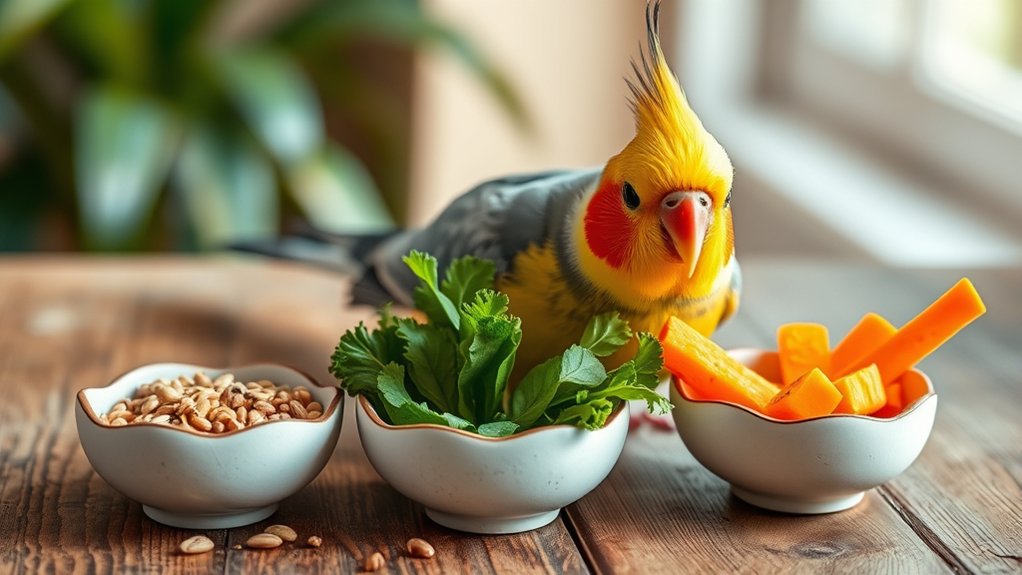
You’ll want to feed your cockatiel a balanced mix of quality seeds and pellets to cover essential nutrients and support overall health. Fresh fruits and vegetables like carrots, spinach, and apples add vitamins and promote natural foraging habits.
Don’t forget supplements like calcium powders or cuttlebones to keep your bird strong and healthy. Combining these three food types guarantees your cockatiel thrives.
Exploring these options further can help you create the perfect diet plan.
Key Takeaways
- Provide a balanced diet combining high-quality seed mixes with a variety of seeds for essential nutrients and flavors.
- Incorporate pelleted diets made from natural ingredients to supply vitamins, minerals, and proteins.
- Offer fresh fruits and vegetables like carrots, spinach, and apples, chopped into small pieces and washed thoroughly.
- Use calcium supplements such as cuttlebone or calcium powder to support bone health and eggshell strength.
- Give millet sprays or whole-grain bread as occasional treats while avoiding sugary or fatty foods.
Essential Seeds and Pellets for Balanced Cockatiel Nutrition
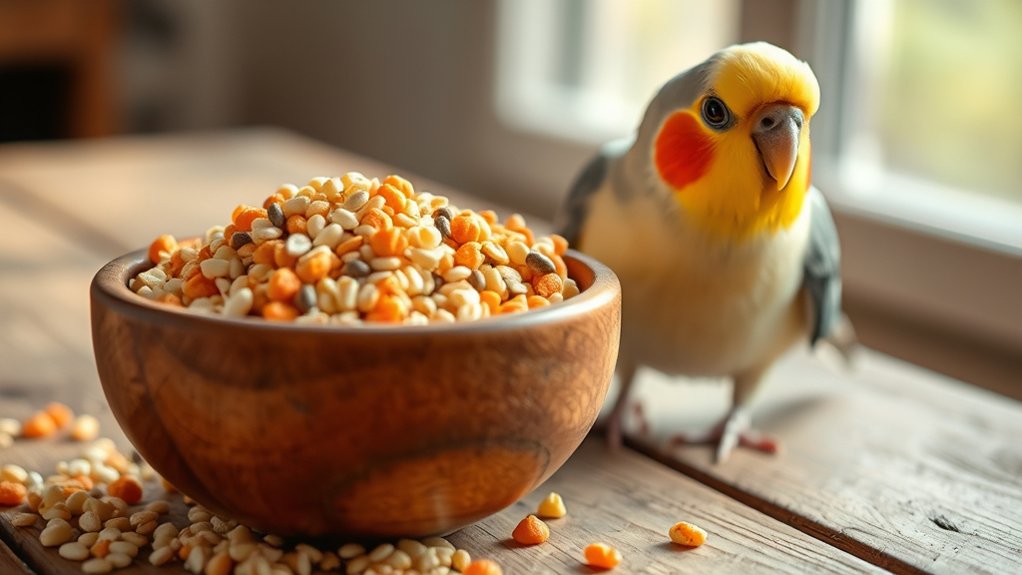
What should you include in your cockatiel’s diet to keep it healthy and happy? Start with quality cockatiel seed mixes that provide a variety of seeds, offering essential nutrients and flavors your bird will enjoy.
However, relying solely on seeds can lead to nutritional imbalances, so it’s important to complement them with pelleted diet options. These pellets are specially formulated to guarantee your cockatiel gets the right vitamins, minerals, and proteins in every bite.
Relying only on seeds risks nutritional gaps; pelleted diets ensure balanced vitamins, minerals, and proteins.
When choosing pelleted diet options, look for brands that prioritize natural ingredients without artificial additives. Mixing seeds and pellets creates a balanced diet, promoting overall health and preventing dietary deficiencies.
You can gradually introduce pellets by mixing them with seeds, helping your cockatiel adjust without stress. By combining cockatiel seed mixes with pelleted diet options, you’re providing a well-rounded diet that supports energy, feather health, and longevity.
Safe and Nutritious Fruits and Vegetables Cockatiels Enjoy
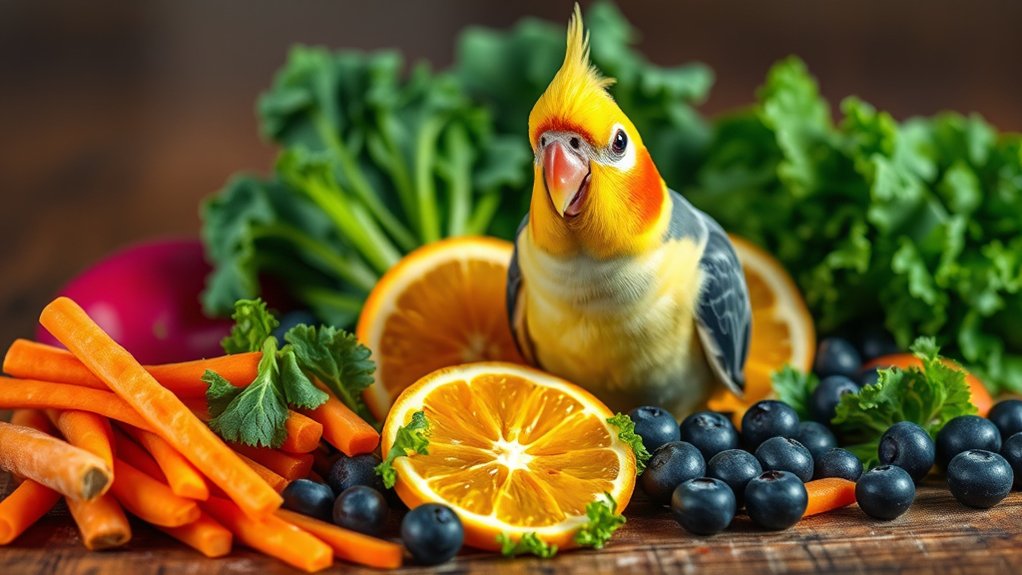
Although seeds and pellets form the foundation of your cockatiel’s diet, adding fresh fruits and vegetables provides essential vitamins and minerals that boost overall health. Safe options include carrots, spinach, broccoli, bell peppers, apples, and berries. Always wash produce thoroughly to remove pesticides and avoid toxic foods like avocado or onion. Chop fruits and veggies into small pieces to make them easier for your bird to eat.
Incorporating fresh foods supports your cockatiel’s bird grooming habits by promoting healthy feathers and skin. Plus, offering a variety encourages natural foraging behavior, enriching their daily routine. Remember to remove uneaten fresh food promptly to prevent spoilage and maintain cleanliness during cage cleaning. This practice helps avoid bacteria buildup and keeps your bird’s environment safe and hygienic.
Supplements and Treats That Help Your Cockatiel Stay Healthy
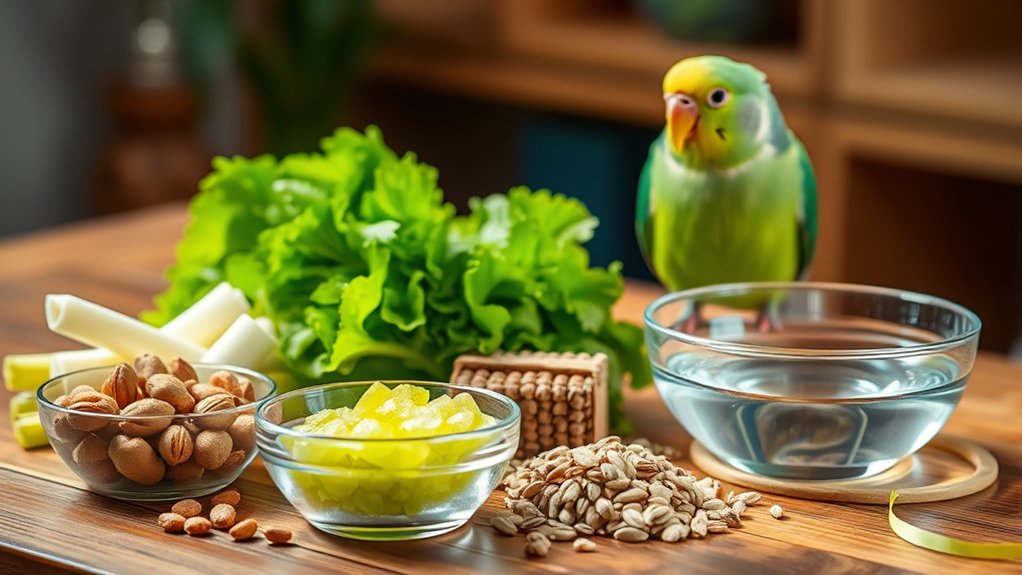
Adding fresh fruits and vegetables to your cockatiel’s diet boosts their nutrition, but sometimes they need a little extra support to stay in top shape. Supplements like calcium powders or cuttlebone are essential, especially for breeding considerations, as they strengthen eggshells and support your bird’s overall health. You can sprinkle calcium powder on their food or place a cuttlebone in the cage for easy access.
Treats, such as millet sprays or small pieces of whole-grain bread, work well for training and behavior reinforcement. Use these sparingly to avoid overfeeding but often enough to keep your cockatiel motivated and engaged. Avoid sugary or fatty treats that can harm their health.
Offering these supplements and treats thoughtfully ensures your cockatiel remains energetic, healthy, and happy, whether you’re focusing on breeding success or improving training outcomes.
Frequently Asked Questions
How Often Should I Clean My Cockatiel’s Food and Water Dishes?
You should clean your cockatiel’s food and water dishes daily to prevent bacteria buildup and keep your bird healthy. Proper dish cleaning guarantees leftover food doesn’t spoil, which ties into good food storage habits.
Rinse dishes thoroughly with hot, soapy water, then dry them well before refilling. Regular cleaning helps avoid illness and keeps your cockatiel’s environment fresh and safe, so make it part of your daily routine.
Can Cockatiels Drink Milk or Other Dairy Products?
You shouldn’t give your cockatiel milk or other dairy products because many birds have dairy allergies or can’t properly digest lactose. While some believe small amounts are safe, it’s best to avoid the risk altogether.
Instead, offer milk alternatives like fortified almond or soy milk in tiny amounts if you want to provide variety, but always prioritize water as their main drink. Your bird’s health depends on safe, digestible options.
What Signs Indicate My Cockatiel Is Allergic to Certain Foods?
You’ll notice food allergies in your cockatiel through symptom recognition like itching, swelling, or redness around their beak and eyes. They might also sneeze, have difficulty breathing, or show changes in droppings and appetite.
If your bird seems lethargic or is scratching excessively after eating certain foods, that’s a red flag. Stop feeding the suspected item and consult your vet for proper diagnosis and care.
How Do I Transition My Cockatiel to a New Diet?
Think of shifting your cockatiel’s diet like gently turning a ship’s wheel, slow and steady. Start by mixing small amounts of new food variety into their current meals, gradually increasing over two weeks.
Sprinkle dietary supplements as needed to guarantee balanced nutrition. Watch your bird closely because sudden changes can ruffle feathers.
Is It Safe to Feed My Cockatiel Human Snacks or Leftovers?
You shouldn’t feed your cockatiel human snacks or leftovers regularly because human snack safety is a big concern. Many snacks contain salt, sugar, or spices that can harm your bird.
Leftover feeding risks include potential bacterial contamination and unhealthy ingredients. Instead, stick to bird-safe foods and treats designed for cockatiels to keep them healthy.
It’s better to avoid risking their health with unsafe human food.
Conclusion
Feeding your cockatiel well isn’t just about filling their bowl; it’s about nourishing a vibrant, happy companion. By choosing essential seeds and pellets, offering safe fruits and veggies, and adding healthy supplements and treats, you’re giving your bird the best chance to thrive.
Remember, a balanced diet is the core of their health. So why settle for less when you can watch your cockatiel soar with vigor every day? Feeding your cockatiel the right way makes all the difference.