What Is Bird Feeding and Why Does It Matter?
If you’ve ever wanted to attract more birds to your yard but felt overwhelmed by where to start, you’re not alone. Many people struggle with finding the right way to feed birds without causing harm or attracting unwanted pests.
Luckily, bird feeding can be simple and rewarding once you know the basics.
Bird feeding is when you provide food to birds in your yard to support local wildlife and help maintain ecological balance. It’s especially important during harsh seasons, habitat loss, and migration, as it offers essential nutrients and safety.
Feeding birds also helps young and vulnerable birds thrive, boosting overall bird health and biodiversity.
If you want to uncover how to set up feeders safely, choose the right foods, and avoid common mistakes, there’s plenty more to investigate.
Key Takeaways
- Bird feeding supports local wildlife by providing essential nutrients during harsh seasons and habitat loss. It helps maintain bird populations, biodiversity, and overall ecosystem balance.
- Feeding birds enriches human connection with nature and counters common myths about dependence. Proper feeding practices ensure bird health, prevent disease, and support successful breeding.
- Bird feeding encourages education and conservation awareness, especially among children and communities.
What Bird Feeding Is And Why It Matters
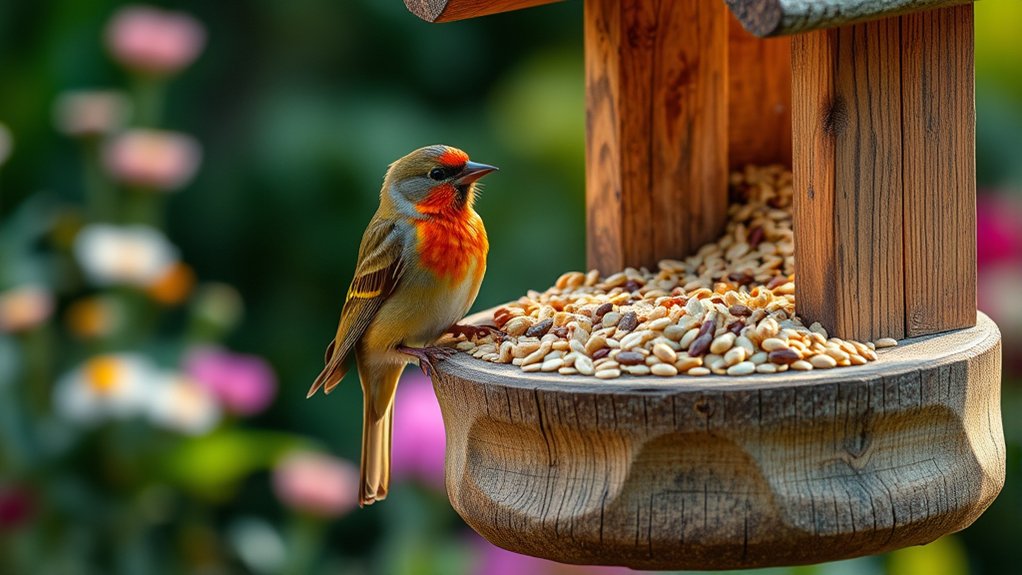
Although you might think bird feeding is just about scattering seeds, it’s actually a vital activity that supports local wildlife and helps maintain ecological balance. When you feed birds, you provide them with essential nutrients during harsh seasons and habitat loss.
However, it’s important to follow proper bird feeding etiquette to avoid harming the birds or disrupting natural behaviors. For example, keeping feeders clean prevents disease, and offering appropriate food guarantees their health.
You might’ve heard bird feeding myths, like feeding birds makes them dependent or alters migration patterns, but these aren’t true when you practice responsibly. Feeding birds thoughtfully not only enriches their lives but also improves your connection with nature.
How To Get Started With Bird Feeding
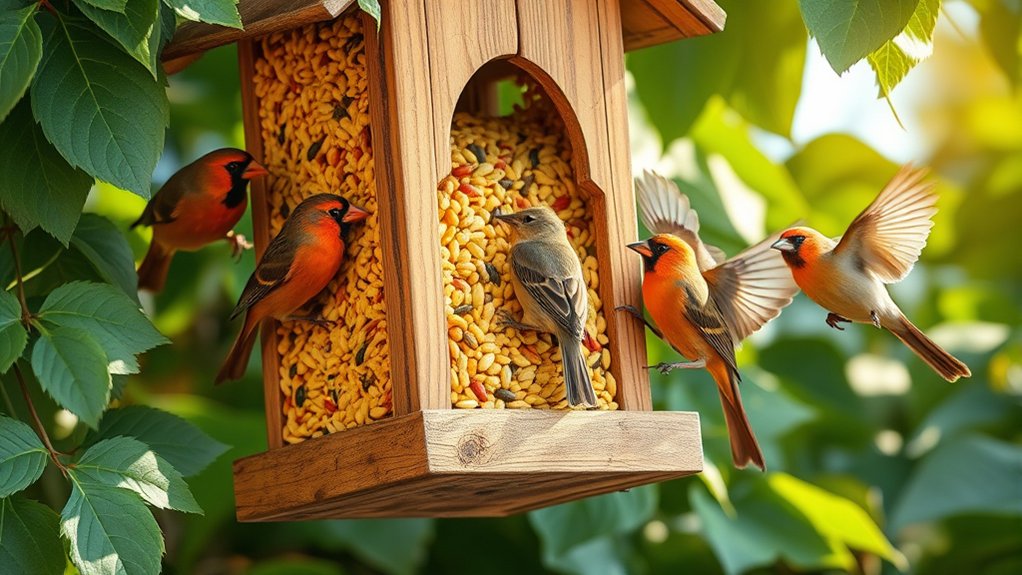
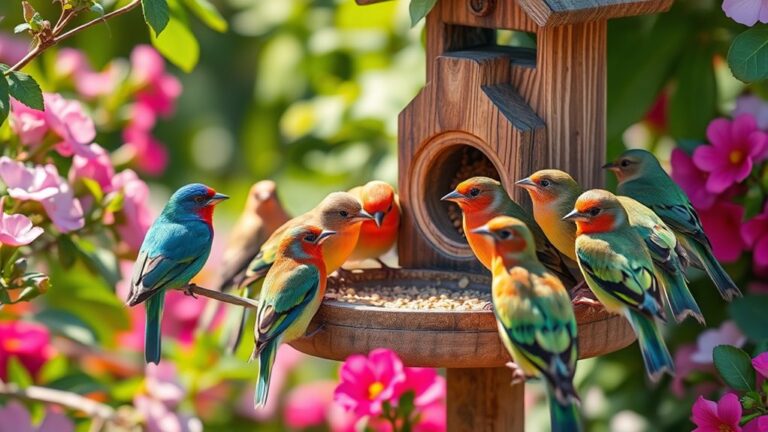
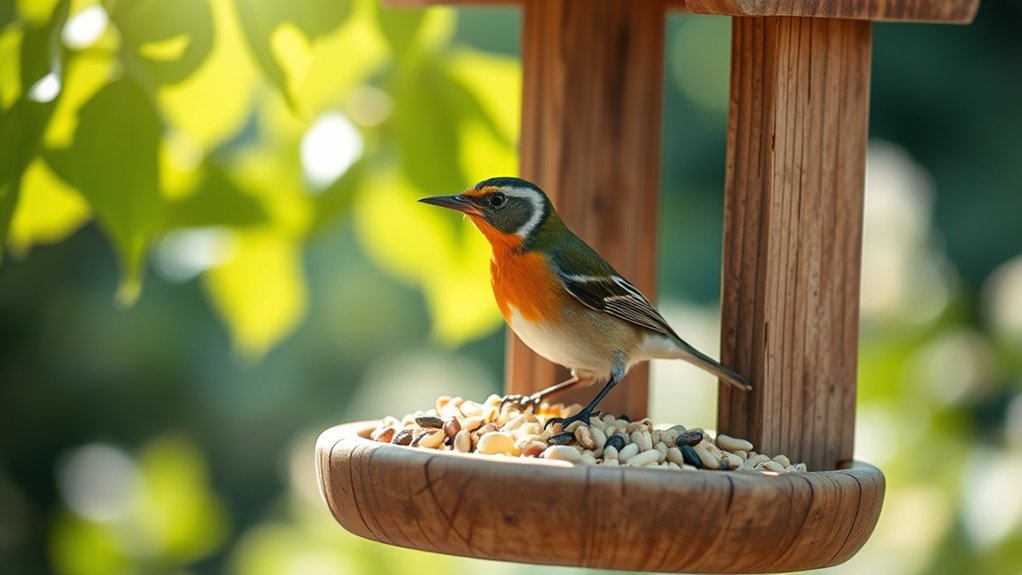
To get started with bird feeding, you’ll want to choose the right feeder that suits the birds you hope to attract. Then, pick suitable bird food that matches their dietary needs. These simple steps will help you create a welcoming spot for your feathered visitors. It’s easier than you might think, and soon you’ll be enjoying all the beautiful birds that come by!
Choosing The Right Feeder
How do you pick the perfect bird feeder to attract your favorite feathered visitors? Start by considering bird feeder design. Different styles appeal to various species. Next, think about feeder placement. Where you put it can make all the difference.
Here’s a quick guide to help you choose wisely:
- Select a feeder design that suits the birds you want. Tube feeders work well for small songbirds, platform feeders are great for larger species, and suet feeders attract woodpeckers.
- Place your feeder where birds feel safe, such as near shrubs or trees but away from predators.
- Make sure the feeder is easy to refill and clean. This helps keep birds healthy and coming back.
Selecting Suitable Bird Food
Once you’ve chosen the right feeder, filling it with the right food will attract your favorite birds and keep them coming back. Start by considering seasonal bird foods. Different species prefer different seeds depending on the time of year.
For example, nyjer and thistle seeds are popular in winter, while suet and fruit attract birds in colder months when natural food is scarce. Pay attention to bird feeder placement too. Position feeders where birds feel safe from predators, such as near shrubs or trees.
Offering a variety of foods ensures a diverse group of birds visits your feeder. By matching bird food to the season and placing feeders thoughtfully, you’ll create a welcoming environment that supports local bird populations year-round.
Why Feeding Birds Helps Them Survive Harsh Conditions
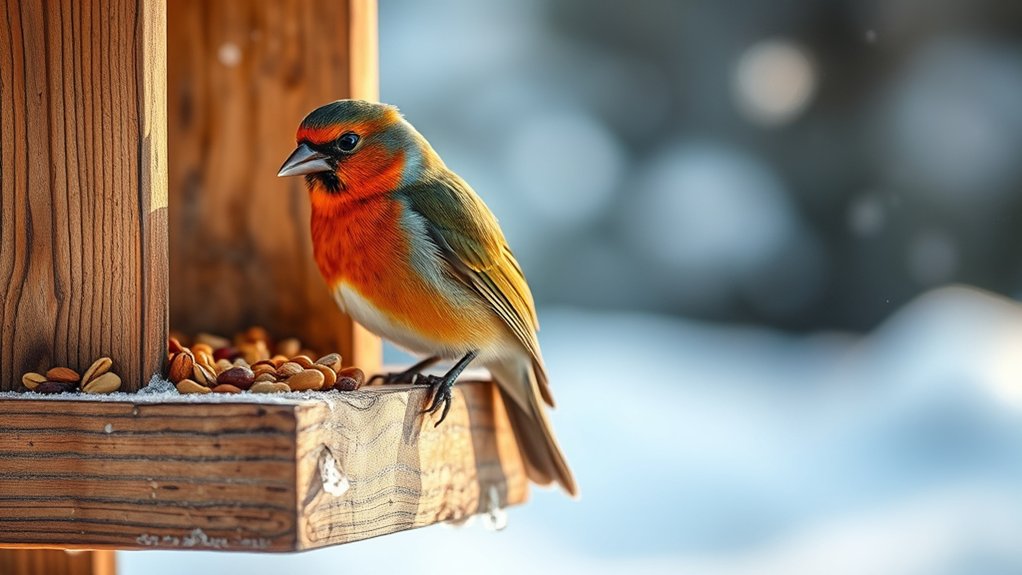
Although birds have natural instincts to find food, harsh conditions can make it tough for them to survive on their own. When winter freezes their usual sources or drought diminishes insects and seeds, you can make a crucial difference by feeding them.
Supporting birds during these times helps maintain a balanced diet essential for their health and energy. You also aid their nesting habits by providing the nutrition needed for breeding and raising young.
Feeding birds supports their health, energy, and successful breeding during challenging times.
Here’s why your feeding matters:
- It boosts their energy reserves to endure cold or scarce periods.
- It supports vulnerable young birds who rely on parents with ample food.
- It helps maintain local bird populations, preserving biodiversity you enjoy.
Best Bird Feeding Foods To Attract Different Species
Feeding birds during tough times is a great way to support their survival, but choosing the right foods can make your efforts even more effective. Different bird species prefer specific foods, especially during critical periods like bird nesting and bird migration.
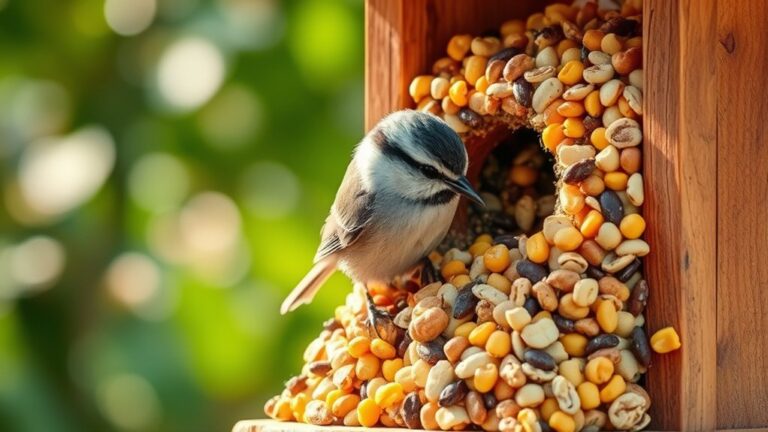
For instance, sunflower seeds attract many songbirds, while nyjer seeds are perfect for finches. If you want to lure woodpeckers or nuthatches, try offering suet, which provides the high energy needed during colder months.
During bird nesting season, protein-rich foods like mealworms help parents feed their young. Fruit-eating birds, such as orioles and tanagers, favor fresh fruits like oranges and berries.
When feeding during bird migration, provide high-fat foods to help birds build energy reserves for their long journeys. By understanding these preferences, you can create a feeding environment that supports various species year-round.
This will enhance your backyard habitat and contribute to bird conservation.
How To Set Up Bird Feeders Safely To Protect Birds
To protect birds while providing food, you’ll need to set up your feeders thoughtfully and safely. Bird feeder placement is key to keeping your feathered friends safe from harm. Here’s how you can make a difference:
- Place feeders at least 10 feet away from windows to prevent collisions and near shrubs or trees for quick shelter.
- Guarantee predator deterrence by positioning feeders away from areas where cats or other predators can easily hide or leap.
- Hang feeders 5-6 feet above the ground to reduce risks from ground-based predators and make cleaning easier.
When Is The Best Time To Feed Wild Birds?
When you want to attract wild birds to your yard, timing matters just as much as the food you offer. Seasonal variations play a big role in when birds feed.
In spring and summer, birds are busy feeding their young, so early mornings are ideal. During colder months, they feed more frequently throughout the day to maintain energy.
While most birds feed during daylight, some species practice nocturnal feeding, so you might notice activity at dusk or dawn.
Here’s a quick guide to the best feeding times:
| Season | Best Feeding Time |
|---|---|
| Spring & Summer | Early morning |
| Fall & Winter | Throughout the day |
| Year-round | Dusk and dawn (nocturnal) |
How Feeding Birds Helps During Migration And Winter
Birds rely heavily on available food sources during migration and winter to fuel their long journeys and survive harsh conditions. When you feed birds during these crucial times, you provide essential support that leads to significant migration benefits and boosts their chances of winter survival. Here’s how your efforts make a difference:
- You help birds build up indispensable energy reserves needed for long migratory flights.
- You offer a dependable food source when natural supplies are scarce due to cold weather or habitat loss.
- You create safe stopping points where birds can rest and refuel, reducing stress and predation risks.
Mistakes To Avoid When Feeding Birds
Although feeding birds can be rewarding, you’ll want to avoid common mistakes that can harm rather than help them. One key error is offering food unsuitable for the bird species visiting your feeder. Different birds have different dietary needs, so providing the wrong seeds or foods can lead to poor nutrition or discourage certain species altogether.
Also, don’t feed birds irregularly or abandon feeding during harsh weather. Maintaining consistent feeding schedules helps birds rely on your feeder, especially during migration and winter.
Another mistake is overcrowding feeders or placing them too close to windows, which increases risks of injury and stress. Avoid using spoiled or moldy food because it can cause illness.
Finally, resist feeding bread or processed human foods. These offer little nutritional value and can harm birds. By paying attention to these common pitfalls, you’ll create a safer, more inviting environment that supports the health and survival of your local birds.
Steps To Keep Your Bird Feeding Area Clean And Disease-Free
Keeping your bird feeding area clean is essential to prevent the spread of disease and guarantee a safe environment for your feathered visitors. You play a crucial role in promoting bird health and habitat preservation by maintaining hygiene.
Here are three key steps you can take:
- Clean Feeders Regularly: Wash feeders with hot, soapy water at least once a week to remove mold, bacteria, and leftover seeds that attract pests.
- Change Food Daily: Replace old seed daily to avoid spoilage and contamination, ensuring your birds get fresh, nutritious food.
- Manage Waste: Clear fallen seeds and droppings from the ground beneath feeders to reduce disease risks and keep the area inviting.
How To Engage Kids In Bird Feeding Activities
If you want to spark a child’s curiosity about nature, involving them in bird feeding activities offers a fun and educational opportunity. Start by setting up a simple feeder together, choosing seeds that attract local birds.
Encourage your child to observe the birds visiting, turning the experience into an exciting bird watching adventure. Use a field guide or an app to help identify different species, making it interactive and informative.
Explain the importance of nature conservation in protecting these feathered friends and their habitats. Teach kids how feeding birds responsibly supports local ecosystems and helps sustain wildlife.
You can also turn this into a creative project by having them draw or journal about the birds they see. By actively participating, kids develop a deeper appreciation for wildlife and learn valuable lessons about caring for the environment.
Engaging children this way not only entertains but fosters lifelong respect for nature.
Frequently Asked Questions
Can Feeding Birds Affect Their Natural Foraging Behavior?
Yes, feeding birds can affect their natural foraging behavior. When you provide easy food sources, birds might develop bird dependency, relying less on their own foraging habits.
This shift can reduce their ability to find food naturally, especially during scarce times. To avoid this, you should offer food thoughtfully and vary feeding times, encouraging birds to maintain their natural foraging skills while enjoying occasional support from you.
How Does Bird Feeding Impact Local Ecosystems?
You change habitats, you risk disease transmission, and you alter local ecosystems when you feed birds.
By introducing food, you disrupt natural habitats, attracting more birds than usual and causing overcrowding. This overcrowding increases disease transmission among bird populations.
You might think you’re helping, but your actions can unbalance food chains and spread illnesses.
Are There Any Laws About Feeding Wild Birds?
Yes, there are legal regulations about feeding wild birds, and you should check local rules before you start. Some areas require feeding permits to protect wildlife and prevent problems like disease spread or attracting pests.
You’ll find these laws vary widely, so it’s smart to contact local wildlife authorities or parks departments. Following the regulations guarantees you’re feeding birds responsibly and legally, helping protect both birds and your community.
What Types of Feeders Prevent Squirrel Interference?
Think of your bird feeder as a fortress guarding precious treasures. To keep squirrels at bay, you’ll want squirrel-proof feeders like weight-sensitive feeders that close under a squirrel’s weight or cages surrounding the feeder that allow only small birds inside.
You can also use bird deterrent techniques such as baffles or slippery poles to block their path. These methods guarantee the birds get their share without unwanted furry thieves raiding your feast.
How to Identify Bird Species Visiting Feeders?
To identify bird species visiting your feeders, focus on bird identification by observing their size, shape, and especially feather patterns. Notice colors, stripes, spots, or unique markings on their wings and bodies.
Using a field guide or a bird identification app can help you match these patterns to specific species. Pay attention to their behavior and calls too; these clues make bird identification easier and improve your feeding experience.
Conclusion
Feeding birds isn’t just a hobby; it’s like becoming a superhero for your feathered friends! You’re not just tossing seeds; you’re saving lives, creating a bird paradise, and turning your backyard into the hottest bird café in town.
By feeding birds right, you help them survive tough winters and epic migrations. So grab that feeder, avoid the rookie mistakes, and watch as your garden turns into a winged wonderland you’ll never want to leave.
Remember, bird feeding matters because it supports these amazing creatures when they need it most.