What Do Small Birds Eat: 3 Essential Foods
If you’ve ever tried feeding small birds and weren’t sure what to give them, you’re not alone. Many people struggle to find the right foods that keep these tiny visitors healthy and happy. Knowing what small birds eat can make all the difference in attracting them to your yard and supporting their well-being.
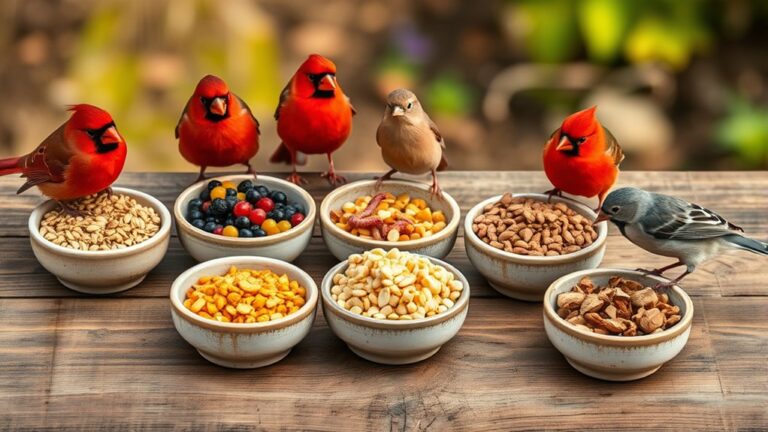
You’ll want to feed small birds three essential foods to keep them healthy and strong. First, seeds and grains like millet and sunflower provide crucial energy.
Next, protein-rich insects such as mealworms and caterpillars support muscle growth and feather health.
Finally, safe fruits and vegetables, including apples and leafy greens, offer important vitamins and hydration.
Together, these foods fuel migration, nesting, and daily activity—and there’s plenty more to investigate about their diet and care.
Key Takeaways
- Small birds primarily eat seeds like millet, sunflower, and safflower for energy and essential nutrients.
- Protein from insects such as mealworms, crickets, and larvae is crucial for muscle and feather growth.
- Safe fruits like apples (seedless), blueberries, and grapes provide vitamins, minerals, and hydration.
- Vegetables such as carrots and leafy greens supply additional nutrients supporting overall health.
- Avoid toxic foods like avocado and onions, and always offer a balanced variety of safe, nutrient-rich foods.
Seeds and Grains: The Staple Foods for Small Birds
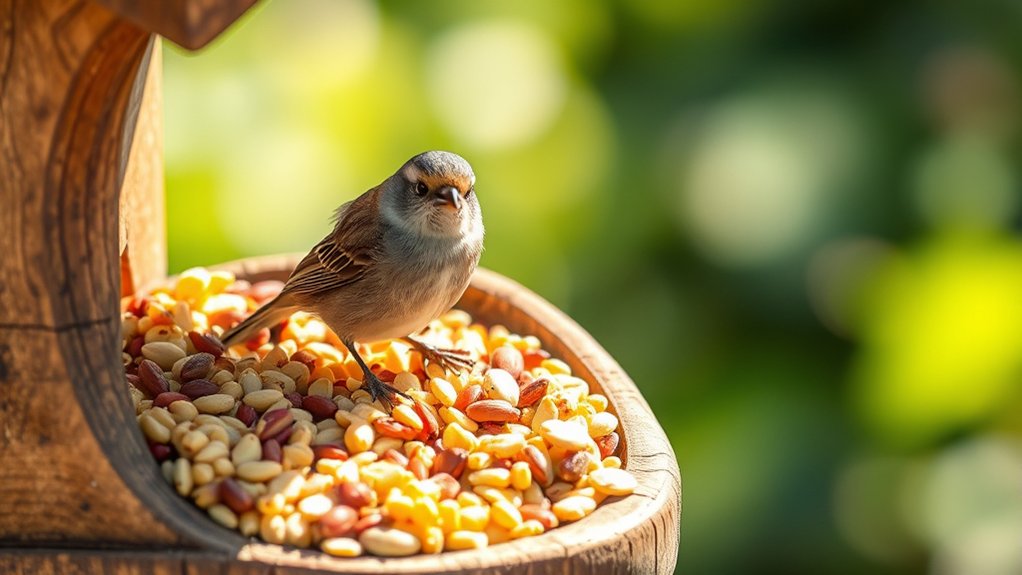
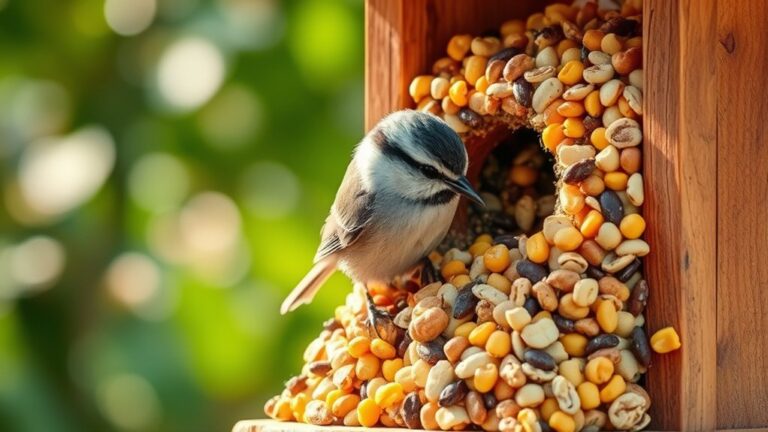
Although small birds enjoy a variety of foods, seeds and grains form the core of their diet. When you observe birds in their natural bird habitat, you’ll notice they often forage for seeds like millet, sunflower, and safflower.
These foods provide essential energy and nutrients, helping small birds maintain their strength and health. You’ll also find that seeds’ availability can influence migration patterns. During migration, birds rely heavily on high-energy seeds to fuel their long journeys.
If you want to support local bird populations, planting native seed-producing plants in your yard can create a welcoming habitat. This approach not only offers a reliable food source but also encourages birds to stay or stop during migration.
Protein Sources: Insects and Other Nutrients for Small Birds
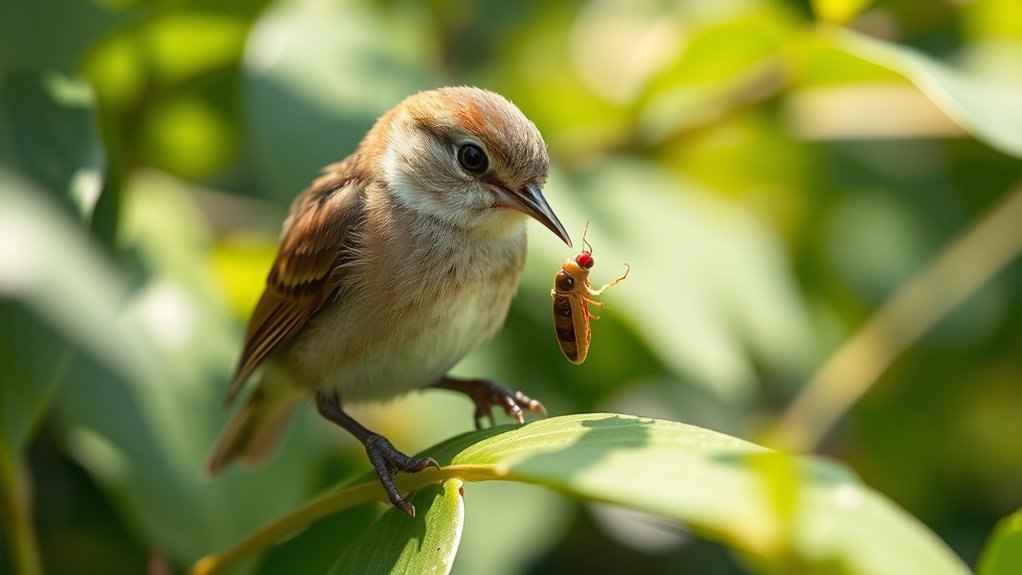
While seeds and grains provide essential energy, small birds also need protein to stay healthy and grow. Understanding bird dietary habits helps you provide the right balance to meet the nutritional needs for small birds.
Seeds offer energy, but protein is vital for small birds’ health and growth.
Protein plays a crucial role in muscle development, feather growth, and overall vitality. Insects and other protein-rich foods naturally form part of their diet, especially during breeding season.
Here are key protein sources for small birds:
- Live insects like mealworms and crickets
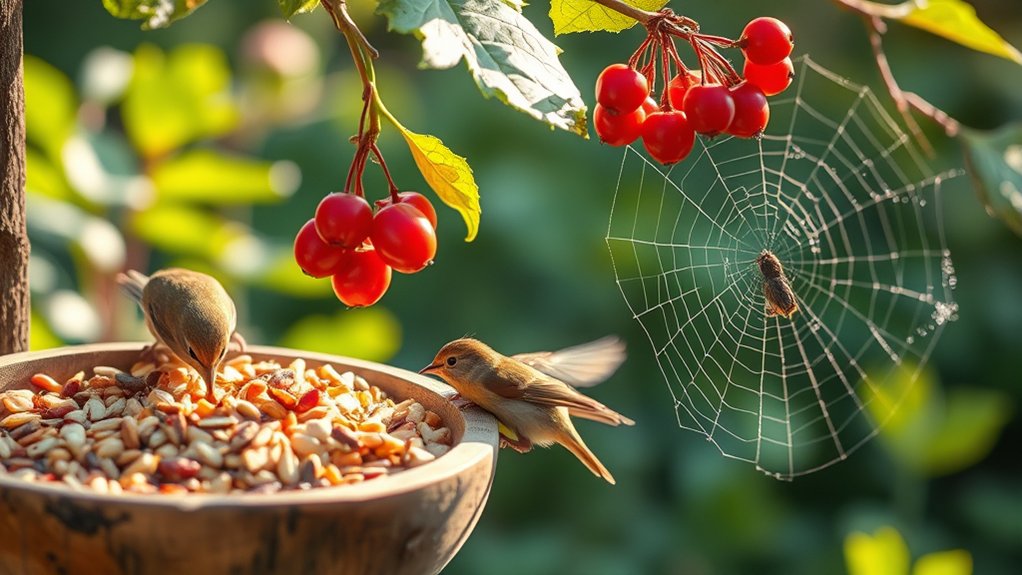
- Spiders and caterpillars found in their habitat
- Small larvae and grubs
- Protein-rich seeds such as sunflower seeds
- Commercial bird food mixes fortified with added nutrients
Safe Fruits and Vegetables Small Birds Enjoy
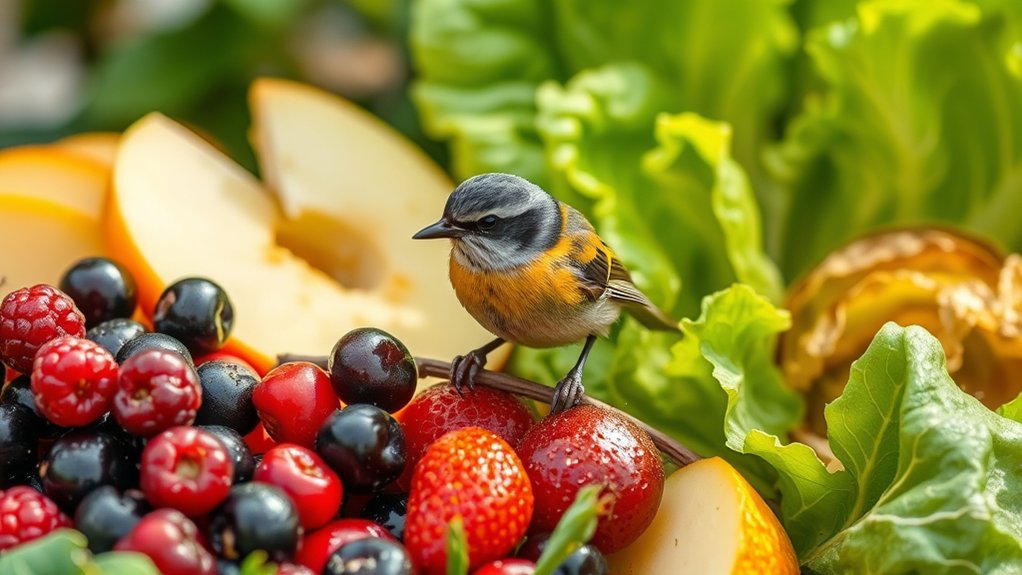
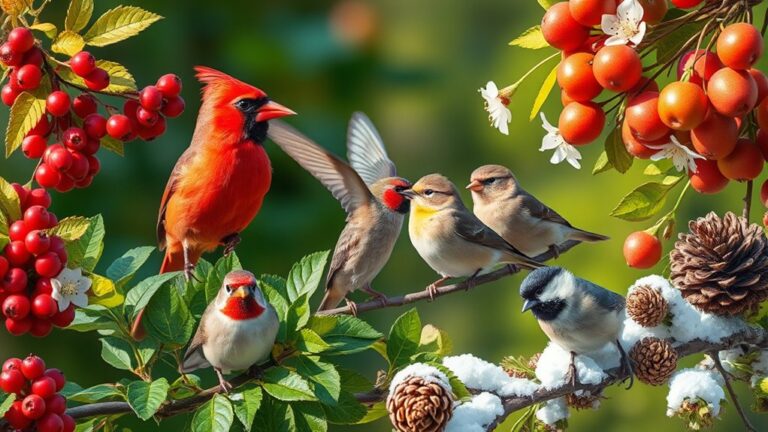
Besides protein sources, small birds benefit from a variety of fruits and vegetables that supply vitamins, minerals, and hydration. You can offer safe options like apples (without seeds), blueberries, grapes, carrots, and leafy greens such as spinach or kale. These foods support their energy needs, especially during demanding times like bird migration patterns when they require extra fuel.
Fresh produce also aids in maintaining strong nesting behaviors, giving birds the nutrients necessary for building nests and raising healthy chicks.
When feeding small birds, avoid toxic fruits like avocado and vegetables like onions. Always wash produce thoroughly and cut it into bite-sized pieces to make it easier for them to eat.
Frequently Asked Questions
How Often Should I Feed Small Birds Daily?
You should feed small birds twice a day to meet their bird dietary needs effectively. Establishing a consistent feeding schedule helps them rely on your food sources and stay healthy.
Morning and late afternoon feedings work best, mimicking natural foraging times. Make sure to provide fresh food each time and clean the feeding area regularly to prevent spoilage and disease.
This routine supports their energy levels and overall well-being.
What Is the Best Type of Bird Feeder to Use?
The best type of bird feeder for you depends on the bird seed varieties you want to offer. Tube feeders work great for sunflower and mixed seeds, while hopper feeders handle larger quantities and attract a variety of birds.
Make sure you keep up with feeder maintenance by cleaning it regularly to prevent mold and disease. This way, you’ll keep small birds healthy and coming back for more.
Can Small Birds Eat Human Snacks or Junk Food?
You wouldn’t hand a knight a sword made of candy, right? Small birds face the same with human snack dangers. Junk food risks like salt, sugar, and preservatives can harm their tiny bodies.
You shouldn’t feed them chips, cookies, or anything processed. Instead, offer nature’s feast: seeds, fruits, and insects so they stay strong, just like a knight with a proper sword, ready to thrive in their wild kingdom.
How Do I Prevent Mold in Bird Food?
To prevent mold in bird food, you need to focus on mold prevention by regularly offering fresh food. Don’t leave uneaten food out for too long. It can quickly get damp and moldy.
Clean feeders often, and store seeds in a cool, dry place. You’ll want to avoid moisture buildup and discard any old or soggy food promptly. Keeping everything fresh helps keep your birds healthy and happy.
What Water Sources Are Safe for Small Birds?
You should provide clean water, as 75% of small birds rely on safe water sources daily. Use water purification methods like boiling or UV treatment to guarantee it’s safe.
Avoid stagnant water and always offer water in safe water containers made from non-toxic materials. Clean them regularly to prevent bacteria buildup.
This keeps birds healthy and encourages them to visit your feeding area consistently.
Conclusion
Now that you know what small birds eat, you can better support their health and happiness. Did you know some tiny birds, like chickadees, can eat up to 100 insects a day to meet their protein needs? That’s a lot of energy packed into such a small body!
By offering seeds, protein-rich insects, and safe fruits or veggies, you’re helping these little creatures thrive right in your backyard. Keep feeding them smart to make sure they get the best nutrition.
Understanding what small birds eat is key to keeping them healthy and happy. So, keep those feeders stocked and enjoy the lively visitors!