10 Best Foods to Feed Wild Birds
If you’ve ever wanted to attract a variety of wild birds to your backyard but struggled to know what to feed them, you’re not alone. Many people find it challenging to pick the right mix of foods that will bring in colorful, lively visitors throughout the year.
Fortunately, with a little guidance, you can create a feeding routine that keeps your feathered friends happy and healthy.
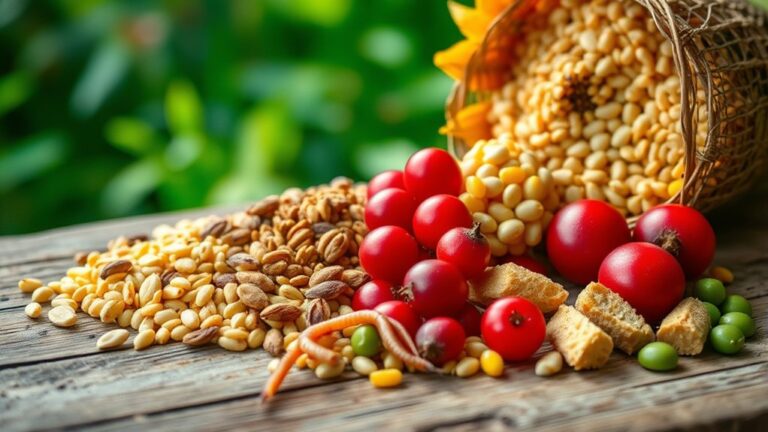
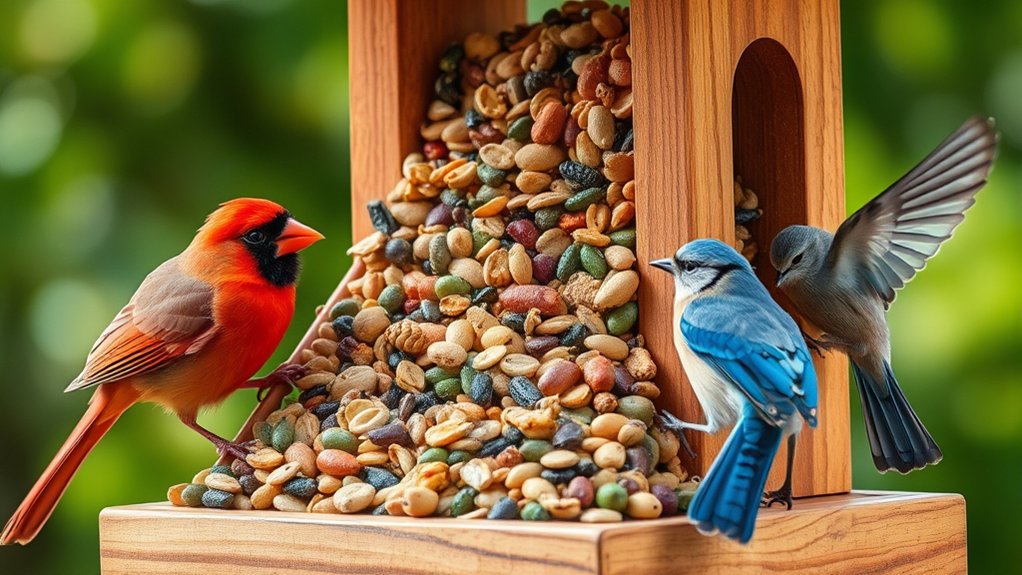
You’ll want to feed wild birds a mix of black oil sunflower, nyjer, millet, safflower seeds, and cracked corn to attract many species. Add suet and unsalted peanuts for energy, especially in colder months.
Fresh fruits like orange halves and berries draw orioles and other fruit lovers. Mealworms offer extra protein, while avoiding bread keeps birds healthy.
Mixing these foods creates a balanced diet that supports birds year-round. Keep exploring to uncover how to fine-tune your feeding to suit different birds and seasons.
Key Takeaways
- Black oil sunflower seeds are top wild bird food due to high fat, thin shells, and wide appeal to species like cardinals and finches.
- Suet blocks provide essential fats and energy, especially in cold weather. They help birds maintain body heat and metabolism.
- Nyjer seeds and small bird foods attract finches and small birds while deterring larger, aggressive species.
- Fresh fruits like orange halves, berries, and chopped apples offer vitamins and attract fruit-loving birds like orioles.
- Avoid bread. Instead, offer nutrient-rich seeds, nuts, and fruits to ensure birds receive essential fats, proteins, and vitamins.
How to Choose the Best Foods for Wild Birds
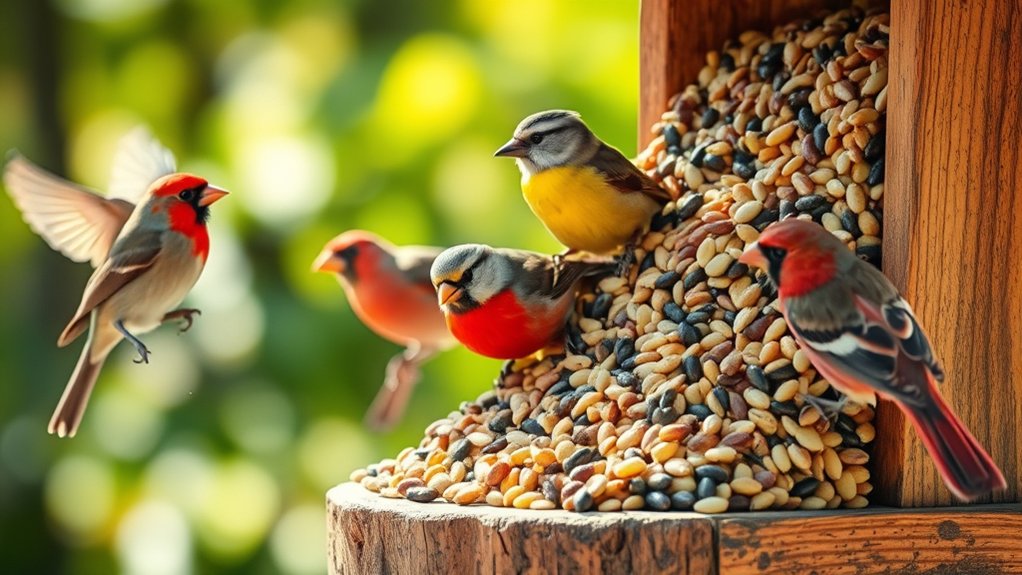
When choosing the best foods for wild birds, you need to take into account the types of birds you want to attract and their specific dietary needs. Different species have unique preferences, especially during bird migration when energy demands spike.
Providing high-energy foods like suet or fatty seeds can support migrating birds on their long journeys. You’ll also want to contemplate the season since birds focus on nest building in spring and early summer.
During this time, offering protein-rich foods such as mealworms or nuts helps birds gather the nutrients they need to build strong nests and raise healthy chicks. Keep in mind that some birds prefer seeds, while others seek insects or fruit.
Top Seeds to Attract a Wide Variety of Wild Birds
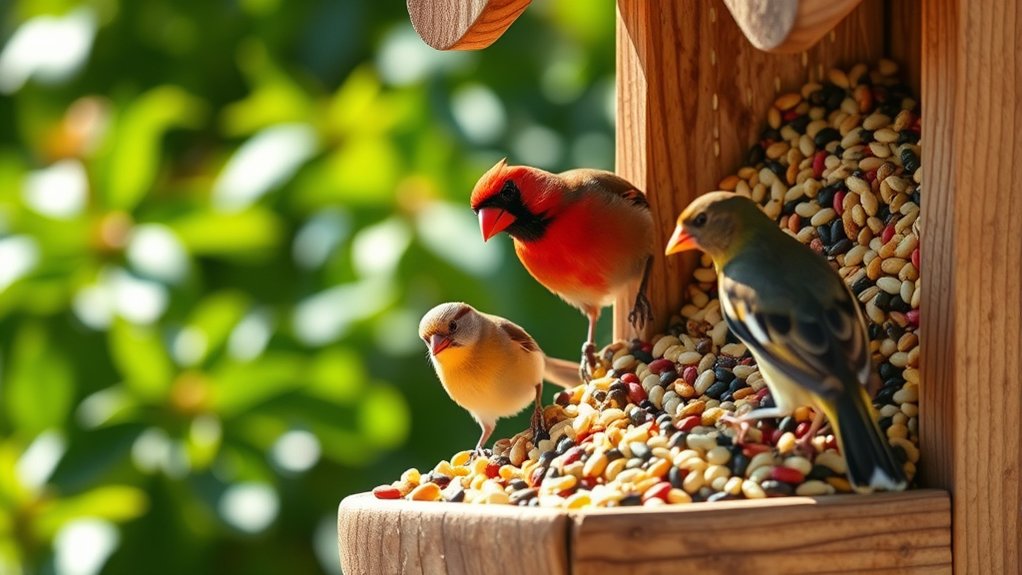
If you want to attract a wide variety of wild birds, it’s best to focus on nutrient-rich seed options that cater to their dietary needs. You’ll find plenty of popular bird seed mixes out there that are designed to appeal to multiple species all year round. Just remember to keep seasonal seed preferences in mind—this way, your feathered visitors will keep coming back again and again.
Nutrient-Rich Seed Options
Although many seed options exist, choosing nutrient-rich varieties guarantees you attract a wide range of wild birds to your feeder. Seeds like black oil sunflower, nyjer, and safflower pack essential fats and proteins that support energy needs, especially during bird migration seasons.
Offering these helps migratory birds build fat reserves for their long journeys and supports local species during nesting behaviors when they require extra nutrition for egg production and chick rearing. You’ll notice more species visiting when you provide seeds rich in nutrients rather than filler options.
Popular Bird Seed Mixes
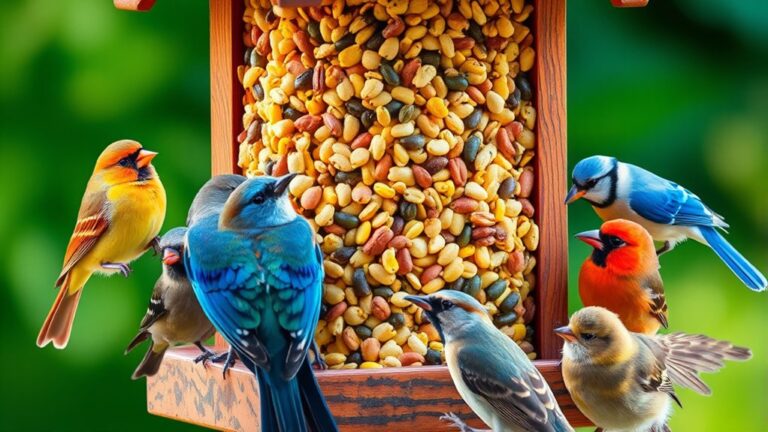
Since wild birds have diverse preferences, choosing the right seed mix can attract a broader range of species to your feeder. Popular bird seed mixes typically combine black oil sunflower seeds, millet, cracked corn, and safflower seeds.
Black oil sunflower seeds appeal to many birds due to their high oil content, ideal during bird migration when energy is critical. Millet attracts ground feeders like sparrows, while cracked corn is favored by larger birds.
Safflower seeds deter squirrels but are loved by cardinals and grosbeaks, supporting birds’ nesting habits by providing essential nutrients. By offering a blend that caters to different dietary needs, you invite a wide variety of birds to visit your yard.
This diversity supports local ecosystems and makes your birdwatching experience more rewarding.
Seasonal Seed Preferences
When the seasons change, so do the feeding habits of wild birds, and you can adjust your seed offerings to match their preferences. In spring, as birds focus on nest building, they need high-protein seeds like sunflower and safflower to fuel their energy.
During summer, smaller seeds such as millet attract ground-feeding birds busy feeding their young. In fall, as bird migration begins, offering black oil sunflower seeds helps birds build fat reserves for their long journeys.
Winter calls for high-fat seeds like nyjer and peanuts to sustain birds through colder months. By rotating your seed choices with the seasons, you’ll attract a wider variety of species year-round and support their natural cycles of migration and nesting.
This simple adjustment makes your yard an essential stopover for wild birds.
Why Black Oil Sunflower Seeds Are a Wild Bird Favorite
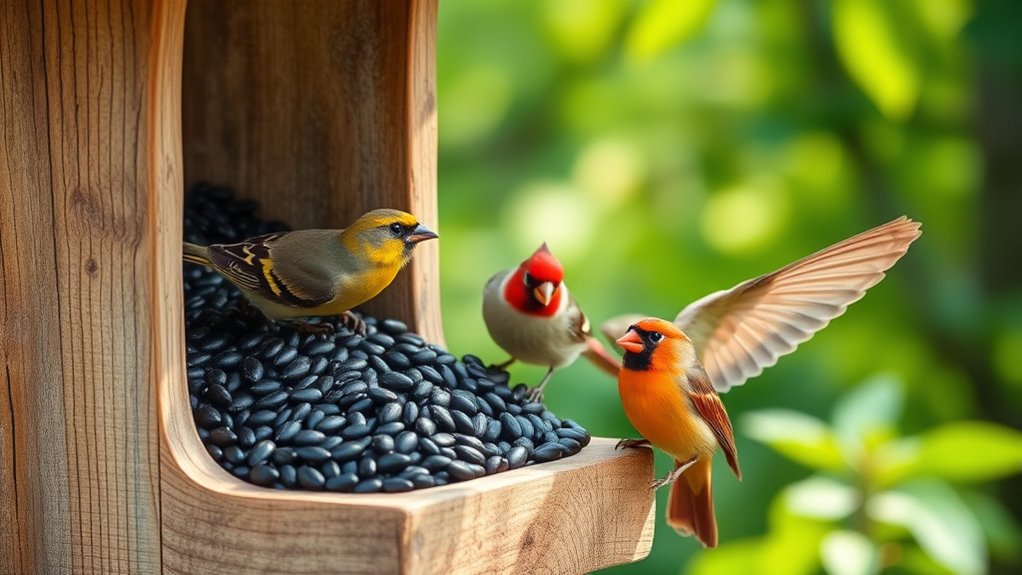
If you want to attract a wide variety of wild birds to your feeder, black oil sunflower seeds are a top choice. These seeds have a thin shell, making them easy for birds to crack open and enjoy.
Because of their high energy content and rich oil, black oil sunflower seeds meet the seed preferences of many common wild birds, including cardinals, chickadees, finches, and nuthatches. You’ll notice more visitors when you offer these seeds since they appeal to both small and large birds.
Unlike striped sunflower seeds, black oil varieties contain more fat and less hull, providing more nutrition with less waste. Plus, their high oil content keeps birds energized, especially during migration or colder months.
Offering black oil sunflower seeds is a simple way to support local bird populations and enjoy diverse birdwatching right in your backyard. If you haven’t tried them yet, you’ll quickly see why black oil seeds remain a wild bird favorite.
How Suet Provides Energy for Wild Birds in Cold Weather
Though wild birds rely on various food sources, suet stands out as an essential energy booster during cold weather. You’ll find suet blocks especially helpful because they provide concentrated fat, which wild birds need to maintain body heat when temperatures drop. Unlike seeds alone, suet offers a dense energy source that’s easy for birds to digest.
Here’s why you should consider suet blocks and insect supplements during chilly months:
- Suet blocks supply high calories, fueling birds’ rapid metabolism.
- Fat in suet helps birds generate warmth efficiently.
- Insect supplements in some suet blocks mimic natural protein sources.
- Suet remains accessible when snow covers other foods.
The Benefits of Peanuts and Tree Nuts for Wild Birds
You’ll find that peanuts and tree nuts pack a powerful nutritional punch. They offer proteins and fats that wild birds really need. When you use peanuts, you can attract a variety of species to your feeder, especially woodpeckers and jays. So, let’s take a closer look at why these nuts are such a valuable food source for your feathered visitors.
Nutritional Value of Nuts
Because nuts pack a powerful nutritional punch, they’re a top choice for feeding wild birds. Nuts like peanuts and tree nuts offer essential fats, proteins, and vitamins that support birds during critical times like bird migration and nest building. By providing these nutrient-dense foods, you help birds maintain energy and build strong nests for their young.
Here are four key nutritional benefits nuts provide wild birds:
- High-energy fats fuel long migratory journeys.
- Protein supports muscle repair and growth.
- Vitamins boost immune system health.
- Minerals aid in feather development and overall vitality.
Feeding nuts guarantees birds stay healthy and active, especially during demanding seasons when they need extra nutrition to survive and thrive.
Attracting Birds With Peanuts
Nuts provide incredible nutrition, and among them, peanuts stand out as a favorite for many wild birds. You’ll notice they attract a variety of species, especially during bird migration when energy demands are high.
Peanuts offer a rich source of protein and fat, essential for fueling long journeys and supporting healthy nesting habits. When you scatter peanuts or place them in feeders, you encourage birds to stop, rest, and refuel.
This not only supports their survival but also helps you observe fascinating behaviors tied to migration and nesting. Just be sure to offer unsalted, raw peanuts to keep birds healthy.
Why Nyjer Seeds Are Perfect for Wild Finches and Small Birds
Although nyjer seeds are tiny, they pack a powerful appeal for wild finches and small birds. When choosing seed varieties, nyjer stands out because it’s rich in oil and nutrients, making it highly attractive to these birds. You’ll notice finches flocking to feeders stocked with nyjer, especially during colder months when they need extra energy.
Here’s why nyjer seeds work so well:
- Their small size is perfect for finches’ delicate beaks.
- Nyjer seeds have a high oil content, providing essential calories.
- They discourage larger, more aggressive birds, so small birds get priority.
- Feeding frequency can be adjusted easily since nyjer doesn’t spoil quickly.
How to Use Fruit to Attract Orioles and Other Fruit-Loving Wild Birds
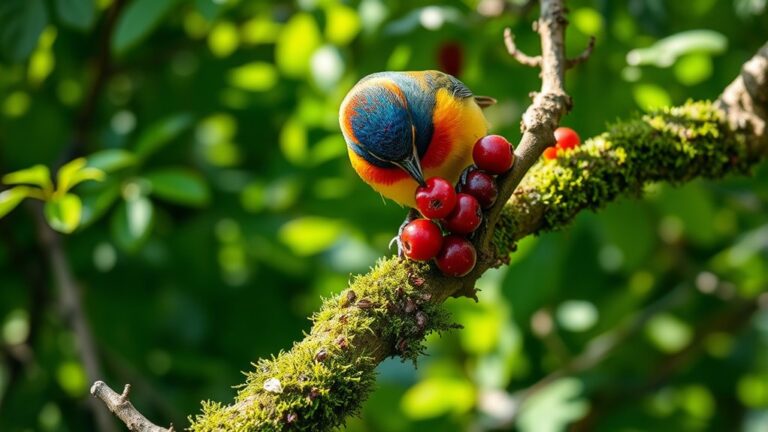
If you want to attract orioles and other fruit-loving birds, offering the right fruits is key. Try hanging orange halves, grape clusters, or berries in visible spots near your feeder.
Placing fruit where birds can easily perch will make your backyard a popular stop for these colorful visitors. It’s a simple way to bring more life and color to your outdoor space.
Best Fruits for Orioles
Wondering how to attract vibrant orioles to your backyard? Offering the right fruits can make all the difference, especially during oriole nesting season when they need extra energy. To keep fruits fresh and appealing, focus on proper fruit preservation techniques like cutting and replacing daily.
Here are the best fruits for orioles:
- Orange halves. They’re rich in vitamin C and perfect for pecking.
- Grapes. Small and juicy, orioles love snacking on them.
- Berries. Blueberries and blackberries provide natural sugars and antioxidants.
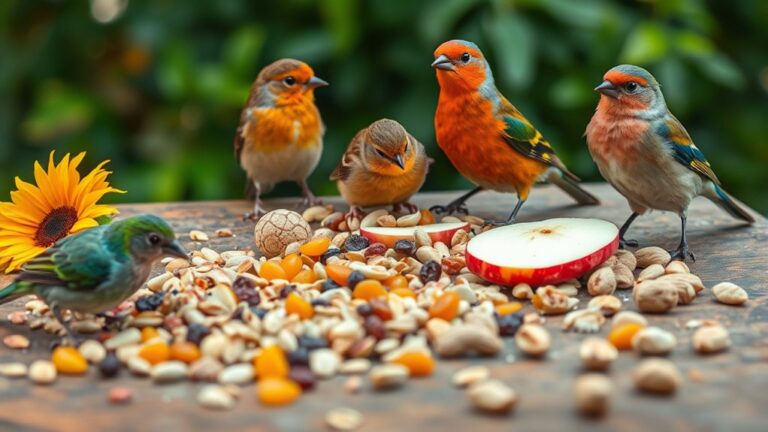
- Chopped apples. A sweet treat that’s easy to eat.
Fruit Placement Tips
When you place fruit thoughtfully around your yard, you’ll attract orioles and other fruit-loving wild birds more effectively. Position fruit feeders near birdhouses but keep them at a safe distance to avoid attracting predators.
Choose elevated spots with good visibility for easy bird access and predator prevention. You can hang fruit slices or use specialized feeders to minimize mess and spoilage.
| Fruit Placement Tip | Benefit |
|---|---|
| Near birdhouse, 10-15 ft | Encourages bird visits |
| Elevated branches or poles | Reduces predator risks |
| Shaded spots | Keeps fruit fresh longer |
How Mealworms Boost Protein for Wild Birds
Because wild birds need protein to stay healthy and energetic, offering mealworms can make a significant difference in their diet. Mealworm nutrition is rich in essential proteins and fats that support muscle development and feather growth. When you provide mealworms, you improve wild bird digestion by offering a natural, easily digestible food source.
Here’s why mealworms are a top choice:
- High Protein: Mealworms contain up to 50% protein, crucial for energy and repair.
- Easy to Digest: Their soft bodies aid wild bird digestion, reducing strain.
- Attracts Variety: Many bird species, including robins and bluebirds, love mealworms.
- Supports Breeding: Protein-rich meals help birds raise healthier chicks.
Why Avoid Bread and What to Feed Wild Birds Instead
Mealworms provide wild birds with the protein they need, but not all human foods offer the same benefits. Bread might seem like an easy option, but you should avoid it due to bread hazards that harm bird nutrition. Bread fills birds up with empty calories and lacks essential nutrients, leading to malnutrition and health problems. Moldy bread can also cause fungal infections, which are dangerous for their delicate systems.
Instead, focus on feeding wild birds nutrient-rich foods like sunflower seeds, millet, and cracked corn. These options supply crucial fats, proteins, and carbohydrates that support their energy and overall health. Fruits such as berries and chopped apples also provide necessary vitamins.
How to Mix Foods for a Balanced Wild Bird Diet
Although feeding wild birds a variety of foods can seem straightforward, mixing the right balance guarantees they get all the nutrients they need to thrive. You want to contemplate their bird habitat, which influences the types of seeds and insects available naturally. When you blend foods, aim to mimic their natural diet and provide materials useful for nesting.
Here’s how to blend foods for a balanced wild bird diet:
- Combine seeds like sunflower, millet, and safflower to attract diverse species.
- Add suet or nuts for high energy, especially in colder months.
- Incorporate dried fruits or mealworms to supply protein and vitamins.
- Include natural nesting materials like small twigs or soft grasses nearby to support breeding.
Frequently Asked Questions
What Types of Feeders Work Best for Different Wild Bird Foods?
You’ll find that tube feeders work best for small seeds like nyjer and sunflower seeds, keeping the food dry and accessible. Hopper feeders suit mixed bird food well, offering different seeds in one spot.
Platform feeders are great if you want to feed larger seeds or fruits, attracting a variety of birds. Suet feeders attract insect-eaters with suet cakes. Choosing the right feeder types helps you keep bird food fresh and minimizes waste.
How Often Should I Clean My Bird Feeders to Keep Birds Healthy?
You should clean your bird feeders at least once every two weeks, but more often during bird migration when lots of birds visit. This helps prevent disease and keeps birds healthy.
Regular cleaning also reduces the risk of predator attraction by minimizing leftover food that can lure unwanted animals. Use a mild bleach solution, rinse thoroughly, and dry completely before refilling.
Staying consistent guarantees a safe feeding spot and supports predator protection.
Can Feeding Wild Birds Cause Dependency on Human-Provided Food?
Yes, feeding wild birds can lead to bird food dependency if you rely too much on human intervention. You’ll want to provide food consistently but not so much that birds stop foraging naturally.
What Time of Day Is Best to Refill Bird Feeders?
You’ll often find birds visiting feeders early in the morning, which happens to be the best time to refill them. This timing coincides perfectly with bird migration patterns, as many species fuel up at dawn for their long journeys.
Seasonal feeding also plays a role. During cooler months, topping off feeders early guarantees hungry birds have enough energy throughout the day. So, make it a morning habit; your feathered friends will thank you.
Are There Any Risks of Feeding Wild Birds During Nesting Season?
Yes, feeding wild birds during nesting season comes with risks. You need to prioritize nestling safety by keeping feeders clean to prevent disease spread.
Also, be aware that feeders can attract predators, so maintaining predator awareness is essential. Place feeders where nests aren’t easily accessible and avoid disturbing nesting areas.
Conclusion
When you scatter black oil sunflower seeds or hang suet cakes, you’re not just feeding birds, you’re inviting a lively, colorful concert right to your backyard. Imagine orioles savoring juicy fruit or woodpeckers enthusiastically pecking mealworms, each bite fueling their flight.
Avoid bread; it’s like offering a bird junk food. Instead, mix nuts, seeds, and fruits to create a balanced feast. You’ll see how quickly your feathered friends return, healthy and happy.
Feeding wild birds the right foods makes all the difference. By choosing the best foods to feed wild birds, you’re helping them thrive and bringing more joy to your outdoor space.