How to Improve Soil Drainage in 3 Steps
Dealing with soggy, poorly draining soil can be incredibly frustrating for gardeners. You’re not alone—many people struggle with waterlogged ground that stunts plant growth and creates a muddy mess. Improving soil drainage is key to healthier plants and a more enjoyable gardening experience.
First, test your soil drainage by digging a 12-inch hole, filling it with water, and timing how long it takes to drain. If it stays soggy, work in compost, well-rotted manure, or leaf mold to loosen tight soil and improve water movement. How to Improve Soil Drainage.
Next, build raised beds or add gravel and perforated pipe in problem spots for better runoff. These simple fixes can turn wet ground into healthier growing space, and there’s more to uncover next.
Key Takeaways
- Test the soil by digging a hole, filling it with water, and timing how quickly it drains.
- Add compost, manure, or leaf mold to loosen soil and improve water movement.
- Mix organic matter into the top 6 to 8 inches of soil each season.
- Build raised beds in low or soggy areas to elevate roots above excess moisture.
- Install gravel, drain tile, or perforated pipe in persistent problem spots for better runoff.
Test Your Soil Drainage First

Before you fix drainage problems, you need to know how well your soil drains now. Start drainage testing by digging a hole about 12 inches deep and 6 inches wide in a few problem spots. Fill each hole with water and let it drain completely, then refill it and time how long the water takes to disappear.
If it drains within a few hours, your soil probably handles excess water well. If water lingers for a day or more, you’ve got a drainage issue that needs attention. Watch soil moisture after rain, too. If the ground stays soggy, smells musty, or feels sticky long after storms pass, your soil is holding too much water.
Check different areas separately, since drainage can vary across your yard. Take notes on each test so you can compare results later. This simple test shows you where problems start and helps you choose the right fix without wasting time or effort.
Add Organic Matter to Improve Soil Drainage
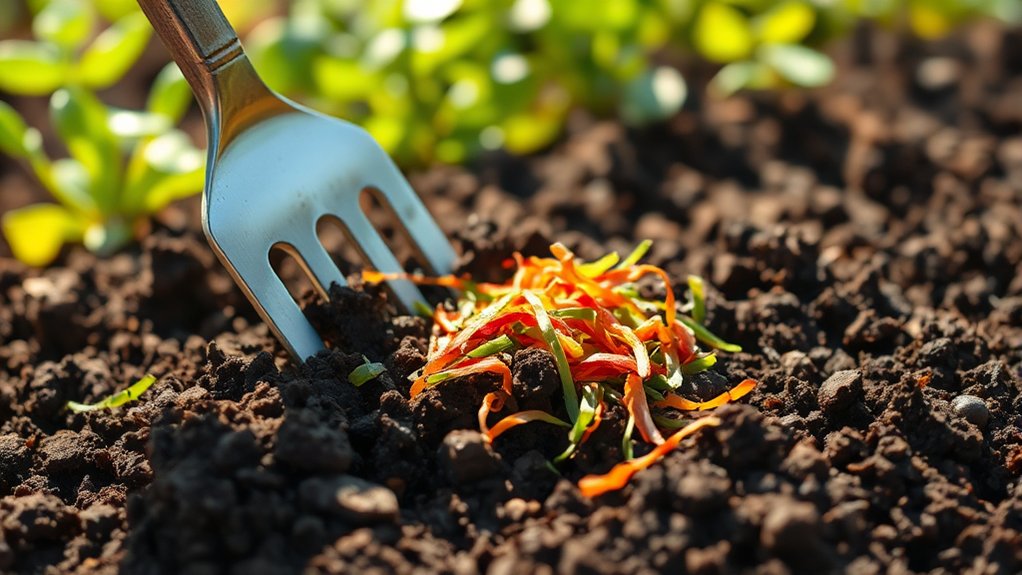
Adding compost, well-rotted manure, or leaf mold can make a big difference in heavy soil because organic matter opens up tight particles and helps water move through more freely. You’ll see compost benefits fastest when you mix it into the top 6 to 8 inches of soil each season.
Compost, manure, or leaf mold loosens heavy soil and helps water move through more freely.
This improves structure, boosts earthworm activity, and creates larger pore spaces that let excess water drain instead of pooling. Keep adding organic matter regularly, since one application won’t fix dense soil for long.
You can also use mulch types like shredded bark, straw, or chopped leaves to protect the surface and slowly feed the soil as they break down. Spread mulch in a thin layer so it doesn’t smother plants or trap too much moisture.
Over time, these simple steps help you build looser, healthier soil that drains better and supports stronger roots.
Build Raised Beds and Drainage Fixes

If your soil stays soggy even after you improve its structure, raised beds can give plant roots a better-draining home right away. You can also fix problem spots with simple drainage updates that move water away fast. Start by choosing a spot with good sun, then build up the bed elevation with sturdy frames and loose, well-mixed soil.
Add drainage materials like coarse gravel, broken pottery, or perforated pipe only where excess water collects, not across the whole bed. Then check how water flows after rain and adjust as needed.
- Raise the bed at least 8 to 12 inches.
- Slope the bottom slightly away from low spots.
- Line pathways so runoff doesn’t pool nearby.
- Refill settled areas with fresh soil mix.
These changes help you control moisture, protect roots, and grow healthier plants in wetter yards.
Frequently Asked Questions
How Often Should I Water Plants After Improving Drainage?
Water less often at first, then adjust by checking the soil. After improving drainage, you should water when the top 1–2 inches feel dry. This usually means once or twice a week, depending on weather and plant type.
Good drainage lowers the risk of overwatering, but you still need enough moisture retention for healthy roots. Stick your finger in the soil and let the plant guide your watering frequency.
Which Plants Tolerate Poor Drainage Best?
You’ll find it almost funny: the soggiest corner can still host stars. You can choose native plants with strong drought resistance, like switchgrass or black-eyed Susan, and wetland species such as iris, sedge, and cattail for truly wet spots.
If you’ve already added soil amendments, your options widen a bit. You should match each plant to your site, then let roots do the hard work.
Can Mulch Affect Soil Drainage Over Time?
Yes, mulch can affect soil drainage over time. You’ll often get mulch benefits like better moisture retention and improved soil structure as organic materials break down.
That decomposition helps earthworms and microbes create air spaces, but too much mulch can slow drainage and compact drainage layers near the surface. Use a moderate layer, and you’ll support healthier soil while limiting the environmental impact of runoff and erosion.
How Do I Know if Drainage Problems Are Caused by Clay Soil?
You can tell clay soil is the cause if water pools after rain, the ground feels sticky when wet, and it cracks hard when dry. Those clay soil characteristics slow drainage because tiny particles pack tightly together.
You’ll also notice shallow roots and muddy, compacted areas. To confirm it, dig a hole, fill it with water, and watch how slowly it drains before choosing drainage solutions.
Should I Use Gravel Under Garden Beds for Drainage?
You can use gravel under garden beds, but it’s not always a magic fix. Gravel benefits include extra air space and a cleaner base, yet it can also trap water above clay soil like a dam.
You’ll often get better results with drainage alternatives such as raised beds, compost, or French drains. Test your soil first, then choose the option that helps water flow instead of lingering around roots.
Conclusion
Improving soil drainage doesn’t have to feel overwhelming. First, test your soil so you know what you’re dealing with.
Then, add organic matter to loosen heavy soil and help water move through it better. If drainage is still poor, build raised beds or try simple fixes to redirect excess water.
You might think it’s too much work, but these small steps can save your plants and make gardening easier for years. Improving soil drainage is worth the effort for healthier, happier plants.