10 Ways How to Improve Garden Soil
Improving garden soil can feel like an uphill battle, especially when you’re not sure where to start. You’re not alone—many gardeners struggle with soil that just won’t cooperate, leading to poor plant growth and frustration.
The good news is, with a few simple steps, you can transform your soil into a thriving foundation for your garden.
You can improve garden soil by first testing it so you know what it needs, then adjusting pH with lime or sulfur if needed.
Add compost and other organic matter to boost fertility, drainage, and moisture retention.
Mulch to protect the surface and reduce weeds.
If soil is heavy or compacted, loosen it and improve drainage.
Rotate crops, plant cover crops, and use natural amendments to keep soil healthy, balanced, and productive all season long.
Key Takeaways
- Test soil regularly to check pH and nutrient levels before adding amendments.
- Add compost and organic matter to improve structure, fertility, drainage, and moisture retention.
- Use mulch to reduce weeds, conserve moisture, and regulate soil temperature.
- Loosen compacted soil and improve drainage with aeration, broadforking, and shallow channels.
- Rotate crops and plant cover crops to replenish nutrients and prevent pests and diseases.
Test Your Garden Soil First

Before you add anything to your garden, test the soil so you know exactly what it needs. You can’t fix what you haven’t measured, and soil testing gives you the facts before you spend time or money.
Use a simple home kit or send samples to a lab for nutrient analysis. Check pH because it affects how well plants absorb nutrients. Also look for deficiencies in nitrogen, phosphorus, potassium, and key micronutrients.
Test pH and nutrient levels so you know exactly what your soil needs before planting.
Take samples from several spots in each bed, mix them well, and follow the instructions carefully so your results stay accurate. If you garden in raised beds or containers, test each one separately since conditions can change fast.
Once you understand your soil’s strengths and gaps, you can make smarter choices and avoid guesswork. This first step helps you build healthier soil and gives your plants the best chance to grow strong all season.
Add Compost to Garden Soil
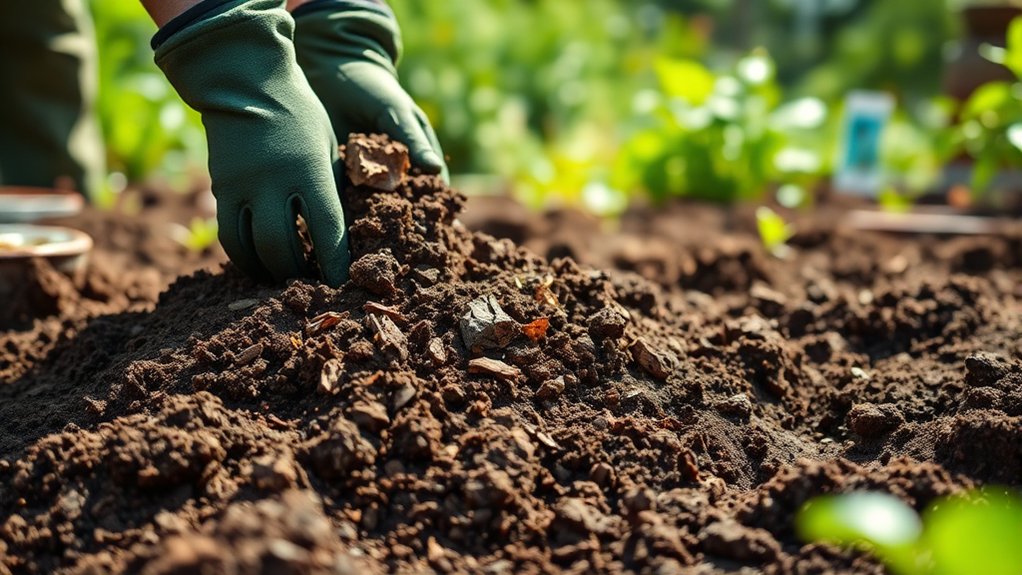
Adding compost to your garden soil gives it a real nutrient boost. It also improves drainage, so your plants don’t get waterlogged, and helps the soil hold moisture better. Plus, you’re encouraging beneficial soil life that supports healthier, stronger plants.
All you need to do is mix a layer of compost into the topsoil. Make sure it blends evenly so it starts working right away. It’s an easy step that makes a big difference!
Compost Benefits
Compost gives your garden soil a steady boost by improving structure, feeding beneficial microbes, and helping roots access water and nutrients more easily. You can choose from several compost types, including leaf mold, kitchen scraps, and finished manure, depending on what your beds need.
Good compost maintenance keeps the pile balanced, so you get dark, crumbly material that looks like rich forest floor.
| Compost type | Benefit |
|---|---|
| Leaf mold | Improves moisture retention |
| Kitchen compost | Adds quick nutrients |
| Manure compost | Enriches tired soil |
When you spread compost on top, you give plants a gentle, steady food source. It also helps sandy soil hold moisture and loosens clay so roots can spread.
Over time, your garden grows stronger, healthier, and more resilient.
Mixing Compost
Once you’ve got compost that’s dark, crumbly, and ready to use, work it into the top layer of your garden soil so plants can take advantage of it faster. Choose compost types based on your needs: leaf mold for moisture, manure-based blends for fertility, or kitchen scraps for general enrichment.
Spread a 1- to 3-inch layer, then mix it lightly into the top 6 inches with a fork or hoe. That simple step boosts drainage, feeds microbes, and improves soil structure.
Time your compost timing for early spring or fall, when beds rest and roots can absorb nutrients. You can also use no-dig compost methods by laying it on top and letting worms pull it down.
Mulch the Soil Surface

Spread a layer of mulch over the soil to protect it and keep it working for your garden. You can choose from several mulch types, including bark, shredded leaves, and straw, based on your mulch materials and mulch aesthetics.
Good mulch benefits include fewer weeds, steadier soil temperature, and better mulch retention around roots. For best mulch application, wait until the soil has warmed and plants are established; that mulch timing helps you avoid slowing growth.
Aim for a mulch thickness of 2 to 4 inches, and keep it a few inches away from stems.
- Pick mulch that fits your beds.
- Spread it evenly without piling it high.
- Refresh it as it breaks down.
When you mulch the surface, you also reduce splashing on leaves and keep the garden looking tidy. A thoughtful layer supports healthy soil while making daily care easier.
Fix Waterlogged Heavy Soil
If your soil stays soggy, you can improve drainage by loosening compacted areas and redirecting excess water. Adding plenty of organic matter helps break up heavy clay and improves soil structure.
If the ground still holds too much water, try raising your planting beds. This way, your roots can stay healthier and avoid sitting in waterlogged soil.
Improve Drainage Paths
When heavy soil stays soggy, you need to give excess water a clear route out. Start by mapping low spots where runoff collects, then create shallow channels that guide water away from beds. Use these drainage techniques to stop standing puddles and protect roots.
You can also loosen compacted paths with a garden fork to boost soil aeration without turning the whole bed over.
- Cut narrow swales beside planting areas.
- Slope paths gently away from the garden.
- Keep outlet points open so water can escape.
Check these routes after hard rain, and clear blockages quickly. If water still lingers, adjust the grade a little more. Better drainage paths help your soil dry faster, support healthier roots, and make gardening easier after storms.
Add Organic Matter
Add organic matter to heavy soil to help it hold its shape without staying waterlogged. You can work in compost, leaf mold, or well-rotted manure to open tight spaces and let air and water move better. This improves soil texture, so roots can spread more easily and won’t sit in soggy pockets.
If you’ve got an empty patch, sow green manure and dig it in before it flowers. Its roots break up dense clumps while adding fresh organic material. Keep adding small amounts each season instead of one huge load.
You’ll build a looser, richer soil that drains better and still keeps enough moisture for healthy growth. Check it after rain, and you’ll notice fewer puddles, less compaction, and stronger plants overall.
Raise Planting Beds
Raise planting beds to lift roots out of soggy ground and give excess water somewhere to drain. You’ll turn heavy soil into a better planting zone by building beds 8 to 12 inches high, then filling them with a free-draining mix. This simple step improves airflow, speeds spring warm-up, and helps roots stay healthy.
The raised bed benefits include easier weeding, less compaction, and cleaner paths after rain.
- Choose a sunny spot with natural runoff.
- Frame the bed with rot-resistant wood, stone, or bricks.
- Fill it with topsoil, compost, and coarse material for drainage.
Raised beds also raise soil temperature, so you can plant earlier and extend the season. Keep edging firm and top up soil yearly to maintain depth and drainage.
Loosen Compacted Garden Soil
Compacted soil keeps roots from getting the air, water, and space they need, so you should break it up before planting anything new. Use a garden fork, broadfork, or core aerator to open channels without turning the whole bed. These soil aeration techniques help water soak in and give roots room to spread.
For stubborn patches, add compost as you loosen the top layer; it helps create better structure over time. Try these root penetration methods:
| Tool | Best Use | Result |
|---|---|---|
| Garden fork | Small beds | Lifts soil gently |
| Broadfork | Deep compaction | Opens air space |
| Core aerator | Lawns and borders | Removes plugs |
| Compost | Surface improvement | Adds texture |
| Mulch | Ongoing care | Reduces re-compaction |
After loosening, avoid stepping on the bed so it won’t pack down again. Keep paths separate and work only when the soil is slightly moist, not wet.
Balance Soil pH for Better Growth
Soil pH affects how well your plants can absorb nutrients, so test it before you plant and adjust it if needed. Use soil testing or simple testing kits to check soil acidity, then plan pH amendments that fit your beds. A balanced pH supports nutrient balance, stronger microbial activity, and better plant health.
Test your soil pH first so plants can absorb nutrients efficiently and grow stronger.
- Test first: sample several spots and read the results carefully.
- Amend wisely: add lime to raise pH or sulfur to lower it, following package rates.
- Recheck seasonally: weather, watering, and fertilizer can shift pH over time.
Keep notes on each bed so you can make seasonal adjustments without guessing. When you match pH to your crops, roots take up minerals more efficiently, and your garden grows more steadily.
Rotate Crops to Rebuild Soil Health
When you rotate crops, you help prevent nutrient depletion, disrupt pest and disease cycles, and give the soil a chance to recover. You also support crop diversity, which keeps your garden from relying on the same nutrients year after year.
Follow heavy feeders, like tomatoes or corn, with lighter feeders, such as beans or lettuce, so the soil can restore key nutrients. Shift plant families each season to reduce buildup of species-specific pests and diseases, and record your rotations so you don’t repeat mistakes.
If you grow root crops one year, try leafy greens or legumes the next. This simple habit improves structure, encourages balanced feeding, and helps you use your beds more efficiently. Over time, you’ll notice healthier plants, steadier yields, and richer soil that can support your garden with less strain.
Plant Cover Crops in the Off-Season
When your main crops are done for the season, you might want to plant some cover crops like clover, rye, or vetch. These plants keep the soil active even when you’re not growing your main crops. They grow throughout the off-season, adding organic matter to the soil, holding onto nutrients, and helping to reduce erosion.
Plus, cover crops act like a natural shield for bare soil. They protect it from wind, rain, and compaction until spring comes around again. So, it’s a smart way to take care of your soil when the fields would otherwise be empty.
Choosing Cover Crops
During the off-season, you can keep your garden soil active and protected by planting cover crops. Choose legume varieties if you want nitrogen fixation and better soil diversity. Match planting timing to your climate so seedlings establish before hard frost.
- Select quick-growing rye, clover, or vetch for reliable cover crop benefits.
- Rotate families each year to support crop rotation and reduce pest pressure.
- Mix species when you need stronger soil erosion control and broader soil diversity.
You’ll get better results when you mow or till cover crops at the right stage, then let residues break down before spring planting. This simple step helps you build healthier beds without leaving ground bare.
Benefits Of Off-Season Growth
Planting cover crops in the off-season keeps your soil working even when your beds are empty. You gain off season benefits by letting roots feed microbes, loosen soil, and add organic matter while you wait for spring. That steady activity supports soil fertility and helps your next planting start stronger.
| Cover Crop | Main Benefit | Your Result |
|---|---|---|
| Clover | Adds nitrogen | Richer beds |
| Rye | Builds biomass | Better texture |
| Vetch | Fixes nitrogen | Strong growth |
| Oats | Grows fast | Quick coverage |
When you sow at the right time, you keep nutrients cycling and reduce the need for extra amendments later. It’s a simple habit that works hard for you all winter.
Soil Protection Strategies
Cover crops don’t just feed soil; they also protect it through the off-season. You can sow rye, clover, or vetch after harvest to keep your beds covered and active. This living shield reduces soil erosion from wind and rain, while roots hold structure in place and improve nutrient retention.
As the plants grow, they trap leftover fertility and keep weeds from taking over.
- Plant early enough for strong establishment before frost.
- Choose species that match your climate and next crop.
- Terminate the cover crop in spring, then mulch or till it in.
When you manage cover crops well, you’ll return richer, looser soil to your garden and start the next season with less work.
Add Organic Matter Every Season
Adding organic matter every season keeps your garden soil lively, loose, and fertile. You can spread compost, shredded leaves, grass clippings, or aged manure over beds, then work it lightly into the top few inches.
A seasonal layer of organic matter keeps garden soil loose, lively, and naturally fertile.
This steady feeding improves texture, helps soil hold moisture, and gives roots room to grow. As the material breaks down, you’ll notice earthworm benefits because worms pull it deeper and leave rich castings behind.
That natural activity boosts drainage and aeration while building a stronger soil structure. Add fresh organic matter after harvest, before planting, and around existing crops to match your seasonal planting schedule.
You don’t need a thick layer; a little each season adds up over time. Keep repeating the habit, and your garden will reward you with healthier plants, easier digging, and soil that gets better year after year.
Use Natural Amendments to Correct Deficiencies
Even with regular organic matter, some beds still need a targeted fix for low nutrients or off-balance pH. You can correct these issues with natural fertilizers and simple soil amendments that work with nutrient cycling instead of against it. Test first, then match the fix to the problem.
- Add lime to raise pH when soil stays too acidic, and use sulfur when it’s too alkaline.
- Work in rock phosphate or bone meal to support roots and flowering in phosphorus-poor soil.
- Blend kelp meal, composted manure, or greensand to supply trace minerals without shocking plants.
Apply amendments lightly, water them in, and give the bed time to respond. You’ll build steadier fertility, avoid overfeeding, and help beneficial microbes keep nutrients moving through the soil. Recheck your soil after a season so you can adjust before small shortages become bigger problems.
Frequently Asked Questions
How Often Should I Retest My Garden Soil?
Retest your garden soil every 2 to 3 years, or sooner if plants struggle, you add lots of amendments, or your pH seems off. Your soil testing frequency should increase after major changes since results can shift quickly.
Watch soil health indicators like poor growth, yellow leaves, crusting, or drainage problems. If you grow vegetables intensively, you might test annually to stay ahead of nutrient imbalances and keep your beds productive.
Can I Improve Soil Without Buying Compost?
Absolutely, you can improve it without buying compost. You’ll make steady gains by using natural amendments like leaf mold, grass clippings, and aged manure.
Add kitchen scraps to a buried trench or worm bin, then use mulch layering to protect moisture. Plant cover crops and boost soil aeration with a fork.
These compost alternatives feed life in your beds, so you’ll get richer, healthier soil without spending much.
Which Soil Test Results Matter Most for Vegetables?
For vegetables, you should focus first on pH levels, nutrient balance, and soil texture. pH tells you whether plants can access nutrients, while nutrient balance shows if you’re short on nitrogen, phosphorus, or potassium.
You’ll also want organic matter, microbial activity, and drainage capacity since they affect root growth and water use. If your soil drains poorly or tests too acidic, your vegetables won’t thrive, even with plenty of fertilizer.
Are Earthworms Helpful for Better Garden Soil?
Yes, earthworms are very helpful for better garden soil. Haven’t you noticed how rich, crumbly soil often teems with them? They boost earthworm benefits by breaking down organic matter, which releases nutrients your plants can use.
They also improve soil aeration, letting air, water, and roots move more easily through the ground. If you encourage worms with compost and mulch, you’ll build healthier soil and stronger vegetables over time.
When Is the Best Time to Amend Garden Soil?
You’ll get the best results when you amend garden soil in fall or early spring, before planting starts. Those ideal seasons give compost, manure, or other materials time to break down and blend in.
You can use simple soil amendment techniques like spreading organic matter, then lightly tilling or digging it in. If your soil’s frozen or waterlogged, wait until it’s workable so you won’t damage its structure.
Conclusion
When you test your soil and feed it with compost, mulch, and organic matter, you’re not just improving dirt. You’re building a living home underground.
Each season, your garden grows richer, softer, and more resilient, like a quiet field waking after rain. Rotate crops, plant cover crops, and correct what’s missing, and you’ll see life return from the roots up.
Healthy soil doesn’t just support your plants. It carries your whole garden forward, making it clear why improving garden soil is so important.