How to Propagate Pothos in 3 Simple Steps
If you’ve ever wanted to grow your own lush pothos plants but felt unsure about where to start, you’re not alone. Many people struggle with propagating pothos successfully and worry about killing their cuttings before they even get roots. How to Propagate Pothos.
The good news is, with just a little know-how, you can easily multiply your pothos collection at home.
Choose a healthy pothos stem with several leaves and at least two nodes, then snip just below a node with clean scissors and remove any leaf near the cut end.
Next, place the cutting in a jar of room-temperature water with one node submerged and set it in bright, indirect light, changing the water every few days.
Once roots reach 2 to 3 inches, pot it in well-draining mix and water lightly, and you’ll be growing even more in no time.
Key Takeaways
- Choose a healthy pothos stem with at least two nodes and cut just below a node using clean scissors.
- Remove any lower leaves so a node can sit in water without foliage touching the surface.
- Place the cutting in a jar of room-temperature water in bright, indirect light.
- Change the water every few days and wait for white roots to grow 2 to 3 inches long.
- Pot the rooted cutting in well-draining soil, water it thoroughly, and let the top inch dry between waterings.
Choose and Cut a Healthy Pothos Stem
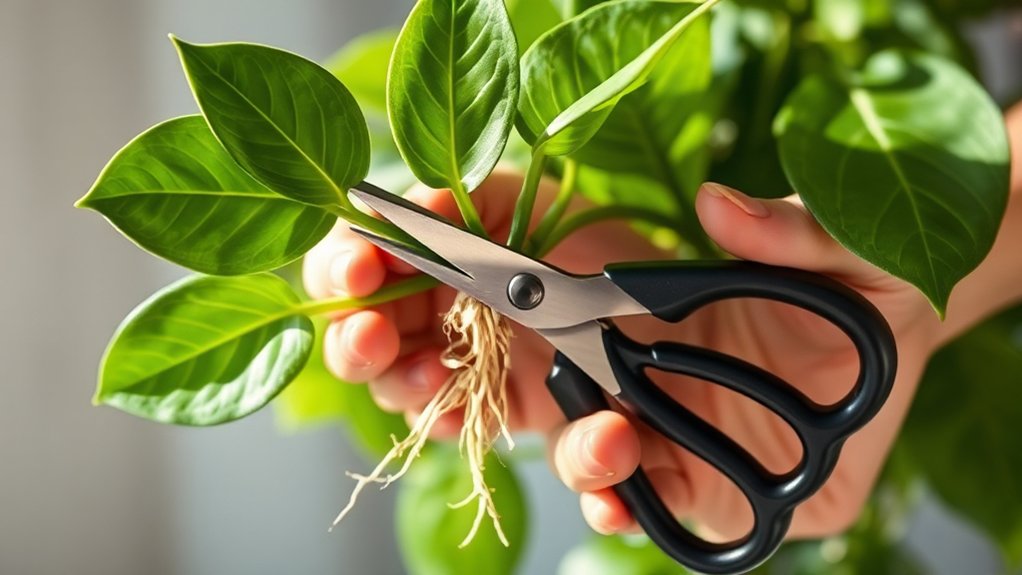
Start by choosing a healthy pothos stem with several leaves and visible nodes, since those nodes are where new roots will form. For smart stem selection, look for a vine that feels firm, has bright leaves, and shows no yellowing, spots, or pest damage.
Choose a healthy pothos stem with several leaves and visible nodes, since those nodes will form new roots.
Pick a section with at least two nodes so your cutting can grow well. Use clean, sharp scissors or pruning shears for the best cutting technique, and disinfect the blades first to reduce disease risk.
Make each cut just below a node, because that’s the point where roots emerge most easily. Aim for a cutting about 4 to 6 inches long, and remove any leaf that would sit too close to the cut end.
Keep the stem intact and avoid crushing it while you work. If you trim several cuttings, label them so you can track which ones came from the strongest vine.
Root Pothos Cuttings in Water

Place your pothos cutting in a clean jar or glass of room-temperature water, making sure at least one node is submerged while the leaves stay above the surface. Set it in bright, indirect light and check the water every few days. You’ll spot tiny roots soon if you keep the water fresh and the stem steady.
| Check | What to look for |
|---|---|
| Water clarity | Clear water helps you notice change fast |
| Node position | Keep one node under the surface |
| Leaf condition | Leaves should stay dry and firm |
| Root growth | White roots usually appear first |
| Water changes | Refresh water when it looks cloudy |
Avoid crowding multiple cuttings in one jar, since they can tangle and slow root growth. If the water turns murky, rinse the jar and refill it. With patience, you’ll see healthy roots develop and know your cutting’s ready for the next step.
Pot and Care for New Pothos Plants
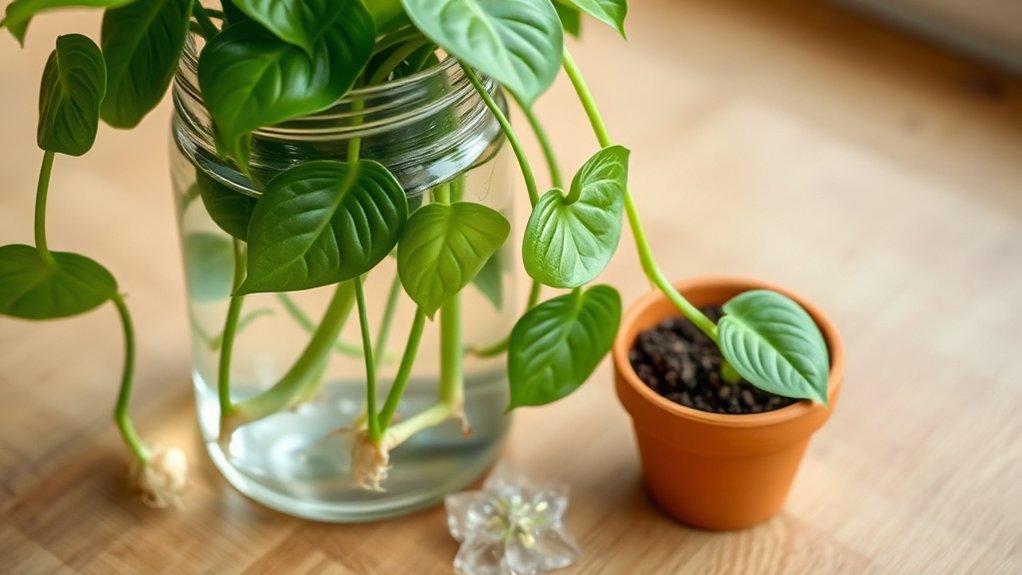
Once your pothos roots are about 2 to 3 inches long, it’s time to move the cutting into a small pot with fresh, well-draining potting mix. Choose a pot size just a bit larger than the root bundle so the soil stays evenly moist without staying soggy.
For soil selection, use a light indoor mix with peat, coco coir, or perlite to improve drainage and airflow. Gently tuck the roots into the center, cover them lightly, and press the mix around the stem without compacting it.
After potting, water thoroughly until excess drains out, then let the top inch of soil dry before watering again. Place your new pothos in bright, indirect light and keep it away from harsh sun.
Water thoroughly after potting, then let the top inch dry before watering again.
You can trim any leggy growth later to encourage bushier vines. Watch for new leaves as a sign that your plant’s settling in well.
Frequently Asked Questions
Can Pothos Propagate From Leaves Without Nodes?
No, pothos can’t properly propagate from leaves without nodes. You can keep a leaf alive in water for a while, but it won’t grow roots or a new vine unless a node is attached. That’s why node importance matters so much in leaf propagation.
If you want a new plant, cut below a node, then place that section in water or moist soil so it can root and grow.
What Tools Sanitize Best Before Taking Pothos Cuttings?
You’ll get the cleanest cut with 70% isopropyl alcohol, a flame-sterilized blade, or a diluted bleach soak. Coincidence matters: a gleaming scissors, a spotless knife, and a fresh cutting board all point to the same goal of cutting hygiene.
Wipe tools before and after each snip, and let them dry fully. Those simple sterilization methods help you avoid spreading bacteria or fungi to your pothos cuttings.
How Often Should Water Be Changed During Propagation?
You should change the water every 3 to 7 days during propagation. If it looks cloudy or smells off, swap it sooner. Use room-temperature water, and rinse your propagation containers each time to keep bacteria down.
Don’t add nutrient solutions until roots form because they can stress cuttings. Keep the water in stable light conditions, and you’ll help your pothos root faster and stay healthier throughout propagation.
Can Pothos Cuttings Root in Soil Instead of Water?
Yes, you can root pothos cuttings directly in soil, and you may even avoid transplant shock. You should use clean cutting techniques, then bury the nodes in moist, airy potting mix.
Good soil preparation matters, so choose a well-draining blend and keep it lightly damp, not soggy. Place the pot in bright, indirect light, and you’ll see new growth once roots establish.
Be patient, since soil rooting takes longer than water.
When Is the Best Season to Propagate Pothos?
Spring and early summer are your best seasons to propagate pothos because warmer days and brighter light support faster root growth. You’ll get better results when you keep cuttings in ideal temperature conditions around 70–80°F.
Use the best propagation methods, like water or soil, and place cuttings where they’ll stay warm and indirect light reaches them. Avoid winter if you can since growth slows and rooting takes much longer.
Conclusion
Now you know how to propagate pothos in just three simple steps: choose a healthy stem, root it in water, and pot it up with care. You can snip with confidence, watch roots grow with patience, and guide your new plant with steady attention.
With a little light, a little water, and a little time, you’ll turn one pothos into many. Keep growing, keep sharing, and enjoy every new vine you create by propagating pothos.