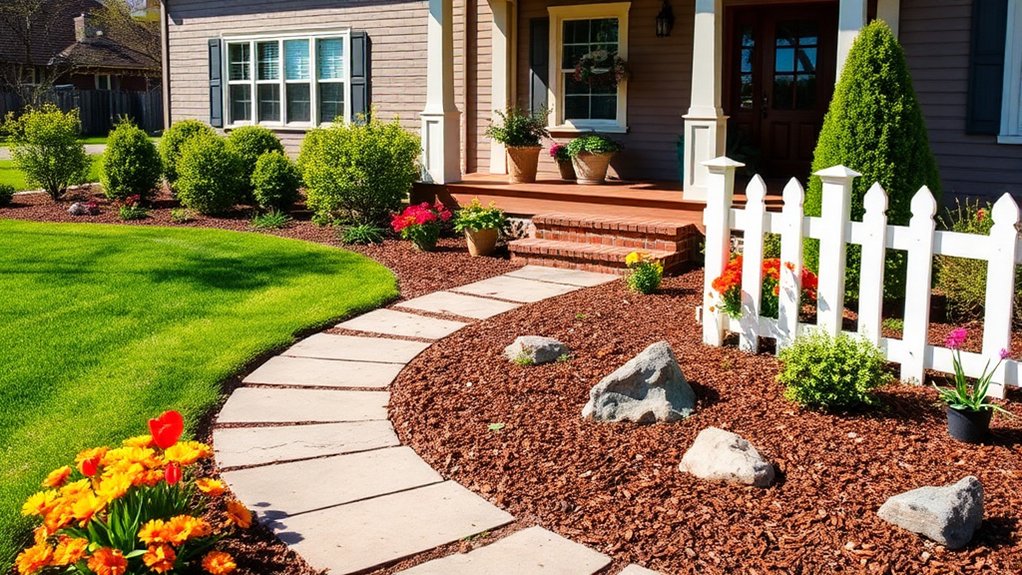
Front Yard Landscaping Ideas for a Simple How-To Guide
If you’ve ever stared at your front yard wondering how to make it look inviting without spending a fortune or endless hours, you’re not alone. Many people struggle with creating a beautiful outdoor space that complements their home while keeping maintenance simple and manageable.
Start by choosing a style that fits your home, like modern, cottage, or traditional. Then sketch your yard and note sun, shade, and drainage. Front Yard Landscaping Ideas.
Shape beds with clean edges or soft curves, and add a simple path that feels wide and welcoming.
Pick low-maintenance shrubs, grasses, and perennials, then mulch to keep things tidy.
Finish with a focal point and a few lights, and you’ll see how small choices can transform your curb appeal.
Key Takeaways
- Choose a landscaping style that matches your home. Then sketch the yard to plan beds, paths, and focal points.
- Use simple pathway shapes and durable edging to create clean lines. This will improve curb appeal.
- Select low-maintenance, climate-appropriate plants with similar sun and water needs.
- Add one strong focal point and layered lighting to make the front yard feel welcoming.
- Reduce upkeep with mulch, limited lawn areas, and seasonal maintenance tasks.
Choose a Front Yard Landscaping Style
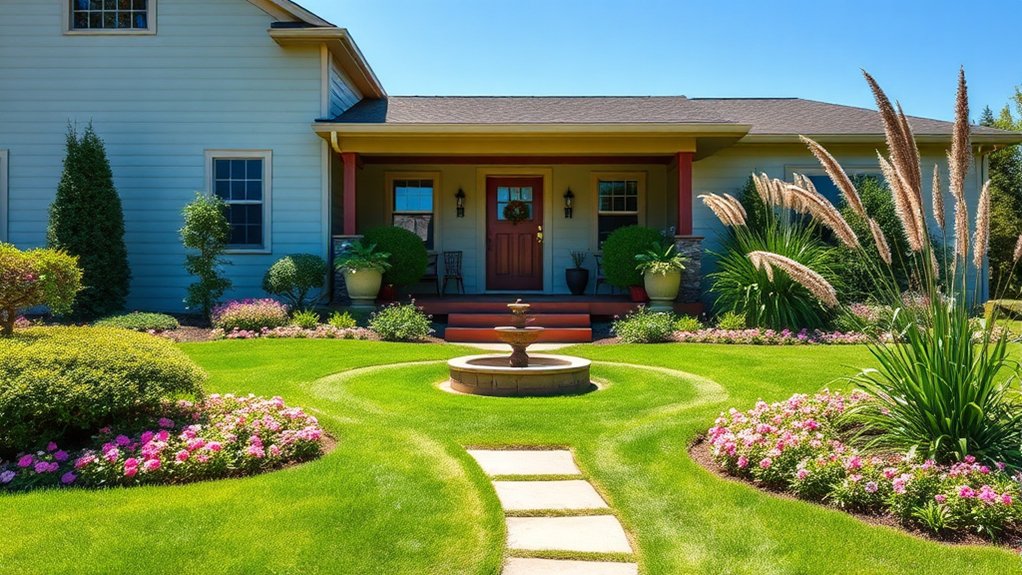
Before you start planting, choose a front yard landscaping style that fits your home and your climate. You can lean into modern aesthetics with clean lines, bold shapes, and limited colors if you want a polished look.
If your house feels classic, traditional charm works well with symmetrical beds and neat hedges. For a softer feel, cottage appeal mixes flowers, layered textures, and informal planting.
Minimalist design suits small yards because it keeps the scene simple and uncluttered. If you live in a warm region, tropical vibes can add lush foliage and dramatic leaves.
You might prefer rustic elements like stone, wood, and natural finishes for a relaxed feel. In dry areas, desert landscaping saves water while still looking striking.
Whatever you choose, think about seasonal changes so your yard stays attractive year-round. A style that matches your home makes every other decision easier, and it helps your front yard feel intentional, welcoming, and balanced.
Plan Your Front Yard Layout
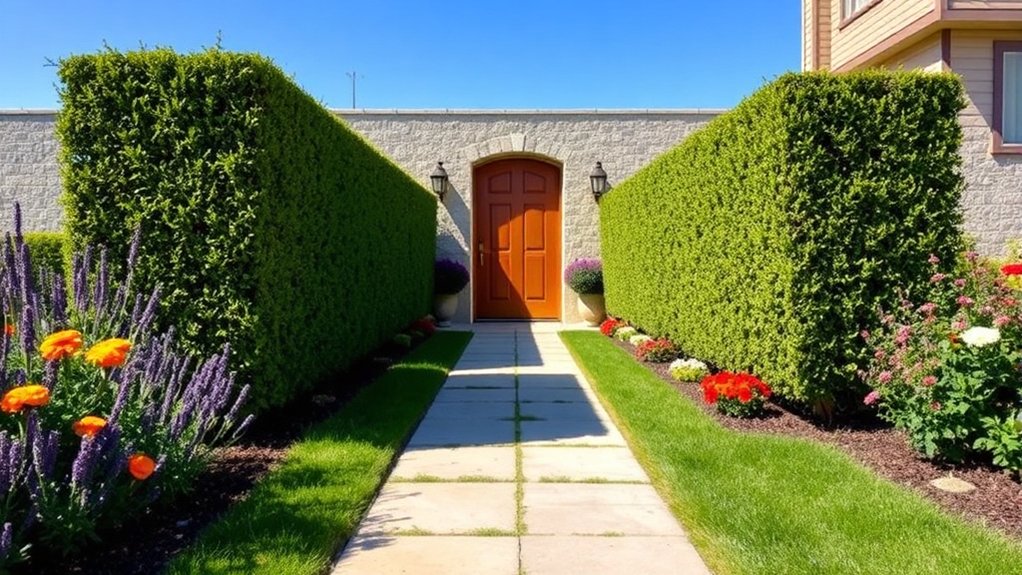
Now that you’ve chosen a style, map out your front yard so every element has a purpose. Start by sketching your house, driveway, porch, windows, and existing trees. Then mark sun, shade, drainage, and utility locations.
Take accurate front yard measurements so you know how much room you really have for planting areas, open space, and focal points. Use those numbers to balance scale. A large shrub near a small porch can overwhelm the design, while tiny accents may disappear on a wide facade.
Measure your front yard first so planting areas, open space, and focal points stay balanced in scale.
Think about sightlines from the street and from your front door, and keep important views clear. Consider seasonal considerations too, since spring blooms, summer shade, fall color, and winter structure all affect how your yard looks year-round.
Place features where they’ll perform well in each season. Then refine the layout until it feels organized, welcoming, and easy to maintain.
Add Pathways and Bed Shapes
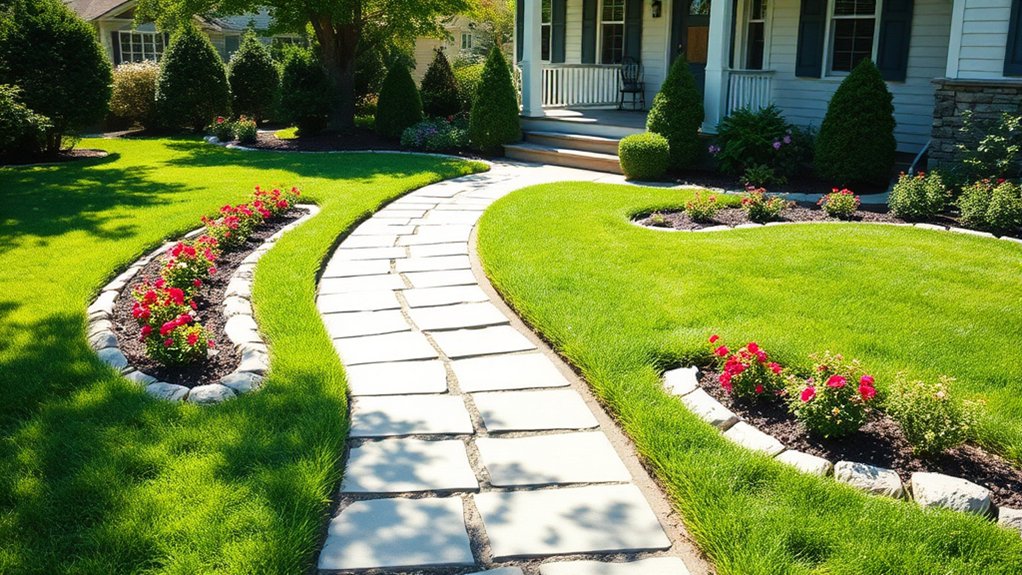
With your layout mapped out, shape the spaces that guide movement and frame the design. Start by choosing pathway materials that match your home’s style and your budget. Gravel gives you a relaxed look, pavers create a crisp edge, and stepping stones add a light, welcoming feel.
Keep paths wide enough for easy walking, and curve them slightly if you want the yard to feel softer and more natural.
Next, define your bed designs with purpose. Use sweeping curves to ease hard corners, or straight lines if you prefer a more structured front yard. You can also widen beds near focal points, such as windows or entry steps, to draw attention where it counts.
As you shape each border, make sure the lines feel intentional and easy to maintain. Clear edges help the whole yard look organized, while balanced paths and beds make your front yard landscaping feel polished and inviting.
Pick Low-Maintenance Plants
Choose plants that look good without demanding constant care, so your front yard stays tidy with less effort. Start with reliable shrubs, grasses, and perennials that suit your climate and sun exposure. You’ll save time when you pick drought tolerant varieties that handle dry spells without wilting.
Mix in a few seasonal blooms to add color through the year, but keep the main planting palette simple so your yard still feels cohesive. Group plants with similar water and light needs together, and space them well so they can grow naturally without crowding.
If you want extra interest, choose evergreen structure plants that stay attractive even when flowers fade. Stick to varieties known for sturdy growth, minimal pruning, and strong disease resistance. That way, you’ll spend less time replacing struggling plants and more time enjoying a front yard that looks fresh, balanced, and easy to maintain.
Add Mulch for a Clean Finish
You can give your front yard a polished look by choosing the right mulch for your plants and style. Just spread it evenly around each plant—it helps the beds look neat and well-defined. And don’t forget to refresh it whenever it starts to fade, so your landscape keeps that clean curb appeal.
Choose the Right Mulch
A layer of mulch can instantly make your front yard look polished while also helping soil hold moisture and blocking weeds. When you choose natural mulch, you get benefits that support weed suppression, moisture retention, and curbside appeal.
Compare mulch types and pick organic options that fit your climate and style.
| Mulch type | Best use |
|---|---|
| Bark | Beds |
| Pine straw | Slopes |
| Wood chips | Paths |
| Compost | Soil boost |
| Gravel | Dry spots |
Choose mulch colors that blend with your siding and plants for stronger aesthetic appeal. Dark brown often looks neat, while red or black can add contrast. You don’t need much; a smart choice gives your landscape a tidy, finished look without overcomplicating the job.
Spread Evenly Around Plants
Once you’ve picked the right mulch, spread it in a thin, even layer around your plants for a clean, finished look. Keep it a few inches from stems so you don’t trap moisture against root systems. Match the depth to plant spacing and garden design, leaving room for growth patterns and easy access.
Good soil quality benefits when mulch moderates temperature and supports water drainage after rain. You’ll also improve pest control by blocking weeds and reducing hiding spots. Consider sun exposure and seasonal planting, since more exposed beds may dry faster and need thoughtful coverage.
Check plant compatibility before you mulch mixed beds, especially when shrubs and perennials share space. A smooth surface ties everything together and makes your front yard feel polished.
Refresh for Lasting Curb Appeal
Fresh mulch can instantly refresh your front yard and keep it looking tidy longer, especially when you top it up before the season changes. You’ll boost curb appeal while helping soil hold moisture and blocking weeds.
Choose a color that fits your home, then spread a 2- to 3-inch layer around beds and trees without piling it against stems.
| Mulch Choice | Look | Mood |
|---|---|---|
| Cedar | Warm | Welcoming |
| Bark | Natural | Calm |
| Dark hardwood | Bold | Polished |
Seasonal updates like this make your yard feel cared for, not cluttered. When you finish, step back and notice how the fresh edge frames your walkway and makes every plant stand out.
Define Beds With Edging
Edging gives your beds a crisp outline and makes your front yard look polished. You can pick from materials like stone, metal, or brick—whatever suits your style and needs. Once you install those clean boundaries, you’ll find it much easier to keep mulch, grass, and plants neatly separated.
Choose Edging Materials
The right edging material gives your front yard beds a crisp finish and keeps mulch, soil, and plants neatly in place. You can choose from edging options like steel, stone, brick, wood, or recycled plastic, depending on your style and budget.
For a modern look, metal feels sharp and clean. If you want a softer, natural feel, stone or brick works well.
When you compare material durability, think about climate, impact, and how much upkeep you’ll accept. Steel lasts long and stays straight, while wood may need more care.
Match the edging to your home’s architecture so the bed lines feel intentional. Pick a material that fits your design and handles daily wear without losing its shape.
Install Clean Boundaries
Once you’ve chosen your edging material, install it to create sharp, defined bed lines that make the whole front yard look tidy and intentional. Dig a narrow trench along your layout, then set the boundary materials so they sit level and hold their shape.
Keep curves smooth and corners crisp, since clean lines guide the eye and improve curb appeal. Match the edging to your plant selection so beds feel unified, not crowded.
If you’re using metal, stake it firmly; if you’re using stone or brick, compact the soil underneath for stability. Finish by backfilling gaps, watering lightly, and checking for spots that shift.
Good edging keeps mulch in place, separates lawn from beds, and gives your landscape a polished finish.
Create a Simple Pathway
A simple pathway can instantly make your front yard feel more inviting and organized. Start by choosing pathway materials that suit your home and budget, such as gravel, pavers, or stepping stones.
Keep the route direct so visitors can move comfortably from the curb to your door. You don’t need an elaborate layout; a clean line often works best.
Use design patterns that feel balanced, like a straight walk for a formal look or a gentle curve for a softer style. Measure the space first, then mark the edges before you dig or place each piece.
Make sure the surface stays level and stable so it’s safe in every season. If you want extra definition, border the path with low plants or simple edging.
A well-planned pathway connects your yard, guides the eye, and gives your landscape a polished finish without overwhelming the rest of your space.
Add a Focal Point
You can make your front yard stand out by choosing a statement piece like a sculpture, bold planter, or unique tree. Just pick something that draws the eye and gives the space a clear center.
And here’s a little tip: use color contrast around it to make that focal point really pop even more. It’s all about creating a spot that naturally grabs attention and adds personality to your yard.
Choose a Statement Piece
Sometimes the easiest way to improve your front yard is to give it one clear focal point, like a sculptural tree, a striking bench, a water feature, or a bold planter. When you choose a statement piece, you guide the eye and make the whole space feel intentional.
Pick from statement piece options that match your home’s style and scale, then place your feature where it can create the strongest visual impact. A single large element works better than several small ones, especially near the entry or at the end of a path.
You don’t need anything elaborate; just choose something that feels memorable, balanced, and easy to maintain. That one choice can anchor your design and make your front yard feel polished.
Use Color Contrast
Color contrast can turn an ordinary front yard into a visual anchor by making one feature stand out right away. You can frame a dark front door with pale trim or set bright flowers against a neutral walkway to guide the eye.
Choose color schemes that repeat in your beds, pots, and porch decor so the yard feels intentional, not busy. A bold shrub, painted bench, or sculptural planter can act as your focal point while nearby greenery softens the effect.
You’ll get the best results when you balance warm and cool tones and refresh the display with seasonal blooms. That way, your entry stays lively, welcoming, and easy to notice from the street all year.
Improve Front Yard Lighting
Good front yard lighting does more than brighten a path. It adds safety, highlights your home’s best features, and makes the whole space feel more welcoming after dark.
You can layer solar lights, decorative lanterns, and string lights to create balanced pathway illumination and soft ambient lighting. Use motion sensors near entries, then aim accent spotlights at trees, porch details, or stonework for depth. This mix improves energy efficiency while boosting landscape aesthetics.
| Light Type | Best Use | Effect |
|---|---|---|
| Solar lights | Borders and walkways | Easy pathway illumination |
| Decorative lanterns | Porch and seating areas | Warm ambient lighting |
| Accent spotlights | Plants and architecture | Strong visual focus |
Add string lights overhead for charm, and make seasonal adjustments so your yard still feels inviting in winter, summer, and beyond.
Keep Maintenance Simple
A low-maintenance front yard stays neat without demanding constant work, so choose plants, materials, and layouts that fit your schedule. Focus on plant selection that matches your climate, soil, and sun exposure, because hardy choices need less watering, pruning, and replacing.
Group plants with similar needs together so you can water once and care for them efficiently. Use mulch to reduce weeds and hold moisture, and install edging to keep beds crisp with less trimming.
- Pick slow-growing shrubs and perennials.
- Limit lawn space with gravel, pavers, or groundcover.
- Schedule seasonal upkeep for pruning, cleanup, and inspection.
When you simplify the design, you’ll spend less time maintaining it and more time enjoying the view. Check irrigation regularly, remove dead growth, and refresh mulch each season.
Small, regular tasks prevent bigger problems and keep your front yard looking polished year-round without overwhelming your weekends.
Frequently Asked Questions
How Much Should Front Yard Landscaping Cost on Average?
You’ll usually spend about $1,500 to $5,000 on front yard landscaping, though small budget landscaping projects can cost under $1,000 and larger, custom designs can run much higher. Your cost estimates depend on yard size, plants, hardscaping, labor, and whether you hire a pro or DIY.
You can save money by phasing the work, choosing native plants, and reusing materials instead of buying everything new.
Do I Need Permits for Front Yard Landscaping Changes?
Yes, you might need permits for front yard landscaping changes, depending on your area. You should check zoning regulations and local ordinances before you start. If you live in a neighborhood with homeowner associations, they may also require approval.
Bigger projects, like retaining walls, drainage work, or driveway changes, often need permits. You can avoid costly delays by confirming rules first and planning your landscape design accordingly.
Which Plants Attract Pollinators to Front Yards?
Like a buzzing welcome mat, you should plant native plants that bloom in waves to attract bees, butterflies, and hummingbirds. For smart flower selection, choose coneflower, milkweed, bee balm, salvia, and black-eyed Susan.
These choices boost pollinator benefits by supplying nectar and pollen through the season. In your garden design, cluster flowers in sunny spots, vary heights, and skip pesticides so you’ll create a lively, pollinator-friendly front yard.
How Can I Landscape a Sloped Front Yard?
You can landscape a sloped front yard by terracing it with retaining walls, adding drainage solutions, and planting deep-rooted groundcovers. Break the slope into usable levels, then mulch each bed to reduce erosion and weeds.
You’ll want to direct runoff away from your home with French drains or swales. Choose plants that stabilize soil, and use stairs or stepping stones so you can move through the space safely and easily.
What Seasonal Care Do Front Yard Plants Need?
You’ll keep front yard plants healthier with regular seasonal care: about 70% of landscape problems start in the soil. In spring, add mulch, feed lightly, and check for winter damage.
In summer, water deeply and watch for pests. In fall, focus on seasonal pruning and clean up debris. In winter, protect roots and avoid foot traffic.
Good soil maintenance helps every plant recover, grow, and look its best year-round.
Conclusion
Your front yard doesn’t need to be complicated to make a big impact. Think of it like a good first handshake: simple, confident, and memorable.
In one weekend, you can choose a style, shape the beds, add a pathway, and plant low-maintenance greenery that fits your home. Even just one clean line of mulch and lighting can transform the space.
Keep it easy, and you’ll enjoy a yard that welcomes you every day. With these front yard landscaping ideas, creating a beautiful and inviting space is simpler than you think.