Best Vegetables for Raised Beds
Struggling to get your garden thriving in raised beds? You’re not alone. Many gardeners find it tricky to choose the right vegetables that will truly flourish in these compact spaces.
The good news is, with the right choices, your raised bed garden can become a bountiful, easy-to-manage oasis.
The best vegetables for raised beds are compact, productive crops that love loose, well-drained soil. You’ll get great results from lettuce, spinach, arugula, radishes, carrots, beets, bush beans, tomatoes, peppers, and cucumbers.
Raised beds warm up quickly, drain well, and give roots room to grow, so your plants stay healthier and yield more.
Add herbs like basil and parsley, and you’ll boost both flavor and harvests as you keep going.
Key Takeaways
- Leafy greens like lettuce, spinach, and arugula grow quickly and are ideal for raised beds.
- Root vegetables such as carrots, radishes, beets, and parsnips thrive in loose, well-drained soil.
- Bush beans, tomatoes, peppers, and cucumbers do well in raised beds with proper spacing and support.
- Raised beds improve drainage, reduce soil compaction, and promote healthier root growth.
- Herbs like basil, parsley, and cilantro pair well with vegetables and boost productivity and pest resistance.
Which Vegetables Thrive in Raised Beds?

Raised beds give you more control over soil, drainage, and spacing, so many vegetables thrive in them. You can grow compact, productive crops like lettuce, spinach, radishes, carrots, beets, and bush beans with ease.
Tomatoes, peppers, and cucumbers also do well when you give them sturdy supports and enough room to spread. If you want fast results, choose leafy greens and root vegetables; they mature quickly and fit neatly into tight spaces.
For longer harvests, mix in herbs such as basil, parsley, and cilantro along the edges. You’ll get better results when you match crops to the season since cool-weather plants and heat lovers each have their own peak times.
Plan crop rotation from bed to bed so you avoid nutrient buildup and reduce pest problems. With smart seasonal planting, you can keep your raised beds productive from spring through fall.
Why Raised Beds Help Vegetables Grow Better

Raised beds help your vegetables grow better by giving the soil better drainage, so the roots don’t have to sit in soggy ground. Plus, they give roots plenty of room to grow deeper and spread out more easily. When roots grow stronger like that, your plants can soak up water and nutrients much more efficiently. It’s a simple way to boost your garden’s health and productivity!
Improved Soil Drainage
When excess water can’t drain away quickly, vegetable roots struggle to get the oxygen they need. Raised beds solve that problem by lifting soil above ground level and letting water move through more freely. You’ll notice puddles disappear faster after rain, which helps keep the bed from staying soggy.
With better drainage, you can water more confidently and avoid overwatering your crops. Add compost, coarse sand, or other soil aeration techniques to keep the mix loose and responsive. The raised bed materials you choose, like wood, stone, or metal, also help define the structure and maintain shape as water moves through.
This setup gives you a drier, healthier growing environment, especially in heavy clay soil or low spots where water tends to collect.
Better Root Growth
Healthier drainage does more than keep roots out of soggy soil. It also helps them spread deeper and stronger. In a raised bed, you give your vegetables loose, workable soil that lets roots move without fighting compaction.
That extra space encourages greater root depth, which helps plants anchor firmly and access moisture below the surface during dry spells. You also improve nutrient absorption because roots can navigate more soil particles and take in minerals more efficiently.
When roots grow freely, your crops build sturdier stems, fuller leaves, and better yields. You’ll notice that carrots, tomatoes, peppers, and lettuce all respond well to this kind of environment. With less resistance underground, your vegetables can focus energy on top growth instead of struggling to survive below.
Best Leafy Greens for Raised Beds
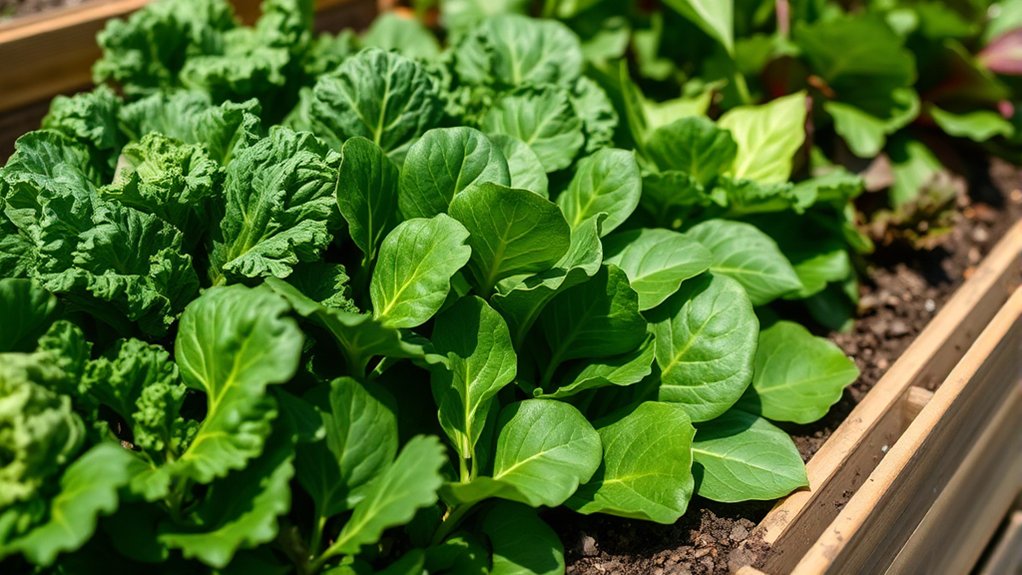
You can grow fast-growing leafy greens like lettuce, spinach, and arugula in raised beds, which is great for quick harvests and steady salads. These crops really take off in cool weather. Plus, you can sow them one after another to keep fresh greens coming all season long.
Now, if your raised bed tends to get hot, don’t worry! Just choose heat-tolerant salad greens that keep producing even as the temperatures rise. It’s all about picking the right greens for your garden’s conditions.
Fast-Growing Leafy Greens
Fast-growing leafy greens are some of the easiest crops to tuck into raised beds because they mature quickly, keep producing with regular harvests, and don’t need much room. You can sow lettuce, spinach, arugula, and baby kale in tight spacing, then cut outer leaves often to extend harvests.
Rich, loose soil helps these crops develop fast, so pay attention to nutrient requirements and mix in compost before planting. Keep moisture steady to prevent bitterness and slow bolting.
Good pest management matters too; use row cover, inspect undersides of leaves, and remove damaged foliage early. Because raised beds warm and drain well, you’ll get tender greens sooner and can replant after each round. That makes them perfect for steady, space-saving harvests.
Heat-Tolerant Salad Greens
When summer heat starts to wilt tender lettuce and spinach, switch to salad greens that handle warmer conditions better in raised beds. You can grow arugula, mâche, New Zealand spinach, malabar spinach, and leaf lettuce types bred for summer.
Choose salad green varieties that bolt slowly, and harvest often to keep leaves tender. Give plants morning sun and afternoon shade if possible, and water deeply so roots stay cool and steady.
Mulch the soil to hold moisture, and space seedlings well for airflow. These heat tolerance strategies help you keep a steady supply of crisp greens through warm spells. If you want a longer harvest, sow small batches every two weeks and pick outer leaves first.
Root Vegetables That Need Loose Soil
Carrots, radishes, beets, and parsnips all thrive in raised beds because the loose, well-drained soil lets their roots grow straight and develop evenly. You’ll get the best results when you mix in compost and avoid heavy clods, since soil composition directly affects how easily roots push downward.
Check the bed’s root depth before planting; most of these crops need room to expand without hitting stones, debris, or compacted layers. Keep the soil evenly moist so roots don’t split or turn woody, but don’t let water linger.
Thin seedlings early, because crowded plants compete underground and produce misshapen harvests. If your raised bed is at least 10 to 12 inches deep, you can grow crisp carrots and tender beets with less effort. A fine, friable texture helps each crop mature cleanly and makes harvesting easier later.
Compact Fruiting Crops for Small Raised Beds
Compact fruiting crops like bush tomatoes, peppers, and compact cucumbers can make the most of a small raised bed without crowding out other plants. You’ll get strong harvests when you choose compact fruit options that stay productive but don’t sprawl. Look for small space varieties bred for containers or tight beds, since they fit neatly between pathways and companions.
- Bush tomatoes give you ripe fruit fast and keep a tidy shape.
- Peppers stay manageable, and you can harvest them over a long season.
- Compact cucumbers climb well on a trellis, saving valuable bed space.
- Dwarf eggplants add color and flavor without taking over.
You can boost results by giving each plant room, steady water, and full sun. Mulch helps hold moisture, and a simple support system keeps vines upright. With the right choices, your raised bed can produce plenty of fresh fruit in a surprisingly small area.
Easy Vegetables for First-Time Gardeners
If you’re new to gardening, start with vegetables that grow quickly, forgive small mistakes, and don’t need constant attention. In raised beds, you’ll do well with easy starter vegetables like radishes, lettuce, bush beans, and zucchini.
Radishes sprout fast, so you get quick wins and learn watering habits. Lettuce gives you steady harvests when you pick outer leaves, and bush beans produce well without staking. Zucchini can fill a bed, but one plant can feed you plenty if you give it space.
Choose varieties with simple care needs, and keep your soil loose, rich, and well drained. Water consistently, pull weeds early, and check leaves often for problems.
These beginner gardening tips help you build confidence while avoiding frustration. If one crop struggles, another will likely thrive, so you can keep learning without losing your momentum.
How to Match Crops to Sun and Season
To get the best results in raised beds, match each crop to the amount of sun your garden gets and the season you’re planting in. You’ll choose better vegetables when you track sun exposure, note temperature preferences, and plan for seasonal planting.
Use crop rotation to keep your bed productive, and group helpful plants with companion planting.
Use crop rotation to keep your bed productive, and pair plants that help each other thrive.
- Put tomatoes, peppers, and beans in your sunniest spot for summer growth.
- Tuck lettuce, spinach, and radishes into cooler beds for spring and fall.
- Plant fast growers between slower crops so you can harvest more often.
- Shift families each year with crop rotation to keep pests guessing.
When you match crops to light and weather, your raised beds work harder for you. You’ll waste less space, avoid bolting, and enjoy steadier harvests from one season to the next.
Improve Raised Bed Soil for Better Harvests
Even the best crop choices can underperform in tired soil, so give your raised beds a boost before planting. Start with soil testing to check pH balance and nutrient levels, then mix in targeted soil amendments to correct weaknesses.
Add compost benefits by blending finished compost through the top layers; it improves structure, supports microbial activity, and helps with nutrient retention. You can also work in organic fertilizers to feed plants steadily without overloading them.
Because raised beds warm and dry faster than ground soil, you should make seasonal adjustments by renewing mulch, adding compost, or topping off settled beds each year. Focus on even texture and good drainage, since roots grow best when air and moisture stay balanced.
With a healthier soil base, your vegetables establish faster, resist stress better, and produce stronger harvests throughout the season.
Best Companion Plants for Raised Beds
You can boost your raised bed harvests by pairing vegetables with companion plants that support growth and share space well. Some plants help attract pollinators, while others keep pests away from your crops.
Choosing the right plant partners can really make your garden healthier and more productive. It’s all about finding the perfect match that benefits each other and fits nicely together in your space.
Beneficial Companion Pairings
Companion planting can make a raised bed work harder for you by pairing vegetables with plants that support growth, deter pests, and improve pollination. You’ll get stronger crop rotation results when you mix families, increase plant diversity, and plan for nutrient synergy.
Good matches also help with pest management, pollinator attraction, soil enrichment, and growth improvement while keeping companion benefits clear.
- Tomatoes with basil: you’ll improve flavor and balance airflow with ideal spacing.
- Carrots with onions: you’ll use seasonal planting to save space and share roots well.
- Lettuce with radishes: you’ll harvest quickly and keep beds productive.
- Beans with corn: you’ll support steady growth and efficient bed use.
Pest-Repelling Plant Partners
When pests start testing your raised beds, the right plant partners can help protect tender crops without adding much work. You can tuck in herb companions like basil, dill, and chives to confuse pests and boost flavor nearby.
Use aromatic plants such as rosemary and mint as natural repellents, but keep mint contained. Add companion flowers like marigolds and nasturtiums; their flower deterrents help guard tomatoes, cucumbers, and beans.
Nasturtiums also act as trap crops, drawing aphids away from your harvest. Let alyssum and calendula invite pest predators and beneficial insects, including ladybugs and lacewings, that patrol leaves for you.
Mix these partners through the bed, and you’ll create a layered defense that supports healthier vegetables with less spraying and fewer surprises.
Watering and Spacing Tips for Raised Bed Vegetables
How much water do raised bed vegetables really need? You’ll usually give them about 1 inch a week, but adjust for heat, wind, and rainfall. Use watering techniques that soak soil deeply, not lightly, so roots grow down and plants stay steadier.
Mulch helps with moisture retention, and drip irrigation methods cut waste while keeping leaves drier.
- Follow spacing guidelines so each plant gets sunlight, airflow, and room to expand.
- Check plant compatibility before crowding fast growers beside slower ones.
- Watch growth patterns; leafy crops need less space than sprawling vines.
- Make seasonal adjustments, since spring seedlings and summer fruiters need different watering rhythms.
Good spacing also improves nutrient distribution because roots won’t compete as sharply. When you combine smart spacing with careful watering, your raised bed vegetables stay healthier, use water better, and produce more.
Frequently Asked Questions
How Deep Should a Raised Bed Be for Carrots?
You should make your raised bed at least 12 inches deep for carrots, and 18 inches is even better for long varieties. That depth gives roots room to grow straight and reduces forked carrots.
Use loose soil with no rocks or clumps, and keep carrot spacing about 2 to 3 inches apart. If your bed’s shallower, choose shorter carrot types that still grow well and taste great in your garden.
Can You Grow Vegetables in a Raised Bed Year-Round?
Yes, you can grow vegetables in a raised bed year-round if you plan smartly. You’ll need seasonal planting to match cool and warm crops with your climate, and crop rotation keeps your soil healthy.
In winter, you can still harvest kale, spinach, and carrots with row covers or a cold frame. It’s a year-round dance, but you’ve got this if you stay flexible and keep planting.
What Materials Are Safest for Building Raised Beds?
You’ll want rot-resistant, untreated cedar, redwood, or cypress for the safest raised beds. If you prefer wood alternatives, choose galvanized steel, stone, concrete blocks, or recycled plastic since they won’t leach harmful chemicals.
Avoid pressure-treated lumber unless it’s clearly labeled safe for garden use. Strong materials also improve raised bed longevity, so you can build once and grow for years with confidence.
How Often Should Raised Bed Soil Be Replaced?
You usually don’t need to replace raised bed soil every year; the theory that you must is false. You should refresh it instead. Each season, top off with compost and other soil amendments, then test drainage and fertility.
Replace soil only if you’ve got severe disease, contamination, or compaction. Good pest management helps keep your bed productive longer, so you can maintain healthy soil without starting over.
Do Raised Beds Need a Drainage Layer Underneath?
No, you usually don’t need a drainage layer under raised beds. You’ll get better results by focusing on proper drainage solutions like a well-draining soil mix and open bed bottoms.
If you put gravel underneath, you can actually trap water above it. You should protect soil health by keeping the bed level, avoiding compaction, and making sure excess water can escape naturally through the base and surrounding ground.
Conclusion
With the right vegetables in your raised beds, you can grow more food in less space and make every inch count. Leafy greens, root crops, and compact fruiting plants all do well when you give them rich soil, steady water, and enough sun.
Add a few companion plants, and you’ll be off to the races. Keep your beds tidy, and you’ll enjoy bigger harvests and a garden that truly thrives. Choosing the best vegetables for raised beds ensures you get the most out of your garden space.