How to Feed Ducks Ok Without Bread Risks
If you love feeding ducks but worry about the risks of giving them bread, you’re not alone. Many people struggle with how to enjoy this activity without harming the ducks or their environment. Finding safe and healthy options can feel confusing, but it’s easier than you think. Is it ok to feed bread to ducks.
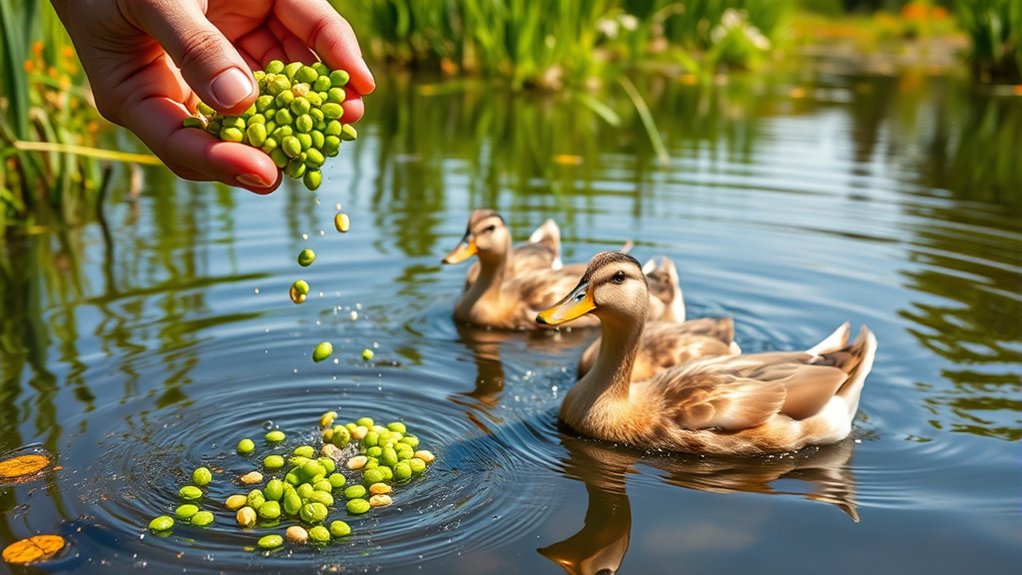
You can feed ducks safely by choosing natural, nutritious foods like cracked corn, oats, peas, or chopped leafy greens instead of bread, which causes malnutrition and pollutes water.
Offer small amounts gently in clean, quiet spots during early morning or late afternoon to avoid overfeeding and disturbance.
Preparing food properly helps ducks digest better and protects their habitat. Following these tips supports healthy ducks and ecosystems, and learning more can help you become an even better caretaker for waterfowl.
Key Takeaways
- Offer nutritious foods like duck pellets, cracked corn, oats, and fresh vegetables instead of bread to meet ducks’ dietary needs.
- Feed ducks in moderation during early morning or late afternoon at quiet, clean water locations to minimize stress and pollution.
- Prepare food by chopping vegetables and soaking grains to prevent choking and encourage natural foraging behaviors.
- Avoid overfeeding to prevent water pollution, algae growth, and disruption of ducks’ natural migration and foraging patterns.
- Educate others about the risks of bread and promote responsible feeding practices to protect duck health and aquatic ecosystems.
Why Is Bread Harmful to Ducks and Their Habitat?
Although it seems harmless, feeding bread to ducks can actually harm their health and the environment they live in. When you give ducks bread, you might think you’re helping, but bread lacks the nutrients they need and can cause malnutrition. Over time, this poor diet weakens them, affecting their ability to migrate properly during bird migration seasons.
You might not realize that leftover bread often pollutes the water, leading to water pollution. Moldy bread and uneaten pieces decompose, promoting algae growth that suffocates aquatic plants and reduces oxygen levels. This polluted environment harms ducks and other wildlife relying on clean water.
When you feed ducks bread regularly, you unintentionally contribute to these problems, disrupting the delicate balance of their habitat. So, if you care about the ducks and their natural migration patterns, it’s best to avoid bread and think about healthier options that protect both the birds and their environment.
What Do Ducks Need to Eat?
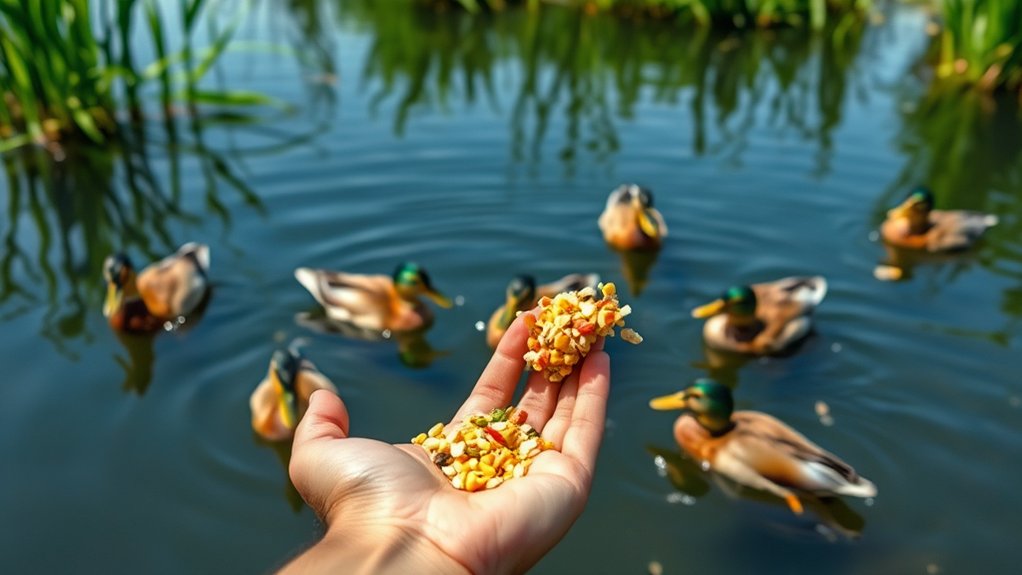
If you want to feed ducks, it’s best to give them foods that meet their nutritional needs without causing any harm. Think about offering natural options like grains, seeds, and vegetables since these are good for their health.
Just be sure to avoid anything with harmful ingredients or additives that might upset their diet. Keeping it simple and natural is the way to go!
Nutritional Requirements Overview
When feeding ducks, it’s important to understand their basic nutritional needs to keep them healthy and thriving. Ducks require a nutritional balance that includes proteins, carbohydrates, fats, vitamins, and minerals. These elements support their energy, growth, and overall well-being.
Dietary diversity plays a vital role in meeting these needs because relying on a single type of food, like bread, can lead to deficiencies and health problems. By offering a variety of foods, you help ducks get the nutrients they need naturally. This approach supports their digestive system and maintains a strong immune response.
Suitable Duck Foods
Because ducks need a balanced diet to stay healthy, offering them a variety of suitable foods is essential. When feeding ducks, you help support their natural behaviors, including bird migration and water conservation. Here are three excellent options to contemplate:
- Duck pellets or grains. Specially formulated for waterfowl, they provide the nutrients ducks need without excess fillers.
- Fresh vegetables and greens. Leafy greens, peas, and corn mimic what ducks forage for in the wild.
- Insects and aquatic plants. These supply protein and help ducks stay hydrated naturally, encouraging water conservation.
Avoiding Harmful Ingredients
Although feeding ducks seems simple, you need to avoid giving them harmful ingredients that can disrupt their health. Bread, for example, lacks essential nutrients and can cause malnutrition or digestive issues.
Instead, focus on natural foods like leafy greens, peas, or corn, which support their diet without harm. Practicing proper feeding etiquette means offering small amounts and scattering food to prevent overcrowding or littering. This helps maintain water quality.
Avoid processed or salty foods that can poison ducks or attract pests. By choosing safe foods and following feeding etiquette, you contribute to habitat preservation, ensuring ducks thrive in their natural environment.
Which Foods Are Safe and Healthy for Feeding Ducks?
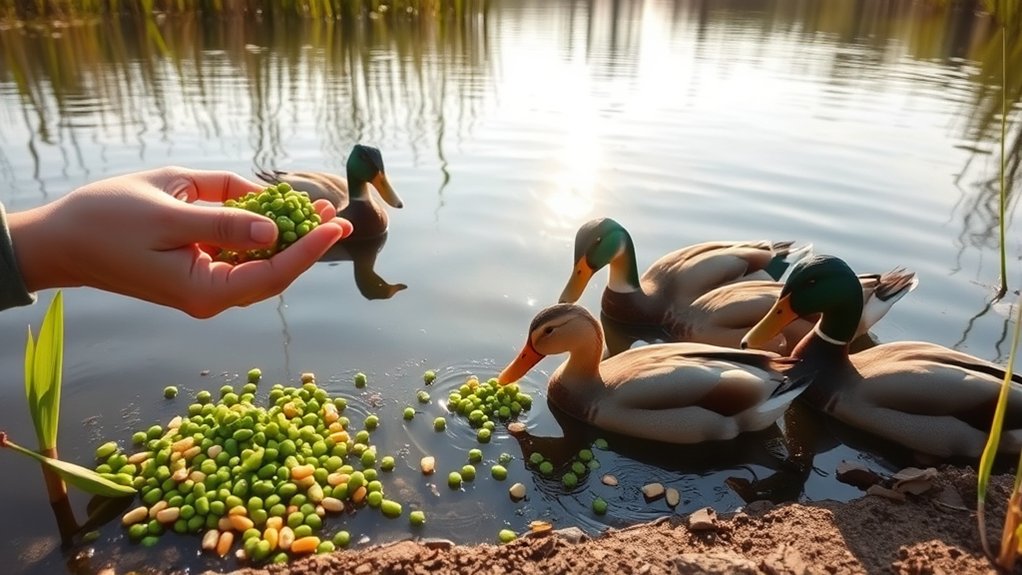
If you want to feed ducks without harming them, choosing the right foods is essential. Proper feeding supports their health during duck migration and helps with pond maintenance by preventing water pollution. Here are three safe and healthy options you can offer:
- Vegetables – Chopped leafy greens like lettuce, spinach, and kale provide essential nutrients without polluting the pond.
- Grains – Unsalted oats, barley, or cracked corn mimic natural foods ducks find during migration and fuel their energy needs.
- Frozen peas or corn – Thawed but uncooked, these are easy for ducks to digest and help diversify their diet.
Avoid processed or salty foods and never feed bread. By providing these natural options, you help maintain a balanced ecosystem and support ducks’ health through their migration cycles. Feeding responsibly also keeps the pond cleaner, benefiting both ducks and the surrounding wildlife.
How to Prepare Simple Duck-Friendly Foods at Home
Feeding ducks with safe, healthy options is only part of the process; preparing these foods properly guarantees the ducks can eat them easily and get the most benefit. Start by chopping veggies like peas, corn, or lettuce into small, manageable pieces. This prevents choking and makes it easier for ducks to digest.
If you’re offering grains or seeds, soak them briefly to soften and avoid hard pellets that can harm their beaks. Always keep the duck habitat in mind. Avoid overfeeding to prevent water contamination and maintain a balanced ecosystem.
When you bring food, stick to feeding etiquette by scattering it gently rather than throwing large clumps. This encourages natural foraging behaviors and reduces competition among ducks.
When and Where Should You Feed Ducks Safely?
You’ll want to feed ducks during calm, quiet times—like early morning or late afternoon—to avoid crowds and stress. It’s best to pick safe spots where there’s plenty of natural food and clean water. That way, the ducks can eat without any danger. Knowing the right when and where helps keep both you and the ducks safe and happy.
Best Times To Feed
Although ducks can be fed throughout the day, choosing early mornings or late afternoons helps avoid peak park crowds and guarantees a calmer experience for both you and the birds. During these times, you’re less likely to disturb bird migration patterns and reduce stress on local wildlife. Feeding ducks at the right moments also minimizes leftover food that can contribute to water pollution.
Here are three tips to pick the best feeding times:
- Feed just after sunrise, when ducks are most active and food naturally scarce.
- Avoid midday when larger crowds and warm temperatures increase water pollution risks.
- Opt for late afternoon, allowing ducks to prepare for night and reducing human interference with migration.
Timing matters. Choose wisely to protect ducks and their habitats.
Ideal Duck Feeding Spots
When you choose the right locations to feed ducks, you help protect both the birds and their environment. Look for birdwatching spots with clean water and natural vegetation, as these areas support healthy feeding habits.
Avoid crowded, urban ponds where pollution and human traffic stress ducks and disrupt their natural behavior. Feeding ducks near quiet lakes or rivers allows them to find natural food sources alongside your offerings, maintaining a balanced diet.
Also, pick spots with gentle shorelines to prevent overcrowding and reduce the risk of injury. By feeding ducks in safe, suitable locations, you encourage responsible interaction and help sustain local ecosystems.
Best Practices for Feeding Ducks Safely
Feeding ducks safely means choosing the right foods and offering them in a way that supports their health and the environment. When you feed ducks, practicing good feeding etiquette guarantees you don’t harm their natural behaviors or habitat. Plus, it improves your bird watching experience by encouraging healthy, active ducks.
Here are three best practices to keep in mind:
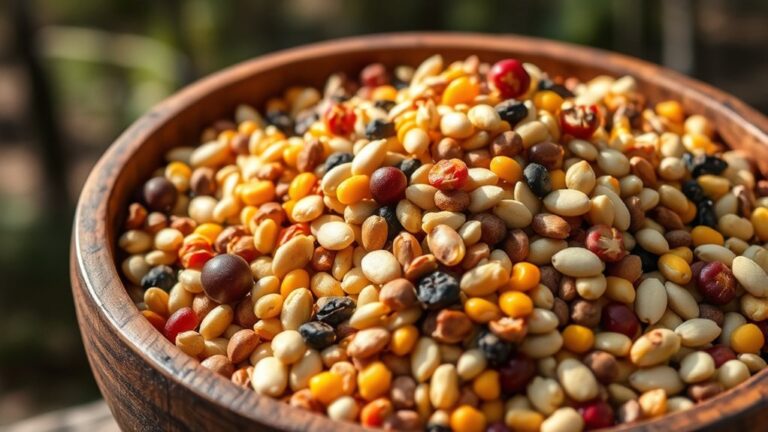
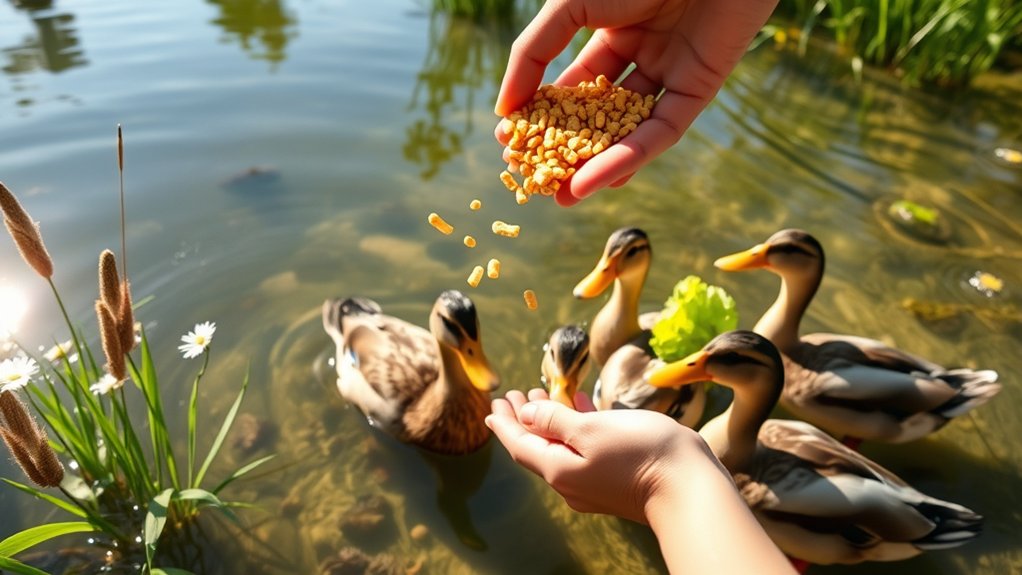
- Offer Nutritious Foods: Provide ducks with healthy options like cracked corn, oats, birdseed, or chopped vegetables instead of bread.
- Feed in Moderation: Give small amounts to avoid disrupting their natural foraging habits and to prevent litter buildup.
- Respect the Environment: Feed ducks away from busy areas to reduce stress and avoid overcrowding, which can harm water quality.
How to Avoid Overfeeding Ducks and Its Consequences
Keeping ducks healthy involves more than just offering the right foods in the right amounts. Overfeeding can cause health issues, water pollution, and disrupt natural behaviors.
To avoid this, try alternative feeding methods such as scattering small portions or feeding less frequently. This helps maintain their natural foraging instincts and supports habitat preservation by preventing waste buildup.
Here’s a quick guide to help you avoid overfeeding:
| Action | Benefit |
|---|---|
| Feed small portions | Prevents obesity and malnutrition |
| Use alternative feeding methods | Encourages natural foraging |
| Limit feeding frequency | Reduces water contamination |
| Observe duck behavior | Adjust based on their needs |
How Feeding Ducks Affects Their Habitat
Although it might seem harmless to toss food to ducks, your actions can greatly impact their habitat. When you feed ducks, you influence their natural behavior, which can disrupt habitat conservation efforts. Here’s how your feeding affects the environment:
- Alters Duck Behavior: Ducks may become dependent on humans for food, reducing their natural foraging instincts and leading to overcrowding in feeding areas.
- Pollutes Water Sources: Leftover food and increased duck waste can degrade water quality, harming aquatic plants and other wildlife that rely on a balanced ecosystem.
- Disrupts Plant Growth: Excess nutrients from uneaten food fuel algae blooms, which block sunlight and reduce oxygen in the water, damaging the habitat ducks and other species depend on.
What to Do If Ducks Are Already Eating Bread
If ducks have already grown accustomed to eating bread, you can help them shift to healthier foods gradually. Start by offering small amounts of nutritious alternatives like cracked corn, oats, or chopped vegetables alongside their usual bread. Over time, reduce the bread portion until they rely mainly on healthier options. This approach supports their natural diet and minimizes risks linked to bread consumption.
Keep in mind, feeding ducks bread encourages them to stay in one place longer, which can disrupt their natural duck migration patterns. By promoting better nutrition, you help maintain their instinct to migrate and find natural food sources. Moreover, leftover bread can contribute to water pollution, causing algae growth and harming aquatic life. Cleaning up uneaten bread and switching to proper foods improves water quality and protects the ecosystem. Your gradual changes can make a real difference in ducks’ health and the environment.
How to Encourage Others to Feed Ducks Responsibly
You can help others feed ducks responsibly by sharing educational resources that explain why bread isn’t the best choice. It’s important to let them know about the risks that bread poses to ducks. Then, suggest healthier food options that are better for their health.
You can even show how easy it is to make these better choices. When you lead by example and demonstrate good habits, people are much more likely to follow along and do the same. It’s all about making small changes that add up!
Share Educational Resources
How can you inspire friends and family to feed ducks responsibly? Sharing educational resources is a powerful way to encourage mindful habits. Understanding bird migration and waterfowl behavior helps people appreciate why certain feeding practices matter.
Try these steps to spread knowledge effectively:
- Share articles and videos that explain how feeding impacts duck health and natural behaviors.
- Organize local talks or workshops focusing on bird migration patterns and waterfowl behavior to highlight seasonal needs.
- Provide easy-to-understand guides or infographics that recommend safe feeding practices and alternatives to bread.
Promote Healthy Food Options
Although feeding ducks can be a fun activity, offering healthy food options is essential to their well-being. You can encourage others to swap bread for nutritious choices like cracked corn, oats, or birdseed. These foods support ducks’ natural diets and help maintain their energy during bird migration.
Remind friends that feeding ducks the right food helps local ecosystems by preventing pollution and promoting water conservation. When people feed ducks responsibly, they reduce the risk of water contamination from leftover bread, which can harm aquatic life.
You might share tips on social media or in community groups to spread the word. By promoting healthy food options, you help protect ducks and their habitats while encouraging a more mindful and eco-friendly way to enjoy wildlife.
Lead By Positive Example
When you consistently feed ducks with healthy foods and follow responsible practices, others are more likely to notice and adopt your habits. Your positive influence can encourage a community shift toward better care for wildlife.
To lead by positive example and promote responsible behavior, try these steps:
- Share what you know about safe feeding options like seeds or greens instead of bread.
- Demonstrate patience and respect for the ducks’ natural environment during feeding.
- Gently remind others when you see harmful feeding habits and explain why responsible behavior matters.
Frequently Asked Questions
Can Feeding Ducks Improve Their Interaction With Humans?
Yes, hand feeding ducks can improve their interaction with humans by building trust and encouraging positive behavioral enrichment. When you feed ducks by hand, they become more comfortable around people, fostering a bond that benefits both of you.
This interaction stimulates their natural curiosity and keeps them mentally engaged. Just make sure you offer safe, nutritious foods to support their health while enhancing your connection through gentle, consistent hand feeding.
What Are the Signs of Malnutrition in Ducks?
You’ll notice signs of malnutrition in ducks through poor duck health like dull feathers, lethargy, and weight loss. Nutritional deficiencies often cause weak bones, swollen joints, or difficulty swimming.
If ducks show slow growth or frequent illness, it’s a red flag. Keep an eye on their behavior and appearance. Healthy ducks stay active with vibrant plumage.
Spotting these signs early helps you protect their well-being and nutritional balance.
How Does Feeding Ducks Affect Local Wildlife Diversity?
Feeding ducks can disrupt habitat balance, much like a Victorian telegram suddenly altering a peaceful scene. When you feed ducks improperly, you unintentionally cause habitat disruption, attracting too many birds and other animals.
This overcrowding increases the risk of disease transmission among local wildlife. You might think you’re helping, but it can reduce biodiversity and harm the ecosystem. So, feeding responsibly or not at all protects local wildlife diversity better.
Are There Seasonal Changes in Ducks’ Dietary Needs?
Yes, ducks’ dietary needs change with the seasons. During spring and summer, you’ll notice their seasonal diet includes more insects, plants, and aquatic invertebrates to support breeding and growth.
In fall and winter, they rely more on seeds, grains, and vegetation to build energy reserves. If you’re near migratory routes, ducks may increase their feeding to prepare for long flights, so their nutritional needs shift accordingly throughout the year.
Can Feeding Ducks Contribute to Water Pollution?
Yes, feeding ducks can contribute to water contamination. When you overfeed ducks, leftover food and excess nutrients from their waste lead to nutrient overload in the water. This triggers algae blooms and reduces oxygen levels, harming aquatic life.
To prevent this, you should avoid giving too much food or inappropriate items. This helps maintain a healthier ecosystem and keeps the water cleaner for ducks and other wildlife.
Conclusion
Feeding ducks isn’t just tossing crumbs into the wind; it’s nurturing a delicate dance between nature and nurture. By choosing wholesome foods over bread, you become a guardian of their health and habitat.
Remember, your mindful actions ripple through their world like gentle waves, shaping a future where ducks thrive. So, feed with care and watch kindness take flight, turning simple moments into lasting harmony between you and these feathered friends.
When you choose to feed ducks ok without bread risks, you’re making a positive impact that helps keep them healthy and happy for years to come.