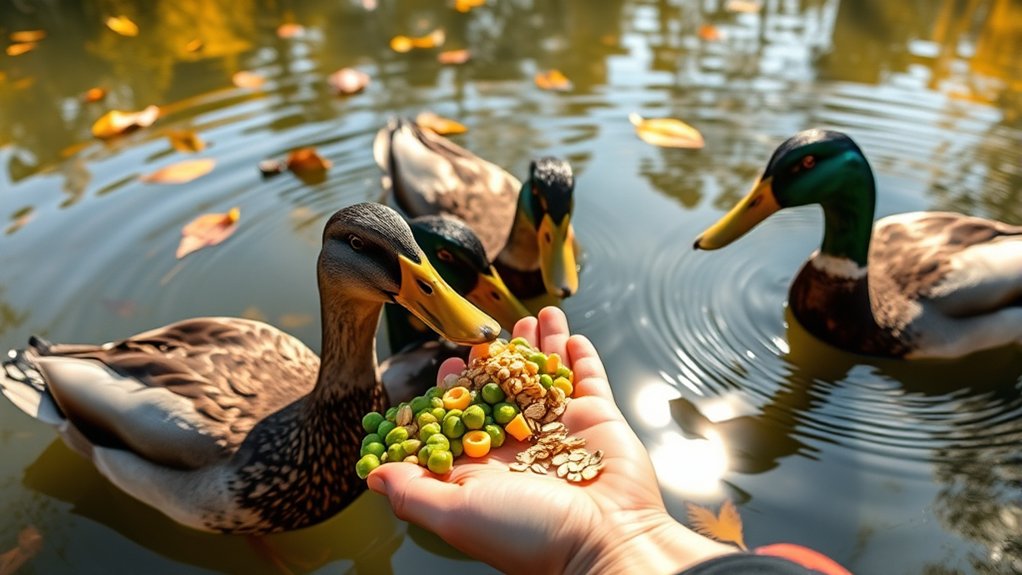
Is Bread Good for Ducks and How to Feed Them Safely
If you love spending time by the pond feeding ducks, you’re not alone. Many people want to enjoy this simple pleasure but worry about whether what they’re offering is actually good for the ducks. It can be confusing to know what foods are healthy and safe, especially when popular options like bread are involved.
Is Bread good for ducks because it lacks the nutrients they need and can cause health problems like malnutrition and weak immunity. It also pollutes water, harms ecosystems, and encourages unhealthy behaviors.
Instead, feed ducks small amounts of healthy foods like cracked corn, oats, peas, or chopped veggies.
Limit feeding to a few times a week and clean up leftovers to protect their environment. Keep these tips in mind to help ducks thrive naturally and safely.
Key Takeaways
- Bread lacks essential nutrients and can cause malnutrition, health problems, and dependency in ducks. Because of this, it’s not suitable as regular food.
- Excess bread pollutes water, promotes harmful algae blooms, and disrupts aquatic ecosystems. These effects pose environmental risks.
- Instead of bread, feed ducks healthier alternatives like cracked corn, birdseed, chopped vegetables, oats, cooked rice, and thawed peas.
- Keep feeding to small portions 2-3 times weekly. Make sure ducks finish their food to prevent waste and dependency.
- Encourage natural foraging by planting native plants and providing nutritious foods. This supports ducks’ health and natural behaviors.
Why Bread Is Bad for Ducks
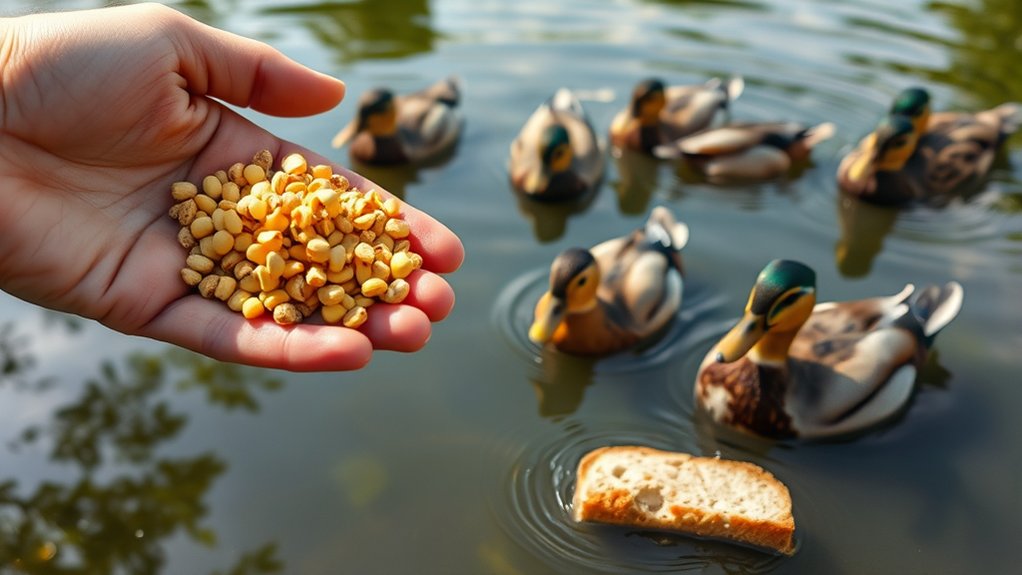
Although it might seem harmless, feeding bread to ducks can actually harm their health. When you toss bread, it fills ducks up without giving them the nutrients they need, leading to malnutrition.
Feeding bread to ducks fills them without nutrients, causing malnutrition and harming their health.
Plus, uneaten bread pollutes the water and attracts pests. To follow proper feeding etiquette, avoid offering bread and instead choose healthier alternatives like cracked corn, oats, or birdseed. These options provide essential nutrients and support the ducks’ natural diet.
Remember, feeding etiquette also means giving food in moderation and avoiding overfeeding, which disrupts their natural foraging behavior. By choosing the right bread alternatives and respecting feeding etiquette, you help maintain a safe, healthy environment for ducks.
You’ll enjoy watching them thrive, knowing you’re contributing positively to their well-being. So next time you’re by the water, skip the bread and opt for smarter, safer food choices that truly benefit the ducks.
What Happens If Ducks Eat Too Much Bread?
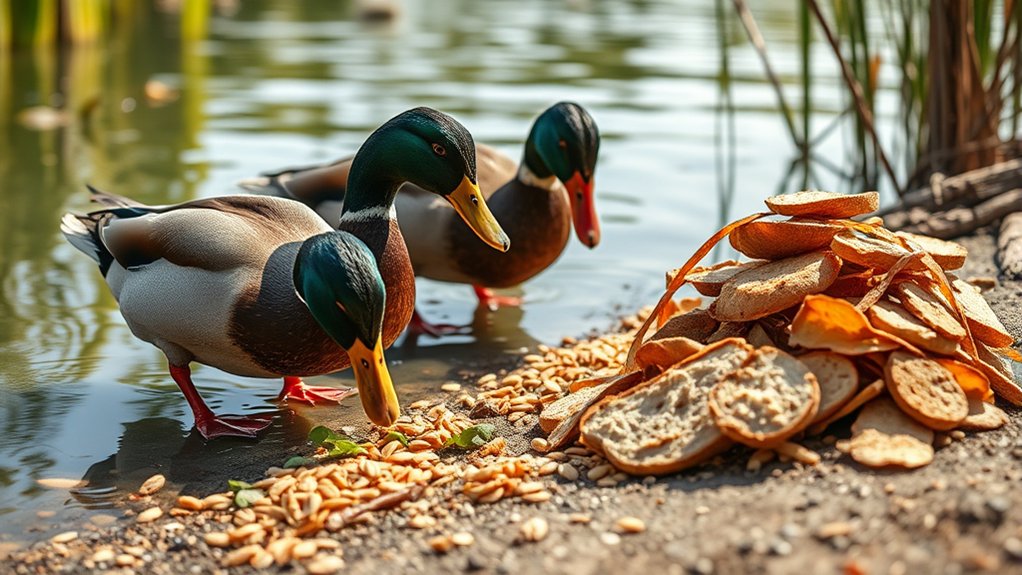
If ducks eat too much bread, they can end up with nutritional deficiencies because bread doesn’t have the nutrients they really need. Also, when there’s leftover bread in the water, it can lead to pollution, which isn’t good for their environment. On top of that, feeding ducks too much bread can cause them to develop unhealthy behaviors. So, it’s best to be careful about what and how much you feed them!
Nutritional Deficiencies Risk
Why does feeding ducks too much bread pose a problem? Bread lacks the essential nutrients ducks need for a healthy life. When ducks rely heavily on bread, it disrupts their nutritional balance and reduces their intake of natural foods. This can lead to serious dietary deficiencies.
Here’s what happens when ducks eat too much bread:
- They miss out on crucial vitamins and minerals needed for growth and immunity.
- Their natural foraging habits decline, limiting dietary variety.
- Overconsumption can cause malnutrition and deformities, such as “angel wing.”
- It weakens their overall health, making them more vulnerable to disease.
To keep ducks healthy, offer them a mix of natural foods that support their nutritional needs instead of bread.
Water Pollution Concerns
Feeding ducks too much bread doesn’t just affect their health, it also impacts the environment around them. When bread accumulates in ponds or lakes, it decomposes and releases excess nutrients. This can degrade water quality.
This nutrient overload encourages algae blooms that consume oxygen, making the water less habitable for ducks and other wildlife. You might not realize it, but even well-meaning feeding can contribute to pollution if done excessively.
To support pollution control, avoid tossing large amounts of bread into the water and opt for healthier alternatives instead. By being mindful, you help maintain cleaner water and a safer habitat for ducks while promoting overall ecosystem balance.
Behavioral Changes In Ducks
When ducks consume too much bread, they often develop unhealthy behaviors that can disrupt their natural instincts. You’ll notice changes in their feeding habits because bread fills them up without providing the nutrients they need.
This can lead to reduced foraging for natural food, which affects their diet balance. You might also see aggression in their social interactions since they compete over bread.
Ducks can become dependent on human feeding, which lowers their survival skills. Plus, overcrowding in feeding areas can cause stress and even injury.
How Feeding Bread Harms Ducks’ Environment
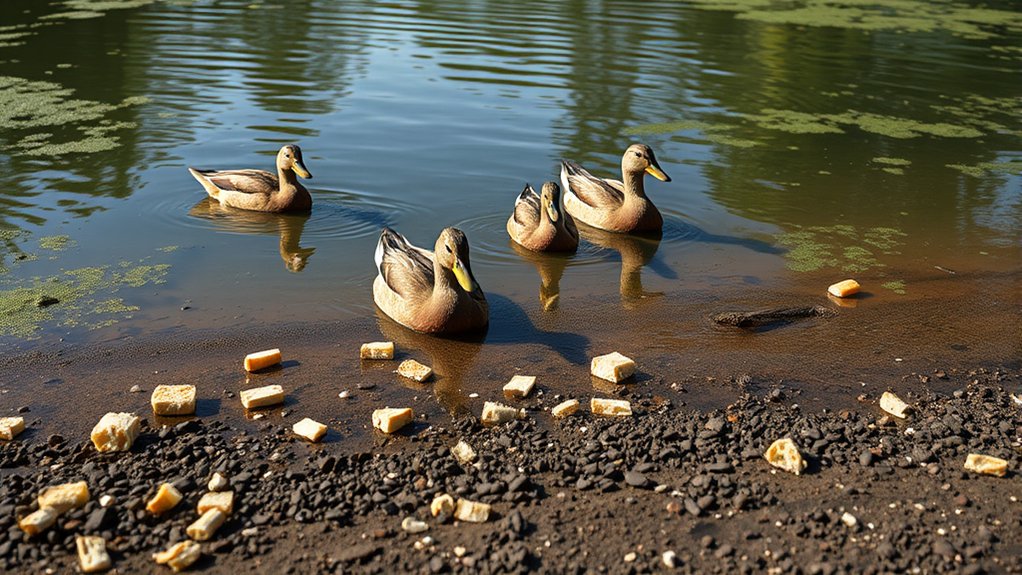
When you feed bread to ducks, it often ends up polluting the water. This can cause algae to grow, which harms the water quality. And when the water isn’t healthy, it disrupts the natural balance of their habitat. That makes it harder for ducks and other wildlife to thrive. You might not realize it, but your simple act can actually change the environment in ways that aren’t good for the ducks.
Water Pollution Effects
Although it may seem harmless, giving bread to ducks can quickly pollute the water where they live. When bread accumulates in ponds or lakes, it lowers water quality and harms the ecosystem.
Uneaten bread decomposes, increasing nutrient levels that cause algae blooms. These blooms reduce oxygen, stressing or killing aquatic life.
You can help with pollution mitigation by avoiding bread and choosing safer feeding options.
Here’s what bread feeding does to water:
- Increases harmful bacteria and pollutants
- Promotes excessive algae growth
- Depletes oxygen needed for fish and other wildlife
- Leads to murky, unhealthy water conditions
Disruption Of Natural Habitats
If you feed ducks bread regularly, you disrupt their natural behaviors and habitats. Bread doesn’t provide proper nutrition, causing ducks to stay in one place longer than they naturally would. This leads to overcrowding and increased wildlife disturbance, stressing the local ecosystem.
Urban development already limits safe spaces for ducks, and feeding them bread worsens the problem by attracting large groups to unnatural areas. This unnatural congregation encourages aggressive behavior and spreads disease among birds.
Furthermore, leftover bread can encourage pests that further disrupt the habitat balance. To protect ducks and their environment, it’s better to avoid feeding them bread and instead support their natural foraging habits. This helps maintain the delicate balance between urban growth and wildlife preservation.
Healthier Foods to Feed Ducks Instead
Since feeding ducks bread can harm their health, you should offer them more nutritious options instead. While historical bread recipes and duck feeding cultural traditions have long encouraged tossing bread to waterfowl, modern understanding shows it’s not the best choice.
Feeding ducks bread may harm their health; choose nutritious alternatives that better support their well-being.
Instead, you can provide foods that support their natural diet and well-being.
Try feeding ducks:
- Cracked corn or birdseed, which are closer to their natural food sources.
- Chopped vegetables like peas, lettuce, or corn, offering essential vitamins.
- Oats, either rolled or instant, which are easy for ducks to digest.
- Cooked rice or quinoa, providing good carbohydrates without additives.
How to Prepare Healthy Duck Treats at Home
When you want to treat ducks, preparing healthy snacks at home guarantees they get the right nutrients without harmful additives. Homemade treats let you control ingredients, ensuring a nutritional balance that supports their well-being. You can mix chopped greens like spinach or kale with grated carrots and peas for a crunchy, vitamin-rich snack.
Adding cooked quinoa or brown rice boosts fiber and energy. Avoid salt, sugar, or processed foods, which can harm ducks.
To make treats, simply combine these ingredients, form small balls or patties, and serve in moderation near their natural habitat. You can also freeze small portions for convenience. Homemade treats not only provide essential nutrients but encourage natural foraging behavior.
How Often to Feed Ducks Safely
Although feeding ducks can be enjoyable, you should limit how often you do it to protect their health and natural habits. Maintaining an appropriate feeding frequency helps prevent over-dependence on humans and keeps their diet balanced. Avoid feeding ducks every day; instead, offer treats a few times a week.
Seasonal considerations also matter. Feed less in warmer months when natural food is abundant, and offer small amounts during colder months when food is scarcer.
Here’s how to manage feeding frequency safely:
- Feed ducks 2-3 times per week to avoid disrupting their natural foraging.
- Reduce feeding during spring and summer when natural food is plentiful.
- Offer small portions to prevent overeating and water pollution.
- Skip feeding during harsh weather to encourage natural survival skills.
Tips to Feed Ducks Without Making a Mess
If you want to feed ducks without making a mess, start by picking the right food that’s healthy for them. It’s super important to keep the portions small so you don’t leave leftovers lying around. Leftover food can attract pests, and nobody wants that! Also, make sure you clean up once you’re done feeding. It helps keep the area safe and nice for everyone.
Choose Appropriate Duck Food
Feeding ducks the right food helps keep them healthy and prevents leftover scraps from attracting pests or polluting the water. When you choose appropriate duck food, you support their natural behaviors like duck migration and feather grooming. Avoid bread, which offers little nutrition and can harm their health. Instead, pick options that mimic their natural diet.
Consider these choices:
- Cracked corn or birdseed, which provide essential nutrients
- Chopped lettuce or greens, aiding feather grooming with vitamins
- Oats or rice (uncooked), easy to digest and energy-rich
- Frozen peas or corn, thawed for a tasty, natural treat
Use Controlled Portions
When you control the portions you offer, you help keep ducks healthy and the environment clean. Overfeeding can lead to leftover food, attracting pests and polluting water.
Stick to feeding guidelines by giving small amounts at a time, allowing ducks to finish before offering more. Instead of bread, choose bread alternatives like cracked corn, oats, or birdseed, which provide better nutrition and reduce waste.
Measure your portions so you don’t unintentionally overfeed. Feeding in controlled amounts also prevents ducks from becoming dependent on handouts and encourages natural foraging behavior.
Clean Up After Feeding
Although sharing food with ducks is enjoyable, leaving behind scraps can create a mess and harm their environment. When you clean up after feeding, you help protect the natural habitats that support bird migration and nest building. Leftover food attracts pests and pollutes water, disrupting these vital processes.
To feed ducks without making a mess, follow these tips:
- Bring only what ducks can eat in one sitting to avoid leftovers.
- Use biodegradable containers or bags to carry food and waste.
- Pick up any dropped food bits and dispose of them properly.
- Avoid feeding near nesting areas to prevent disturbing nest building.
Encouraging Ducks to Eat Natural Foods
Why should you encourage ducks to eat natural foods instead of relying on bread? Natural foods provide the essential nutrients ducks need to support crucial activities like migration and nesting habits. Bread lacks these nutrients and can disrupt their health and natural behaviors.
To help ducks eat better, offer foods like cracked corn, oats, chopped vegetables, or birdseed. These options mimic what ducks find in the wild, encouraging them to maintain their natural diet.
You can also create a welcoming environment by planting native aquatic plants near the water’s edge. These plants attract insects and provide natural foraging opportunities for ducks.
Avoid feeding ducks too frequently or in large quantities so they keep searching for natural foods on their own. By guiding ducks toward healthier eating habits, you support their overall well-being, ensuring they stay strong for migration and successful nesting seasons.
This small effort benefits both the ducks and the local ecosystem.
What to Do If Ducks Eat Harmful Food
If ducks accidentally eat harmful food, you should act quickly to minimize health risks. Harmful substances can disrupt ducks’ mating and nesting behaviors, which are essential for their population health.
First, avoid feeding them more food until you know they’re safe. Next, observe their behavior closely for signs of distress such as lethargy or unusual swimming.
Here’s what you can do:
- Contact a local wildlife rehabilitator or veterinarian for advice.
- Remove any remaining harmful food from the area to prevent further ingestion.
- Provide fresh, clean water nearby to help flush their system.
- Keep a safe distance to avoid stressing the ducks, especially during mating and nesting seasons.
Prompt action supports the ducks’ natural behaviors and helps maintain a healthy environment for their young. By staying attentive, you play a critical role in protecting these birds from the dangers of inappropriate feeding.
Best Practices for Feeding Ducks in Parks
Taking steps to prevent ducks from eating harmful food is just one part of responsible care. When feeding ducks in parks, you should focus on wildlife conservation and supporting urban ecology.
Use safe, nutritious foods like cracked corn, oats, or duck pellets instead of bread. Feed ducks in moderation to avoid disrupting their natural foraging habits.
Always feed them near the water’s edge to keep the environment clean and reduce overcrowding.
Here’s a quick guide to help you feed ducks responsibly:
| Best Practices | Why It Matters |
|---|---|
| Use safe duck food | Supports ducks’ health |
| Feed near water | Keeps park areas clean |
| Avoid bread | Prevents malnutrition and disease |
| Feed in moderation | Maintains natural foraging behavior |
| Dispose of trash properly | Protects urban ecology |
Frequently Asked Questions
Can Feeding Ducks Bread Cause Aggression Among Them?
Yes, feeding ducks bread can cause aggression among them. When you give bread, it often leads to increased food competition because the bread isn’t very nutritious. So, ducks might crowd and fight over it more aggressively.
You’ll notice changes in duck behavior, such as pushing and squabbling, which isn’t healthy. To keep things peaceful, you should offer healthier foods that reduce competition and promote better duck behavior overall.
Is It Safe to Feed Ducks Bread in Winter?
You might think feeding ducks bread in winter is harmless, but it’s not the safest choice. Bread causes nutritional deficits, especially during colder months when ducks need more energy.
If you feed them bread too often, it can harm their health and disrupt natural foraging habits. Instead, limit feeding frequency and offer healthier options like oats or cracked corn to help ducks stay strong through winter’s chill.
Do All Types of Bread Affect Ducks the Same Way?
Not all types of bread affect ducks the same way. White bread offers little nutritional impact and can harm their health, while whole grain or rye bread is slightly better but still not ideal.
If you want to help ducks thrive, focus on alternative feeding options like cracked corn, oats, or birdseed. These provide essential nutrients and keep ducks healthier than any bread variety ever could.
Can Ducklings Eat Bread Safely?
Sure, you can give ducklings bread, but if you want them to grow up healthy, don’t! Duckling nutrition needs more than just empty carbs.
Bread fills them up but lacks essential vitamins and minerals, so it’s basically junk food for baby ducks. Instead, try bread alternatives like oats, corn, or specially formulated duck feed.
You’ll help ducklings thrive, not just survive, and you won’t feel guilty about feeding them something that’s more snack than sustenance.
How Does Feeding Ducks Affect Local Fish Populations?
Feeding ducks can disrupt aquatic ecosystems by increasing nutrient levels from uneaten food, leading to algae blooms that reduce oxygen and harm fish health. When you feed ducks too much, leftover food decays, lowering water quality and stressing local fish populations.
To protect aquatic ecosystems and maintain fish health, it’s best to avoid overfeeding and choose natural, appropriate foods that won’t pollute the water or unbalance the habitat.
Conclusion
Feeding ducks bread is like giving a car the wrong fuel. It might run for a bit, but it won’t last long or run well. You want ducks to thrive, not just survive.
So, swap that white loaf for nature’s own treats, like peas or corn. By choosing wisely, you’re not just feeding ducks; you’re helping them live vibrant, healthy lives in a clean, balanced world.
Your care truly makes a difference when it comes to feeding ducks bread safely and responsibly.