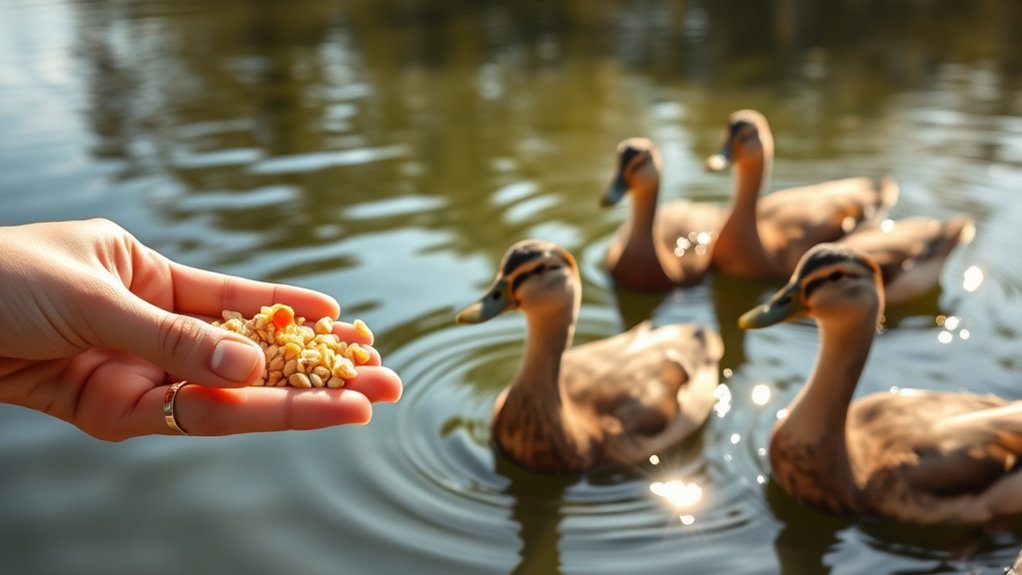
Is Bread Ok for Ducks to Eat – A Guide to Feeding
If you love spending time by the water feeding ducks, you’re not alone. Many people want to enjoy this simple pleasure but worry about doing it the right way. It can be confusing to know what’s safe and healthy for ducks, especially with so much conflicting advice out there.
You shouldn’t feed bread to ducks because it lacks the nutrients they need and can harm their health and the environment. Bread causes malnutrition, weakens their immune system, and leads to issues like deformities and digestive problems.
Instead, choose natural foods like oats, corn, or leafy greens in moderation. Feeding responsibly helps protect ducks’ well-being and local habitats.
Keep going to find out how to feed ducks safely and support their natural behaviors.
Key Takeaways
- Bread lacks essential nutrients and can cause malnutrition, deformities, and weakened immune systems in ducks.
- Feeding bread disrupts ducks’ natural diet and behaviors, which can impair their migration and foraging instincts.
- Uneaten bread pollutes water, promotes harmful algae growth, and damages aquatic ecosystems.
- Healthier alternatives include leafy greens, oats, corn, peas, and specially formulated duck pellets.
- Feed ducks in moderation using natural foods, and avoid bread to support their health and the environment.
Is Bread Safe for Feeding Ducks?
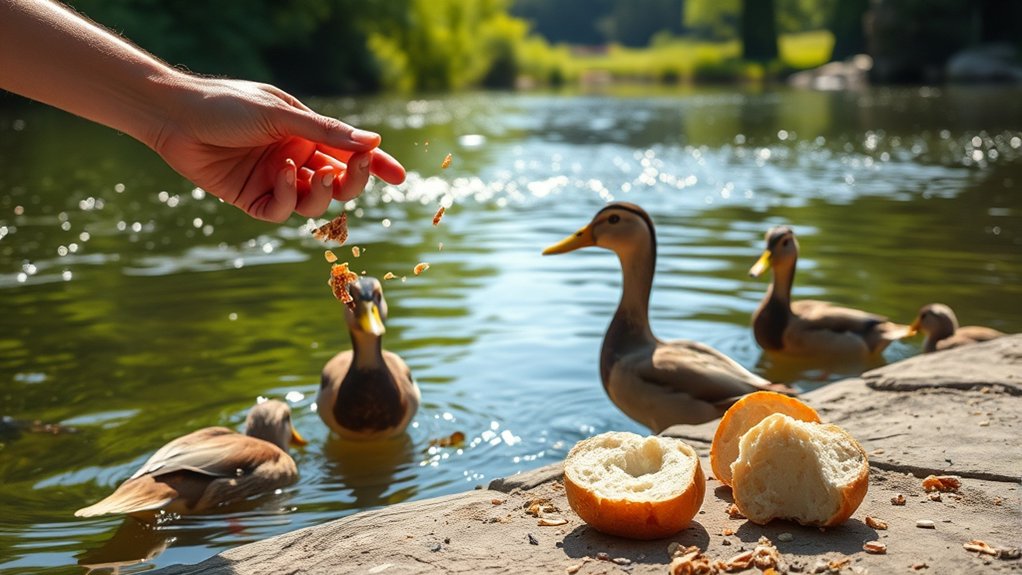
While it might seem harmless to toss bread to ducks, you should know that bread isn’t safe for them. Feeding ducks bread can disrupt their natural diet, leading to poor nutrition that affects their health and ability to survive during bird migration.
Feeding ducks bread harms their health by disrupting their natural diet and migration survival.
When ducks rely on bread, they miss out on essential nutrients they’d normally get from natural food sources like aquatic plants and insects. Also, uneaten bread often sinks or floats, contributing to water pollution by promoting algae growth.
This algae reduces oxygen in the water, harming fish and other wildlife that ducks depend on. You might think feeding bread is a kind gesture, but it can actually harm the entire ecosystem, including the ducks you want to help.
Instead of bread, consider offering healthier alternatives that support their natural behaviors and preserve the environment they thrive in during migration and throughout the year.
Why Bread Is a Poor Choice for Ducks
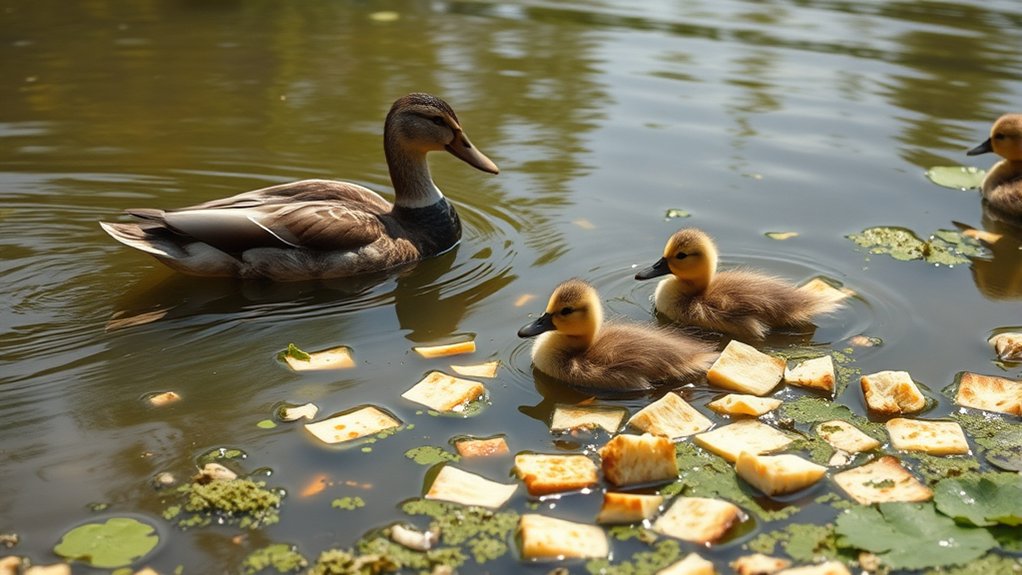
You might think bread is harmless, but it actually lacks the nutrients ducks need to stay healthy. When ducks eat bread, it can lead to health problems for them and even harm their natural environment. So, let’s take a closer look at why bread isn’t the best choice for feeding ducks.
Nutritional Deficiencies in Bread
Although bread might seem like an easy treat to share, it lacks the essential nutrients ducks need to stay healthy. When you feed ducks bread, you contribute to nutritional deficiencies because bread is mostly empty calories and doesn’t provide crucial proteins, vitamins, or minerals.
This dietary imbalance can prevent ducks from getting the nutrients required for strong feathers, proper growth, and good immune function. Over time, relying on bread can lead ducks to fill up on low-quality food, leaving less room for their natural, nutrient-rich diet.
Health Risks for Ducks
Nutritional deficiencies from feeding bread don’t just affect a duck’s growth. They can also lead to serious health problems. When ducks rely on bread, you risk harming their ability to complete critical behaviors like migration and maintaining healthy nesting habits.
Here are three key health risks you should know:
- Weakened Immune System: Bread lacks essential nutrients, making ducks more vulnerable to disease.
- Deformed Bones and Feathers: Poor nutrition disrupts proper development. This impairs flight and survival during migration.
- Digestive Issues: Bread can cause bloating and malnutrition. It also prevents ducks from digesting natural food sources.
Environmental Impact of Feeding
How does feeding bread to ducks affect the environment around them? When you toss bread, it often goes uneaten, leading to pollution and harming water quality. This disrupts habitat preservation efforts.
Leftover bread encourages algae growth, which reduces the oxygen aquatic life depends on. This undermines environmental conservation and threatens the balance of the ecosystem.
| Issue | Impact on Environment |
|---|---|
| Uneaten Bread | Pollutes water, harms wildlife |
| Algae Growth | Depletes oxygen, kills fish |
| Overpopulation | Strains food sources |
Health Problems From Feeding Ducks Bread
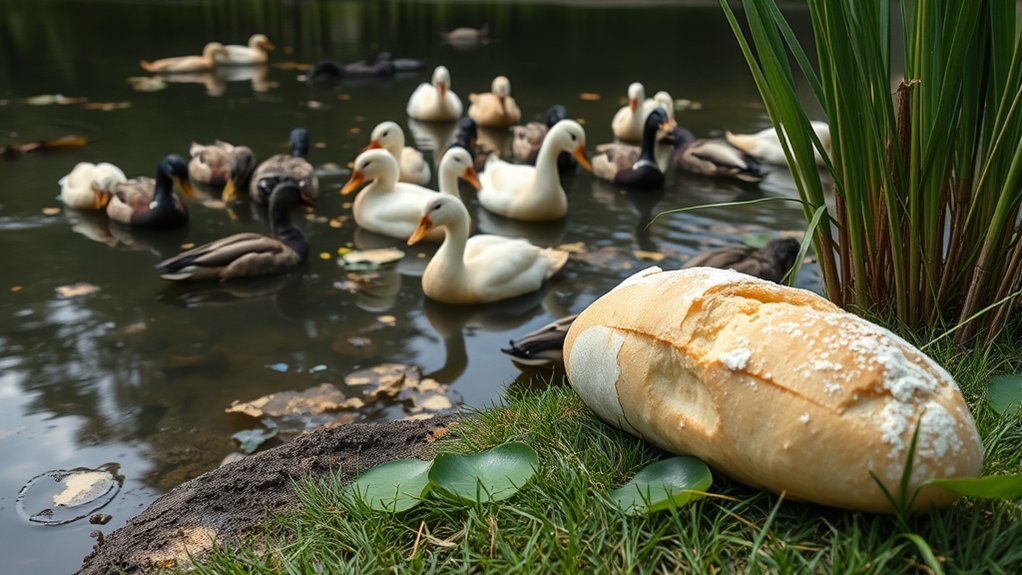
What happens when you feed ducks bread regularly? You might think you’re helping, but bread toxicity and nutritional imbalance can seriously harm their health. Bread lacks the essential nutrients ducks need, and over time, feeding them bread can cause several health problems.
Here are three major issues you should be aware of:
- Malnutrition: Ducks fill up on bread but miss out on vital vitamins and minerals, leading to weakened immune systems.
- Angel Wing: This deformity, caused by poor nutrition, prevents ducks from flying, putting them at risk from predators.
- Digestive Problems: Excess bread can cause bloating and other digestive issues, sometimes even fatal blockages.
Feeding ducks bread might seem harmless, but it often leads to more harm than good. Instead, understanding these risks helps you make better choices for their wellbeing.
Healthy Feeding Alternatives to Bread for Ducks
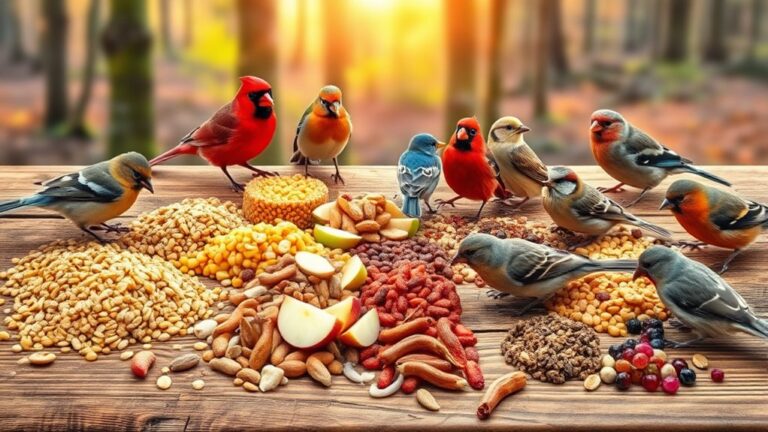
If you want to feed ducks something better than bread, you can try giving them oats, corn, or birdseed. These are packed with nutrients that ducks really benefit from.
You can also offer safe natural treats like chopped vegetables and leafy greens. Ducks love these, and they’re a great way to mix things up.
Nutrient-Rich Duck Foods
Although feeding ducks bread might seem harmless, choosing nutrient-rich alternatives can greatly improve their health and well-being. Bread offers little nutrition and may cause gluten allergies in some ducks, so opting for better options is key. When you focus on seasonal feeding, you provide ducks with foods that align with their natural diet throughout the year.
Here are three nutrient-rich duck foods you can offer:
- Leafy greens like lettuce and spinach, packed with vitamins and fiber.
- Grains and seeds such as oats and corn, providing essential energy.
- Vegetables like peas and corn, which support overall health.
Safe Natural Treats
While bread is a common snack for ducks, it lacks the nutrients they need and can harm their health. Instead, you can offer safe natural treats that support ducks’ feeding habits and provide essential nutrition.
Ducks’ favorite treats include leafy greens like lettuce and spinach, peas, corn, and oats. These options mimic what ducks naturally forage in the wild, helping maintain their digestive health and energy levels.
Avoid processed foods and anything with added salt or sugar. When feeding, give small portions to prevent overfeeding and keep their environment clean.
Preparing Simple Snacks for Feeding Ducks
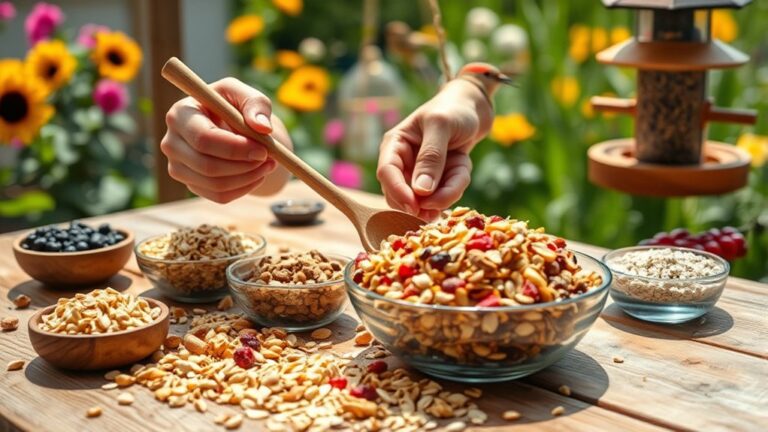
How can you easily prepare snacks that ducks will enjoy and that are safe for them? It’s simpler than you might think. Doing so helps support wildlife conservation by protecting their natural diet and preserving the bird habitat.
Preparing safe, enjoyable snacks for ducks supports their natural diet and helps preserve their habitat.
Try these three easy snack ideas:
- Chopped vegetables Peas, corn, and lettuce mimic what ducks find in the wild and provide essential nutrients.
- Oats or cooked rice These grains are digestible and a great energy source without harming their health.
- Birdseed mix A blend designed for waterfowl encourages natural foraging behavior.
When and How Often Should You Feed Ducks?
You’ll want to feed ducks just once or twice a day to avoid overfeeding. Early morning or late afternoon are the best times since ducks tend to be most active then. Sticking to this routine helps keep them healthy and eager for their snacks.
Ideal Feeding Frequency
When should you feed ducks to keep them healthy and happy? Sticking to an ideal feeding frequency is key. Overfeeding can disrupt their natural foraging habits and harm their health.
Follow these guidelines to practice good feeding etiquette and support duck diet diversity:
- Feed ducks no more than twice a day to avoid overdependence on handouts.
- Offer small portions that ducks can consume within 10-15 minutes to prevent leftover waste.
- Skip feeding during extreme weather or when natural food sources are abundant, so ducks continue foraging naturally.
Best Feeding Times
Why does timing matter when feeding ducks? Feeding ducks at the right times helps maintain their natural habits and supports the waterfowl habitat. Early morning or late afternoon are the best times, as ducks are most active and likely to eat.
Feeding during these periods aligns with their feeding patterns, especially before or after bird migration seasons, when they need extra energy. Avoid feeding late at night or too frequently, as overfeeding can disrupt their natural foraging instincts and harm the ecosystem.
Feeding Ducks Responsibly Without Harming the Environment
Although feeding ducks can be a fun and rewarding activity, you need to do it responsibly to protect their health and the environment. In urban habitats, improper feeding can lead to water pollution, harming both ducks and local ecosystems.
Feeding ducks is enjoyable but must be done responsibly to protect their health and the environment.
To feed ducks responsibly, keep these tips in mind:
- Choose natural foods like cracked corn, oats, or duck pellets instead of bread, which causes malnutrition and pollutes water.
- Feed ducks in moderation to prevent leftover food from attracting pests and causing algae growth.
- Dispose of any trash or food packaging properly to keep the habitat clean and safe.
Spotting Signs of Malnutrition in Ducks
Since ducks rely heavily on the food you provide, you need to recognize signs of malnutrition early to help them stay healthy. Watch for dull feathers, lethargy, or unusual weight loss. These are clear indicators that their diet lacks essential nutrients. Poor nutrition can disrupt ducks’ migration patterns, making their long journeys even more challenging.
You might also notice slow healing of wounds or frequent illness, which signals weakened immunity from a deficient diet.
Good feeding etiquette plays a vital role in preventing malnutrition. Avoid feeding ducks only bread or low-nutrient foods. Instead, offer natural options like grains, seeds, and aquatic plants.
Helping Ducks Avoid Harmful Foods Like Bread
When you feed ducks bread, you may think you’re helping, but it can actually harm their health. Bread safety is a big concern because it lacks the nutrients ducks need and fills them up with empty calories. This leads to nutritional concerns that can weaken their immune systems and stunt growth.
Feeding ducks bread harms their health by providing empty calories and lacking essential nutrients.
To help ducks avoid harmful foods like bread, consider these steps:
- Choose healthier alternatives such as cracked corn, oats, or birdseed that offer proper nutrition.
- Educate others about the dangers of feeding bread to ducks, promoting better bread safety awareness.
- Always feed ducks in moderation to prevent overfeeding and pollution in their habitat.
Encouraging Responsible Duck Feeding in Your Community
Helping ducks avoid harmful foods like bread is just the first step toward protecting their health. When you encourage responsible duck feeding in your community, you help maintain healthy urban habitats and respect migratory patterns.
Start by educating neighbors about proper food choices and the environmental impact of feeding ducks incorrectly. You can organize community events or share informative flyers to spread awareness. Collaborate with local parks to install signs about appropriate feeding.
Here’s a quick guide to help your community feed ducks responsibly:
| What to Feed | Why It’s Good | Avoid Because |
|---|---|---|
| Duck pellets | Balanced nutrition | Causes minimal waste |
| Fresh vegetables | Natural, healthy | Easy to digest |
| Grains (corn, oats) | Mimics natural diet | Supports energy needs |
| Bread | None | Leads to malnutrition |
Frequently Asked Questions
Can Feeding Ducks Bread Affect Their Natural Foraging Behavior?
Yes, feeding ducks bread can affect their natural foraging behavior. When you feed them bread frequently, they may rely less on their wild diet and stop searching for natural food sources.
This change can lead to poor nutrition and dependency on humans. To avoid disrupting their natural habits, limit feeding frequency and offer healthier options that mimic their wild diet. This helps ducks stay active and well-nourished in their environment.
What Types of Bread Are Least Harmful if Given Occasionally?
Whole grain or rye bread are the least harmful if you give bread to ducks occasionally. These types have a better nutritional impact compared to white bread, providing more fiber and fewer empty calories.
However, you should keep feeding frequency low to avoid disrupting their natural diet and foraging behavior. Remember, bread should only be an occasional treat, not a regular part of their meals, to help maintain their health and natural habits.
How Should Leftover Bread Be Disposed of to Avoid Attracting Pests?
When dealing with leftover bread, it’s best to “let it find a new home” by avoiding tossing it in open areas. Instead, you should use your garbage disposal or seal it tightly in a bin.
This approach supports pest prevention by keeping unwanted critters at bay. Remember, securely containing your waste stops pests from sniffing out a free meal, maintaining a cleaner and safer environment for everyone around you.
Are There Specific Duck Species That Tolerate Bread Better Than Others?
You won’t find specific duck species that tolerate bread better because all ducks can suffer from nutritional deficiencies and behavioral changes if fed too much bread. While some species might seem less affected, bread lacks essential nutrients they need.
Feeding bread regularly can lead to health problems and disrupt natural foraging habits. It’s better to offer ducks healthier alternatives to keep them thriving and behaving naturally.
Can Feeding Ducks Bread Impact Local Water Quality or Ecosystems?
Yes, feeding ducks bread can impact local water quality and cause water pollution. When uneaten bread sinks or ducks produce excess waste, it leads to nutrient buildup in the water. This can trigger harmful algae blooms and reduce oxygen levels, harming fish and other aquatic life.
You might also disrupt the ecosystem by encouraging unnatural duck populations and altering their natural feeding habits. This affects the balance of local wildlife and plant species.
Conclusion
Feeding ducks bread might seem harmless, but did you know over 80% of ducks fed bread suffer from malnutrition? You can make a real difference by choosing healthier snacks like peas, corn, or oats instead.
Not only will you keep ducks healthier, but you’ll also protect their environment. So next time you visit the pond, feed ducks responsibly and encourage others to do the same. Small changes can lead to big improvements for our feathered friends when it comes to feeding ducks bread.