What Is a Mallard Duck?
If you’ve ever tried to identify ducks during a nature walk or while visiting a park, you’re not alone. Many people struggle to tell different duck species apart, especially when they see a mix of colors and patterns. That’s why learning about the mallard duck can make your birdwatching experience much more enjoyable.
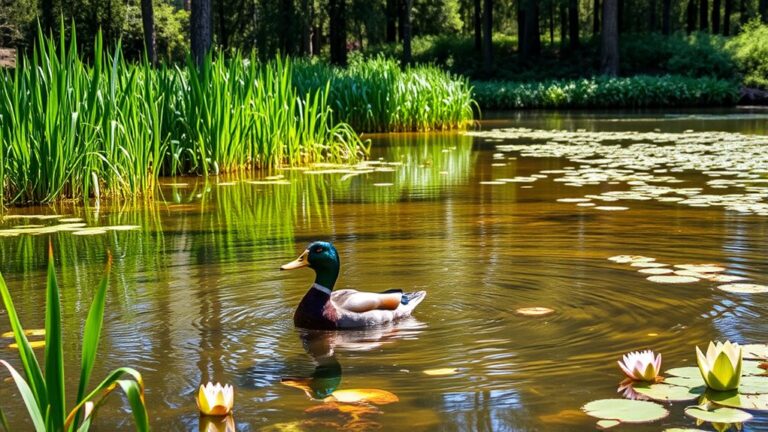
You’ll easily spot a mallard duck by the male’s shiny green head and bright yellow bill.
Females have mottled brown feathers that help them blend in.
They live near lakes, rivers, and even city ponds across many continents.
Mallards communicate with distinct quacks, eat plants and insects, and have unique mating habits.
If you want to understand their behaviors, habitats, and challenges, there’s plenty more to learn about these adaptable waterfowl.
Key Takeaways
- Mallard ducks are common waterfowl with males having iridescent green heads. Females are mottled brown for camouflage.
- They live in freshwater wetlands, lakes, rivers, and urban parks across North America, Europe, Asia, and North Africa.
- Mallards communicate with loud female quacks and softer male calls. They use these sounds for social interaction and alarms.
- Their diet includes aquatic plants, insects, small fish, and grains. They forage by dabbling and grazing in shallow water.
- Females lay 8-13 eggs in concealed nests near water. Ducklings become independent quickly under their mother’s care.
What Is a Mallard Duck?
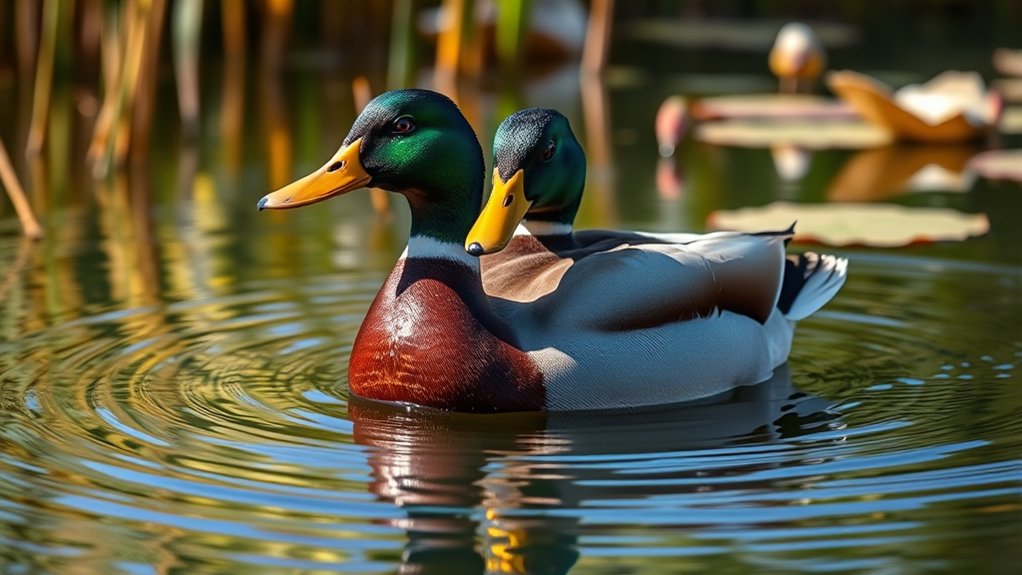
What makes a mallard duck so recognizable? You’ll spot the male’s iridescent green head and bright yellow bill from a distance, while females show mottled brown feathers that help with camouflage.
These ducks are adaptable, thriving in various habitats, which supports their widespread presence. You might notice their distinctive quack and the way they paddle in water to find food.
Mallards adapt to diverse habitats, recognizable by their unique quack and graceful paddling as they forage.
When you think about mallard migration, know that many mallards travel seasonally between breeding and wintering grounds, showcasing their strong navigational skills. This migratory behavior helps maintain genetic diversity and healthy populations across regions.
You play a role in mallard conservation by supporting wetland preservation and responsible hunting regulations, ensuring these ducks continue to thrive. Understanding what a mallard duck is helps you appreciate not only their beauty but also the importance of protecting their habitats and migration routes for future generations to enjoy.
Where Are Mallard Ducks Found?

You’ll find mallard ducks in a variety of native habitats all around the world. They adapt easily, so they thrive in both urban parks and rural wetlands. So, whether you’re near a city pond or out in the countryside, there’s a good chance you might spot one. Let’s investigate where these adaptable birds make their homes.
Native Habitats Worldwide
Where can you spot mallard ducks in the wild? You’ll find them across North America, Europe, Asia, and parts of North Africa. These adaptable birds thrive in freshwater wetlands, lakes, rivers, and marshes where they can find abundant food and shelter.
During mallard migration, they travel to warmer regions, expanding their range seasonally. This movement helps maintain healthy populations and genetic diversity.
Mallard conservation efforts focus on protecting these natural habitats from pollution and development, ensuring safe breeding and feeding grounds. By preserving wetlands worldwide, conservationists support mallard survival and the broader ecosystem.
Urban and Rural Presence
Mallard ducks don’t just stick to wild wetlands. They’ve also adapted remarkably well to urban and rural areas. Thanks to their urban adaptation, you’ll often spot them in city parks, ponds, and even busy waterways where they find food and shelter.
They’re surprisingly comfortable around people, making them a familiar sight in many towns and cities. In rural areas, mallards practice rural nesting, choosing quiet fields, marshes, and farm ponds to raise their ducklings safely.
If you’re near a rural landscape, you might notice their nests hidden in tall grass or brush. Whether in bustling urban environments or peaceful rural settings, mallard ducks have mastered living alongside humans, showing their incredible flexibility and resilience in various habitats.
How Can You Identify Male and Female Mallards?

You can spot male and female mallards by their distinct colors and markings. Males usually have bright green heads and more vibrant plumage. On the other hand, females wear mottled brown feathers that help them blend into their surroundings. So, let’s take a closer look at these key differences.
Male Mallard Characteristics
Although male and female mallards share many behaviors, you can easily tell them apart by their distinct physical traits. During mallard mating season, males display vibrant colors to attract females. This is especially noticeable during duck migration when you might spot them flying in formation.
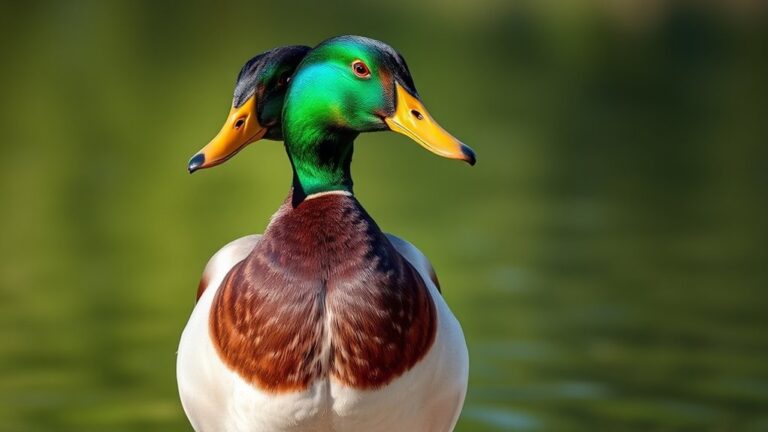
Male mallards have a glossy green head, bright yellow bill, and a white ring around their neck, making them stand out.
| Feature | Description |
|---|---|
| Head Color | Glossy green |
| Bill | Bright yellow |
| Neck Ring | White, distinct |
These traits help you quickly identify males in the wild, especially when observing their behavior during mating and migration periods.
Female Mallard Features
While male mallards catch your eye with their bright colors, females blend into their surroundings with muted hues that provide excellent camouflage. This helps them stay safe during nesting and Mallard migration.
To identify female mallards, look for these features:
- Mottled brown plumage that offers superb blending with reeds and grasses.
- Orange bills marked with dark spots, unlike the solid yellow of males.
- A subtle blue patch bordered by white on their wings, visible in flight.
- A smaller, less vibrant appearance compared to males.
Understanding these traits supports Mallard conservation efforts by helping you monitor populations accurately during migration and breeding seasons. Recognizing females ensures you appreciate the full diversity of Mallard ducks in the wild.
What Sounds Do Mallard Ducks Make?
When mallard ducks communicate, they use a variety of sounds that serve different purposes. You’ll often hear the familiar quacking of the female mallard, which is loud and clear, especially during the breeding season or when warning of danger. Males, on the other hand, make softer, raspy calls.
These vocalizations play a key role during mallard migration, helping ducks stay in contact while flying in groups or finding suitable resting spots.
You might also notice mallards using quieter grunts and whistles to signal contentment or coordinate with their mates. Understanding these sounds can enhance your appreciation of mallard conservation efforts, as researchers monitor their calls to track populations and behaviors.
What Do Mallard Ducks Eat?
Listening to mallard ducks communicate gives you insight into their behavior, but understanding what they eat reveals more about their daily routines and habitats. Their feeding habits showcase impressive diet diversity, allowing them to thrive in various environments. You’ll notice mallards adapt easily, consuming different foods based on availability.
Here are four key components of their diet:
- Aquatic plants and algae. Mallards often graze on water vegetation.
- Insects and larvae. These provide essential protein, especially during breeding season.
- Small fish and amphibians. These are occasional treats that boost nutrition.
- Grains and seeds. They are commonly eaten in agricultural areas.
How Do Mallard Ducks Forage?
Because mallard ducks forage in diverse environments, they use a variety of techniques to find food efficiently. You’ll notice their feeding habits adapt whether they’re in shallow water, on land, or in marshes.
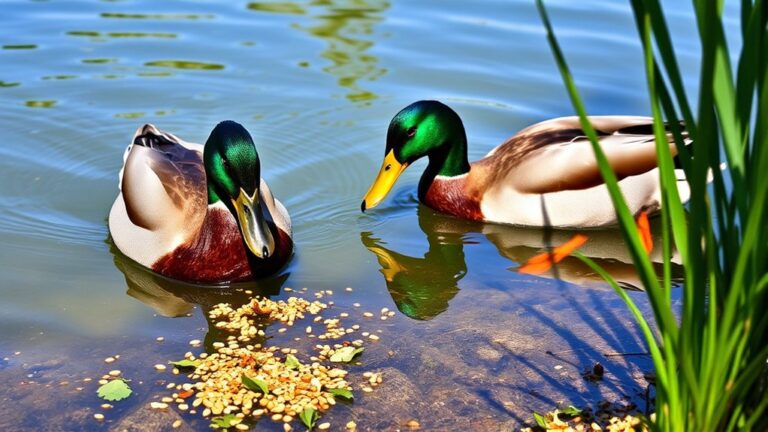
Mallards often dabble, tipping forward in the water to reach aquatic plants, insects, and small fish below the surface. When on land, they use pecking and grazing methods to pick seeds, grains, and insects.
Their keen eyesight helps spot food, while their sensitive bills detect edible items underwater. These foraging techniques let mallards exploit a wide range of food sources, ensuring they stay nourished throughout the year.
What’s Mallard Duck Behavior Like in the Wild?
Although mallard ducks are often seen peacefully gliding on ponds, their behavior in the wild is dynamic and highly social. When you observe them, you’ll notice their actions change with the seasons and social setting. Here’s what to look for:
- During mallard migration, they travel in large flocks, often flying in V-shaped formations to conserve energy.
- Males flaunt vibrant duck feather colors, especially their iridescent green heads, to attract females during mating season.
- Mallards communicate through various quacks and body language, signaling danger or establishing dominance.
- They engage in cooperative behaviors like group foraging and mutual preening, strengthening social bonds.
Why Do Wetlands Need Mallard Ducks?
When you investigate wetlands, you’ll quickly see that mallard ducks play a crucial role in keeping these ecosystems healthy. Their mallard migration patterns help distribute nutrients across wide areas, supporting plant growth and aquatic life.
Plus, their mallard diet variations, ranging from plants to insects, control pest populations and promote biodiversity.
Here’s how they impact wetlands:
| Role in Wetlands | Impact |
|---|---|
| Nutrient Dispersal | Supports plant and fish life |
| Pest Control | Reduces harmful insect levels |
| Seed Distribution | Aids wetland vegetation growth |
| Food Source for Predators | Maintains food chain balance |
How Do Mallard Ducks Reproduce and Raise Their Young?
You’ll notice that mallard ducks team up in pairs during mating season. They pick out hidden spots to build their nests, making sure their eggs are safe. The females lay the eggs and keep them warm until they hatch.
When the ducklings come out, both mom and dad get involved. They help guide and protect their young as they grow. It’s a real team effort!
Mating and Nesting Habits
Since mallard ducks form strong pair bonds during the breeding season, you’ll often see males performing elaborate courtship displays to attract females. These displays involve head bobbing, tail shaking, and distinctive vocalizations. Once paired, mallards choose nesting sites close to water, often hidden in dense vegetation.
To understand their mating and nesting habits, consider these key points:
- They adjust feeding habits to boost energy for courtship and nesting.
- Migration patterns influence when and where they breed.
- Females build nests using grasses and down feathers.
- Males stay nearby but don’t help incubate eggs.
Egg Laying and Incubation
How do mallard ducks guarantee their offspring survive after mating? The female lays a clutch of 8-13 eggs in a well-hidden nest, often near water. She relies on her muted feather coloration to stay camouflaged while incubating, which lasts about 28 days.
During this period, the male’s flight agility helps him fend off predators, ensuring the female isn’t disturbed.
| Stage | Female’s Role | Male’s Role |
|---|---|---|
| Nesting | Builds and lines nest | Guards territory |
| Egg Laying | Deposits eggs daily | Stays nearby |
| Incubation | Keeps eggs warm by sitting | Uses flight agility to protect |
| Protection | Remains camouflaged | Chases predators away |
This teamwork boosts the survival of their young right from the start.
Duckling Development and Care
After hatching, mallard ducklings quickly become independent but still rely heavily on their mother’s guidance and protection. You’ll notice that the mother leads her ducklings to water soon after they hatch, teaching them essential survival skills.
Their feeding habits develop rapidly as they learn to forage for insects and plants. Understanding their migratory patterns is vital, as the mother prepares them for seasonal movements.
Here’s what you should know about duckling development and care:
- The mother keeps ducklings warm and safe from predators.
- Ducklings learn to swim almost immediately.
- They follow the mother closely to feeding grounds.
- The family migrates together during seasonal changes, ensuring survival.
You’ll see nature’s care in action through these behaviors.
What Threats Do Mallard Ducks Face?
Although mallard ducks are adaptable and widespread, they still face several significant threats that can impact their survival. During mallard migration, they encounter dangers such as habitat loss, hunting, and harsh weather conditions that can reduce their numbers. Wetland drainage and urban development destroy vital stopover sites where mallards rest and feed, directly affecting their ability to complete migration successfully.
You should also consider how changes in duckling genetics, caused by hybridization with other duck species, threaten mallard populations. This genetic mixing can reduce the mallard’s unique traits and adaptability, potentially weakening their resilience to environmental changes and diseases.
Pollution, predation, and climate change further challenge mallards. By understanding these threats, you can appreciate the importance of conserving habitats and supporting efforts to protect these vibrant ducks. Your awareness helps guarantee mallards continue thriving in the wild for generations to come.
Frequently Asked Questions
How Long Do Mallard Ducks Typically Live in Captivity?
You can expect mallard ducks to live around 10 to 15 years in captivity if you provide proper care. When you’re involved in duck breeding, creating a safe and suitable mallard habitat is essential for their health and longevity.
Can Mallard Ducks Be Trained or Kept as Pets?
You can train mallard ducks to some extent, especially if you’re patient and consistent. Picture them waddling enthusiastically toward you, responding to your calls. That’s duck behavior shaped by trust.
However, they need a proper habitat with water, space to forage, and safety from predators. Keep in mind, they’re wild creatures. So while they can become friendly pets, they require commitment to meet their natural habitat requirements for health and happiness.
What Is the Nutritional Content of Mallard Duck Meat?
Mallard duck meat is rich in protein and provides essential vitamins like B6, B12, and iron. When you cook it, using meat preparation techniques like roasting or slow-cooking helps retain moisture and flavor.
Don’t overlook duck fat benefits; it’s great for heart health in moderation and adds a delicious richness to dishes. You’ll find mallard meat both nutritious and flavorful if you prepare it thoughtfully.
How Do Mallard Ducks Migrate During Different Seasons?
When it comes to migration patterns, mallard ducks don’t just fly off at the drop of a hat. You’ll notice they shift their seasonal behaviors based on temperature and food availability.
In colder months, you’ll see them head south to warmer wetlands, while they return north in spring to breed. You can count on their migration to follow these rhythms, ensuring they make the most of each season’s resources for survival.
Are Mallard Ducks Protected by Any Wildlife Laws?
Yes, you’ll find mallard ducks are protected under various wildlife legislation aimed at duck conservation. These laws prevent hunting during breeding seasons and regulate habitat preservation to keep populations stable.
If you’re involved in outdoor activities, it’s important to respect these rules to support conservation efforts. By following wildlife legislation, you help maintain healthy ecosystems and guarantee mallards continue to thrive for future generations.
Conclusion
Now that you know a bit about mallard ducks, here’s something fascinating: a single female mallard can lay up to 13 eggs in one clutch! These adaptable birds not only brighten wetlands with their vibrant colors but also play a vital role in maintaining healthy ecosystems.
Next time you spot a mallard, remember how important they are to nature and how incredible their life cycle truly is. Keep watching and appreciating these amazing mallard ducks!