5 Best Foods to Give Ducks to Eat
Feeding ducks the right foods can be trickier than it seems. If you’ve ever felt unsure about what to give your feathered friends, you’re not alone. Many people struggle with finding safe and nutritious options that ducks actually enjoy.
Luckily, knowing the best foods to give ducks to eat can make all the difference in keeping them healthy and happy.
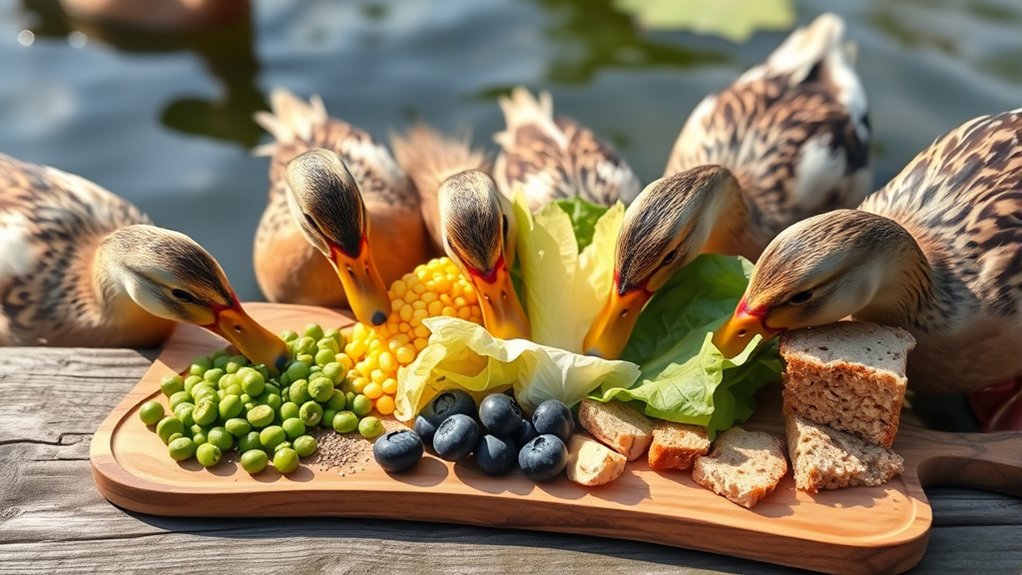
You should give ducks fresh vegetables like kale and peas for vitamins and hydration, along with natural grains such as cracked corn and sunflower seeds to boost energy and stamina.
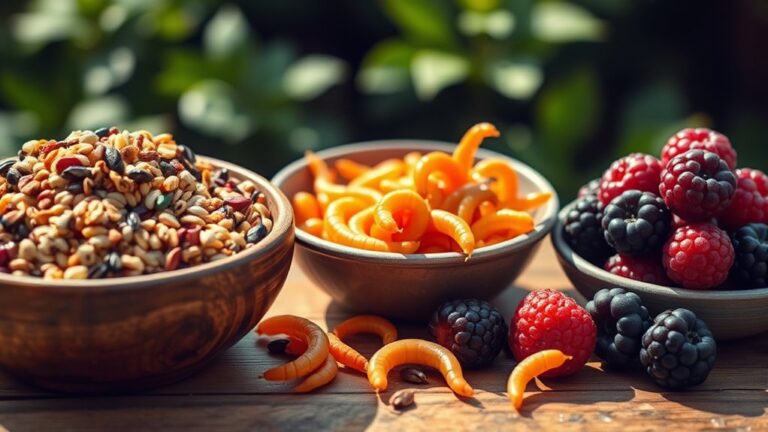
Seasonal fruits like berries add healthy nutrients, while protein sources like mealworms support growth and feather health.
Always avoid harmful foods like bread, processed snacks, and dairy, which can cause health issues.
If you want to guarantee your ducks thrive, keep exploring the best feeding tips and tricks.
Key Takeaways
- Fresh leafy greens like spinach and kale provide essential vitamins and minerals for ducks’ health.
- Grains such as cracked corn and oats supply high energy and support natural foraging behaviors.
- Seasonal fruits like berries, apples, and pears offer natural energy and vital nutrients in small pieces.
- Protein sources like mealworms, cooked eggs, and peas aid feather growth and immune system strength.
- Avoid bread and processed snacks to prevent malnutrition and digestive issues in ducks.
Fresh Vegetables to Feed Ducks
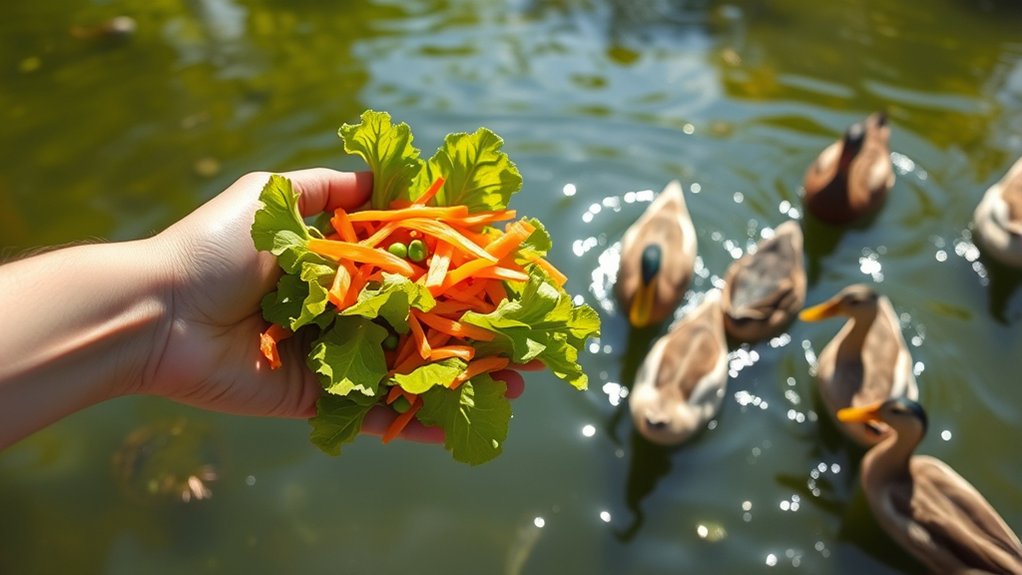
Wondering which fresh vegetables are safe and nutritious for ducks? You’ll want to offer leafy greens like lettuce, spinach, and kale, as well as peas and corn. These veggies provide essential vitamins and minerals that support their overall health.
When feeding ducks fresh vegetables, make sure to chop them into small, manageable pieces to prevent choking. Fresh vegetables also complement their natural behaviors. After eating, ducks often engage in duck bathing, where they splash around to clean their feathers and maintain waterproofing.
Providing a balanced diet with fresh veggies can even influence their nesting habits by ensuring they have the energy and nutrients needed for breeding and raising ducklings. Avoid starchy or processed vegetables, as these can disrupt their digestive system.
Grains and Seeds Ducks Love to Eat
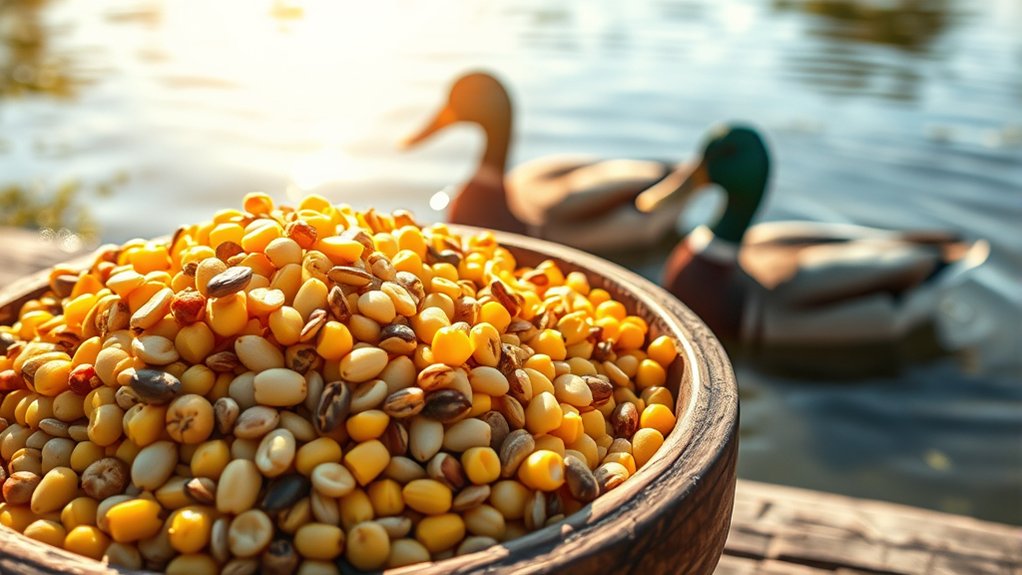
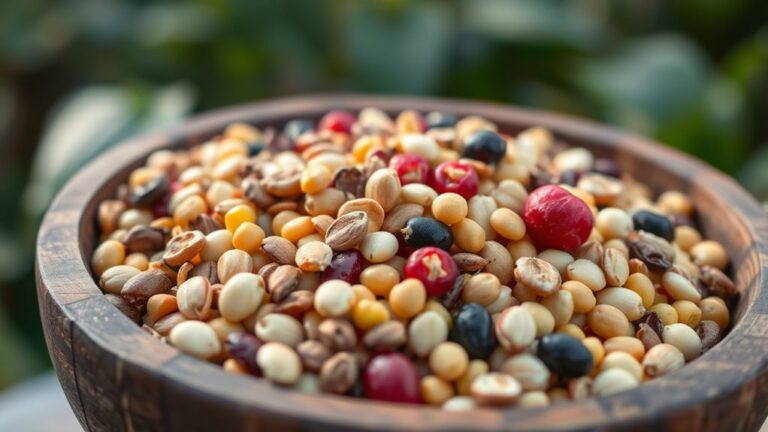
Ducks enthusiastically eat a variety of grains and seeds that provide them with energy and essential nutrients. When you offer cracked corn, oats, or barley, you help support their high energy needs, especially during migratory patterns when they require extra fuel.
Sunflower seeds, rich in healthy fats, also benefit ducks, boosting their stamina for long flights. During duck nesting season, providing these grains can aid females in maintaining strength for egg-laying and caring for their ducklings.
You should avoid processed or salted grains, sticking to natural, plain options. Scattering grains near water or nesting areas encourages natural foraging behaviors, promoting healthy habits.
Fruits to Feed Ducks for Natural Energy
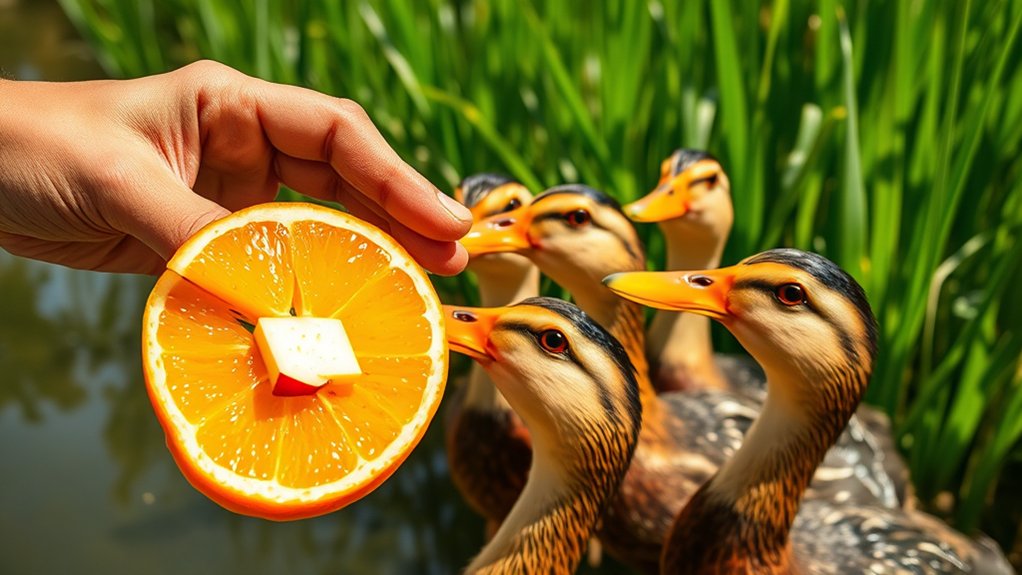
Alongside grains and seeds, offering fruits provides ducks with natural energy and essential vitamins. You can boost ducks’ vitamin needs by including fruits rich in vitamin C and antioxidants. Seasonal fruit choices like berries, apples, and pears are great options. Just make sure to cut fruits into small, manageable pieces to prevent choking.
In spring and summer, strawberries, blueberries, and watermelon give invigorating hydration and energy. During fall, apples and pears supply valuable nutrients and fiber. Avoid feeding fruits with added sugars or pesticides. Also, don’t give citrus fruits, as they can upset ducks’ digestion.
Healthy Protein Sources for Ducks
While fruits and grains provide essential nutrients, including healthy protein sources in a duck’s diet is crucial for growth, feather development, and overall health. You should focus on natural protein supplements like mealworms, earthworms, and small insects, which ducks readily enjoy and digest well.
These options mimic what ducks find in the wild and offer a rich source of amino acids necessary for muscle repair and immune function. Incorporating cooked eggs or peas into their meals also boosts protein intake without processed additives.
Avoid relying solely on commercial feeds; instead, balance your duck diet with these natural protein sources to keep them energetic and thriving. Remember, protein supplements are especially important during molting seasons when ducks need extra nutrients to regrow feathers.
Bread and Other Harmful Foods to Avoid
Protein-rich foods support a duck’s health, but not everything you might consider feeding them is safe. Bread, for example, lacks nutrition and can cause malnutrition or swim bladder issues.
Sticking to homemade duck treats and observing proper duck feeding etiquette keep ducks healthy and the environment clean.
Here’s a quick guide on foods to avoid and why:
| Food Item | Why It’s Harmful | Alternative Suggestion |
|---|---|---|
| Bread | Causes malnutrition | Oats, cracked corn |
| Processed snacks | High salt and preservatives | Peas, corn, homemade treats |
| Junk food | Toxic additives | Duck-safe vegetables |
| Dairy products | Ducks can’t digest lactose | Fresh water and grains |
| Candy | Contains harmful sugars | Unsalted nuts or seeds |
Avoid these harmful foods to support healthy ducks and enjoy feeding them responsibly.
Frequently Asked Questions
How Often Should I Feed Ducks in the Wild?
You should keep your feeding frequency moderate, ideally once or twice a week, to avoid disrupting the ducks’ natural foraging habits. Pay attention to seasonal adjustments. Feed less during warmer months when food is abundant, and a bit more in colder seasons when natural resources dwindle. This balance helps maintain their health and encourages them to rely on their environment rather than becoming dependent on you for food.
Can Feeding Ducks Affect Their Migration Patterns?
Yes, feeding ducks can cause migration disruption by altering their natural feeding habits. When you feed ducks regularly, they might rely on easy food sources instead of foraging naturally.
This change can make them less inclined to migrate on schedule or travel long distances, which affects their survival instincts. So, while it seems helpful, you should be careful not to disrupt their natural behaviors and migration patterns.
What Is the Best Time of Day to Feed Ducks?
The best time of day to feed ducks is early morning or late afternoon, when they’re naturally more active. Sticking to consistent feeding frequency helps ducks develop a routine and reduces stress.
Feeding during these ideal feeding times aligns with their natural habits, making it easier for them to digest food and stay healthy. Avoid feeding too late in the day to prevent disrupting their nighttime behaviors.
Are There Any Health Risks for Humans When Feeding Ducks?
Yes, there are some health risks for you when feeding ducks. You could be exposed to bacteria and viruses that ducks carry, which might lead to food contamination if you don’t wash your hands properly afterward. Always avoid touching your face, especially your mouth and eyes, while feeding ducks.
To protect your human health, wash your hands thoroughly with soap and water right after. Also, avoid feeding ducks in areas where water quality is poor.
Should Ducks Be Fed Differently During Breeding Season?
Yes, you should adjust feeding habits and modify the breeding diet during breeding season. You’ll want to provide more protein, more nutrients, and more energy to support egg production and chick growth.
You’ll need to offer foods rich in vitamins, minerals, and quality proteins. You shouldn’t just keep feeding the usual diet; instead, tailor it to meet their increased nutritional demands. This helps ensure healthy ducks and successful breeding outcomes.
Conclusion
So, next time you want to spoil your duck friends, skip the bread. They’ll thank you by staying healthy and not waddling around with upset tummies. Instead, toss them fresh veggies, grains, fruits, and protein they actually need.
It’s funny how something as simple as choosing the right snacks can make such a difference, isn’t it? Who knew feeding ducks the right way wasn’t just about keeping them cute but also keeping them well? Remember, giving ducks the best foods helps them thrive and stay happy.