What Is a Mallard?
If you’ve ever tried to identify a duck in the wild, you’re not alone—many people struggle with telling different species apart. Mallards, in particular, stand out once you know what to look for, but getting familiar with their unique traits can be tricky at first.
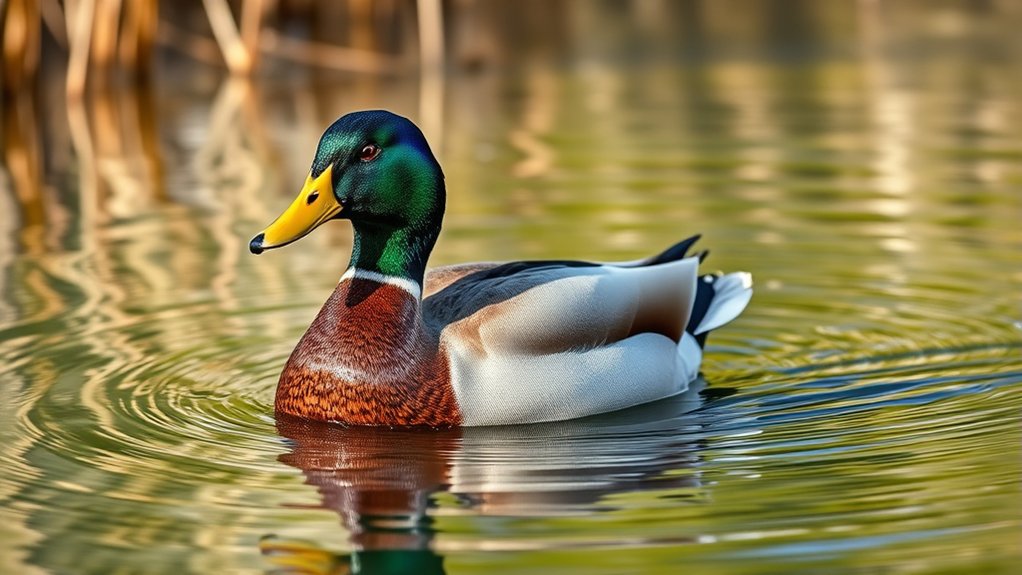
You’ll recognize a mallard by its vibrant green head, orange legs, and distinctive quack. These adaptable ducks live across North America, Europe, and Asia, thriving in wetlands, urban parks, and ponds.
They forage by dabbling and grazing on plants, insects, and small aquatic animals.
Mallards are highly social and migrate seasonally, connecting habitats.
They also play key roles in ecosystems and have fascinating behaviors. Keep exploring to uncover more about their habits and impact.
Key Takeaways
- Mallards are common dabbling ducks found across North America, Europe, and Asia. You’ll often see them in wetlands, ponds, and even urban parks.
- Male mallards have glossy green heads and gray bodies. Females, on the other hand, have mottled brown feathers and orange bills.
- They are highly social birds and are known for their seasonal migration between breeding and wintering habitats.
- Mallards eat a variety of foods including plants, insects, small aquatic animals, and seeds. They adapt really well to urban environments.
- These ducks play important ecological roles by helping with seed dispersal, controlling insect populations, and serving as prey for predators like foxes and hawks.
What Are Mallards and Where Are They Found?

Where can you find mallards, and what makes them so recognizable? Mallards are widespread across North America, Europe, and Asia, thriving in wetlands, ponds, and urban parks. Their adaptability allows them to live in diverse environments, from rural marshes to city lakes.
You might notice them during mallard migration, as they travel seasonally to find ideal breeding and wintering habitats. These movements help maintain healthy populations by connecting different groups.
You play a role in mallard conservation, too. Protecting wetlands and minimizing pollution directly supports their survival. Conservation efforts focus on preserving natural habitats and managing water quality, which benefits not only mallards but entire ecosystems.
How Can You Identify a Mallard by Appearance?

Recognizing a mallard starts with noticing its distinct features. Male mallards boast vibrant Mallard coloration: a glossy green head, white neck ring, chestnut-brown chest, and gray body. Females have mottled brown feathers with an orange bill marked by dark splotches, allowing them to blend into their surroundings.
Both sexes show a unique blue speculum bordered by white on their wings, which becomes especially noticeable during flight. During Mallard migration, you might spot flocks with these characteristic colors as they travel seasonally.
Pay attention to their size, about 20-26 inches long with a wingspan of 32-39 inches, and their orange legs. Their rounded heads and relatively short tails also help you identify them.
What Do Mallards Eat and How Do They Forage?
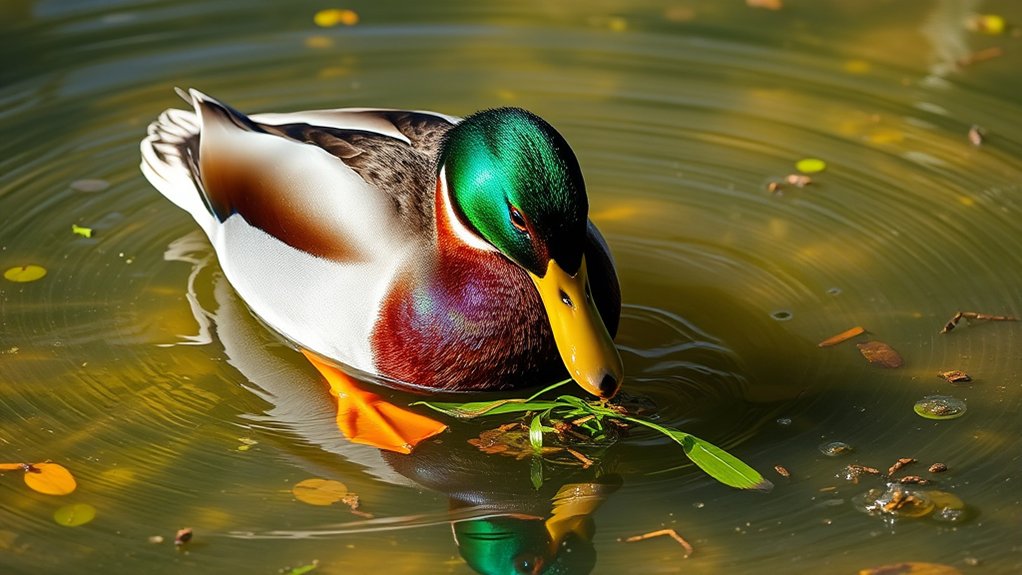
You’ll notice mallards eat a variety of foods, from plants to small aquatic creatures. They usually forage by dabbling at the water’s surface or tipping forward to reach underwater. Their diet actually changes with the seasons, adapting to whatever’s available.
Typical Mallard Diet
Although mallards are often seen splashing on water surfaces, their diet is surprisingly diverse and adaptable. You’ll find that mallards eat a mix of plants, insects, and small aquatic animals depending on the season and location.
This adaptability supports mallard migration, allowing them to thrive in varied environments. Mallard conservation efforts also focus on preserving habitats that supply this varied diet.
Here’s a quick look at their typical foods:
| Food Type | Examples |
|---|---|
| Aquatic Plants | Duckweed, pondweed |
| Seeds | Grasses, grains |
| Invertebrates | Insects, snails |
| Small Fish | Minnows |
| Crustaceans | Crayfish |
Understanding their diet helps you appreciate how these ducks survive and why conserving their habitats is crucial.
Foraging Techniques Used
When mallards search for food, they use a variety of clever techniques that suit their flexible diet. You’ll often see them dabbling on the water surface, tipping forward to reach aquatic plants, insects, and small fish.
They also forage by grazing on land, picking seeds and grains. During Mallard migration, they adapt their foraging strategies to the changing environments they encounter, ensuring they find enough nourishment.
Their Mallard coloration helps them blend into wetlands, giving them cover while they feed. You might notice them foraging in groups, which improves safety and efficiency.
Whether dabbling or grazing, mallards are resourceful, using their surroundings to access diverse food sources without expending unnecessary energy. This adaptability supports their widespread presence across various habitats.
Seasonal Food Variations
Mallards adjust their diet and foraging habits as the seasons change to make the most of available food sources. During spring and summer, when breeding behavior is at its peak, you’ll find mallards focusing on protein-rich foods like insects, larvae, and small crustaceans to support egg production and chick growth.
In contrast, during fall and winter, as mallard migration begins, their diet shifts toward seeds, aquatic plants, and grains you’ll find in wetlands and agricultural fields. You’ll notice they forage by dabbling, tipping forward in water to reach submerged vegetation, and grazing on land.
This seasonal flexibility helps mallards thrive year-round, ensuring they get the nutrients needed for breeding and long migratory journeys. Watching these changes can deepen your appreciation for their adaptability.
How Do Mallards Behave in the Wild?
When you watch mallards in the wild, you’ll notice they’re pretty social birds. They often hang out in groups. They communicate with each other using all kinds of calls and body language to keep their social bonds strong. You’ll also see them feeding together, using clever foraging techniques to find food efficiently. It’s really interesting to watch how they work as a team.
Social Interaction Patterns
Although they often seem solitary, mallards actually engage in complex social behaviors that help them survive and thrive in the wild. You’ll notice mallards forming tight groups during migration, which strengthens social bonding and improves navigation. These birds communicate through vocalizations and body language, coordinating movements and warning of dangers.
Here’s a quick look at their social interaction patterns:
| Behavior | Purpose | Example |
|---|---|---|
| Flocking | Safety & navigation | Mallard migration |
| Pair bonding | Reproduction | Mating pairs stay close |
| Vocal calls | Communication | Warning of predators |
| Preening | Social bonding | Mutual feather care |
| Territory defense | Protecting resources | Males chase off rivals |
Understanding these patterns helps you appreciate their social complexity in the wild.
Feeding and Foraging Habits
Since they rely on diverse food sources, these ducks adapt their feeding strategies to different environments. You’ll see mallards dabbling in shallow water, tipping forward to reach aquatic plants, insects, and small fish.
On land, they forage for seeds, grains, and insects, especially during nesting behaviors when energy needs rise. During mallard migration, their diet shifts depending on available resources along their routes, helping them maintain strength.
You might notice them feeding in groups or alone, depending on food abundance. Their flexible diet and foraging habits support survival across varied habitats, from ponds to marshes. By understanding these patterns, you can better appreciate how mallards thrive year-round, balancing energy intake with the demands of migration and raising young.
How Do Mallards Adapt to Urban and Natural Habitats?
You’ll notice mallards thrive in both bustling cities and quiet wetlands because they quickly adjust their behavior and diet to fit each environment. In urban areas, you’ll see mallards feeding on human leftovers and nesting near parks or ponds, showing impressive adaptability.
In natural habitats, they stick to aquatic plants and insects, blending into wetlands and rivers. Their flexible feeding habits help them survive year-round, especially during mallard migration, when they travel between breeding and wintering grounds.
You can also appreciate how mallard conservation efforts focus on protecting diverse habitats, ensuring they have safe stopover sites during migration. These efforts support their ability to adapt and maintain healthy populations in changing environments.
What Role Do Mallards Play in Their Ecosystems?
You might not realize it, but mallards actually play a key role in their ecosystems by spreading seeds as they move around. It’s pretty interesting how these ducks help plants grow in new places just by going about their day.
They also help maintain balance by serving as both prey and predator. So, they’re part of the food chain in more ways than one, which keeps things in check.
When you understand their role, it’s easier to see how important they are to nature’s web. They’re definitely a small but essential piece of the bigger picture.
Seed Dispersal Agents
Although mallards are best known for their vibrant plumage and adaptable nature, they also play an essential role as seed dispersal agents in their ecosystems. When mallards feed on aquatic plants and seeds, those seeds often pass through their digestive systems unharmed.
As you watch them during mallard migration, you’ll notice they carry and deposit seeds across vast distances, helping plants colonize new areas. This natural process supports biodiversity and maintains healthy wetland environments.
Waterfowl conservation efforts recognize this critical role, emphasizing habitat protection to sustain mallard populations and their seed dispersal functions. So, by supporting mallards, you’re also aiding the spread of native plants and the overall balance of aquatic ecosystems where they thrive.
Prey and Predator Balance
While mallards contribute to seed dispersal, they also play an essential role in maintaining prey and predator balance within their ecosystems. As you observe mallard migration, you’ll notice how they connect different habitats, influencing food chains.
Mallards serve as prey for predators like foxes and hawks, while also controlling insect populations. This balance supports healthy ecosystems. Protecting them through mallard conservation efforts guarantees this crucial cycle continues.
| Role in Ecosystem | Emotional Impact |
|---|---|
| Prey for predators | Reminds you of nature’s fragility |
| Predator of insects | Shows their vital contribution |
| Migrators linking habitats | Inspires awe in their journey |
You help preserve this balance by supporting conservation initiatives.
How Do Mallards Reproduce and Raise Their Young?
Because mallards are highly social birds, they engage in a mating ritual that helps them find strong partners for reproduction. During mallard migration, males display colorful plumage and perform elaborate courtship behaviors to attract females.
Once paired, the female builds a nest close to water, often hidden in dense vegetation. She lays 8 to 13 eggs and incubates them for about a month, keeping them warm and protected.
After hatching, you’ll see the mother leading her ducklings to water, teaching them to feed and avoid predators. This early care is essential for their survival.
Mallard conservation efforts focus on protecting wetlands and nesting habitats to support these young birds during this vulnerable stage. By understanding their reproduction and parenting habits, you can appreciate how important healthy ecosystems are for sustaining mallard populations.
This knowledge helps guide conservation strategies that ensure mallards thrive despite environmental changes.
What Threats Do Mallards Face in the Wild?
When you investigate wetlands where mallards live, you’ll notice that these birds face many challenges, from habitat loss to pollution and hunting pressures. Wetland drainage and urban development reduce the natural spaces mallards need for nesting and feeding. Pollution contaminates water sources, affecting their health during vital Mallard migration periods. Furthermore, hunting, while regulated, can impact local populations if not carefully managed.
You should also be aware that climate changes alter migration patterns, making it harder for mallards to find safe stopover sites. Mallard conservation efforts focus on protecting wetlands and maintaining safe migratory routes. These efforts involve habitat restoration and pollution control, ensuring mallards have clean, secure environments throughout the year.
How Do Mallards Interact With Humans and Urban Areas?
As you investigate parks and ponds in urban areas, you’ll often spot mallards comfortably adapting to human presence. These ducks have learned to thrive alongside people, taking advantage of food scraps and safe nesting spots.
You might notice their vibrant mallard plumage shining even in city settings, making males easy to identify with their iridescent green heads. Mallards’ adaptability extends beyond urban living. During migration, they navigate both wild and developed landscapes, showing remarkable flexibility.
You’ll also see how mallards tolerate close human interaction, often approaching for food. However, feeding them bread isn’t ideal because it can harm their health. Instead, you can offer appropriate duck feed or grains.
Why Are Mallards Popular Among Bird Watchers and Photographers?
Spotting mallards in urban parks isn’t just a common experience; it’s a favorite among bird watchers and photographers. You’ll appreciate their striking colors, especially the males during mallard mating season when their vibrant green heads and bright plumage stand out. These moments offer you perfect photo opportunities, capturing nature’s beauty up close.
You also get to observe mallard migration patterns firsthand, as these adaptable birds travel between breeding and wintering grounds. Watching their flocks arrive or depart adds a dynamic element to your birdwatching routine. Plus, mallards’ approachable nature means they often stay close to people, making it easier for you to get clear, detailed shots without disturbing their natural behavior.
Whether you’re snapping photos or simply enjoying their lively antics, mallards offer a rewarding experience. Their combination of vivid appearance, fascinating behaviors like mallard mating, and seasonal movements keeps you engaged and eager to observe them again and again.
Frequently Asked Questions
How Long Do Mallards Typically Live in Captivity?
In captivity, mallards typically live around 5 to 10 years, though some can reach 15 years with proper care. You’ll want to understand mallard behavior to meet their needs, like providing space for swimming and social interaction.
Captivity challenges include ensuring a clean environment and preventing boredom, which can affect their health. If you address these, you’ll help your mallard thrive and enjoy a longer, happier life in captivity.
Can Mallards Be Kept as Pets Legally?
You can keep mallards as pets legally in many places, but you’ll need to check local laws first. Remember, their mallard diet includes aquatic plants, insects, and small fish, so you’ll have to provide a varied, natural diet.
Also, respect their mallard nesting habits. They prefer secluded, safe spots near water for nesting. Providing these conditions helps keep your pet mallards happy and healthy in captivity.
What Are Common Diseases That Affect Mallards?
When it comes to mallards, you can’t just sweep diseases under the rug. Common illnesses include avian influenza and botulism, which can affect them in their natural mallard habitat like wetlands. Poor water quality or contaminated food can trigger these diseases.
Since their mallard diet mainly consists of aquatic plants and small invertebrates, keeping their environment clean helps reduce risks. Stay vigilant to keep these ducks healthy and thriving.
How Do Mallards Communicate With Each Other?
You’ll notice mallards communicate using a mix of mallard vocalizations and body language. Their quacks and other calls help signal danger, attract mates, or establish territory.
Besides sounds, they use body language like head bobbing and wing flapping to convey messages. Paying attention to these cues lets you understand what they’re feeling or trying to say, making their social interactions clearer and more fascinating to observe.
Are Mallards Migratory Birds?
Just like the legendary travelers of old, mallards are migratory birds, moving with the seasons to find the best Mallard habitat. You’ll notice they head south when winter grips northern lands, seeking warmer waters and abundant food.
Their Mallard diet, rich in aquatic plants and small invertebrates, depends on these changing environments. So, when you spot them flying in V-formation, you’re witnessing a timeless journey driven by survival and nature’s rhythm.
Conclusion
Think of the mallard as a skilled traveler, effortlessly steering through both wild forests and bustling cities. Just like a bridge connecting two worlds, these adaptable ducks show you how life thrives through change and resilience.
By watching them, you learn the art of balance, embracing nature’s rhythms while coexisting with human life. So next time you spot a mallard, remember it’s not just a duck but a symbol of harmony in a changing world.